 CityBuddy
 English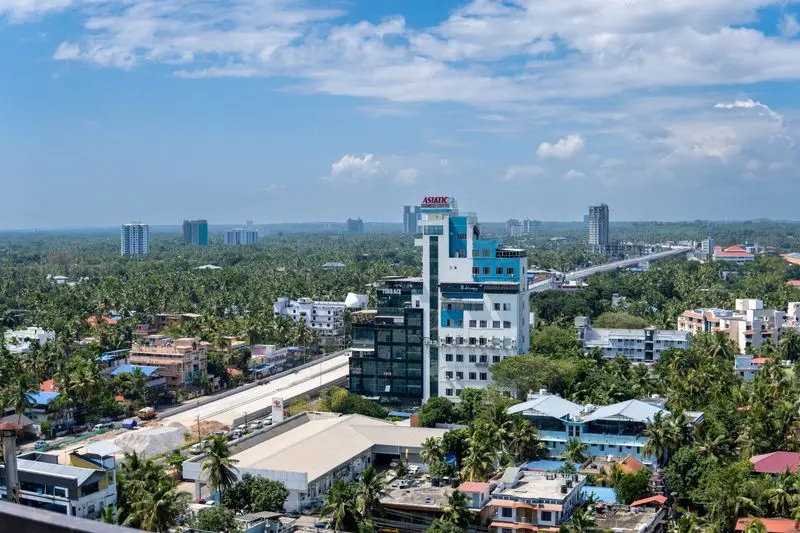
Things to Do in Thiruvananthapuram, India
Photo made by Tomy Mathew on Pexels.com
When to visit
Plan your perfect trip to Thiruvananthapuram, India
Get a complete travel plan built just for you in under 30 seconds, with daily routes, local food tips, budget estimates and more.
Are any of these especially important to you?
Select all that apply
Plan language: EnglishMost popular attractions in Thiruvananthapuram, India
Looking for things to do in Thiruvananthapuram, India? Start with Padmanabhaswamy Temple, where gold treasures are said to be hidden six meters underground. Four kilometers south lies Kovalam Beach with its crescent-shaped beach. Also take the opportunity to visit Puthen Malika Palace with its hundred wooden pilasters.
1. Kovalam Beach
Would you like to feel the waves of the Indian Ocean against your feet and see the lighthouse view? Golden sand, coconut scent, grilled fish, and a sunset that turns everything gold.
Quick facts: Three crescent-shaped sandy beaches link together several kilometers of golden coastline, lined with coconut palms and small fishing villages. Here the powerful waves of the Indian Ocean come in with full force, and the 35-meter-high lighthouse with its 70 steps offers a sweeping view over the entire bay.
Highlights: The local fishermen still push their wooden catamarans out at dawn and sell the day's catch directly on the beach, often cooked over glowing coals right before your eyes. At sunset, both travelers and Keralites gather to watch the boats glide in as market stalls light up along the sand.
2. Napier Museum
Step into a fairytale brick fortress where minarets and carved treasures await. Inside you will find bronze sculptures, a royal temple chariot, and stories from southern India.
Quick facts: The collection houses 16th-century bronze sculptures, glittering antique gold jewelry, and a complete wooden temple chariot with carvings in every corner. With minarets, colorful plaster, and patterned windows, the building stays cool even in the heat, and daylight filters softly over the objects.
Highlights: The ritual wooden temple chariot is the room's hidden star, carved deity figures in several tiers cover every surface and take over an hour to explore. Beside it stands a miniature model of the Padmanabha Swamy Temple where hundreds of pillars and minarets are reproduced in perfect scale, so detailed that you can follow every procession route.
3. Puthen Malika Palace
122 wooden horses support the roof of a surprisingly royal residence. Wander through halls with crystal chandeliers and meet the musical legacy of a composer king.
Quick facts: The upper floor rests on 122 hand-carved wooden horses, all hewn from single pieces of solid teak. The maharaja who lived here composed over 400 classical songs and had court musicians play every evening.
Highlights: On the upper balcony, 122 wooden horses carry the roof, each carved from a single piece of teak with different facial expressions. The evenings here were once filled with live music, the maharaja himself sitting at the instruments among Belgian mirrors and crystal chandeliers.
4. Shanghumukham Beach
A beach where the 35-meter-long mermaid and landing airplanes share the attention. You get sunsets over the Arabian Sea, quiet walks, and the rhythmic sound of waves.
Quick facts: A 35-meter-long mermaid sculpture by artist Kanayi Kunhiraman rises from the sand and has become the beach's natural meeting point. The planes' approach to the nearby airport passes so low over the water that the entire landing procedure unfolds right in front of the beachgoers.
Highlights: The mermaid Jalakanyaka has her face turned toward the sea and serves as the beach's silent symbol, created by the same artist who shaped many of the region's public sculptures. At low tide, hundreds of meters of hard sand are exposed where families wade out among beached boats, far beyond the powerful surf.
5. Thiruvananthapuram Zoo
One of India's oldest zoos with tigers, macaques, and lush gardens in the middle of the city. You wander among old museums, meet king cobras, and spot lion-tailed macaques in the trees.
Quick facts: Close to 200 species and around 1,500 animals live here, including white tigers, lion-tailed macaques, and king cobras. The zoo is one of India's oldest and lies nestled in a 14-hectare botanical garden just a stone's throw from the Napier Museum.
Highlights: The reptile and amphibian house is among the oldest in the country and was built around a pair of historic banyan trees, where king cobras and pythons still lie basking. The lion-tailed macaques, an endangered species from the Western Ghats, have a special enclosure where they swing between trees right above the walkways.
6. Veli Tourist Village
An unusual mix of playground, miniature world, and boat rides where river meets sea. Stroll among model monuments, take a boat in the lagoon, and have dinner on rocking water.
Quick facts: The freshwater from the lagoon pushes through a narrow opening and mixes with the waves of the Arabian Sea. In the model park stand around thirty miniatures of famous world monuments, and the floating restaurant lies anchored in the middle of the water.
Highlights: A footbridge leads out to a restaurant that gently sways in the lagoon's water, while fishing boats pass close by. Stand on the bridge at sunset and watch how the saltwater meets the green-brown freshwater below you.
7. Priyadarshini Planetarium
Sit back under an entire starry sky without leaving the city. In a single show you travel from the planets' neighborhood to the depths of the galaxies.
Quick facts: The dome hall is eighteen meters in diameter and seats 180 visitors reclining under a ceiling full of stars. It premiered in 1994 as one of the country's first digitalized facilities, and shows are still held today in both Malayalam and English.
Highlights: The darkness, the faint starlight, and the surround sound make the dome feel like a time machine when the projector spins the sky back several thousand years. The zoom can go from the entire sweep of the Milky Way all the way down to a single moon, something that is unusual even among the major planetariums.
8. Vizhinjam Lighthouse
Climb 144 steps and get a sweeping view over the Arabian Sea. The light sweeps out over the water while the fishing boats glide in below you.
Quick facts: The tower is 36 meters tall and stands on a hill with views over both the fishing village harbor and the open Arabian Sea, with 144 steps up to the lantern room. The lighthouse was lit in 1972, but the cliffs below welcomed ships as early as around two thousand years ago.
Highlights: The view from the top sweeps from Kovalam Beach's arc-shaped sand in the east to the old harbor's colorful fishing boats in the west, a panorama that constantly shifts as the light moves. The lamp shines 26 nautical miles out to sea, and when evening falls it is easy to sense the fires that sentries once lit on the same cliff thousands of years ago.
9. Kanakakunnu Palace
An evening here is like stepping into a living dream of dance, music, and the scent of flowers. You wander through royal halls and settle down on the lawn while the scenes come to life.
Quick facts: When the gates open in the evening, the whitewashed 19th-century building transforms into a stage for everything from kathakali to jazz. The festival here has been held since 1975 and, during its best weeks, features over a hundred program items with artists from around the world.
Highlights: The building is actually not a museum, it still lives: author evenings, dance theater, and music go on inside the royal halls year-round. The evenings here carry a special charge, when strings of lights come on in the branches and the audience spreads out blankets on the lawn while drum rhythms echo through the trees.
Where to Stay in Thiruvananthapuram, India
Selected by City Buddy based on guest reviews and proximity to top attractions
Search all hotels in Thiruvananthapuram, IndiaPowered by agoda
Traditional Sweet Dishes

Ada Payasam
Ada payasam is a creamy rice-flake pudding simmered in sweetened coconut milk, a staple of the grand Onam sadya feast. Tradition says no Kerala festival banquet is complete without a serving of this warm, cardamom-scented dessert.
Unniyappam
Unniyappam are small, round sweet fritters made from rice flour, jaggery, and mashed banana, fried until golden. They are a beloved temple offering and tea-time snack across Thiruvananthapuram.
Ela Ada
Ela ada is a steamed rice cake stuffed with sweetened coconut and jaggery, wrapped in a banana leaf that gives it a subtle aromatic flavor. The leaf wrapper is a signature touch you still see at traditional Kerala homes.
Traditional Savory Dishes
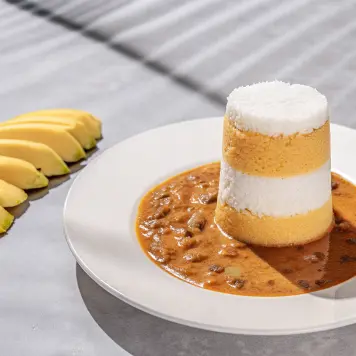
Puttu and Kadala Curry
Puttu is a cylindrical steamed cake of rice flour layered in a bamboo or metal steamer, served with a spicy black chickpea curry. In Thiruvananthapuram it is the classic breakfast pairing that locals eat with ripe bananas and coconut.
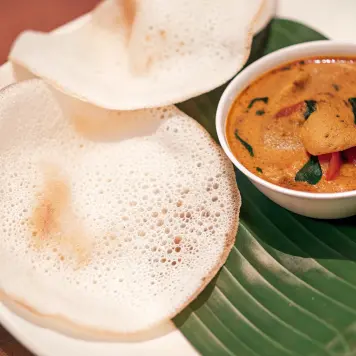
Appam with Vegetable Stew
Appam is a soft, lacy pancake with a crisp edge, made from fermented rice batter and coconut milk. It is traditionally dunked into a mild, creamy vegetable or chicken stew flavored with curry leaves and coconut.
Kerala Porotta with Beef Roast
Kerala porotta is a flaky, layered flatbread made by repeatedly folding and rolling the dough, giving it dozens of thin, crisp layers. In Thiruvananthapuram it is famously wrapped around spicy beef roast or chicken curry for a hearty meal.
Traditional Beverages

Elaneer (Tender Coconut Water)
Elaneer is the refreshing clear water sipped straight from a tender green coconut, which is still opened fresh at roadside stalls across the city. Street vendors in Thiruvananthapuram sell it year-round as the ultimate natural cooler.

Sulaimani Tea
Sulaimani is a light black tea brewed with lemon and a touch of sweetness, served in tall glasses all through Kerala. The name is often said to honor Sulaiman, a spice trader credited with popularizing the drink along the state's trading routes.
Sambharam (Spiced Buttermilk)
Sambharam is a chilled, thin buttermilk drink seasoned with ginger, green chili, curry leaves, and a pinch of salt. Kerala families serve it after meals to aid digestion and beat the tropical heat, often in a traditional clay pot.
Frequently Asked Questions about Thiruvananthapuram, India
Is Thiruvananthapuram, India safe for tourists?
How many days should one stay in Thiruvananthapuram, India?
When is the best time to visit Thiruvananthapuram, India?
Is Thiruvananthapuram, India expensive to visit?
How do you get around in Thiruvananthapuram, India?
Get a PDF with the most popular attractions sent to your email
Get a PDF with all attractions, ratings, and tips. Perfect for offline use.
Most popular day trips
Kovalam Beach
Famous crescent beach with lighthouse, cafes and water sports
Padmanabhapuram Palace
16th century wooden palace of the Travancore kings, now in Tamil Nadu
Ponmudi Hill Station
Hill resort with tea gardens, misty peaks and trekking trails
Kanyakumari
Southernmost tip of India with sunrise views and Vivekananda Rock
Getting there
Train stations
Kochi, Kollam, Kanyakumari, Chennai, Mumbai
Regional and long distance express services
The airport is only 5 km from the city center; prepaid taxis and autos take about 20 minutes. Book trains in advance on IRCTC for the scenic coastal route.
Find flights to Thiruvananthapuram, India
Click to get eSim for Thiruvananthapuram, India
The easiest and most affordable way to get mobile internet wherever you travel.

Comments (5)
Trivandrum is fine but not mind blowing. The city is chaotic and the traffic gets on your nerves. Nice to see if you have time, I would not fly here just for it.
The Sri Padmanabhaswamy temple has a strict dress code and long queues. Hit a weekday morning around 6am to beat the crowd, and bring cash for the lockers since phones are not allowed.
Kerala fish curry with appam here changed my life. The beaches are clean, people are friendly, and the whole place just feels slow and easy. Three days was perfect.
Great food and the museum is genuinely worth a morning, but the humidity is brutal in May. Pack light, drink a lot of water, and you'll love it.
Take the city bus to Kovalam for 25 rupees instead of paying 800 for a taxi. Local buses stop right at the beach entrance and it is stupid easy.