 CityBuddy
 English
Things to Do in San Sebastiano, Italy
Photo made by Osviel Rodriguez Valdés on Pexels.com
When to visit
Plan your perfect trip to San Sebastiano, Italy
Get a complete travel plan built just for you in under 30 seconds, with daily routes, local food tips, budget estimates and more.
Are any of these especially important to you?
Select all that apply
Plan language: English
San Sebastiano is the #1 city for food lovers in the world, based on our data across hundreds of destinations.
Most popular attractions in San Sebastiano, Italy
The best things to do in San Sebastiano, Italy, put you inside history, just 15 minutes from Pompeii Archaeological Park. Walk Herculaneum's preserved streets, climb Mount Vesuvius's 1,281-meter crater rim, and finish with the Villa of the Mysteries' vivid frescoes, all within a day's reach.
1. Mount Vesuvius
Stand on a rim where a single eruption buried whole Roman cities. Sulfur smoke drifts from vents as the entire bay sprawls out beneath your feet.
Quick facts: A single afternoon in 79 AD buried whole Roman towns under up to 7 meters of ash and rock. Roughly 1,281 meters tall, the cone remains mainland Europe's only active volcano and gives off hundreds of small tremors each year.
Highlights: Peering into the crater, you catch yellow sulfur crystals crusting the vents as gases hiss out. A newer inner cone has been growing since 1944, the last eruption, so the smoking bowl below keeps changing shape each visit.
2. Pompeii Archaeological Park
Walk streets frozen mid-moment by a single eruption more than 1,900 years ago. You'll peer into intact homes, brothels, bakeries, and theaters exactly as Romans left them.
Quick facts: Nearly 3 million people yearly tread over original basalt paving still rutted by Roman cart wheels. Fiorelli's plaster casts of over 1,000 victims capture frozen expressions, from a family huddled together to a guard dog straining at its chain.
Highlights: At the fast-food stall in Regio V, jars still hold carbonized chickpeas while frescoes show the menu beside a snarling watchdog painted to guard the counter. Scribes left over 11,000 graffiti notes, including one scratchy tavern complaint about the barmaid, proving everyday Romans griped about love and prices exactly as we do.
3. Herculaneum
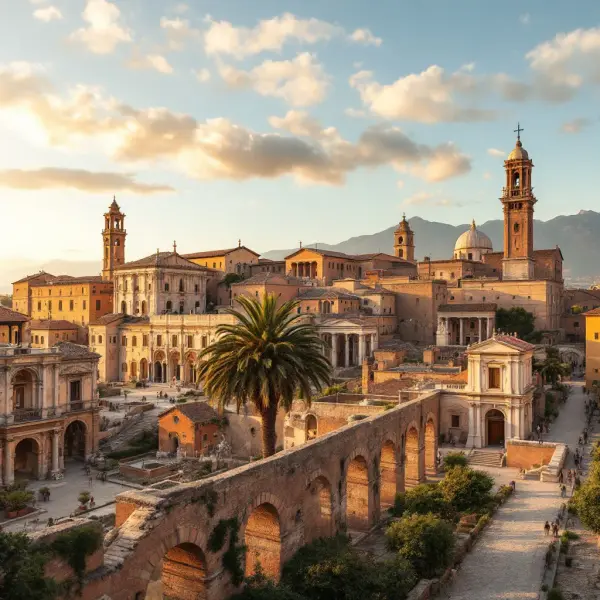
Walk through a Roman seaside town frozen mid-disaster, with wood, food, and bones still intact. A two-hour wander delivers painted streets, frescoes, and a beach hiding 300 last stand skeletons.
Quick facts: Though far smaller than its sister city, roughly 75% of this town still sleeps under the modern streets above. The killer pyroclastic surge in 79 AD carbonized wood so completely that original beds, doors, and even a loaf of bread survived, while about 300 victims huddled together in waterfront boat chambers.
Highlights: Look for the carbonized wooden cradle in the house of the wooden partition, the tiny skeleton of an infant still lies inside, preserved when superheated gas instantly baked and sealed everything. Down by the old shoreline, the fornici boat sheds hold roughly 300 tightly packed residents who fled there, among them a guard still clutching his ring of keys.
4. Villa of the Mysteries
A hidden room traps a forbidden initiation ritual in paint that still looks wet. Step inside and 29 life-size figures stare back as the drama silently replays.
Quick facts: Meet a dining room where nearly life-size women and a winged demon enact a 2,000-year-old initiation, painted across a span of roughly 17 meters in still-brilliant oxblood red. Volcanic debris from the eruption of 79 AD kept the pigments so flawless that the figures seem to stare straight back at you.
Highlights: Count the cast of this painted ritual and you'll find roughly 29 figures surrounding a tiny girl who a moment earlier had been flogged, along with twin satyrs and a skinny winged demoness whose cracked grin gives the whole room its edge of danger. The drama coils around all four walls without a single break, so turning slowly feels like watching a silent film from 79 AD unfold in real time.
5. Oplontis Excavations
A 64-room estate whose frescoes still glow in original color. Wander empty halls and an enormous plunge pool, frozen mid-renovation by the blast.
Quick facts: Roughly 90 frescoed rooms survived the 79 AD eruption, many with pigments so vivid they look freshly painted. The estate sprawls across 10,000 square meters and even has a private pool stretching 60 meters long, a luxury almost unheard of in Roman-era households.
Highlights: In the bath complex, excavators cracked open a sealed door to find a storage room untouched for nearly 2,000 years, jammed with a marble column, iron hoes, and a bronze candelabrum. Those half-packed crates and unfinished fittings reveal the owners were still remodeling when the mountain exploded, freezing a renovation mid-stride with workers' tools left exactly where they fell.
6. Vesuvius National Park
Climb the trail to a smoking crater that rewrote history, then look down on the ruins it buried. Your boots crunch volcanic stone as steam curls up and a sweeping bay view unfolds.
Quick facts: Mainland Europe's only active volcano, the 1,281-meter giant last blew in 1944 and still pushes steam from its summit vents. Ash-rich slopes host more than 600 plant species, including white-leaved broom that turns the gray cone gold every May.
Highlights: Standing on the rim means peering into a chasm roughly 450 meters wide while sulfurous steam hisses from vents right beside the footpath. The eruption that buried Pompeii in 79 AD still entombs entire bakeries under ash, and from this height you see the exact field of rubble the mountain left behind.
7. Sanctuary of the Madonna dell'Arco
Every Easter Monday, thousands of runners charge down the road in a raw act of faith. You'll walk through halls packed with thousands of painted thanksgiving tablets.
Quick facts: Over 20,000 devotees known as fujenti sprint the final kilometers each Easter Monday wearing white outfits and red sashes. The ritual reenacts a 1450 legend in which a boy's thrown ball struck a fresco of the Virgin and reportedly made it bleed.
Highlights: Inside the ex-voto hall, more than 7,000 hand-painted tablets thank the Virgin for rescues from shipwrecks, illnesses, and broken marriages. Look closely at the tiny folk-art figures on the oldest ones and you feel 500 years of raw, personal gratitude.
8. Basilica of Santa Maria del Pozzo
Sacred spring water flows inside this sanctuary, drawing pilgrims who trust its healing pull. Visitors leave with a filled bottle, a lit candle, and the quiet hum of a place alive with prayer.
Quick facts: Water from the sacred well inside the sanctuary has been drunk for healing since a devastating earthquake struck in 1456 and locals credited the Virgin with calming the tremors. Pilgrims still queue daily to fill bottles with the spring, a ritual now in its sixth century.
Highlights: A candlelit marble well sits at the sanctuary's core, its metal rim dented by decades of hands and glinting with small silver ex-votos left as thanks. Water still drips from the natural spring into a stone basin, and pilgrims scoop it straight out with a ladle that has been used for generations.
Where to Stay in San Sebastiano, Italy
Selected by City Buddy based on guest reviews and proximity to top attractions
Search all hotels in San Sebastiano, ItalyPowered by agoda
Traditional Sweet Dishes
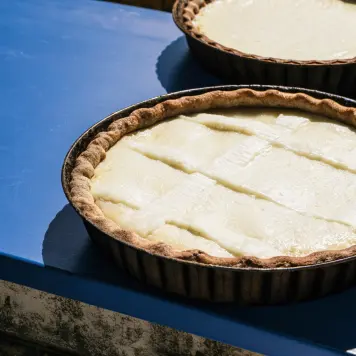
Pastiera napoletana
Pastiera is made with cooked wheat berries, ricotta, and orange flower water, and its floral aroma once filled Neapolitan streets every Easter. The filling is baked slowly so it stays creamy and never cracks.
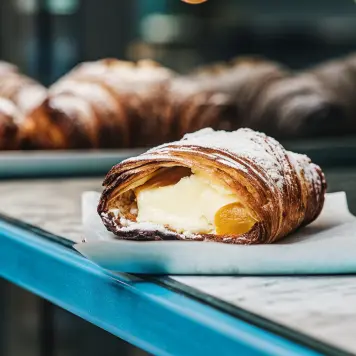
Sfogliatella
Sfogliatella's crispy shell comes from dozens of paper thin layers of dough rolled into a clam shape. It is said to have been created by nuns at the Santa Rosa convent, who filled it with ricotta, semolina, and candied fruit.
Babà
The rum babà is a soft yeast cake soaked in a rum and sugar syrup, a longtime favorite of the Bourbon court in Naples. Chefs famously squeeze the syrup out and re-soak it so every bite stays impossibly moist.
Traditional Savory Dishes

Pizza Margherita
Created in Naples in 1889 to honor Queen Margherita, this pizza uses tomato, mozzarella, and basil to mirror the colors of the Italian flag. It must be baked in a blazing wood fired oven for only about 90 seconds.
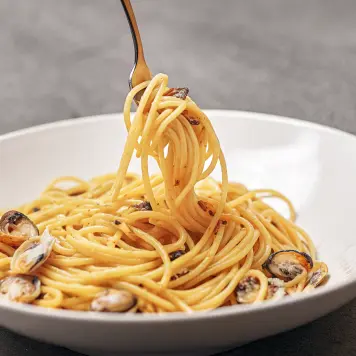
Spaghetti alle vongole
Spaghetti with tiny clams is a Campanian classic built on garlic, olive oil, white wine, and the clams' own salty liquor. No cheese is ever added, only a squeeze of lemon over the top.
Parmigiana di melanzane
This layered eggplant bake with tomato sauce, basil, and melted mozzarella is a Neapolitan comfort food favorite. Its name likely refers to the stacked layers cooked "alla parmigiana," and its origin is debated between Campania and Sicily.
Traditional Beverages
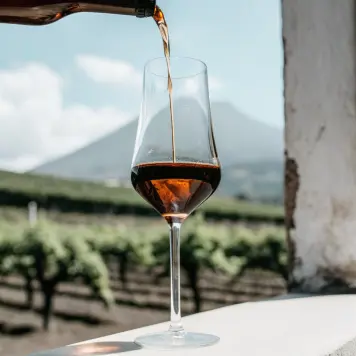
Lacryma Christi del Vesuvio
This wine comes from vineyards growing on the volcanic slopes of Mount Vesuvius, just near San Sebastiano al Vesuvio. Legend says the grapes sprouted from Christ's own tears, giving the wine its name meaning "Tears of Christ."

Limoncello
Limoncello is a bright yellow liqueur made by steeping lemon zest in alcohol, a tradition from the nearby Amalfi Coast and Sorrento. It is served ice cold after a meal to refresh the palate and aid digestion.
Caffè napoletano
Neapolitan coffee is brewed with the cuccumella, a traditional flip pot, and is thick, intense, and served in small cups. Locals also practice the "caffè sospeso" custom, paying for an extra coffee so a stranger can enjoy one for free.
Frequently Asked Questions about San Sebastiano, Italy
Is San Sebastiano, Italy safe?
How many days in San Sebastiano, Italy?
Best time to visit San Sebastiano, Italy?
Is San Sebastiano, Italy expensive?
How to get around San Sebastiano, Italy?
Get a PDF with the most popular attractions sent to your email
Get a PDF with all attractions, ratings, and tips. Perfect for offline use.
Most popular day trips
Naples
Vibrant historic center, world class pizza, and lively street culture

Herculaneum
Exceptionally preserved Roman seaside town buried by Vesuvius in 79 AD
Pompeii
Famous ancient Roman city frozen in time by volcanic ash
Mount Vesuvius
Active volcano with crater views over the Bay of Naples
Sorrento
Cliffside town with lemon groves and views toward the Amalfi Coast

Rent a car in San Sebastiano, Italy
Getting there
Train stations
Circumvesuviana line to Naples and Sorrento
High speed Frecciarossa, Italo, and regional lines to Rome, Salerno, and beyond
From Naples airport, take the Alibus shuttle to Napoli Centrale, then switch to the Circumvesuviana local train for the short ride to San Sebastiano. Allow about 45 minutes total.
Find flights to San Sebastiano, Italy
Click to get eSim for San Sebastiano, Italy
The easiest and most affordable way to get mobile internet wherever you travel.

Comments (9)
Beautiful to wander but way quieter than I expected. If you need nightlife this aint it. Great reset though, woke up to church bells and zero noise.
Came in October and the weather was perfect for walking all day. Not much open after sunset, so bring a book. Two days is plenty.
Stayed two nights and honestly could have done four. Morning light on the old streets is unreal and coffee runs about a euro. People actually talk to you here.
The food blew me away, especially the little trattoria near the fountain. Only downside, everything shuts down between 1 and 4, so plan around that.
Driving in is a nightmare, park outside the old walls and walk. Daily parking inside runs you 20 plus and the streets barely fit a Fiat.