 CityBuddy
 English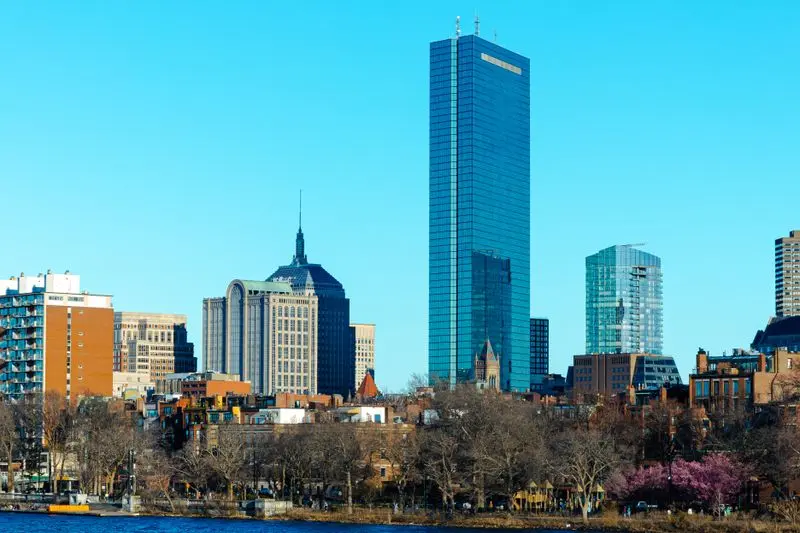
Things to Do in Boston, United States
Photo made by Phil Evenden on Pexels.com
When to visit
Plan your perfect trip to Boston, United States
Get a complete travel plan built just for you in under 30 seconds, with daily routes, local food tips, budget estimates and more.
Are any of these especially important to you?
Select all that apply
Plan language: EnglishMost popular attractions in Boston, United States
The best things to do in Boston, United States, begin with walking: the Freedom Trail threads 16 landmarks over 2.5 miles of red brick sidewalk. Save an afternoon for the Museum of Fine Arts' 100 galleries, then catch a game at Fenway Park, baseball's oldest park since 1912, home of the 37-foot Green Monster.
1. Freedom Trail
Follow a painted red line that ties 16 centuries of stories into one afternoon walk. Snapshot a colonial home, duck into an old church, and climb the hill for a skyline payoff.
Quick facts: A 4-kilometer ribbon of red brick winds past 16 historic sites from a city's central green to a hilltop obelisk. Journalist William Schofield dreamed up the route in 1951, and within months volunteers painted the first bricks to test the idea.
Highlights: The painted line is just 20 centimeters wide, yet roughly 4 million people follow it yearly, many pacing backward while squinting at paper maps. Inside the brick church from 1723, the two lanterns that once flashed the warning for a famous midnight ride still sit in a glass case.
2. Boston Common
Stand where a colonial cow pasture became America's first public park. Wander past cannons and statues, then skate the frozen Frog Pond or picnic beneath the fall leaves.
Quick facts: America's oldest public park spreads across a full 50 acres of downtown green. Cows grazed here for two centuries, redcoats pitched tents on the grass in 1776, and a violent 1876 storm toppled the Great Elm after roughly 200 years of shade.
Highlights: For more than two centuries, dairy cows acted as the park's official groundskeepers, chewing the grass flat long before any flower bed was planted. Come winter, that same expanse floods and freezes into a downtown ice rink, where the scrape of blades mixes with roasted-chestnut smoke and laughter bouncing off office towers.
3. Fenway Park
Watch a game where the left field wall is hand-painted and the scoreboard still clicks by hand. Sing "Sweet Caroline" with 37,000 strangers as one voice when the home team rallies.
Quick facts: Its 37-foot-tall left field wall hides a manual scoreboard that still runs by hand today. A single red seat among thousands of navy ones marks where Ted Williams smashed a 502-foot home run back in 1946.
Highlights: Slip into seat 21, row 37, section 42 in the right field box, the only red chair in a sea of navy, and a stadium worker will hand you signed gear every time the home team scores. The tradition honors the exact spot where Ted Williams's 502-foot blast landed, the longest home run ever measured in this ballpark.
Have you heard of free walking tours?
After traveling to 30+ countries, there's one thing I wish someone had told me from day one, and it completely changed how I experience new cities.
Free walking tours. Yes, actually free. No credit card needed. No catch.
Local guide, 2-3 hours
Major sights, hidden gems, local stories
100% tip-based
Guides earn only tips, so they give their absolute best
You tip what feels right
At the end, just tip whatever you feel is right
I've done these in dozens of cities and they've been the highlight of almost every trip. If you're visiting Boston, United States, do this on your first day. You'll thank me later.
4. Museum of Fine Arts
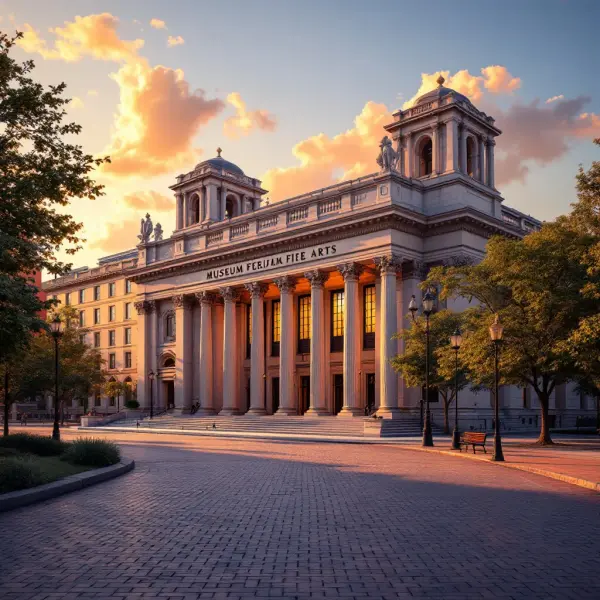
Sink into 500,000 artworks over 5,000 years without leaving town. Stroll from a gilded Egyptian coffin straight into Monet's glowing haystacks.
Quick facts: Roughly 500,000 works span 5,000 years, making the holdings among the largest in North America. Bostonians snapped up Impressionist canvases early, and the museum now shows more than 30 Monets, a concentration second only to Paris.
Highlights: Monet's haystack series sits in the Impressionist galleries, where amber late-afternoon light spills across the canvases and shifts each one's glow by the hour. About 30 more Monets, including a grand water-lily panel, fill the nearby rooms, a trove you can stand inches from.
5. Isabella Stewart Gardner Museum
Step into a palazzo where Old Masters hang the way their collector arranged them by hand. Wander a flower-filled courtyard while chamber music drifts from the galleries above.
Quick facts: Roughly 2,500 plants cycle through the sunlit, four-story courtyard garden, which shifts its blooms with the seasons. Thirteen artworks, including a Vermeer and a Rembrandt, vanished in a 1990 heist and are still missing, leaving their empty frames hanging in place.
Highlights: Wander inside and you're standing in a glass-roofed courtyard where orchids, camellias, and a 2nd-century Roman mosaic share space four stories tall. Anyone legally named Isabella, with just a driver's license, gets in free, a quirk the founder wrote into her own will.
6. New England Aquarium
A four-story ocean in a glass cylinder puts sharks, rays, and a 500-pound sea turtle at eye level. Spiral your way past a living coral reef and cheeky penguin colonies without ever getting wet.
Quick facts: A staggering 200,000 gallons swirl through the Giant Ocean Tank, a four-story coral reef cylinder you circle like a lighthouse staircase. Myrtle, a green sea turtle who showed up in 1970 and now tips the scales past 500 pounds, has outlived decades of visitors while still cruising laps alongside the sharks.
Highlights: From the spiral ramp hugging the Giant Ocean Tank, you can watch divers in full scuba gear hand-feed the reef fish midwater, then lean in for the daily dive presentation where Myrtle swims straight past your nose. The penguin colony, one of the largest in New England, keeps African, rockhopper, and little blue penguins on rocky ledges where chicks hatch right in public view each breeding season.
7. USS Constitution
Board the oldest commissioned warship still afloat and roam her decks. Sailors in period uniforms guide you past masts and cannons that saw real combat.
Quick facts: One of the oldest commissioned warships still afloat, she won all 33 of her naval engagements without a single loss. Her copper-clad live oak hull once shrugged off British cannonballs during the War of 1812, earning the ship its enduring nickname.
Highlights: The "Old Ironsides" nickname came from a real battle moment, when British cannonballs bounced harmlessly off her 22-inch live oak sides. Each year the ship sails again under her own power for a turnaround cruise, with sailors scrambling aloft to unfurl canvas while crowds line the shoreline.
8. Boston Tea Party Ships & Museum
Throw actual tea chests overboard in Boston Harbor, just like 1773. Interactive holograms, real artifacts, and a floating ship tour make history feel live.
Quick facts: On December 16, 1773, colonists tossed 342 chests of tea into the harbor, roughly 92,000 pounds worth over $1 million in today's money. Visitors get to throw tea chests into the water themselves, then go below deck to see surviving artifacts like the Robinson Half Chest.
Highlights: The Robinson Half Chest is one of only two known surviving tea chests from that December night, and it still holds actual tea leaves, smelling faintly of three centuries of history. Real-time hologram actors put you in the middle of that December 16, 1773 meeting, complete with fog rolling off the harbor as you shout alongside Sam Adams at the Old South Meeting House reenactment.
9. Trinity Church
Few American buildings blend raw stone power and luminous art this perfectly. Walk through carved arches into towering murals and hear a 4,420-pipe organ shake the rafters.
Quick facts: The 211-foot tower and rough brownstone exterior borrow from medieval French churches, yet the soaring interior glows like a jewel box of painted walls. John La Farge's hand-blown glass and murals, plus windows from William Morris's London studio, put this sanctuary on America's most-loved buildings lists.
Highlights: The church's own tombstone is a skyscraper story: a glass neighbor from the 1970s bent sunlight like a magnifying glass, scorching the granite, rattling the stained glass, and kicking up winds strong enough to topple pedestrians. After decades of arguing between architects and engineers, every one of the reflective panes was finally replaced with ordinary glass in 2006, a fix that cost a hundred million dollars and saved the centuries of art inside.
10. Quincy Market
Two centuries of vendors pack one granite hall, and the food lines never stop moving. Grab a lobster roll, sausage, and cannoli, then eat on the cobblestones out front.
Quick facts: Roughly 18 million visitors a year crisscross the granite cobbles outside, while the main food hall runs a full 535 feet from one colonnade to the other. Mayor Josiah Quincy pushed the project through the city council in the 1820s, and locals repaid him by naming the whole structure after him.
Highlights: Climb to the glassed-in balcony at the west end and peer down into the rotunda, where a single round skylight throws a clean pool of daylight onto the granite floor below. A 1960s plan to swap the empty hall for a parking garage stalled under a preservationist lawsuit, and the long fight ended with the colonnades reopening to a packed crowd in 1976.
Where to Stay in Boston, United States
Selected by City Buddy based on guest reviews and proximity to top attractions
Search all hotels in Boston, United StatesPowered by agoda
Traditional Sweet Dishes

Boston Cream Pie
Boston Cream Pie is actually a cake with custard filling and chocolate glaze, invented at Boston's Parker House Hotel in 1856. It became the official state dessert of Massachusetts in 1996.
Indian Pudding
Indian Pudding is a baked New England dessert of cornmeal and molasses, descended from the Native American dish nasaump. It was a colonial favorite that is traditionally served warm with vanilla ice cream or cream on top.
Fig Newton
The Fig Newton was first produced in 1891 by the Kennedy Biscuit Company in Cambridge, Massachusetts, just across the river from Boston. It is named after the nearby town of Newton, not the fig fruit or any person.
Traditional Savory Dishes

New England Clam Chowder
New England Clam Chowder is a creamy white soup of clams, potatoes, onions, and salt pork, and Bostonians famously serve it in hollowed-out sourdough bread bowls. Its creamy style is a longtime rival to Manhattan's tomato-based red chowder.
Lobster Roll
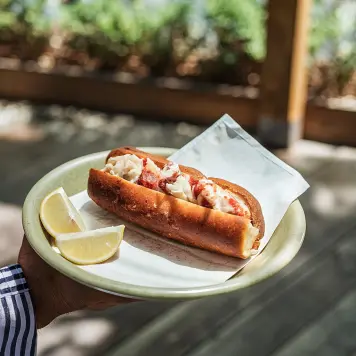
The lobster roll stuffs chilled lobster meat tossed with mayonnaise into a buttered, toasted split-top hot dog bun. It is a New England summer icon and a can't-miss staple of Boston's Quincy Market.
Boston Baked Beans
Boston Baked Beans are navy beans slow-cooked for hours with molasses and salt pork, and they earned the city its nickname of Beantown. Boston's love of molasses dates to colonial trade, and a giant molasses storage tank once flooded the city's North End in 1919.
Traditional Beverages
Frappe
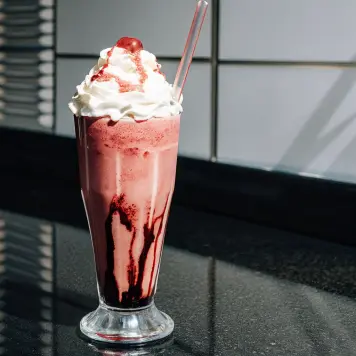
In Boston and greater New England, a frappe is a thick milkshake made with ice cream, flavored syrup, and milk. Ask for a milkshake in a Boston soda fountain and you will likely be handed a frappe instead.
Ward Eight
The Ward Eight is a cocktail of rye whiskey, lemon, orange, and grenadine created around 1898 at Boston's famous Locke-Ober restaurant. It was named in honor of Boston's political Ward Eight district.
Moxie
Moxie was invented in 1885 in Lowell, Massachusetts as a patent medicine tonic, and it remains a beloved New England soda with a distinctive bitter-sweet flavor. The word moxie is now in the dictionary meaning courage, energy, or pep.
Frequently Asked Questions about Boston, United States
Is Boston, United States safe?
How many days in Boston, United States?
Best time to visit Boston, United States?
Is Boston, United States expensive?
How to get around Boston, United States?
Get a PDF with the most popular attractions sent to your email
Get a PDF with all attractions, ratings, and tips. Perfect for offline use.
Most popular day trips
Salem
Historic witch trial sites, museums, and waterfront charm
Lexington and Concord
Revolutionary War battlefields and literary heritage trails
Plymouth
Mayflower story, Plymouth Rock, and historic waterfront
Newport, Rhode Island
Gilded Age mansions and scenic coastal cliff walks

Cape Cod (Provincetown)
Seaside art town with beaches, dunes, and whale watching
Getting there
Airports
Train stations
Amtrak Acela and Northeast Regional, plus commuter rail
Amtrak Downeaster to Maine, commuter rail to Salem
Amtrak Northeast Corridor trains
From Logan, take the free Silver Line bus or Blue Line subway to downtown for about $3, no expensive transfer needed
Find flights to Boston, United States
Click to get eSim for Boston, United States
The easiest and most affordable way to get mobile internet wherever you travel.

Comments (9)
Loved Boston way more than I thought. Clam chowder by the harbor and wandering the old brick streets at dusk was the highlight of our whole trip.
Great city but the T is a mess, kept having delays and sketchy stations at night. Still, the food and the waterfront made up for it honestly.
Skip the tourist lobster spots near Faneuil Hall. Take the walk to the local markets, you get better seafood for half the price and no crowd.
The brownstones on Beacon Hill are unreal and the whole city feels so compact and walkable. Three days was perfect, anything more and I'd have been bored.
Came in March, freezing wind off the water every day. Wrapped up and still managed to love the Freedom Trail, but I'd 100% come back in fall instead.