 CityBuddy
 English
Things to Do in Berlin, Germany
Photo made by Cristian Salinas Cisternas on Pexels.com
When to visit
Plan your perfect trip to Berlin, Germany
Get a complete travel plan built just for you in under 30 seconds, with daily routes, local food tips, budget estimates and more.
Are any of these especially important to you?
Select all that apply
Plan language: EnglishBerlin is the #1 city for nightlife in the world, based on our data across hundreds of destinations.
Most popular attractions in Berlin, Germany
Things to do in Berlin, Germany include exploring the Brandenburg Gate, a historic symbol located in the center of Pariser Platz. Visit the Reichstag Building with its striking glass dome that offers panoramic views of the city. Be sure to check out the Berlin TV Tower, which reaches 368 meters in height and provides excellent views from its observation deck.
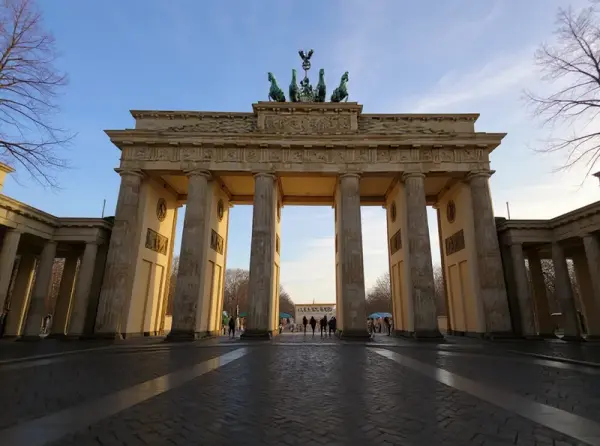
1. Brandenburg Gate (Brandenburger Tor)
Brandenburger Tor
A Berlin landmark embodying history and reunification. Stand beneath the neoclassical Quadriga, enjoy street performers, and take in views of central Berlin.
Quick facts: Sunlight glances over the aged stone and makes the bronze quadriga shine, attracting visitors to stop and capture photos. The monument has been a witness to grand parades, protests, and heartfelt reunions that continue to influence the city's history.
Highlights: Hidden behind twelve Doric columns that create five walkways, the central path was once reserved exclusively for royalty and still feels formal under Johann Gottfried Schadow’s bronze Quadriga, crafted in 1793. Napoleon took the Quadriga to Paris in 1806, it returned victoriously in 1814, and nearly 200 years later locals gathered in the square in November 1989 to celebrate the symbolic reopening.
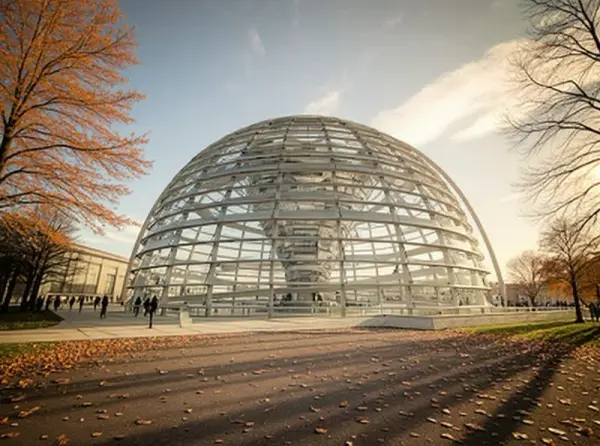
2. Reichstag Building (Reichstagsgebäude)
Reichstagsgebäude
Panoramic rooftop vistas and a shining glass dome showcase modern German democracy. Walk along the spiraling ramp, enjoy city views, and peek into the parliamentary chamber.
Quick facts: Visitors stop beneath the towering glass dome to see sunlight spiral down a mirrored cone, forming a dramatic beam of light that highlights the parliamentary floor below. Walking up the curved ramp offers sudden city views, and the dome manages rainwater and natural airflow to lower energy use, blending modern sustainability with historic splendor.
Highlights: Climb the spiraling glass dome designed by Norman Foster and completed in 1999, reaching a 360-degree walkway where a mirrored cone directs sunlight straight into the debating chamber, letting you observe shadows and reflections of the MPs below. On a quiet morning, you can hear the muffled rhythm of speeches through the glass and see worn Cyrillic graffiti and soot marks from Soviet soldiers in 1945, small human traces that make the site feel like a living history book.
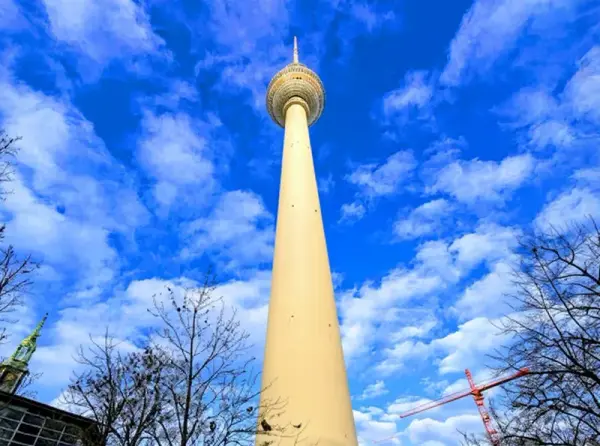
3. Berlin TV Tower (Fernsehturm Berlin)
Fernsehturm Berlin
The TV Tower is worth visiting for panoramic skyline views and a revolving restaurant 203 meters up. Ride the elevator to the observation deck for 360-degree city sights.
Quick facts: A shining sphere tops the building at a total height of 368 meters, and a high-speed elevator transports visitors to the observation level in about 40 seconds so the city stretches out beneath you. Visitors can enjoy a slowly revolving restaurant that completes a full turn in roughly 30 minutes, giving a changing skyline with every course of your meal.
Highlights: Standing 368 meters tall with its mirrored sphere positioned around 203 meters, the tower's revolving restaurant takes about 30 minutes for a full rotation, so your coffee slowly circles the skyline while you watch the Spree River and red-brick roofs pass below. Nicknamed Telespargel by locals in the 1970s, the structure was finished in 1969 as an East German symbol of modernity, and you can still feel this in the retro elevators and concrete-lined lobby.
Have you heard of free walking tours?
After traveling to 30+ countries, there's one thing I wish someone had told me from day one, and it completely changed how I experience new cities.
Free walking tours. Yes, actually free. No credit card needed. No catch.
Local guide, 2-3 hours
Major sights, hidden gems, local stories
100% tip-based
Guides earn only tips, so they give their absolute best
You tip what feels right
At the end, just tip whatever you feel is right
I've done these in dozens of cities and they've been the highlight of almost every trip. If you're visiting Berlin, Germany, do this on your first day. You'll thank me later.
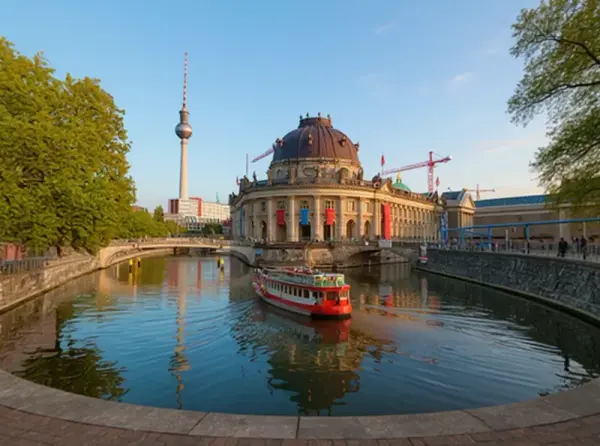
4. Museum Island (Museumsinsel)
Museumsinsel
Five world-class museums on a UNESCO island trace art and archaeology from ancient times to the 19th century. Discover the Pergamon altar, Nefertiti, and German Romantic paintings across connected museum buildings.
Quick facts: Wandering along the riverbank, you find soaring domes and cozy galleries where sunlight highlights marble profiles and painted surfaces, making the objects seem unexpectedly vibrant. Five major museums gather on one island, so you can move from ancient Egyptian masterpieces to classical sculptures and contemporary exhibits without leaving the water's edge.
Highlights: Stand beneath the rebuilt Ishtar Gate, with its glazed blue bricks rising about 18 meters above, and watch the gold rosettes catch the gallery lighting like stars against a cobalt sky. Ask a guide about the painted limestone bust of Nefertiti, roughly 48 centimeters tall and carved around 1345 BCE, and you’ll hear how excavator Ludwig Borchardt allegedly called it a plaster model in 1913 to ease its export, a quiet scandal still debated by historians.
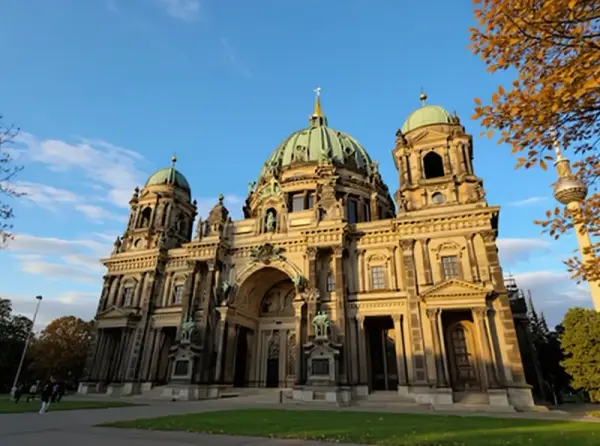
5. Berlin Cathedral (Berliner Dom)
Berliner Dom
An iconic cathedral by the river with a soaring dome and richly decorated interiors. Climb the dome for wide views of the Spree, and explore the Hohenzollern crypt and historic organ.
Quick facts: A roaring pipe organ fills the lofty dome while a candlelit marble crypt holds many royal coffins and ornate sarcophagi. Climbing the spiral staircase rewards the breathless with close views of sparkling mosaics and a broad panorama over the river and museum spires.
Highlights: Under the richly decorated nave, a dim, echoing crypt holds painted sarcophagi of 94 Hohenzollern family members, their carved names catching light like tiny gold scars and the air smelling faintly of wax and old cedar when you lean in to read them. After climbing about 270 cramped steps to the dome walkway, you can touch the worn 19th century stone balustrade, imagine the 1945 bomb blast that destroyed large sections, and appreciate the careful restoration finished in 1993 that left the interior with a gilded, slightly imperfect glow.
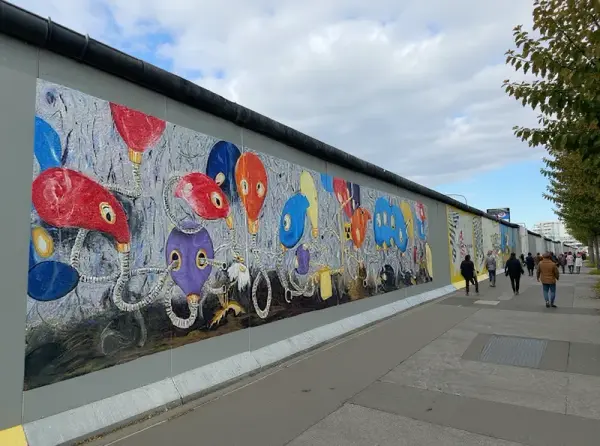
6. East Side Gallery (Berlin Wall - East Side Gallery)
Berlin Wall - East Side Gallery
Walk an open-air gallery alive with history and street art. See 1.3 km of murals, political messages, and riverside views along where the Berlin Wall once stood.
Quick facts: Bright streaks of paint cover 1.3 kilometers of concrete, where more than 100 murals painted by artists worldwide transform a former barrier into a large open-air gallery. Visitors pause to photograph faded brushstrokes and a famous painted kiss, while ongoing efforts work to preserve fragile artworks exposed to sun, rain, and graffiti.
Highlights: Walk along a 1.3 kilometer open-air gallery painted in 1990 by 118 artists from 21 countries, and you will see Dmitri Vrubel's shocking mural of two leaders kissing, with the black caption 'Mein Gott, hilf mir, diese tödliche Liebe zu überleben' still written beneath bold reds and bright blues. After a controversial 2009 restoration that caused protests, locals started the quirky habit of leaving small painted stones and whispered notes at certain panels, a tactile, colorful ritual seen in spray paint chips, patched concrete, and fingerprints on the rails.
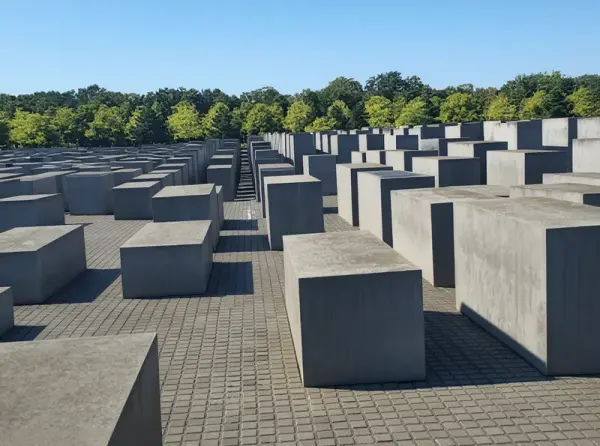
7. Memorial to the Murdered Jews of Europe (Holocaust Memorial)
Holocaust Memorial
A powerful open-air memorial encouraging reflection on the Holocaust. Walk among concrete stelae and visit the underground information center.
Quick facts: Walking among the stark concrete stelae feels like moving through a vast, silent maze, where light narrows into deep ribbons and the ground subtly slopes underfoot. Over 2,700 pillars rise in uneven rows, and an underground exhibit shows personal documents and testimonies that give intimate faces to the huge loss.
Highlights: Wander between the 2,711 concrete slabs that tilt and rise up to 4.7 meters, and the narrow gravel paths and sudden walls cause your footsteps to drop into a deep metallic echo as if the city noise has been turned down. Beneath the field, an underground information center houses thousands of personal testimonies and photos, and visitors often stop to read a single life story aloud, a quiet ritual that turns abstract numbers into one unmistakable human face.
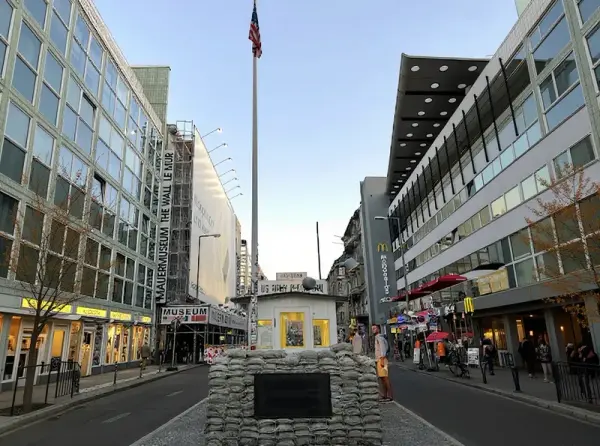
8. Checkpoint Charlie
Stand at a key Cold War crossroads that shaped modern Berlin. Walk past the replica guardhouse, read exhibits, and imagine life on both sides of the Wall.
Quick facts: A weathered guardhouse and stern warning signs still give off Cold War tension, and visitors often pause to read faded notices and examine the replica tank that marks the crossing. Surprising escape stories include hot-air balloons, hidden car compartments, and daring tunnels, with dozens of people managing to slip past the border before the barrier ended.
Highlights: Even today, actors in worn U.S. uniforms pose at the crossing, offering a playful photo for about 3 to 5 euros while the air mixes diesel fumes with the sharp smell of cheap leather from souvenir stalls. A real wooden guardhouse from the Cold War era sits inside the Allied Museum, its varnished planks faintly smelling of oil and cigarette smoke, and plaques nearby tell of the October 27, 1961 tank standoff when U.S. and Soviet armor faced off for about 16 hours.
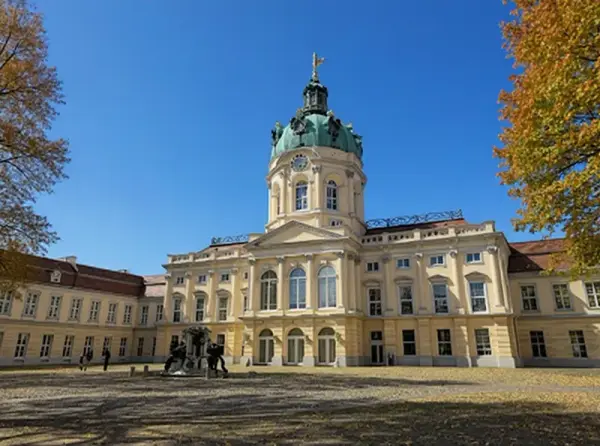
9. Charlottenburg Palace (Schloss Charlottenburg)
Schloss Charlottenburg
Baroque grandeur and royal elegance beside the Spree, showcasing Prussian court life. Wander ornate state rooms, a rococo chapel, and wide formal gardens.
Quick facts: Walking through gilded ceilings and mirrored salons, visitors often feel immersed in rococo luxury as sunlight catches delicate porcelain and gold details. Surprisingly, a famous porcelain cabinet holds one of Europe's most dazzling royal porcelain collections, making the interiors worthy of close looks just as much as the gardens invite long, leisurely walks.
Highlights: Built for Sophie Charlotte, wife of Frederick I, at the end of the 1690s, the palace's restored state rooms still exude the waxy warmth of 18th-century life: polished parquet floors, gilded mirrors, and the faint scent of citrus and beeswax when sunlight warms the oak. A surprising number of original treasures survived because staff packed hundreds of paintings and porcelain pieces into wartime storage, so the delicate Meissen figurines and painted cups you see today are often the exact items that returned from cave-like salt mines after the war.
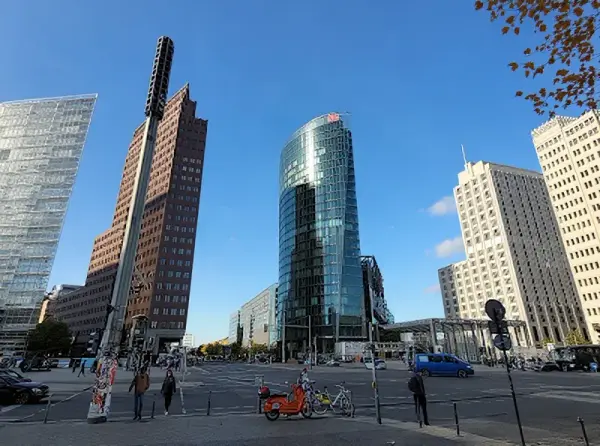
10. Potsdamer Platz
A striking blend of modern architecture, cinema history, and vibrant public life. Explore the Sony Center, cafés, and shops, then take the Kollhoff Tower elevator for panoramic city views.
Quick facts: Walkers notice a constant hum of traffic, movie trailers, and tram noises under a skyline of glass and steel that reflects neon and weather like a living film. At dusk, the plaza turns into a festival of light and sound, with outdoor screenings, pop-up exhibitions, and a stream of workers and night owls keeping the energy vibrant.
Highlights: A stunning glass-and-steel canopy by Helmut Jahn tops the complex and at night pulses with colored lights, while a glass elevator shoots visitors to the 24th-floor Panoramapunkt in about 20 seconds for dizzying views. Beneath your feet, a jagged brass line and darker cobbles trace the exact path of the old border, a tactile, almost theatrical reminder that the bright, cinema-lined square grew from the scarred no-man's-land left after 1989.
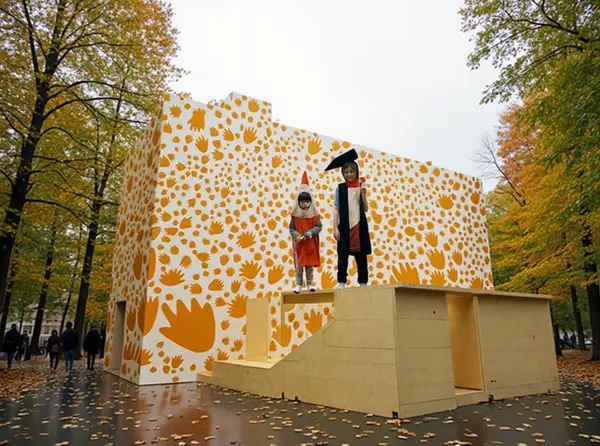
11. Labyrinth Kindermuseum
Play through over 120 hands-on exhibits. Dive into a world of mazes, puzzles, and laughter designed for kids to discover.
Quick facts: More than 120 interactive exhibits invite children to explore through play. The museum welcomes around 100,000 young visitors each year who dive into hands-on learning experiences.
Highlights: Children crawl inside a giant transparent ball that simulates the feeling of being in a maze. Interactive rooms change themes regularly, keeping curiosity alive with new puzzles and challenges every few months.
Where to Stay in Berlin, Germany
Selected by City Buddy based on guest reviews and proximity to top attractions
Search all hotels in Berlin, GermanyPowered by agoda
Traditional Sweet Dishes

Berliner Pfannkuchen
A Berliner Pfannkuchen is a jam-filled doughnut so iconic that a long-running myth says John F. Kennedy accidentally called himself a pastry when he said "Ich bin ein Berliner", though linguists say he meant the city's people.

Apfelstrudel
Apfelstrudel's dough is stretched so thin it can be read through, a technique that gives the pastry its paper-thin layers and a light, flaky texture that contrasts with spiced apple filling.

Stollen
Stollen started as a humble Lenten bread, but over centuries bakers enriched it with butter, dried fruit, and marzipan to create the festive loaf that became a Christmas staple across Berlin and Germany.
Traditional Savory Dishes

Currywurst
Currywurst was invented in Berlin in 1949 by Herta Heuwer, who mixed ketchup and curry powder supplied by British soldiers, and the snack quickly became the capital's beloved postwar street food.

Schnitzel
Wiener Schnitzel must be veal by law in Austria, but in Berlin pork schnitzel rules everyday kitchens, usually breaded, pan-fried until golden and finished with a squeeze of lemon.

Bratwurst
Germany boasts over 1,500 regional varieties of bratwurst, and in Berlin you often find thick, coarsely ground sausages grilled until the casing snaps and served with mustard and a crusty roll.
Traditional Beverages

Beer
Berlin's own Berliner Weisse is a tart, effervescent wheat beer traditionally served with raspberry or woodruff syrup, which turns the beer pink or green and made it a playful local specialty.

Apfelschorle
Apfelschorle, a fizzy mix of apple juice and mineral water, is so ubiquitous in Berlin that servers will often assume you mean the sparkling version, it's prized for refreshment and a lighter sweetness.

Glühwein
Glühwein is hot spiced wine sold at Berlin's Christmas markets, traditionally brewed with cinnamon and cloves and served in reusable mugs that doubles as a memento and way to cut down on waste.
Frequently Asked Questions about Berlin, Germany
What is the best time to visit Berlin, Germany?
Is Berlin, Germany expensive to live or travel in?
How do you get around Berlin, Germany?
Is the tap water safe to drink in Berlin, Germany?
How many tourists visit Berlin, Germany each year?
Get a PDF with the most popular attractions sent to your email
Get a PDF with all attractions, ratings, and tips. Perfect for offline use.
Most popular day trips
Potsdam
Palaces, parks and the Sanssouci estate.
Spreewald (Lübben)
Unique canal forests, boat tours and local gherkins.
Rostock / Warnemünde
Baltic Sea beaches, lighthouse and seaside promenade.
Rent a car in Berlin, Germany
Getting there
Airports
Train stations
ICE, IC, RE, RB, international connections
InterCity, regional, regional express
From BER take the FEX or S-Bahn (S9/S45) to Hauptbahnhof; buy a BVG AB ticket.
Find flights to Berlin, Germany
Click to get eSim for Berlin, Germany
The easiest and most affordable way to get mobile internet wherever you travel.
Useful information for Berlin, Germany
Overview for Berlin, Germany
Most popular itineraries for Berlin, Germany
Browse trip plans created by other travelers
5 Jours à Berlin pour Amoureux de Culture et Nature en Famille
Découvrez Berlin à travers ses trésors culturels, ses espaces verts printaniers et des activités familiales adaptées pour une exploration à la fois enrichissante et ludique.
5 Jours à Berlin pour la Famille Curieuse et Active
Découvrez Berlin au printemps en famille avec des visites culturelles, des activités nature, et des trésors cachés pour tous les âges. Imprégnez-vous de l'histoire, explorez des parcs magnifiques, et vivez des expériences locales authentiques à un rythme confortable.
5-Day Berlin Family Adventure Blending Culture, History, and Nature
Experience Berlin's rich history, lively culture, and beautiful spring outdoors with your family through interactive museums, scenic parks, and guided tours designed for all ages.
5 Tage Berlin für budgetbewusste Entdecker im Frühling
Erlebe Berlins authentisches Flair mit kostenlosen Stadtführungen, Street Food, gemütlichen Hostels und spannenden lokalen Erlebnissen. Perfekt für Backpacker, die Berlin abseits der Touristenpfade entdecken wollen.
Comments (5)
Skip single tickets, get a day or 7-day pass on the BVG app, it's cheaper and you can hop trams, S-Bahn and buses without fuss.
Loved the creative scene and nightclubs, but some neighborhoods felt grubby and tourist crowds by the main sights were annoying.
Strange relaxed energy, amazing street food like doner on every corner. Rain wrecked one museum day but four days felt just right.
Three days felt rushed, Museum Island is stunning but gets packed, leave time for lazy cafés and long walks along the canals.
Avoid restaurants next to landmarks, walk two blocks out for normal prices. Carry cash for tiny currywurst stalls, many don't take cards.