 CityBuddy
 English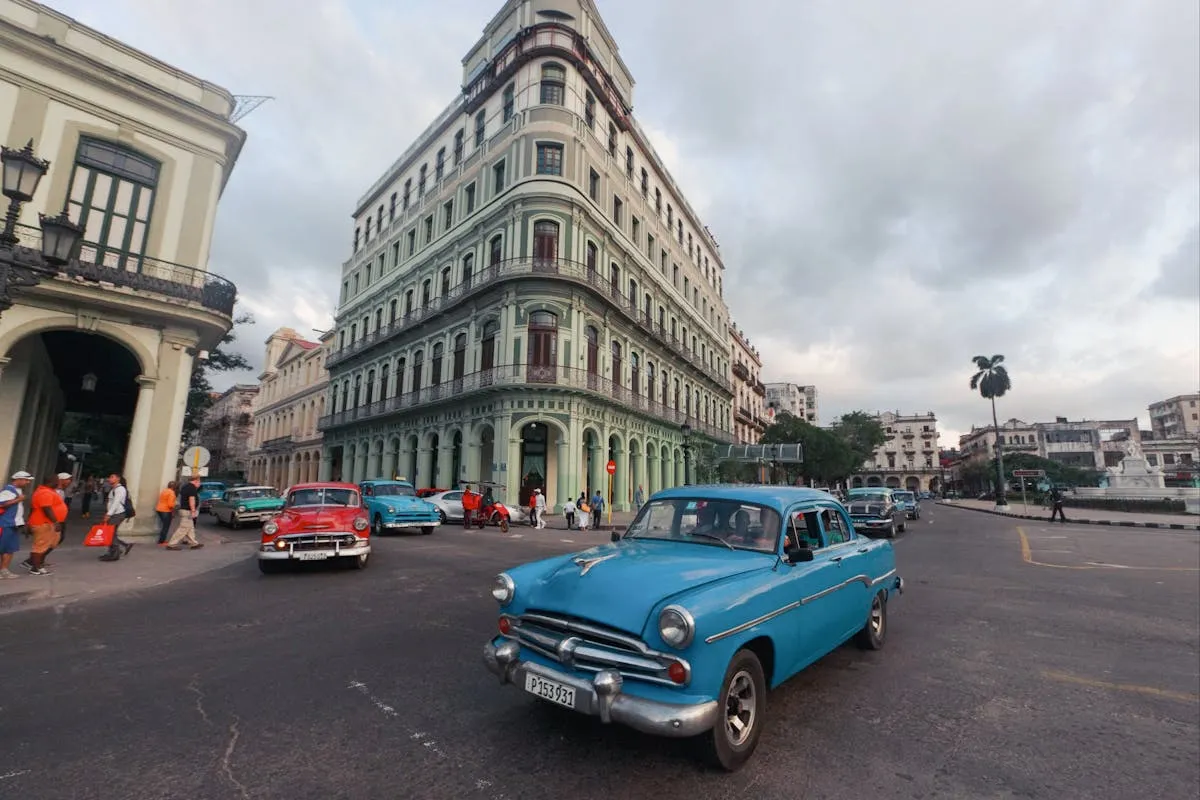
Things to Do in Havana, Cuba
Photo made by Mehmet Turgut Kirkgoz on Pexels.com
When to visit
Most popular attractions in Havana, Cuba
Things to do in Havana, Cuba include exploring Habana Vieja, a historic district with cobblestone streets and pastel buildings. Walk the 8-kilometer Malecón seawall at sunset for stunning sea views. Visit El Capitolio, an impressive neoclassical building resembling the U.S. Capitol, rich in Cuban history and culture.
1. Habana Vieja (Old Havana)
Old Havana
Colonial architecture and lively plazas bring Havana's past to life. Explore colorful streets, classic cars, live music and neighborhood cafés on a slow, soak-it-in walk.
Quick facts: Cobblestone streets rattle under vintage cars, balconies spill potted plants and laundry in a kaleidoscope of color, and plazas pulse with impromptu music sessions. More than half the neighborhood's buildings show layers of faded paint and baroque details, and community-led restorations have turned crumbling facades into bustling artisan shops and cafés.
Highlights: Stroll beneath sun-bleached balconies as candy-apple 1952 Chevrolets rattle by, laundry lines heavy with twenty shirts and the air thick with frying plantains and old gasoline. At dusk, veteran domino players snap 28 bone tiles on scarred wooden tables while a three-piece son conjunto: tres, upright bass, congas, trades riffs and neighbors lean out to sing along.
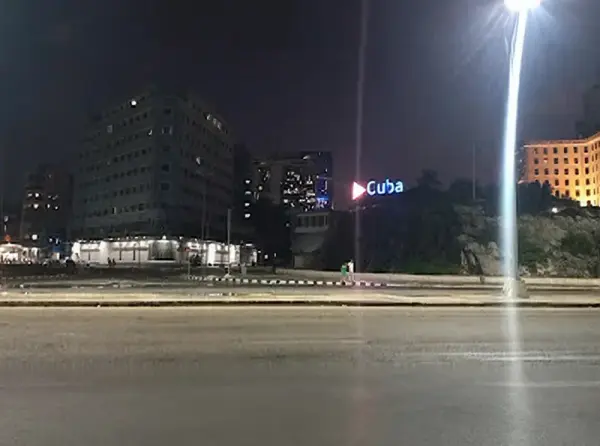
2. Malecón
Oceanfront promenade with classic cars, colorful neighborhoods, and dramatic sunset views. Walk the seawall, watch fishermen, hear live music, and photograph pastel facades.
Quick facts: Salt-laced breezes carry fishermen's jokes and couples' laughter along the seawall, while classic cars add a cinematic soundtrack. Neon-lit nights pulse with live music, spontaneous domino games, and waves that hurl spray onto the promenade, turning conversations into salt-scented memories.
Highlights: At dusk more than 200 people can pack the seawall to play dominoes and swap news under sodium streetlights, the clack of tiles and the tang of grilled fish from street carts blending into a neighborhood soundtrack. A handful of teenagers keep a daring nightly ritual, leaping from the roughly 1.5-meter-high edge into the surf and clambering back up amid cheers while neighbors pass around cold Cristal beers.
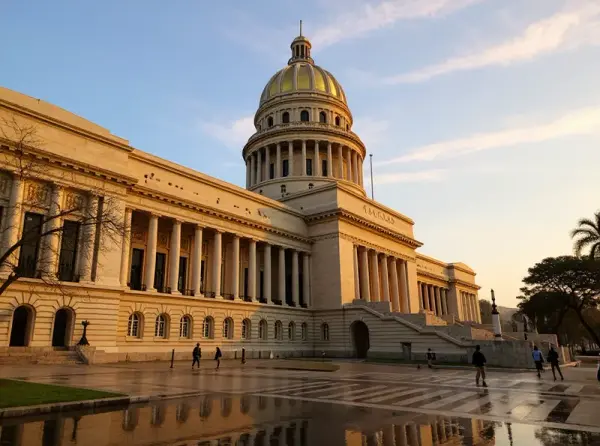
3. El Capitolio (Capitolio Nacional)
Capitolio Nacional
Grand neoclassical architecture crowns Havana's Capitolio. Tour the restored halls, stand beneath the massive dome and spot the huge marble statue.
Quick facts: Visitors frequently gasp at the soaring marble dome and cavernous central hall, where shafts of sunlight spotlight gilded details and polished stone. A sweeping marble staircase leads to a rotunda dominated by a massive bronze figure, and close-up inspection reveals unexpected Art Nouveau flourishes carved into the columns and friezes.
Highlights: Guess what: a gleaming 15-meter bronze statue, gilded in places so sunlight slants into warm gold, towers over the central hall and was once touted as one of the largest indoor statues in the world. Tucked into the marble floor nearby is a tiny brass "Kilómetro Cero" plaque marking the start of the nation's road network, and locals often brush it with a fingertip for luck before long journeys.
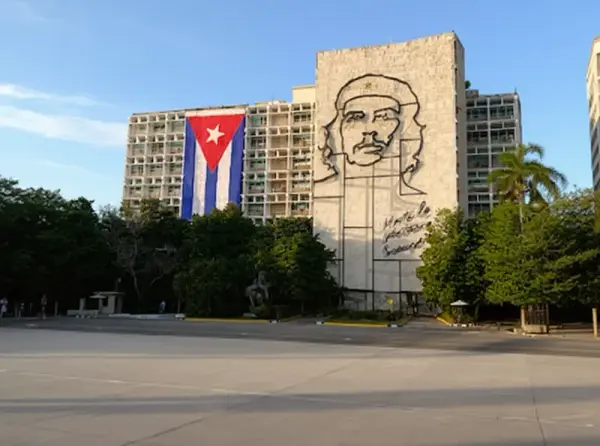
4. Plaza de la Revolución (Plaza de la Revolución José Martí)
Plaza de la Revolución José Martí
A vast political stage with iconic monuments and giant murals. Walk under the José Martí tower, pose by the Che mural, and feel Havana's political energy.
Quick facts: Standing in the vast open space you feel the scale as hundreds of thousands once gathered for mass rallies, and a massive steel portrait of Che Guevara on a nearby ministry gives the skyline an unforgettable silhouette. A single concrete plaza can hold well over 100,000 people, and the central memorial spire doubles as an observation tower with sweeping views across the city.
Highlights: Every May Day and January 1 the vast square fills with up to one million people, the air thick with shouted slogans, the smell of frying street food and the metallic clank of temporary platforms. Two enormous steel portraits, one of Che Guevara and one of Camilo Cienfuegos, hang on government facades like stark black silhouettes, catching the low sunlight around 7:30 a.m. and turning the concrete skyline suddenly cinematic.
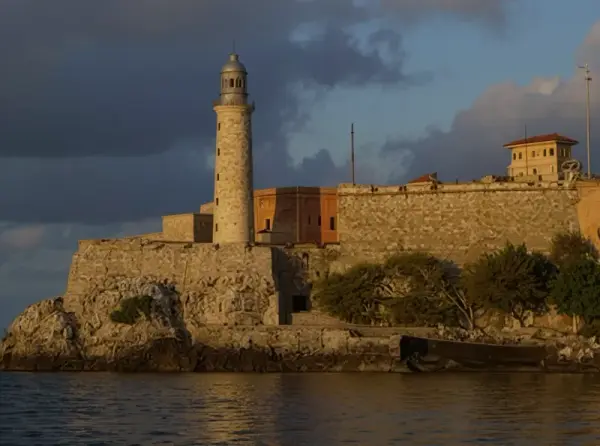
5. Castillo de los Tres Reyes del Morro (Morro Castle)
Morro Castle
A fortress guarding Havana Bay with sweeping coastal views and centuries of maritime history. Walk the stone ramparts, climb the lighthouse and watch cannon-lined walls at sunset.
Quick facts: Perched at the harbor entrance, its thick stone walls still echo with cannon fire and offer sweeping sunset views that photographers obsess over. A daily tradition of firing a cannon at sunset has been maintained for over a century, drawing crowds who press against the battlements to feel the thunder and taste the salty air.
Highlights: Every night at 9pm a single cannon shot rings out from the old fort as a ritual called the cañonazo, the boom rattles nearby windows and leaves a coppery tang of gunpowder in the salt air. Climb the jagged ramparts and you can stand beside an 1840s stone lighthouse, feel the limestone warm under your palm, and watch fishermen cast lines against the endless turquoise of the bay.
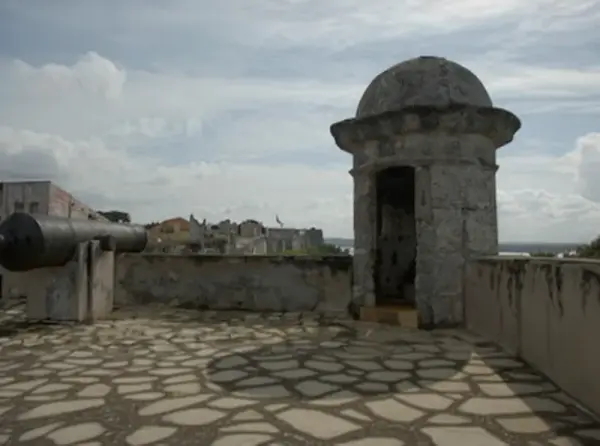
6. Fortaleza de San Carlos de la Cabaña (La Cabaña)
La Cabaña
Hilltop fortress with sweeping views over Havana and the harbor. Explore thick ramparts, museum rooms and the nightly 9pm cannon salute.
Quick facts: Walking along the fortress's stone ramparts at sunset, you feel the salt-laden wind and sense echoes of cannon volleys from its defensive past. Nightly crowds gather for a thunderous cannon salute and panoramic harbor views, a ritual that turns history into a living spectacle.
Highlights: Every night at 9:00 p.m. a thunderous cannon blast, the cañonazo, ruptures the calm and fills the air with hot black-powder smoke and the briny tang of the sea. Slip into a dim, vaulted casemate and you can still see rusted iron rings on the walls where prisoners once were chained, hear the echo like a hollow heartbeat, and picture the 18th-century gunners who paced those stone corridors.
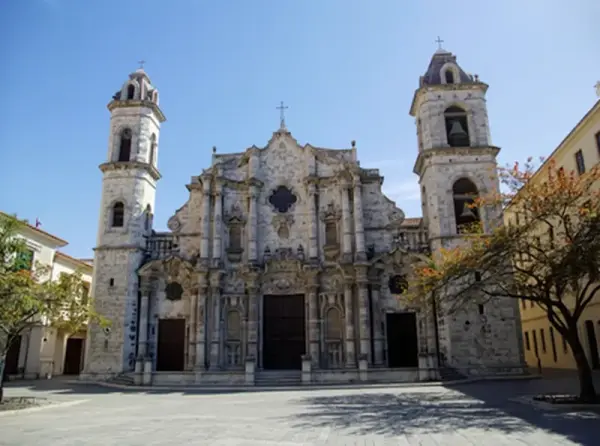
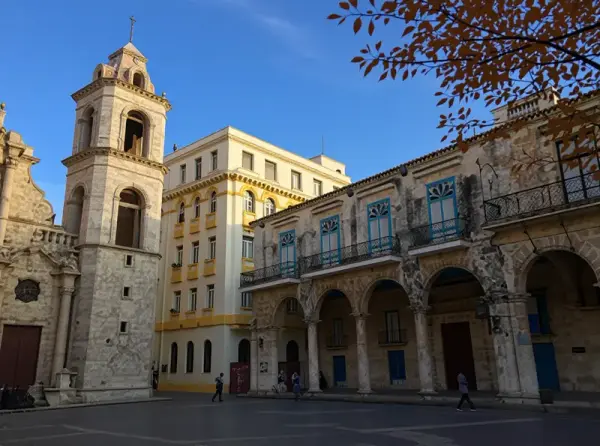
7. Catedral de San Cristóbal de La Habana (Havana Cathedral)
Havana Cathedral
Baroque icon in Old Havana, steeped in colonial character. Admire the ornate façade, cool interior and lively plaza photo spots.
Quick facts: Sculpted baroque towers lean subtly, their weathered stone catching warm light so the facade seems to come alive at sunset. Visitors fall quiet inside when they notice gilded altars and a hidden cistern, small surprises that speak to layered history and clever colonial engineering.
Highlights: From 1796 to 1898 the cathedral held what were claimed to be Christopher Columbus's remains, a period of 102 years that turned the main chapel into a quiet pilgrimage site where visitors left coins and handwritten prayers tucked into the wooden pews. Golden afternoon light pours across the rough-hewn coral and limestone facade, and the two mismatched bell towers rise to slightly different heights so that at sunset their shadows give the square an oddly theatrical, almost human expression, while the air carries the warm scent of old wax and faint sea salt.
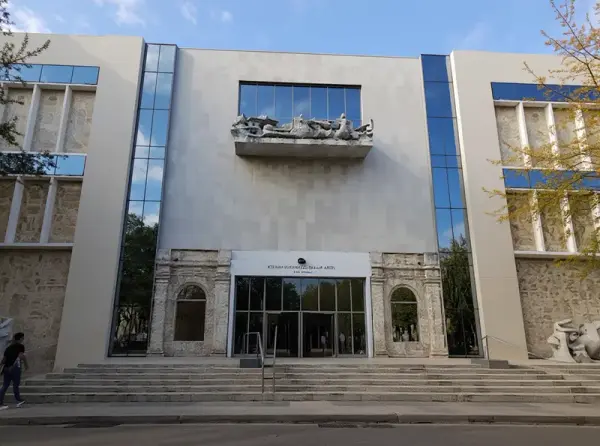
8. Museo Nacional de Bellas Artes de La Habana
Home to Cuba's finest art collection, from colonial portraits to modern Cuban masters. Wander two linked buildings filled with painting, sculpture and striking works by Wifredo Lam and Amelia Peláez.
Quick facts: Step inside and you’ll find one of the richest collections of Cuban art, where vivid mural-sized canvases and intimate colonial portraits sit side by side. A rooftop courtyard floods the galleries with tropical light, while quiet rooms reveal surprising modernist experiments and political cartoons that trace a nation’s turbulent cultural history.
Highlights: Slip into the hushed Cuban galleries at golden hour and the honeyed light makes Wifredo Lam's sinuous figures, Amelia Peláez's ceramic-like brushwork, and René Portocarrero's mosaic-like murals glow as if someone turned the saturation up on the whole room. Curators quietly rotate pieces from the vault every few months, so the same marble halls can surprise you with a 19th-century portrait in velvet tones one visit and a riotous modernist panel the next.
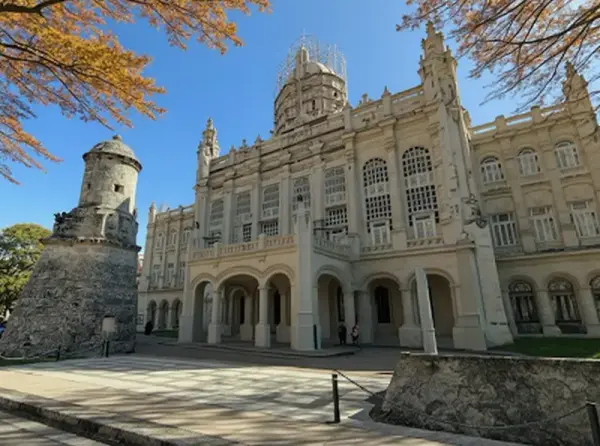
9. Museo de la Revolución
Powerful look at Cuba's 20th-century revolution in the former Presidential Palace. You'll see period rooms, original artifacts and a rooftop view over Havana.
Quick facts: Stepping through the grand courtyard, you encounter gleaming presidential cars and intimate personal items that make the revolutionary era feel startlingly immediate. Surprisingly, the collection exceeds a thousand objects, from guerrilla gear to ornate state regalia, revealing both myth and the messy human stories behind power.
Highlights: Step into a former presidential palace where a bullet-pocked office holds the original walnut desk topped by a faded typewriter and a stamped photograph of Fidel Castro, the smell of old paper and varnish rising from the glass cases. Behind a glass wall, a row of eight parade cars gleams under yellowed lights, and local guides whisper about a quirky tradition of rubbing a small brass plaque for luck before revolutionary anniversaries.
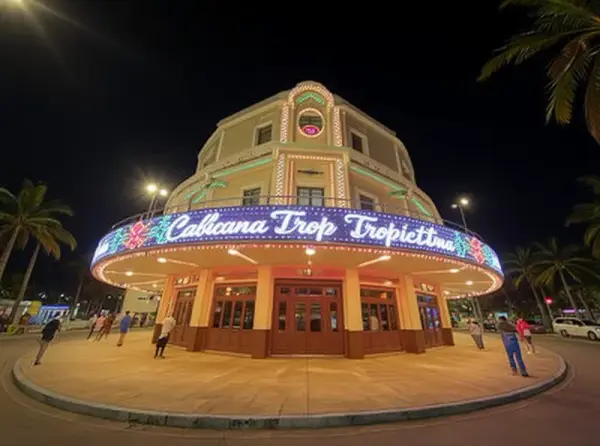
10. Cabaret Tropicana (Tropicana)
Tropicana
Iconic Havana nightclub with lavish, old-school glamour. Expect live Cuban music, flamboyant dancers, and a garden-stage spectacle under the stars.
Quick facts: Velvet curtains part to reveal a riot of feathered headdresses, glittering choreography, and a live big-band sound that pulses through open-air gardens. Guests often leave buzzing from the sensory overload, since soaring brass, tropical scents, and cascading sequins make the show feel like a nonstop, vintage party.
Highlights: Under a starlit open-air canopy, a live big band blasts mambo and bolero while dancers in towering feathered headdresses and sequined skirts parade across the garden stage, the air thick with rum, citrus and cigar smoke. A quirky tradition dating back to 1939 sees performers pause mid-show to invite a lucky table up for a spontaneous rum toast and conga, a moment that often ends with the audience stomping and shouting as confetti and rose petals rain down.
Where to Stay in Havana, Cuba
Selected by City Buddy based on guest reviews and proximity to top attractions
Search all hotels in Havana, CubaPowered by agoda
Opening days in Havana, Cuba
Which of the top sights close on which day of the week — the classic trip-ruiner, checked for you.
Monday: 1 of 7 top sights closed — plan museums for another day.
Closed on Monday · 1 closed, 6 open
Opening days from Google Maps (checked 2026-02-19). Public holidays, strikes and seasonal hours can differ — check the official website before you go.
Traditional Sweet Dishes
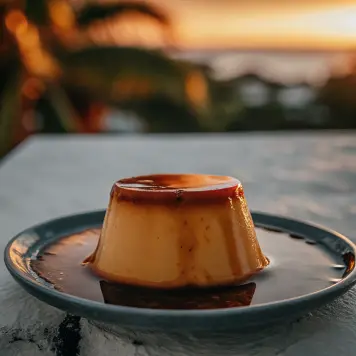
Flan
Cuban flan is a silky baked custard topped with a thin layer of caramel, and many Cuban recipes use condensed milk to give it extra creaminess that resists the island heat.
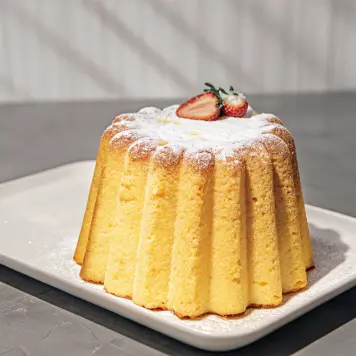
Tres Leches Cake
Tres leches cake soaks up three kinds of milk until it becomes almost pudding-like, and it is a show-stopping dessert at Cuban celebrations because each forkful is decadently moist.
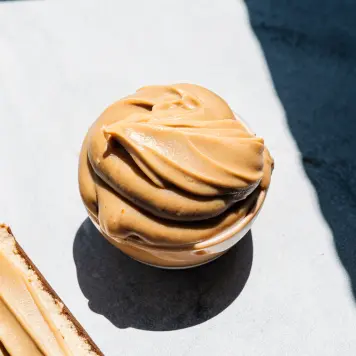
Dulce de Leche
Dulce de leche is made by slowly simmering milk and sugar until it becomes a caramelized, spreadable treasure, and Cubans use it to fill pastries and sweet breads across the island.
Traditional Savory Dishes
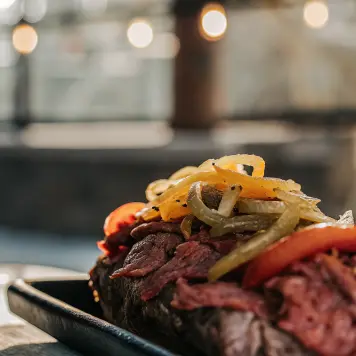
Ropa Vieja
Ropa vieja, literally 'old clothes', is shredded beef braised in a smoky tomato and pepper sauce, and its stringy texture is said to resemble torn fabric, which inspired the name.
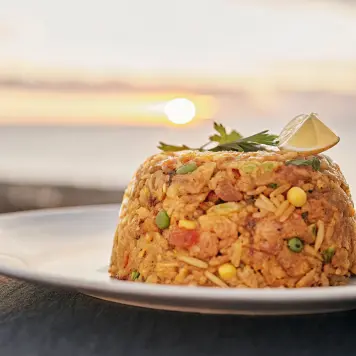
Arroz con Pollo
Arroz con pollo is a one-pot celebration of rice and chicken colored with saffron or bijol for a warm golden hue, and family recipes often include olives, peas, and a bright squeeze of lime.
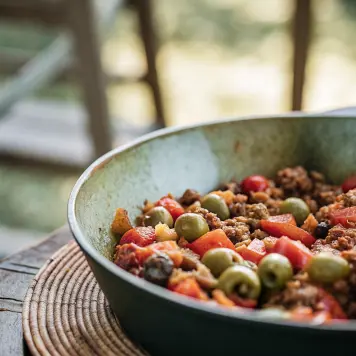
Picadillo
Picadillo mixes ground beef with tomatoes, olives, raisins, and capers for a sweet and savory punch that reflects Spanish and Caribbean influences, and it commonly stuffs empanadas or tops white rice and beans.
Traditional Beverages
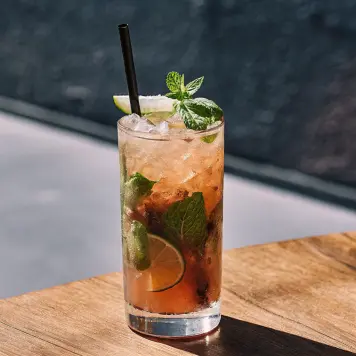
Mojito
The mojito pairs fresh mint, lime, sugar, and white rum for a zesty, cooling drink that became synonymous with Havana nightlife, and it was famously celebrated in bars like La Bodeguita del Medio.
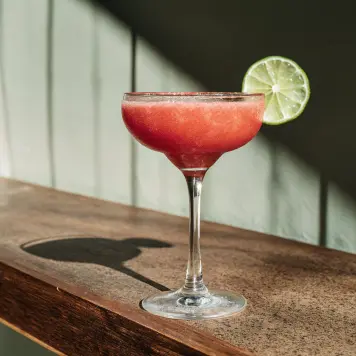
Daiquiri
The daiquiri was born in Cuba as a simple blend of rum, lime, and sugar, and the frozen variation and Ernest Hemingway's favorite at El Floridita helped turn it into a global classic.
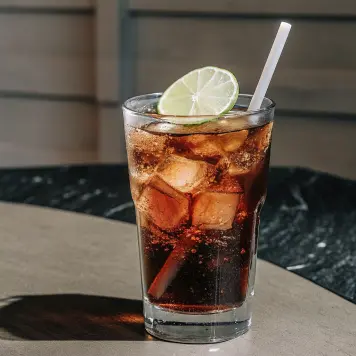
Cuba Libre
The Cuba Libre mixes rum and cola with a squeeze of lime, and the cocktail's name and origin story are tied to Cuba's struggle for independence when American cola met Cuban rum.
Frequently Asked Questions about Havana, Cuba
Best time to visit Havana, Cuba?
Is Havana, Cuba expensive?
How to get around Havana, Cuba?
Is Havana, Cuba safe for tourists?
How many tourists visit Havana each year?
Get a PDF with the most popular attractions sent to your email
Get a PDF with all attractions, ratings, and tips. Perfect for offline use.
Most popular day trips
Viñales
Limestone mogotes, tobacco farms, horseback and cave tours.
Las Terrazas (Sierra del Rosario)
Eco-village with hiking, coffee farms and a lake for swimming.
Varadero
World-class beaches, resorts, water sports, easy day escape.
Playa Girón / Bay of Pigs
Snorkeling, diving and historic invasion beaches.
Getting there
Airports
Train stations
National lines to Matanzas, Santa Clara, Santiago and other cities
From HAV take an authorized taxi or prepaid transfer; buses are cheaper but slower—agree price in advance.
Useful information for Havana, Cuba
Overview for Havana, Cuba
Want a day-by-day plan for Havana, Cuba? Open the trip planner
Plan your perfect trip to Havana, Cuba
Get a complete travel plan built just for you in under 30 seconds, with daily routes, local food tips, budget estimates and more.
Are any of these especially important to you?
Select all that apply
Getting around
How do you want to move between places?
Plan language: English