 CityBuddy
 English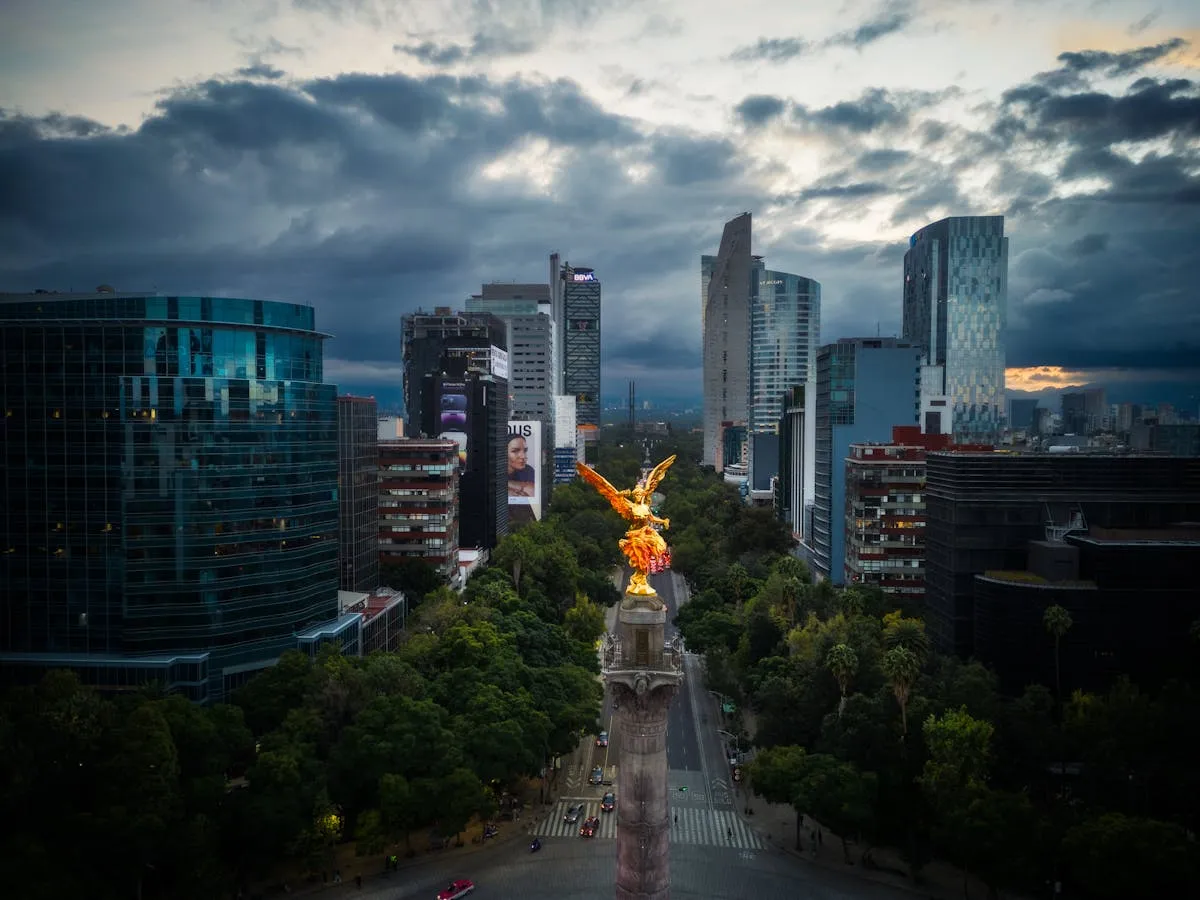
Things to Do in Mexico City, Mexico
Photo made by Jesus Toledo on Pexels.com
When to visit
Mexico City is the #8 city for food lovers in the world, based on our data across hundreds of destinations.
Most popular attractions in Mexico City, Mexico
Top things to do in Mexico City, Mexico include exploring the vast Zócalo, one of the world's largest public squares, visiting the Catedral Metropolitana with its fusion of architectural styles, and touring the Templo Mayor Archaeological Site to see Aztec ruins just steps from the city center. Don't miss the colorful murals inside Palacio Nacional.
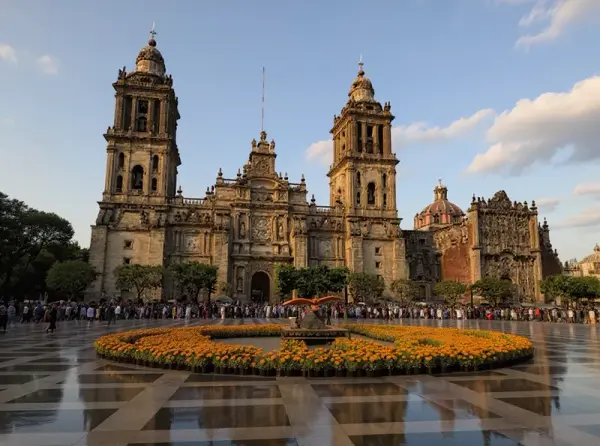
1. Zócalo (Plaza de la Constitución)
Plaza de la Constitución
Iconic historic core of Mexico City, framed by the cathedral and National Palace. Walk the vast plaza, watch the flag ceremony and street life.
Quick facts: A hum of mariachi and footsteps mixes with the scent of street tacos as crowds gather beneath an enormous flag that commands the open space. Hundreds of thousands can gather for major events, and archaeological remains under the square are displayed in a nearby museum so you can sense layers of the city's past.
Highlights: In the heart of the city a 1978 excavation pulled back the paving to reveal layers of the Aztec capital: shards of polychrome pottery, a carved jaguar relief, and foundation stones from a 14th-century palace that now lie just beneath the plaza's worn flagstones. At dusk a nightly military flag-lowering halts traffic and conversation, people fall silent as a lone bugle sounds and the air fills with the metallic tang of gunpowder and the flurry of hundreds of pigeons taking off from colonial rooftops.
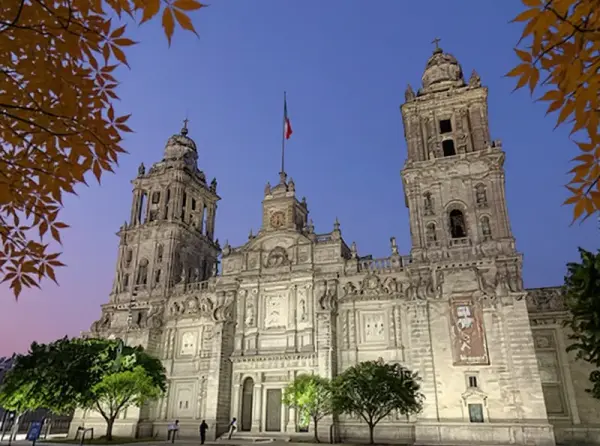
2. Catedral Metropolitana (Mexico City Metropolitan Cathedral)
Mexico City Metropolitan Cathedral
One of Latin America's largest colonial cathedrals, steeped in centuries of art and history. Walk cavernous chapels, ornate altars and climb rooftop viewpoints over the Zócalo.
Quick facts: Visitors often feel the floor subtly tilt underfoot, evidence of centuries of settling and the constant battle to preserve towering bell towers. A dizzying blend of Baroque flourishes, austere Neoclassical lines and gilded altars reveals layers of art and politics, where chapels hide family tombs and surprising colonial-era paintings.
Highlights: Built over 240 years, from 1573 to 1813, the structure hides within its stonework dozens of colonial-era crypts where ornate carved coffins and hand-lettered burial plaques are tucked away under side altars. You can feel the place slowly leaning on more than 6,000 wooden piles driven into the old lakebed, and if you press your cheek against a cool pillar you might catch the faint scent of beeswax and centuries of candle smoke layered with lime from nearby street stalls.
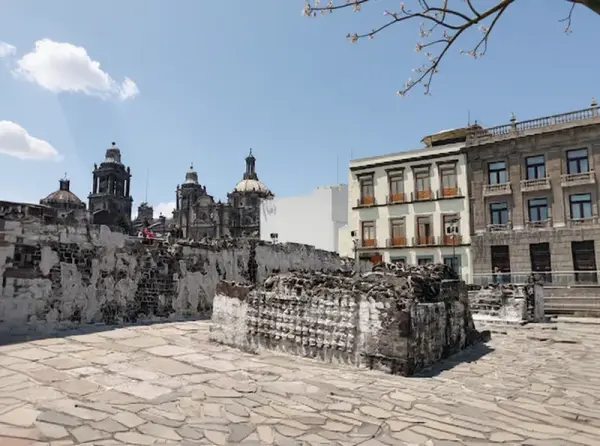
3. Templo Mayor Archaeological Site and Museum
Discover the ruined heart of Aztec Tenochtitlan under modern Mexico City. Explore pyramids, sacred offerings, and a museum of glittering artifacts.
Quick facts: Underfoot you feel layered history as walkways expose giant carved stones and a massive stone serpent head, giving a vivid sense of ritual life. Archaeologists have uncovered thousands of offerings, from vivid sculptures to sacrificial remains, revealing a metropolis that pulsed with ceremony and fierce politics.
Highlights: In 1978 construction workers unexpectedly unearthed the giant carved Coyolxauhqui disk, about 3.25 meters across and roughly eight tonnes, its fractured limbs still showing traces of red pigment and immediately revealing layers of ritual offerings beneath the street. Step into the museum's cool, dim rooms and you'll bend close to labels pointing out hundreds of tiny offerings: gold earspools no bigger than a thumb, miniature clay figurines stacked like pantry jars, and a rough greenstone mask that feels chalky under your fingertips.
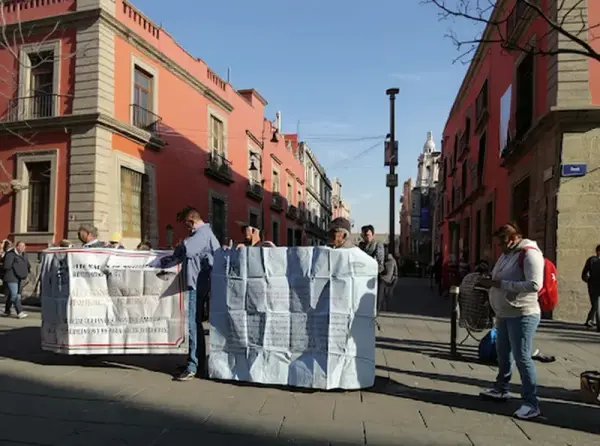
4. Palacio Nacional (National Palace)
National Palace
Center of Mexico's political and artistic history, home to Diego Rivera murals and colonial architecture. Explore grand state rooms, monumental murals, and views over the Zocalo.
Quick facts: Bright murals cascade across the main stairwell and walls, pulling visitors into a cinematic retelling of revolution-era stories and national myths. Echoing stone corridors lead to ornate balconies and former government rooms, where guides point out hidden details and the building's layered textures invite close-up inspection.
Highlights: Diego Rivera painted an epic wall-length fresco that stitches pre-Hispanic gods to 20th-century revolutionaries, and if you stand close enough you can see his energetic brush ridges and the faint smell of lime and oil still clinging to the plaster. Every September 15, at about 11:00 p.m., the sitting president steps onto the main balcony to reenact the Grito, ringing the bell and shouting '¡Viva!' while the plaza below erupts with fireworks, waving flags, and the roar of thousands.
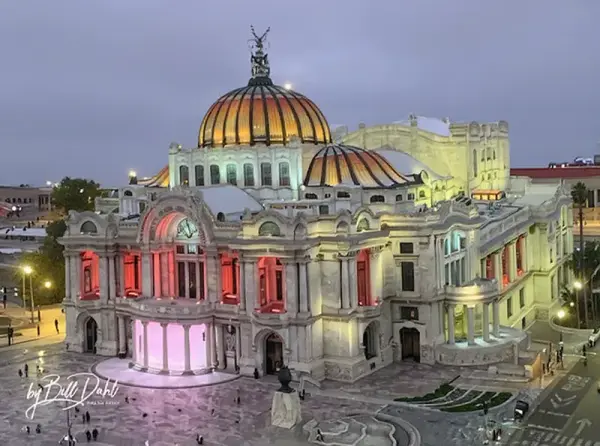
5. Palacio de Bellas Artes (Palace of Fine Arts)
Palace of Fine Arts
Grand Beaux-Arts palace with an iconic stained-glass dome and national murals. Explore galleries, Diego Rivera frescoes, and performances in an ornate theater.
Quick facts: Sunlight pours through a vast stained-glass dome and paints jewel-toned mosaics across the polished marble, so the whole interior feels like a living canvas. Visitors often fall silent before massive murals by renowned painters, and an enormous pipe organ can rumble through the hall with surprising warmth.
Highlights: Construction began in 1904 and, after a decades-long halt caused by the Mexican Revolution, the building finally opened in 1934, leaving the structure slightly askew because the old lakebed foundations settled unevenly. Inside, huge murals by Diego Rivera, José Clemente Orozco, David Alfaro Siqueiros and Rufino Tamayo splash the walls with thunderous color, and a sunset-kissed tiled dome glows in warm gold and orange above the plaza.
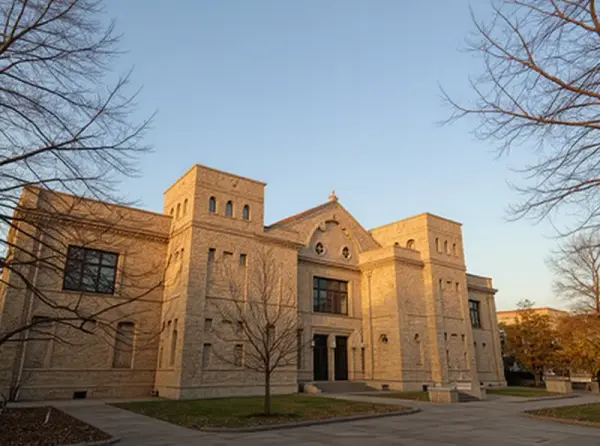
6. Museo Nacional de Antropología (National Museum of Anthropology)
National Museum of Anthropology
World-class pre-Hispanic artifacts that explain Mexico's roots. Walk through enormous halls and iconic pieces like the Aztec Sun Stone up close.
Quick facts: Under a dramatic umbrella-like courtyard canopy, a monumental basalt sunstone looms over groups of visitors and invites close-up study. Astonishingly, the holdings exceed 600,000 objects, from feathered ritual headdresses to carved jade masks, offering an immersive panorama of pre-Hispanic life.
Highlights: Step inside and you're face-to-face with the Aztec Sun Stone, a 3.6-meter, roughly 24-ton carved basalt disk whose concentric glyphs are still so crisp you can study individual faces and dates with the naked eye. Wander the museum's 23 dim halls and you'll sometimes hear a docent whisper the quirky story of a tiny jade ear pendant that shimmered green under a spotlight, a piece that was once mistaken for a child's toy and later reclassified as a ceremonial ornament.
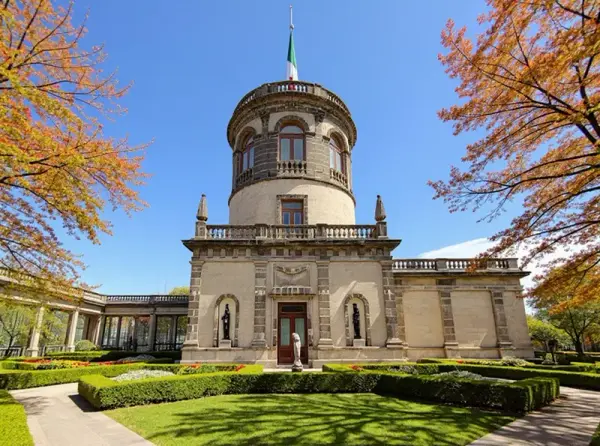
7. Castillo de Chapultepec (Chapultepec Castle)
Chapultepec Castle
A hilltop palace offering sweeping city views and rich Mexican history. Wander ornate rooms, murals by Orozco, and lush castle gardens.
Quick facts: Perched on a rocky hill with sweeping park views, the place still bears murals and cannon marks that whisper of dramatic battles and its chapters as an imperial palace and later a presidential residence. A rooftop terrace garden smells of citrus and pine, while inside you'll find an unexpectedly rich mix of European and Mexican paintings and ornate rooms that show how leaders once lived.
Highlights: Perched about 2,325 meters above sea level, the old imperial palace still displays Emperor Maximilian's delicate Paris-made porcelain and glittering crystal chandeliers, and when late afternoon sun pours through the tall windows the marble rooms bloom with streaks of powder-blue and gold. Every September 13 a hushed ceremony honors six teenage cadets who fell defending the walls in 1847, and local legend says 13-year-old Juan Escutia wrapped himself in the tricolor and leapt from the ramparts rather than let the flag be captured.
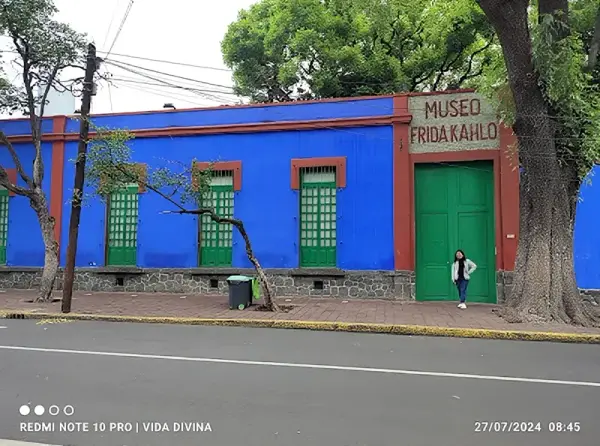
8. Museo Frida Kahlo (Casa Azul)
Casa Azul
See Frida Kahlo's home and original artworks, a vivid portrait of her life and art. Explore colorful rooms, her studio, personal objects, and the leafy courtyard garden.
Quick facts: Step through a cobalt-blue gate and you encounter an intimate, lived-in studio where sunlit patios, embroidered dresses, and paint-splattered easels make the artist’s presence feel immediate. Surprising personal objects, such as her wheelchair, original clothing and a trove of folk and pre-Hispanic art, show how private life, political conviction and creative practice blended together.
Highlights: Step into the cobalt-blue courtyard and you can practically smell earth and marigolds, while dozens of her embroidered Tehuana dresses hang like banners and a hand-painted plaster corset plus her prosthetic leg sit exactly where she left them. A small mirror mounted on the canopy above her four-poster bed shows how she painted many of her self-portraits while bedridden, and Diego Rivera's studio objects and pre-Columbian masks crowd the adjacent room, making the whole place feel like a lived-in painting.
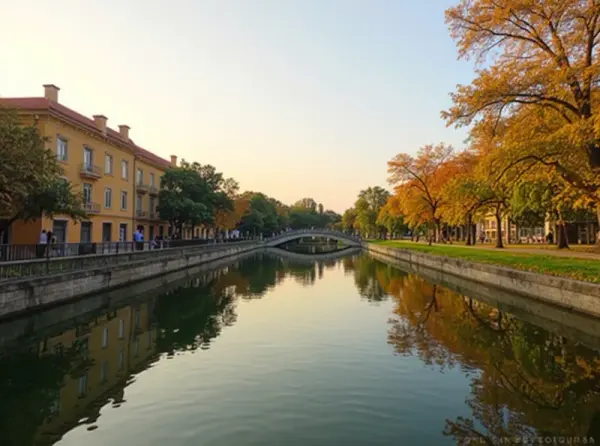
9. Xochimilco Canals (Floating Gardens)
Floating Gardens
Colorful trajineras glide through centuries-old canals, offering a lively escape from the city. Expect mariachi, street food, floating gardens and picture-perfect boat views.
Quick facts: Gliding along narrow, reed-fringed lanes, you can hear marimba music and watch families picnic from brightly painted boats while vendors drift by with fresh flowers and snacks. More than 170 kilometers of waterways survive within the urban sprawl, offering one of the largest remaining examples of chinampa agriculture where gardeners still cultivate floating plots by hand.
Highlights: Paddle past narrow chinampa gardens first dug in the 14th century, where farmers still layer lake mud and reeds to grow corn, flowers and chinampa-grown cilantro on plots only a few meters wide. Brightly painted wooden trajineras, each often seating about 10 people, drift under strings of papel picado while mariachi bands climb aboard to sing, and vendors in small boats sell smoking esquites and cold pulque between the floating rows.
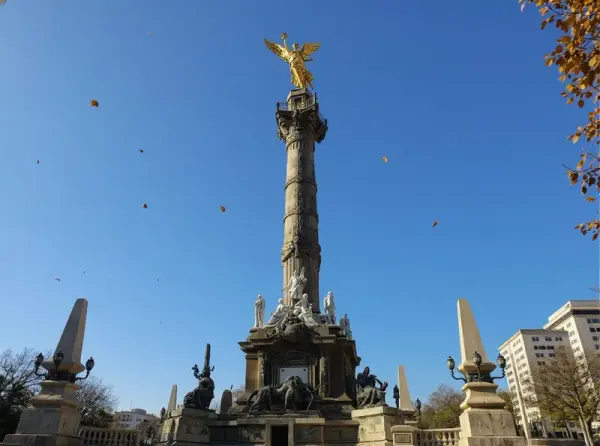
10. Ángel de la Independencia (The Angel on Paseo de la Reforma)
The Angel on Paseo de la Reforma
Marvel at the golden Angel towering over Paseo de la Reforma, a national symbol and parade focal point. Stroll the plaza, grab skyline photos and soak in local life.
Quick facts: Golden light splashes off the gilded statue at sunset, turning the column into an irresistible backdrop for wedding photos and nightly photographers. Below the pedestal lies a crypt with independence heroes, and the plaza becomes a charged gathering point after big sports triumphs or political rallies.
Highlights: A gilded winged figure about 6.7 meters tall and weighing roughly seven tonnes perches atop a 45-meter column, so when the sun hits its gold leaf at midday the whole statue flashes like a coin seen from blocks away. Locals have a quirky habit of turning the circular plaza into a roaring party after big soccer wins, thousands squeezing into the roundabout to drape flags, climb the low steps, and sing beneath the gleaming figure.
Where to Stay in Mexico City, Mexico
Selected by City Buddy based on guest reviews and proximity to top attractions
Search all hotels in Mexico City, MexicoPowered by agoda
Opening days in Mexico City, Mexico
Which of the top sights close on which day of the week — the classic trip-ruiner, checked for you.
Monday: 5 of 8 top sights closed — plan museums for another day.
Closed on Monday · 5 closed, 3 open
Opening days from Google Maps (checked 2026-02-19). Public holidays, strikes and seasonal hours can differ — check the official website before you go.
Traditional Sweet Dishes
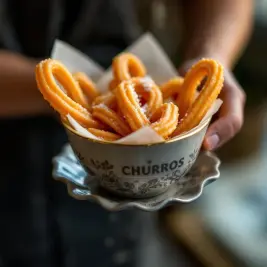
churros
Churros in Mexico City are beloved street treats, often piped hot and crispy then rolled in cinnamon sugar and stuffed with fillings like cajeta or chocolate for an extra indulgence.
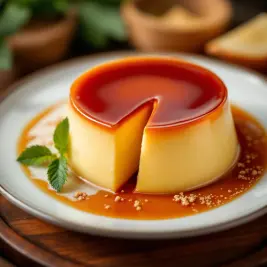
flan
Flan in Mexico City blends Spanish custard technique with local tastes, its silky caramel top and creamy interior make it a staple at family gatherings and celebrations.
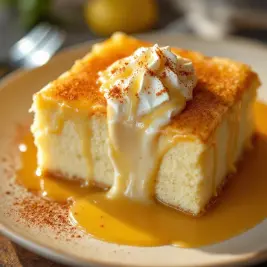
tres leches cake
Tres leches cake is soaked in three kinds of milk so it stays supremely moist, and bakeries in Mexico City often finish it with whipped cream and a sprinkle of cinnamon for a crowd-pleasing dessert.
Traditional Savory Dishes
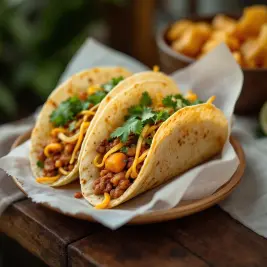
tacos
Tacos in Mexico City are a culinary crossroads, where regional fillings from across Mexico meet local twists like al pastor carved from a vertical trompo and served with bright salsas.

tamales
Tamales are a weekend tradition in Mexico City, wrapped in corn husks or banana leaves and often made in tamalada gatherings where neighbors assemble hundreds to share.

mole
Mole in Mexico City is a multi-layered sauce with dozens of ingredients, from chilies and nuts to chocolate and spices, and some family recipes are closely guarded heirlooms.
Traditional Beverages

horchata
Horchata in Mexico City is usually made from rice steeped with cinnamon and sugar, yielding a creamy, refreshing drink that balances spicy street food.

agua fresca
Agua fresca vendors in Mexico City turn seasonal fruits and flowers into bright, lightly sweet drinks like agua de jamaica and tamarindo, perfect for cooling off.

pulque
Pulque is a milky, slightly fizzy fermented agave drink that was once sacred in pre-Hispanic ceremonies, and today it has a revival in hip pulquerías around the city.
Frequently Asked Questions about Mexico City, Mexico
What is the best time to visit Mexico City, Mexico?
Is Mexico City, Mexico expensive for travelers?
How do tourists get around Mexico City, Mexico?
How many tourists visit Mexico City annually?
How many days should I spend in Mexico City, Mexico?
Get a PDF with the most popular attractions sent to your email
Get a PDF with all attractions, ratings, and tips. Perfect for offline use.
Most popular day trips
Puebla & Cholula
Colonial streets, cuisine, and Cholula pyramid.
Getting there
Airports
Train stations
Tren Suburbano Line 1 (to Cuautitlán); connects to Metro/urban transit
Metro Line 1 terminal; planned Interurban Toluca–CDMX link
From MEX use Metro/authorized taxi or Aerotren; from AIFA/Toluca take airport shuttles to metro hubs.
Useful information for Mexico City, Mexico
Overview for Mexico City, Mexico
Want a day-by-day plan for Mexico City, Mexico? Open the trip planner
Plan your perfect trip to Mexico City, Mexico
Get a complete travel plan built just for you in under 30 seconds, with daily routes, local food tips, budget estimates and more.
Are any of these especially important to you?
Select all that apply
Getting around
How do you want to move between places?
Plan language: English