 CityBuddy
 English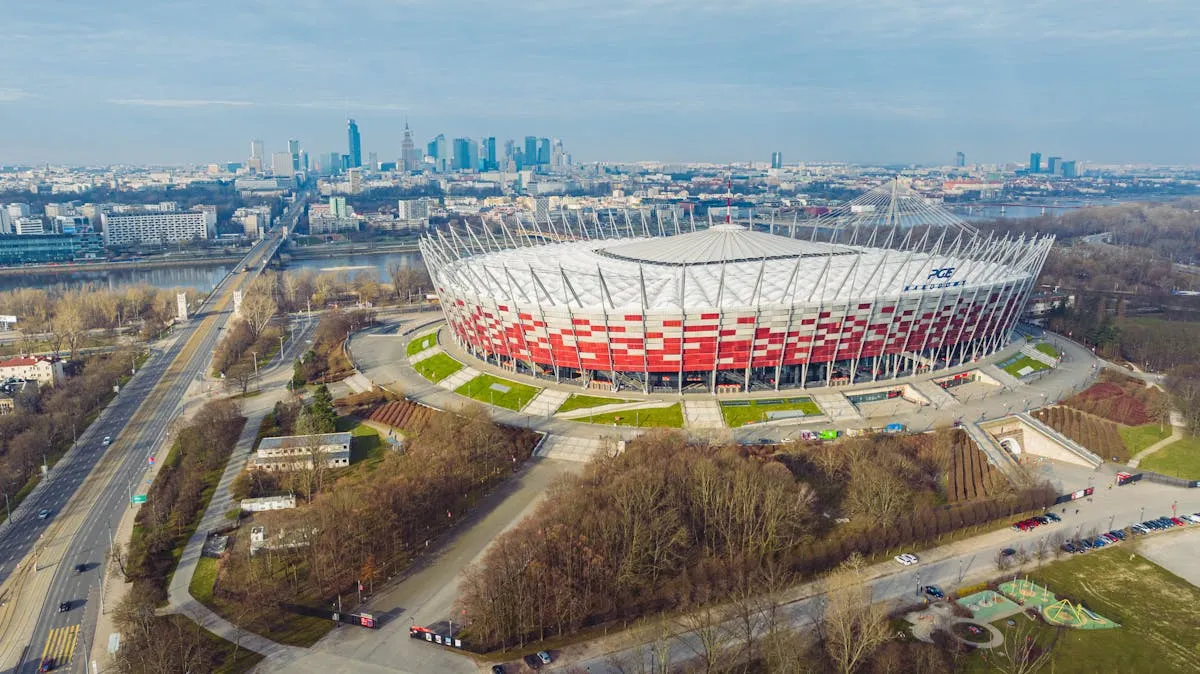
Things to Do in Warsaw, Poland
Photo made by Przemysław Lunic on Pexels.com
When to visit
Most popular attractions in Warsaw, Poland
Things to do in Warsaw, Poland, include exploring Old Town Market Square, a 13th-century historic area featuring colorful townhouses and lively cafes. Visit the Royal Castle nearby, known for its impressive art collections and rich history. Łazienki Park offers a serene escape with the Palace on the Isle and the Chopin Monument both within a scenic 76-hectare green space.
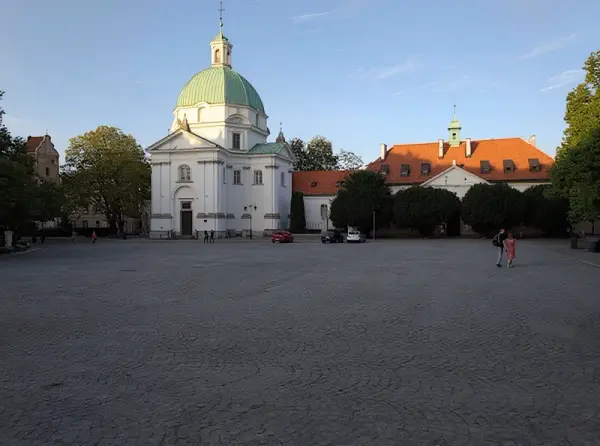
1. Old Town Market Square (Rynek Starego Miasta)
Rynek Starego Miasta
Cobblestone square framed by pastel townhouses that tell Warsaw's rebuilding story. Expect outdoor cafes, street performers and plenty of photo opportunities.
Quick facts: Shadows from colorful façades and the clink of café cups fill the square, where street musicians and painters turn cobblestone corners into a living postcard. Beneath the surface, painstaking postwar reconstruction used salvaged bricks and archival drawings to recreate historic details, surprising many who expect untouched medieval streets.
Highlights: After the 1944 destruction, restorers leaned heavily on Bernardo Bellotto's 18th-century Canaletto paintings to reconstruct the painted façades, duplicating tiny details like window mouldings and a palette of cinnabar red, pale ochre and soft teal. On warm evenings you can hear the clack of cobbles underfoot and smell stall-baked gingerbread spiced with cinnamon and nutmeg, while wartime bullet marks still glitter faintly in the sunlight as a quiet, visible scar.
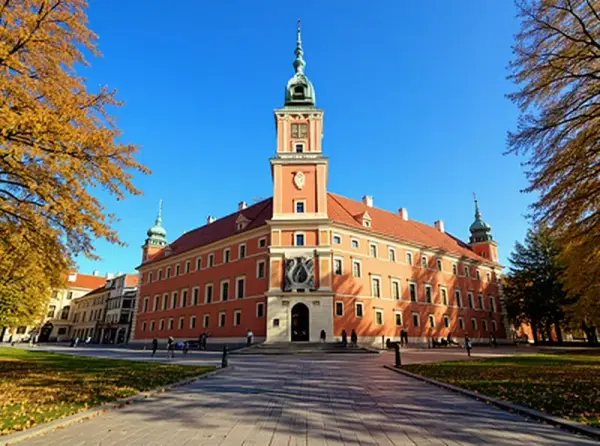
2. Royal Castle (Zamek Królewski)
Zamek Królewski
A centerpiece of Warsaw's Old Town, with reconstructed royal apartments and grand state rooms. Walk through lavish chambers, historical paintings and original artifacts.
Quick facts: Stepping inside feels like walking through a living gallery, where opulent royal chambers, sweeping murals, and gilded ceilings guide visitors through layers of art and courtly drama. Knowledgeable guides often point out remarkable restorations: more than 300 artworks were painstakingly recovered after wartime destruction, and several rooms are faithful reconstructions based on historical plans and paintings.
Highlights: After being deliberately blown up in 1944, Polish conservators spent about 30 years painstakingly rebuilding the castle, rescuing many original 17th- and 18th-century paintings and using archival plans to finish the reconstruction in 1974. Step into the former throne rooms and you’ll find Marcello Bacciarelli’s painted regalia and a portrait gallery where gilt frames and wax-polished floors still give off a faint honeyed scent, the sort of quiet, slightly dusty perfume that makes you imagine court gossip and candlelight.
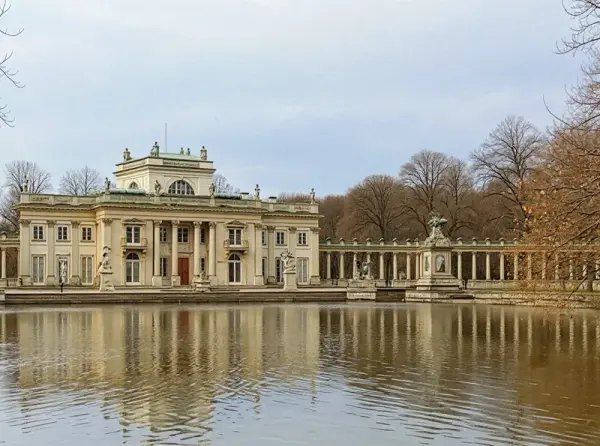
3. Łazienki Park (Łazienki Królewskie) — Palace on the Isle & Chopin Monument
A lakeside royal palace set in landscaped gardens, rich in art and history. Walk palace rooms, admire neoclassical pavilions and hear Chopin by the monument.
Quick facts: Moonlight turns the pale façade into a silver mirror on the lake, where swans and rowboats drift past an elegant island pavilion whose intimate salons are full of intricate stucco and gilded details. Summer Sundays fill the grounds with music as free piano recitals gather crowds around a lyrical bronze figure, locals spreading blankets for an acoustic ritual that symbolizes resilience after the original statue was destroyed during the war.
Highlights: Every summer on Sundays at 12:00, pianists play short Chopin pieces beside a bronze monument by Wacław Szymanowski, drawing crowds that can swell into the thousands; the original statue was smashed by occupying forces in 1940 and painstakingly rebuilt in 1958, so the music often feels like a small, public act of recovery. A short wander leads to a white neoclassical palace that began as a 17th-century bathhouse, its gilt rooms and mirrored panels reflecting the pond while peacocks strut across marble balustrades and ruffle loud, metallic feathers against the hush of the piano.
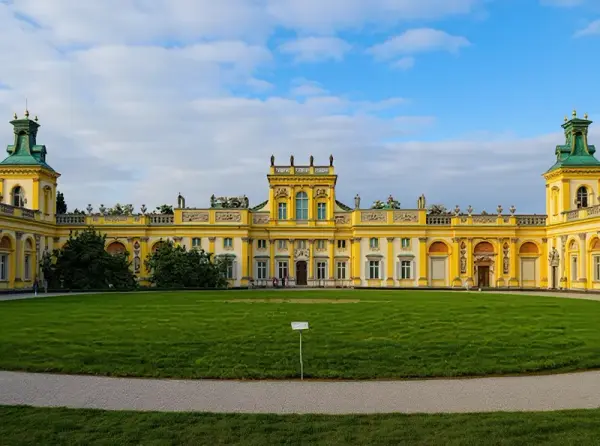
4. Wilanów Palace (Pałac w Wilanowie)
Pałac w Wilanowie
Baroque royal palace with ornate rooms and landscaped gardens worth a walk. Explore opulent interiors, art-filled apartments, and peaceful palace park.
Quick facts: Ornate stucco and vivid frescoes mingle with a fragrant rose garden, making wandering the rooms feel like stepping into a living painting. More than 100,000 visitors come each year, drawn by hidden collections of Asian porcelain, Dutch portraits and surprising theatrical staging in the royal apartments.
Highlights: Built as the private Baroque residence for King Jan III Sobieski between 1677 and 1696, the palace still shows his hunting trophies and golden stucco ceilings that glow under candlelight. Opened to the public as a museum in 1805, it has a quirky old tradition of letting visitors wander the king's narrow private corridors where wax-polished oak floors creak and the air smells faintly of old wood and beeswax.
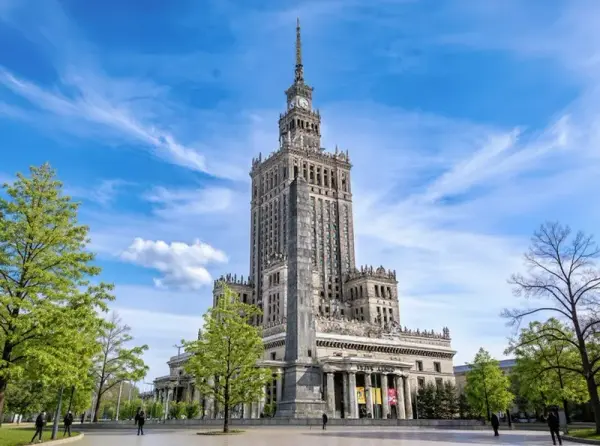
5. Palace of Culture and Science (Pałac Kultury i Nauki)
Pałac Kultury i Nauki
Landmark Stalinist skyscraper with sweeping views and lively cultural venues. Ride to the 30th-floor observation deck then explore theatres, exhibitions, and cafés.
Quick facts: Visitors often climb to the high observation deck for a dizzying panorama and the chance to spot more than a dozen distinct architectural styles packed into the surrounding cityscape. Echoing footsteps in marble corridors lead past Soviet-era sculptures and lavish chandeliers, creating an odd mix of grandeur and awkward nostalgia for first-time visitors.
Highlights: Climb up to the observation deck on the 30th floor, roughly 114 meters above the ground, and the city below becomes a toy tableau: trams shrink to colored matchsticks and the river flashes like a silver ribbon at sunset. Legend has it a private apartment was planned for a Soviet leader and never used, and the building's 237 meter height with 42 floors helps explain why locals still whisper about secret rooms and wartime stories.
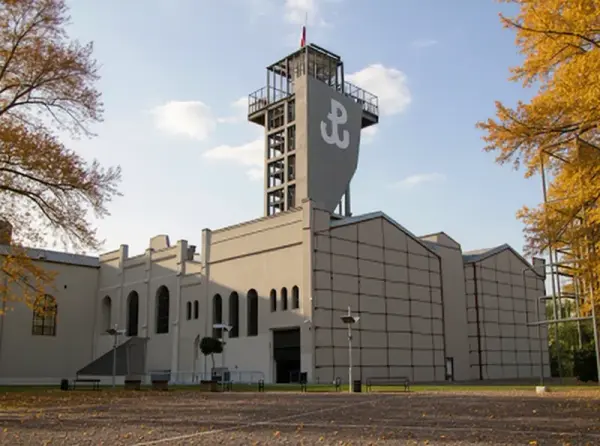
6. Warsaw Uprising Museum (Muzeum Powstania Warszawskiego)
Muzeum Powstania Warszawskiego
Intense, deeply human account of the 1944 Warsaw Uprising. Interactive displays and original artifacts let you feel the city's wartime story.
Quick facts: Walking through darkened halls, you hear original radio broadcasts, gunfire and street sounds layered with poignant film footage, making the 1944 uprising heartbreakingly immediate. Hundreds of original artifacts and personal testimonies are arranged in immersive, interactive rooms, so visitors leave with a visceral sense of ordinary people’s courage.
Highlights: Creep through a narrow, brick-walled replica of the 1944 sewer tunnels and feel the ceiling close in while recorded drip echoes and distant footsteps make the passage eerily alive. Before you leave press a numbered red button to play a survivor named Zofia's 12-minute eyewitness recording, her voice rough with flour and smoke so vivid you can almost taste the burned bread she describes.
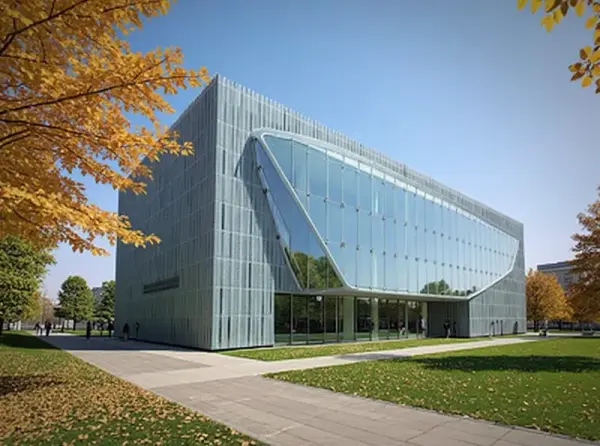
7. POLIN Museum of the History of Polish Jews (Muzeum Historii Żydów Polskich POLIN)
Muzeum Historii Żydów Polskich POLIN
Explore a millennium of Jewish life in Poland through striking architecture and immersive exhibits. Walk the dramatic core exhibition, view artifacts and hear personal stories.
Quick facts: Stepping into a dramatic, undulating atrium, visitors find immersive galleries that combine multimedia, reconstructed interiors, and original artifacts to unravel centuries of Jewish life. Surprising personal stories and archaeological finds are woven with contemporary art, so the core exhibition feels less like a museum and more like a living neighborhood full of voices.
Highlights: Walk into the dim hall and your eyes snag on the hand-painted polychrome ceiling of the reconstructed Gwoździec wooden synagogue, where cobalt blues, reds and gold floral motifs glow above carved beams and the warmed pine scent makes the air feel almost centuries old. The museum's permanent exhibition traces 1,000 years of Jewish life, and evening programs like intimate klezmer concerts and lamplight workshops where you copy 19th-century Hebrew script make the past sound and feel alive.
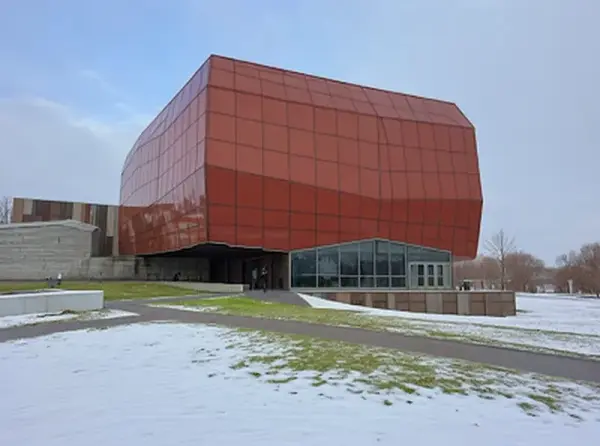
8. Copernicus Science Centre (Centrum Nauki Kopernik)
Centrum Nauki Kopernik
Hands-on experiments make science clear and fun for all ages. Expect interactive exhibits, live demos, an outdoor science garden, and an immersive planetarium show.
Quick facts: Bright, hands-on galleries buzz with curious energy as people of all ages tinker with puzzles, launch simple experiments, and watch live demos that make abstract science feel immediate. More than 400 interactive exhibits invite direct experimentation, and an immersive planetarium plus frequent workshops turn complex ideas into sensory, memorable moments.
Highlights: Inside the main building you'll find over 400 hands-on exhibits: one live show features a Tesla coil that hisses and throws electric-blue sparks high enough to make the floor vibrate, so you can actually see your skin glow under the strobing light. After dark the planetarium's 300-seat dome goes black and a narrator counts down in Polish while the ceiling blooms with stars, you can feel the cool hush of the air system and smell popcorn from the lobby as the audience murmurs in the dim light.
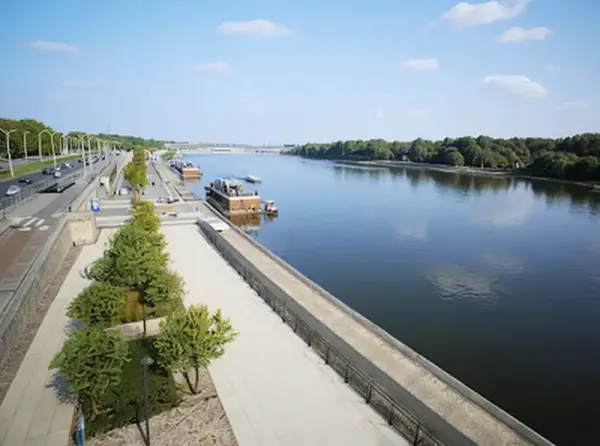
9. Vistula River Boulevards (Bulwary Wiślane)
Bulwary Wiślane
Riverside skyline and lively summer bars make the Vistula Boulevards worth visiting. Stroll riverside paths, sample food stalls, and watch sunsets over Warsaw.
Quick facts: Strollers and cyclists share long, tree-lined promenades where pop-up cafés, street food stalls, and summer concerts create a constant, lively buzz. Colored lights shimmer on the water and illuminate a mix of refurbished industrial relics and sleek new footbridges, making the skyline unexpectedly photogenic.
Highlights: When the sun drops behind the steel bridge, hundreds of wooden deckchairs line the stone steps and the air fills with the smell of grilled sausages and hop-scented beer, while floating bars bob and basslines drift across the river. Locals have a quirky habit of bringing guitars and sparking singalongs that swell into 50-person circles on warm nights, and in the blue hour you can find early-morning anglers casting from concrete ledges as swans slip through silver ripples.
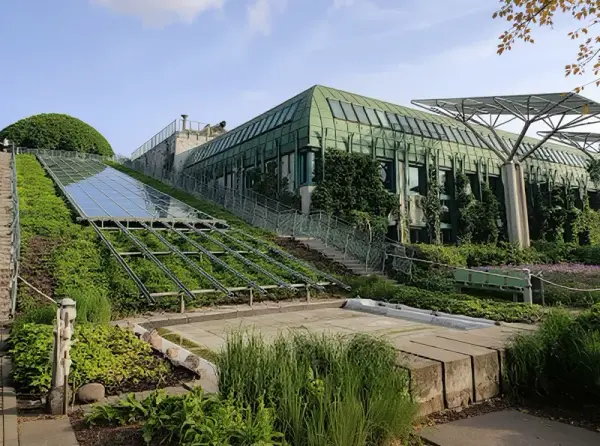
10. University of Warsaw Library Rooftop Garden (Ogród na dachu Biblioteki Uniwersyteckiej)
Ogród na dachu Biblioteki Uniwersyteckiej
A lush rooftop garden with sweeping views over the Vistula and Old Town, perfect for relaxing above the city. Wander ponds, terraces and artful pathways while watching sunset.
Quick facts: Stepping up to the roof feels like entering a layered urban ecosystem, where a reflective pond, a breezy birch grove, and swaths of native grasses draw busy bees and migratory birds. Panoramic glass terraces frame surprising skyline views, creating quiet study nooks and popular photo spots favored by students and locals.
Highlights: Climb the broad stone steps up to the roof and you'll step into layered terraces planted with lavender and native grasses, the air thick with honeyed floral scent and the soft splash of a shallow reflecting pool where frogs sometimes call at dusk. Local students have a low-key habit of leaving tiny paper boats on the pool after exams as a quiet celebration, so if you visit in late June you'll likely spot dozens of folded notes bobbing alongside the reeds.
What to pre-book in Warsaw
These sell out or need a reservation. Book them first, in this order.
- 1.Royal Castle (Zamek Królewski)Book 3 days aheadA few days ahead in high season Skip-the-line tickets
- 2.Wilanów Palace (Pałac w Wilanowie)Book 3 days aheadA few days ahead in high season Skip-the-line tickets
- 3.Copernicus Science Centre (Centrum Nauki Kopernik)Book 2 days aheadA few days ahead in high season Skip-the-line tickets
- 4.Warsaw Uprising Museum (Muzeum Powstania Warszawskiego)Book 2 days aheadA couple of days ahead in high season Skip-the-line tickets
- 5.POLIN Museum of the History of Polish Jews (Muzeum Historii Żydów Polskich POLIN)Book 2 days aheadA couple of days ahead in high season Skip-the-line tickets
Where to Stay in Warsaw, Poland
Selected by City Buddy based on guest reviews and proximity to top attractions
Search all hotels in Warsaw, PolandPowered by agoda
Opening days in Warsaw, Poland
Which of the top sights close on which day of the week — the classic trip-ruiner, checked for you.
Tuesday: 3 of 10 top sights closed — plan museums for another day.
Closed on Tuesday · 3 closed, 7 open
Opening days from Google Maps (checked 2026-02-19). Public holidays, strikes and seasonal hours can differ — check the official website before you go.
Traditional Sweet Dishes

Pączki
Pączki are Polish filled doughnuts so beloved in Warsaw that bakeries make thousands for Fat Thursday, they often contain rosehip or plum jam and are traditionally eaten before Lent.

Sernik
Sernik is Poland's cheesecake made with twaróg curd cheese, giving it a dense, slightly grainy texture that Warsaw bakers have been perfecting since royal cookbooks centuries ago.

Makowiec
Makowiec is a poppy-seed roll so rich that a single braided loaf can contain hundreds of thousands of tiny seeds, it is a Christmas staple believed to symbolize prosperity and good fortune.
Traditional Savory Dishes

Pierogi
Pierogi are dumplings that range from savory to sweet, in Warsaw you can find fillings from sauerkraut and mushrooms to blueberries, and master cooks will boil then pan-fry them for a crisp finish.

Bigos
Bigos is a slow-simmered hunter's stew of sauerkraut, fresh cabbage, and mixed meats, and many families insist it tastes best after a day or two of reheating.

Zapiekanka
Zapiekanka is Warsaw's classic open-faced baguette topped with mushrooms, cheese, and condiments, it rose to fame in the 1970s and remains the city's favorite late-night street snack.
Traditional Beverages

Vodka
Vodka in Warsaw has a centuries-long social role as a ceremonial drink and flavor carrier, and Polish distillers still produce distinctive rye and potato vodkas prized for their terroir.

Kompot
Kompot is a simple, fragrant fruit stew boiled into a refreshing drink, it grew out of a need to preserve summer fruit for winter and is served warm or chilled at Polish family tables.
Know before you go
What a day costs in Warsaw, and the rip-offs to avoid
Top rip-offs to avoid
- Unlicensed drivers at the airport. Walk to the official taxi rank or use a licensed app like Uber, Bolt or iTaxi. Agree the fare or insist the meter runs before starting.
- Poor-rate exchange booths. Compare the rate and the final amount before handing over cash. Pay by card where possible, or use a bank ATM at the local rate.
- Distraction pickpocket teams. Keep bags closed and in front, and keep phones and wallets out of reach. Stay alert in busy spaces and on packed transport.
Fair taxi from the airport: 40 zł - 80 zł (€9 - €18)
Cheaper option: Public bus 175 or the city train (S2/S3) from the airport into central Warsaw (4.40 zł)
All scams, fair prices and rulesFrequently Asked Questions about Warsaw, Poland
What is the best time to visit Warsaw, Poland?
Is Warsaw, Poland expensive for travelers?
How do I get around Warsaw, Poland?
Is the tap water in Warsaw safe to drink?
How many tourists visit Warsaw, Poland each year?
Get a PDF with the most popular attractions sent to your email
Get a PDF with all attractions, ratings, and tips. Perfect for offline use.
Most popular day trips
Kraków
Historic former capital with Wawel Castle and Old Town.
Getting there
Train stations
Main national IC/EIP and regional connections
Intercity and regional; good for west/northbound trains
Regional and some long-distance eastbound services
From Chopin take the SKM/rail link or taxi; from Modlin use the shuttle train/bus to center.
Useful information for Warsaw, Poland
Overview for Warsaw, Poland
Compare Warsaw with other destinations
Prices, safety, weather and top attractions side by side, with a verdict for every kind of traveler.
Want a day-by-day plan for Warsaw, Poland? Open the trip planner
Plan your perfect trip to Warsaw, Poland
Get a complete travel plan built just for you in under 30 seconds, with daily routes, local food tips, budget estimates and more.
Are any of these especially important to you?
Select all that apply
Getting around
How do you want to move between places?
Plan language: EnglishMost popular itineraries for Warsaw, Poland
Browse trip plans created by other travelers