 CityBuddy
 English
Things to Do in Hrodna, Belarus
Photo made by Vladimir Srajber on Pexels.com
When to visit
Plan your perfect trip to Hrodna, Belarus
Get a complete travel plan built just for you in under 30 seconds, with daily routes, local food tips, budget estimates and more.
Are any of these especially important to you?
Select all that apply
Plan language: EnglishMost popular attractions in Hrodna, Belarus
The top things to do in Hrodna, Belarus center around its remarkable concentration of medieval and Baroque architecture. Walk the grounds of the 11th century Kalozha Church of Sts. Boris and Gleb, the city's oldest surviving structure. Contrast it with the 17th century St. Francis Xavier Cathedral, whose 100 meter tall spires dominate the skyline. Visit both the Hrodna Old Castle and Hrodna New Castle, standing side by side on the Niemen River's high bank.
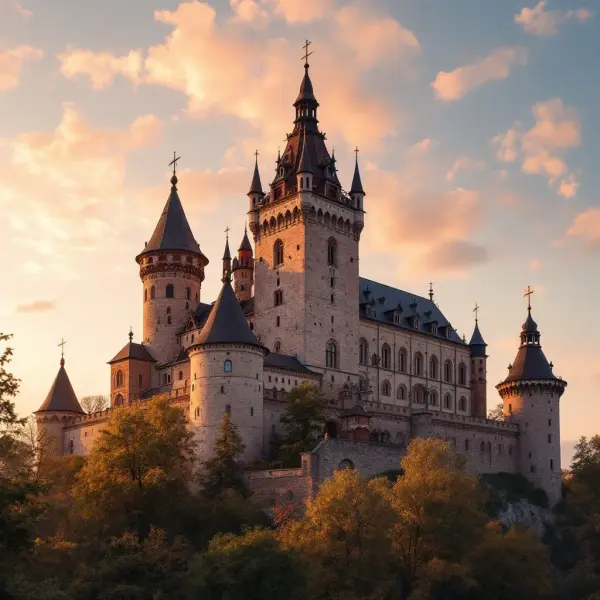
1. Hrodna Old Castle
Where centuries of Polish, Lithuanian and Belarusian history collide inside a single fortress. Walk halls where kings once slept and touch walls scarred by actual cannon fire.
Quick facts: Columns rise in three distinct architectural styles, as each century left its mark on the stone walls. Cannonballs from the 1656 siege are still embedded in the outer fortifications near the main gate.
Highlights: A secret passage beneath the castle once connected it to the Bernardine monastery across the Niemen River, allowing soldiers to move unseen. Climb the southwest tower at sunset, when the low light turns the river into liquid gold and the entire Hrodna skyline unfolds before you.
2. St. Francis Xavier Cathedral
A towering Baroque masterpiece that survived two world wars and Soviet atheism largely unscathed. Walking through its doors reveals one of Europe's most complete original 18th century church interiors.
Quick facts: One of the world's tallest Baroque church towers stands at 65 meters and can be seen from kilometers away. The cathedral features a rare surviving 18th century fresco cycle painted by a single artist over the course of a decade.
Highlights: Step inside and look up: the ceiling frescoes seem to ripple like fabric, painted with such illusionistic skill that the flat plaster appears to bulge and fold. Local legend claims the artist fell from his scaffolding three times while completing the work, yet never broke a single bone.
3. Kalozha Church of Sts. Boris and Gleb
Step into one of Eastern Europe's oldest surviving Orthodox churches, still active after centuries of history. You will stand inside a sanctuary where rough stone walls, flickering candlelight, and ancient graffiti tell stories of medieval worshipers.
Quick facts: Walls are decorated with thousands of brightly colored stone crosses and ceramic tiles set directly into the masonry. Hundreds of unique ancient graffiti cover the interior, left by worshippers over the past 800 years.
Highlights: Unlike any other surviving Orthodox church from that era, the exterior walls were never plastered, leaving the intricate patterns of polished colored stones and glazed ceramic plates fully exposed to the elements. Look closely at the facade and you will spot small stone crosses, green and yellow tiles, and even fragments of marble, all arranged in geometric designs that shimmer differently as the sunlight shifts.
4. Soviet Square
Watch sunlight dance across cobblestones at Hrodna's central gathering point where centuries of history converge. Feel the pulse of city life as locals chat on benches beneath chestnut trees and children chase pigeons across the geometric stone plaza.
Quick facts: The square hosts a striking statue of Lenin that remains a focal point, contrasting with the surrounding colorful 19th century buildings. Its pavement features a unique circular pattern that creates an optical illusion when viewed from above.
Highlights: At the center stands one of Belarus' last remaining Lenin statues that locals have affectionately nicknamed "Grandfather," with fresh flowers often appearing at its base from both older residents and young couples. The square transforms at dusk when the surrounding historic facades glow amber from hidden uplighting, revealing intricate architectural details invisible during the day.
5. Drama Theatre
Step into a masterpiece of Soviet modernist design where every performance feels intimate, even in a 700-seat hall. Expect dramatic architecture, surprising acoustics, and a rotating lineup of drama, ballet, and experimental shows.
Quick facts: Hrodna's Drama Theatre hosts over 300 performances each season, filling nearly every seat in its 700-capacity halls. The building's stark white facade and geometric lines were inspired by 1960s Soviet modernism, making it stand out against the city's older architecture.
Highlights: Few visitors realize the main auditorium was designed with a retractable orchestra pit that disappears beneath the stage floor, allowing the space to transform for intimate plays or full ballet productions. During winter shows, the foyer's floor-to-ceiling windows capture the snowy park outside, creating a stage-like backdrop that changes with every season.
6. Augustow Canal
Float through a pristine forest waterway that has barely changed since the 1830s. Cycle along shaded towpaths, pass through hand-operated locks, and spot eagles soaring above serene green corridors.
Quick facts: Stretching 101 kilometers across Poland and Belarus, this 19th-century waterway links the Vistula and Neman rivers through 18 locks and 22 sluices. Engineers designed the canal with such precision that its original lock mechanisms, hand-operated using wooden beams, still function after nearly 200 years.
Highlights: Unlike most canals, this one carves through a UNESCO-listed biosphere reserve where beavers, otters, and white-tailed eagles patrol the waters alongside passing boats. The locks change elevation by up to 3 meters each, and you can watch the original hand-cranked mechanisms creak to life as water thunders through century-old oak gates.
7. Museum of Religion History
Where else can you walk through a 300-year-old monastery and see everything from medieval Torah scrolls to Soviet atheist propaganda in one afternoon? You will move through echoing stone corridors past candlelit icons, then step into a silent courtyard where monks once grew herbs.
Quick facts: Housed in a former Roman Catholic monastery complex from the 17th century, the museum's collection spans over 2,000 artifacts across four permanent exhibitions. Visitors can see rare printed Bibles, Jewish liturgical objects, and a reconstructed 19th-century synagogue interior.
Highlights: One hall displays a single room completely covered in hand-painted frescoes depicting biblical scenes, where the original pigments still glow in shades of ochre and lapis lazuli. The museum's attic holds a dusty collection of Soviet-era religious artifacts that were secretly preserved by locals during state-mandated atheism.
Where to Stay in Hrodna, Belarus
Selected by City Buddy based on guest reviews and proximity to top attractions
Search all hotels in Hrodna, BelarusPowered by agoda
Traditional Sweet Dishes
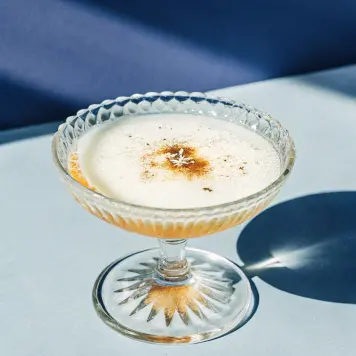
Krambambula
Krambambula is a spiced honey liqueur often used in desserts and believed to have originated in the Grand Duchy of Lithuania. Its name comes from a popular 18th century drinking song.
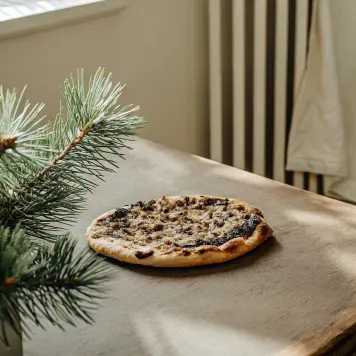
Sochen with poppy seeds
Sochen is a thin unleavened flatbread traditionally baked for Christmas Eve and served with a sweet poppy seed filling. In Hrodna, locals often add crushed nuts and dried apples for extra flavor.
Draniki with apple and cinnamon
While draniki are usually savory potato pancakes, in Hrodna they are often sweetened with grated apple and cinnamon. They are served with sour cream or honey as a beloved local dessert.
Traditional Savory Dishes

Draniki
Draniki are crispy potato pancakes that are considered the national dish of Belarus. In Hrodna, they are often served with sour cream, fried onions, or mushroom sauce.
Machanka
Machanka is a thick, hearty gravy made from pork fat, flour, and sour cream, traditionally served with thick Belarusian pancakes called bliny. It is a rustic winter comfort food beloved in the Hrodna region.
Kolduny
Kolduny are stuffed dumplings similar to pierogi, filled with meat and mushrooms. In Hrodna, the local version is sometimes called "magic dumplings" and was a favorite of the Polish-Lithuanian nobility.
Traditional Beverages

Krambambula (drink version)
This spiced honey liqueur is one of the most famous beverages from the Hrodna region. It was historically brewed by Dominican monks in the city and is still made today with honey, spices, and alcohol.
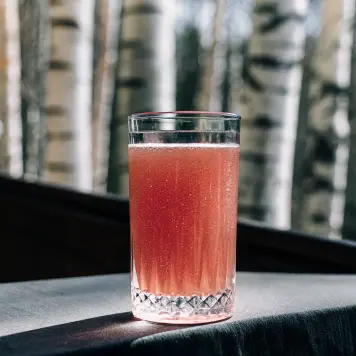
Bierzo
Bierzo is a traditional Belarusian birch sap drink collected in early spring. Hrodna locals tap birch trees in March for this refreshing, slightly sweet beverage that is believed to cleanse the blood.
Kvass
Kvass is a fermented rye bread drink that is a staple across Belarus. In Hrodna, it is often homemade with local rye bread and flavored with mint, berries, or dried fruits.
Frequently Asked Questions about Hrodna, Belarus
Is Hrodna, Belarus safe for tourists?
How many days in Hrodna, Belarus are enough?
Best time to visit Hrodna, Belarus?
Is Hrodna, Belarus expensive to visit?
How to get around Hrodna, Belarus?
Get a PDF with the most popular attractions sent to your email
Get a PDF with all attractions, ratings, and tips. Perfect for offline use.
Most popular day trips
Mir Castle
A UNESCO World Heritage castle with Gothic and Renaissance architecture.
Nesvizh Castle
Historic palace and park complex, another UNESCO listed site.
Augustow Canal
Scenic 19th century canal connecting Belarus and Poland, great for walks and boat trips.
Bialowieza Forest
Ancient primeval forest and UNESCO site, home to European bison.
Getting there
Train stations
Minsk, Brest, Vilnius, Warsaw
From Grodno Airport, take a taxi or bus to city center (20 min). From Minsk, take a direct train (4h) or bus (4.5h).
Find flights to Hrodna, Belarus
Click to get eSim for Hrodna, Belarus
The easiest and most affordable way to get mobile internet wherever you travel.
Comments (5)
Food was cheap and tasty especially at the local bakeries. Wish I'd brought more cash though cards don't work everywhere.
Bus from Vilnius is only a few euros and takes 2 hours. Check the schedule carefully though they don't run very often on Sundays.
The old town is nice but honestly one full day is enough. Great for a budget weekend from Vilnius though.
Loved the castle but the rest of the city felt kinda dead after 8pm. Not much nightlife if that's your thing.
Pro tip: skip the overpriced restaurants on Sovetskaya and eat at the market stalls near the river instead. Half the price double the flavor.