 CityBuddy
 English
Things to Do in Hungary
Photo made by Budget Bizar on Pexels.com
When to visit
Plan your perfect trip to Hungary
Get a complete travel plan built just for you in under 30 seconds, with daily routes, local food tips, budget estimates and more.
Are any of these especially important to you?
Select all that apply
Plan language: EnglishMost popular attractions in Hungary
When considering top things to do in Hungary, start with the Fisherman's Bastion atop Castle Hill for panoramic views over the Danube and Pest. Then explore Buda Castle, a 944-room palace complex housing the Hungarian National Gallery. Finish with a soak in Széchenyi Thermal Bath, Europe's largest medicinal bath with 18 pools fed by thermal springs.
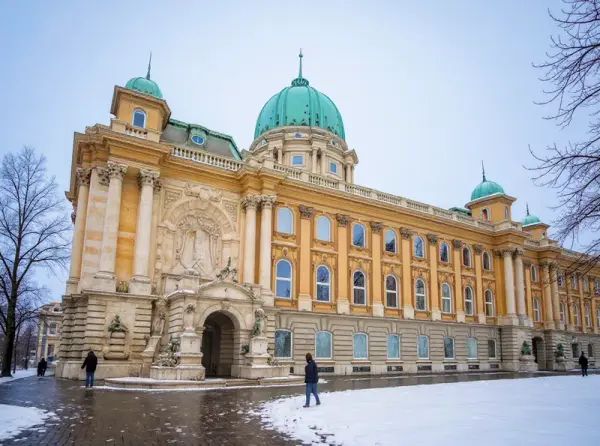
1. Buda Castle
Budapest
Quick facts: Golden light at dusk turns the carved stone and baroque roofs into a cinematic backdrop that makes crowds pause and photographers linger. Beneath those grand facades, galleries and museums guard millions of artifacts, so you can wander from medieval tapestries to modern art without leaving the same courtyard.
Highlights: Hop on the hill funicular, first opened in 1870 and rebuilt in 1986, and the climb delivers a postcard panorama of riverlight and terracotta rooftops that feels like stepping into a movie set. Wander under the palace and you'll find a cool, echoing network of medieval cellars and caves that were used as wine stores and wartime shelters, where buskers sometimes play violins so the stones literally answer back.
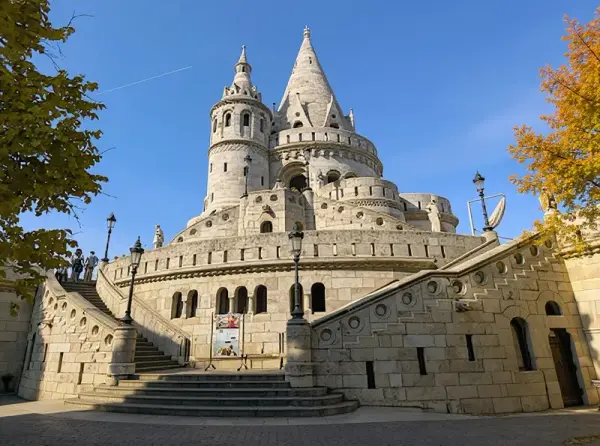
2. Fisherman's Bastion
Budapest
Quick facts: Stepping onto the honey-colored terraces, visitors get sweeping panoramic views and fairytale towers that photograph brilliantly at golden hour. Seven conical turrets symbolize the Magyar tribes, and ornate arches, carved stonework, and hidden nooks reward anyone who wanders off the main path.
Highlights: A quirky little fact: the spot takes its name from the medieval fishermen's guild that once defended that stretch of castle wall, and the neo-Romanesque lookout you see today was designed by architect Frigyes Schulek and built between 1895 and 1902 with seven conical towers representing the seven Magyar tribes. At golden hour the honey-colored stone warms under your palm and the terraces offer a postcard-perfect panorama where the Gothic Revival spires of the Parliament shimmer across the Danube while Alajos Stróbl's bronze statue of King Stephen catches the low light.
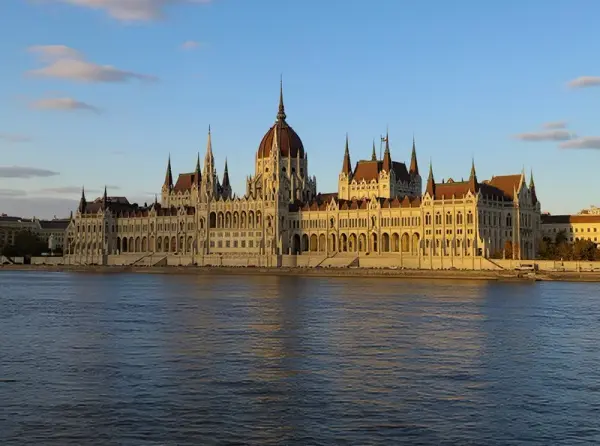
3. Hungarian Parliament Building
Budapest
Quick facts: Step close and you'll notice the opulent interior hides an astonishing 691 rooms, with a central hall crowned by a 96-metre dome that dominates the skyline. Inside, visitors encounter the Holy Crown of Hungary displayed beneath that dome, a tiny but potent symbol amid soaring marble, carved statues, and glittering gold leaf.
Highlights: Behind the central glass display the Holy Crown of St. Stephen sits under soft gilt and spotlights, its enamel and precious stones catching the riverlight like a tiny sun, a relic spirited out after World War II and not returned until 1978. Towering above, a 96-meter dome crowns a labyrinth of 691 rooms, and after dark the Neo-Gothic spires and red roof tiles are bathed in amber lights so the whole façade resembles a lit honeycomb.
Have you heard of free walking tours?
After traveling to 30+ countries, there's one thing I wish someone had told me from day one, and it completely changed how I experience new cities.
Free walking tours. Yes, actually free. No credit card needed. No catch.
Local guide, 2-3 hours
Major sights, hidden gems, local stories
100% tip-based
Guides earn only tips, so they give their absolute best
You tip what feels right
At the end, just tip whatever you feel is right
I've done these in dozens of cities and they've been the highlight of almost every trip. If you're visiting Hungary, do this on your first day. You'll thank me later.
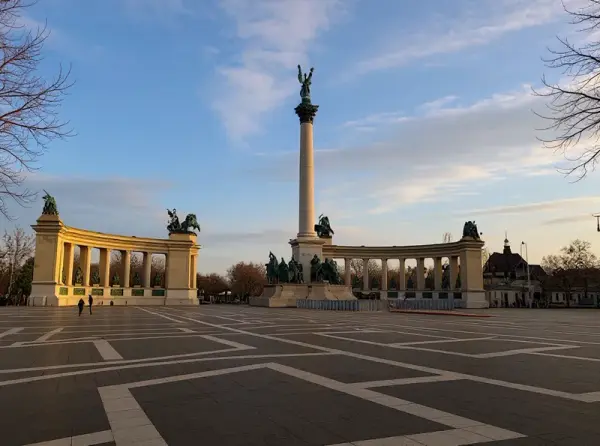
4. Heroes' Square
Budapest
Quick facts: Step onto a wide, echoing plaza and you’ll be greeted by towering statues that dramatize seven centuries of leaders, their horses frozen mid-stride under the open sky. Look closely at the colonnade and you’ll spot symbolic figures and subtle inscriptions that whisper unexpected stories about national myths and political turns.
Highlights: A 36-metre central column topped by the Archangel Gabriel holding the crown and apostolic double cross rises between two colonnades of 14 life-size statues, so when the late sun hits the bronzes their faces burn a warm, metallic orange. Built in 1896 to mark the thousand-year anniversary of the Magyar arrival, the place still draws quiet school pilgrimages where children line up on the chieftains' plinths to learn the names of the seven leaders.
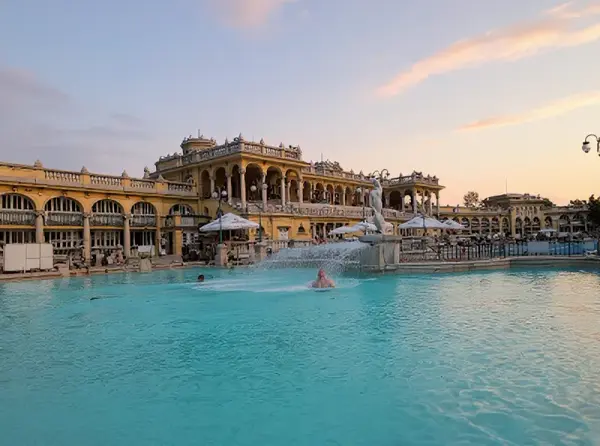
5. Széchenyi Thermal Bath
Budapest
Quick facts: Steam curls above a grid of outdoor pools where locals and visitors play chess at poolside tables while soaking in mineral-rich water kept around 38°C, creating a lively, social vibe. Ornate yellow façades and cavernous neo-Baroque halls hide dozens of thermal and medicinal baths, and the warm, slightly sulfurous mist makes every soak feel like a cozy, restorative ritual.
Highlights: Steam drifts over the pale yellow neoclassical baths at dawn, where 18 outdoor pools sit like warm islands at about 38 degrees Celsius, while elderly men shout and slap dominoes over steamy games of chess at the poolside tables. Come nightfall the complex flips into a neon-soaked party: live DJs and people hopping between steaming basins during the famed 'Sparty' events, the air heavy with eucalyptus and mineral salt.
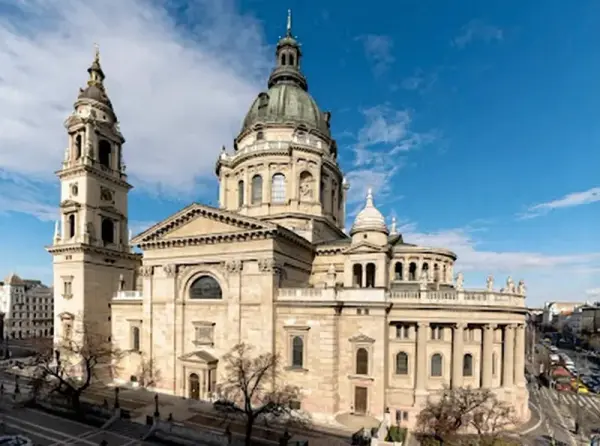
6. St. Stephen's Basilica
Budapest
Quick facts: Climbing the narrow spiral staircase to the dome rewards you with a jaw-dropping, 360-degree panorama and a dramatic close-up of the richly gilded interior frescoes. A solemn glass case holds a preserved right hand venerated as a national relic, drawing both pilgrims and curious visitors who linger under its soft light.
Highlights: A glass reliquary holds the preserved right hand of King Stephen I, and on August 20 locals still carry it in a slow, candlelit procession that smells of beeswax and incense. Take the elevator up to the 96-meter-high dome and you'll emerge into a circular gallery where the air tastes faintly of old stone and candle smoke, the gilded tiles shimmer in gold and you can stare down at the floor mosaics like a secret map.
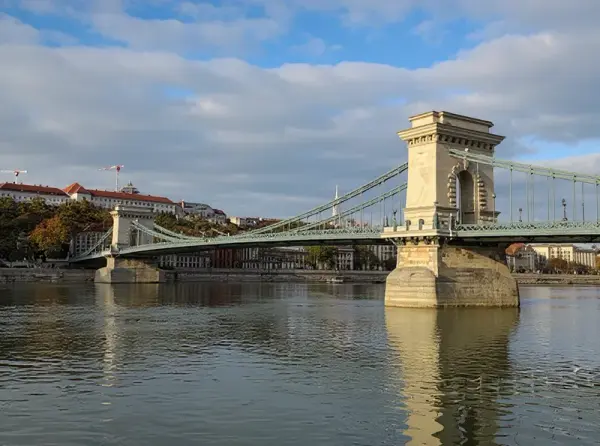
7. Chain Bridge
Budapest
Quick facts: Walking across at dusk, the wrought-iron chains and stoic lion sculptures feel oddly theatrical, while floodlights turn the span into a glittering ribbon over the water. A persistent myth says the lions have no tongues, yet close inspection shows they were carved with tongues that hide in shadow, which surprises many visitors.
Highlights: Engineered by William Tierney Clark and built under Scottish engineer Adam Clark, the bridge first opened in 1849, was blown up in 1945, and was spectacularly rebuilt and reopened exactly one hundred years after its debut in 1949. Visitors always do a double-take at the four stone lions sculpted by János Marschalkó, leaning in to squint at the jaws because a long-running local joke claims the lions have no tongues, though a close look reveals tiny carved tongues tucked behind the teeth.
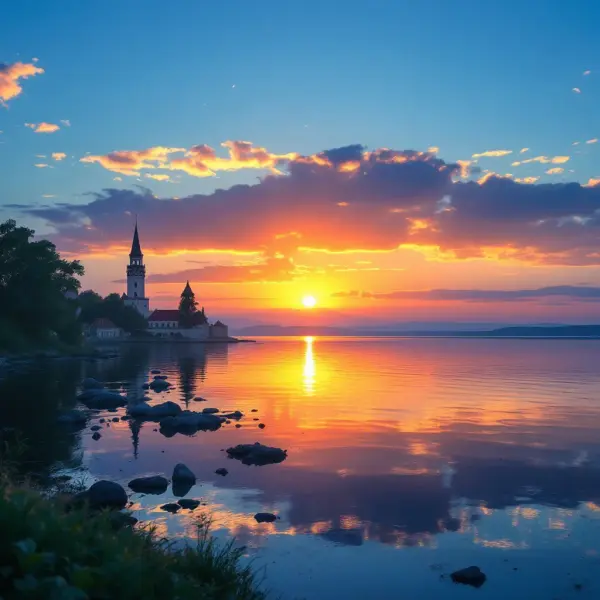
8. Lake Balaton
Balatonfüred
Europe's warmest lake delivers beach life, volcanic wine regions, and medieval castles all in one trip. Float in the mineral-rich water, cycle past lavender fields, and sip legendary white wines as the sun paints the water purple.
Quick facts: Central Europe's largest lake spans 592 square kilometers, yet its average depth is a mere 3.2 meters, making it shallow enough to wade far from shore. The lake's unique mineral composition and warm waters have drawn visitors since Roman times, earning it the nickname "the Hungarian Sea."
Highlights: Come sunset, the northern shore's water slowly turns a deep violet hue, a phenomenon caused by the lake's unique mineral content reflecting the fading light. Locals call this the "Balaton purple hour" and gather with bottles of local Olaszrizling wine to watch the transformation in silence.
9. Eger Castle
Eger
Quick facts: The 40-meter-deep casemate network beneath the castle stretches over 200 meters of underground tunnels. A single cannon shot from a Hungarian defender during the 1552 siege knocked out two Ottoman pashas simultaneously.
Highlights: Taste the legend yourself at the castle's wine cellar, where you can sample the robust red wine said to have given defenders superhuman strength during the 1552 siege. Original Ottoman cannonballs still embedded in the fortress walls make the medieval battle feel shockingly present.
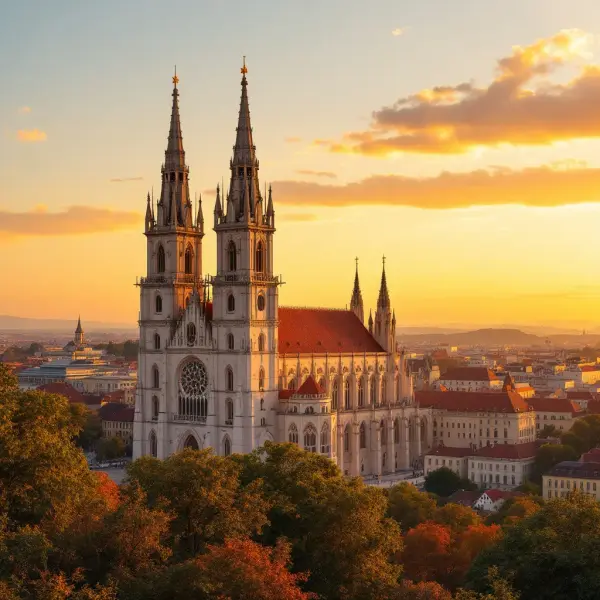
10. Pécs Cathedral
Pécs
Stand where Hungarian kings once knelt for coronation, surrounded by 900-year-old frescoes. You will walk through a 4th-century crypt, gaze up at 60-meter towers, and discover layers of history beneath your feet.
Quick facts: Four towers rise above the city skyline, with the western pair soaring 60 meters and the eastern duo slightly shorter. The current structure dates from the 11th century, though the site itself has been a sacred space for nearly 2,000 years.
Highlights: Step inside and look up: the Hungarian kings were crowned right here in the 11th century, and fragments of those original frescoes still cling to the walls. An underground crypt from the 4th century sits beneath your feet, with early Christian sarcophagi carved with symbols that predate the cathedral itself.
Where to Stay in Hungary
Selected by City Buddy based on guest reviews and proximity to top attractions
Search all hotels in HungaryPowered by agoda
Popular Cities in Hungary
Frequently Asked Questions about Hungary
Is Hungary safe for tourists?
How many days should I spend in Hungary?
What is the best time to visit Hungary?
Is Hungary expensive to visit?
How to get around Hungary?
Get a PDF with the most popular attractions sent to your email
Get a PDF with all attractions, ratings, and tips. Perfect for offline use.
Most popular day trips
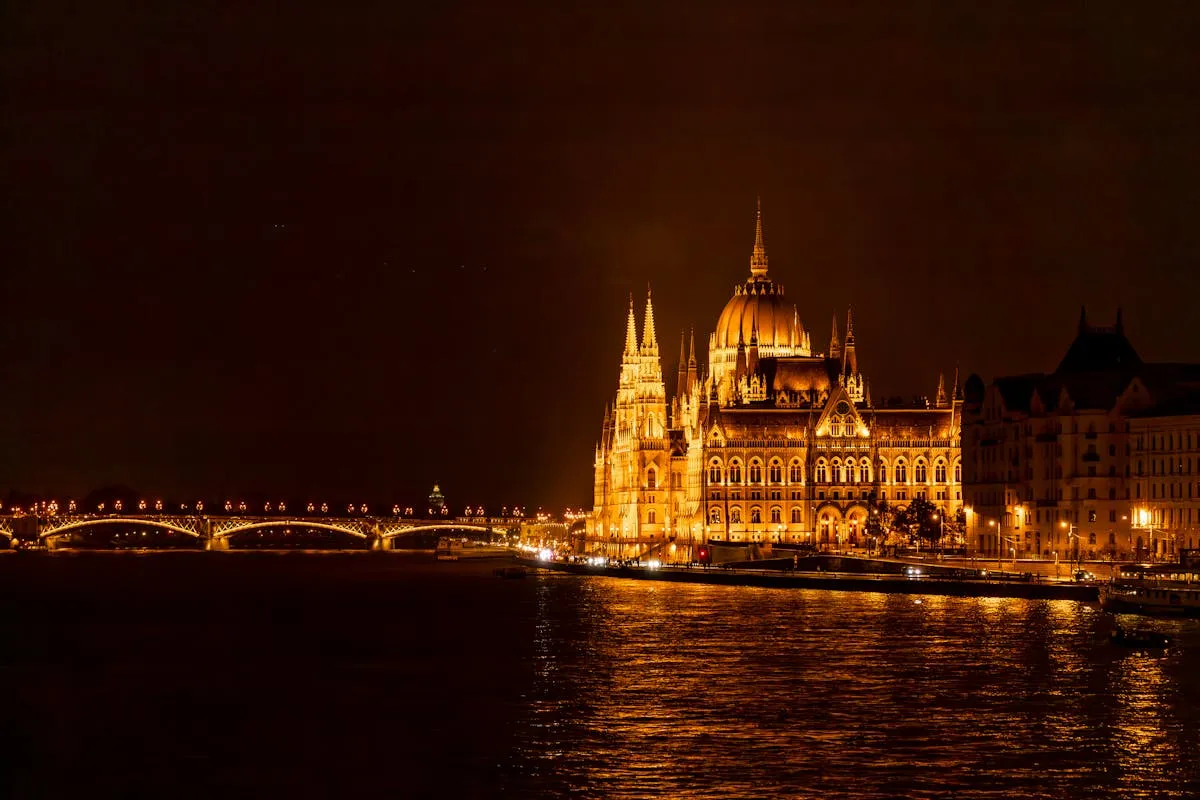
Budapest
Stunning Danube riverside, Buda Castle, thermal baths and ruin bars.
Eger
Baroque town with a historic castle and famous red wine cellars.
Pécs
Medieval city with Ottoman mosques and early Christian tombs.
Szentendre
Artists village with colorful houses and Danube river views.
Rent a car in Hungary
Getting there
Airports
Train stations
Vienna, Prague, Berlin, Bucharest
Szeged, Debrecen, Miskolc
Lake Balaton, Pécs, Zagreb
Take bus 100E from BUD airport to city center in 30 minutes. Taxis cost around HUF 8000.
Click to get eSim for Hungary
The easiest and most affordable way to get mobile internet wherever you travel.
Visa & entry
United States, Canada, UK, Australia, New Zealand, Japan, South Korea, EU/EEA countries, Switzerland
Most African, Asian (except Japan, Korea) and Middle Eastern countries
Hungary is part of the Schengen Area. Visa-free stays are 90 days within any 180-day period.
Comments (6)
Skip the river cruise restaurants. Walk to the Jewish Quarter for dinner, same Danube view without the ripoff prices. Food quality is way better too.
Download BKK and buy a 72 hour ticket on your phone. Valid on all metro, bus, tram. Way easier than hunting for a ticket machine at 6am.
Hungary surprised me. Didn't love Budapest as much as everyone said, but the countryside and smaller towns stole my heart completely.
Honestly I was a bit underwhelmed by the thermal baths. Too crowded and touristy. Wish I'd skipped the whole Szechenyi thing.
Food was amazing but the weather in March was unpredictable. Pack layers, seriously. Castle District felt like a fairytale.