 CityBuddy
 English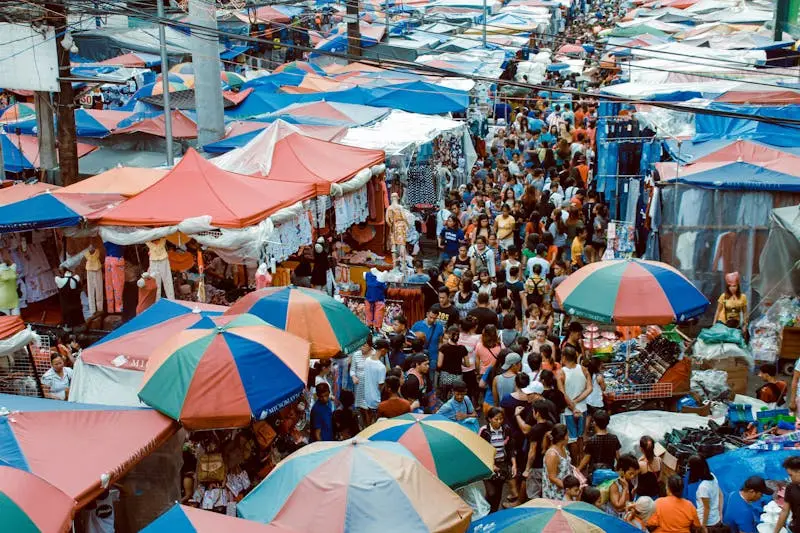
Things to Do in Manila, Philippines
Photo made by NIC LAW on Pexels.com
When to visit
Manila is the #14 friendliest city to foreigners in the world, based on our data across hundreds of destinations.
Most popular attractions in Manila, Philippines
Top things to do in Manila, Philippines include exploring Intramuros, the historic walled city dating back to the Spanish colonial period. Visit Fort Santiago, a citadel with rich history just 600 meters from the coast. Don't miss San Agustin Church and Museum, the oldest stone church in the country, offering fascinating artifacts and architecture.
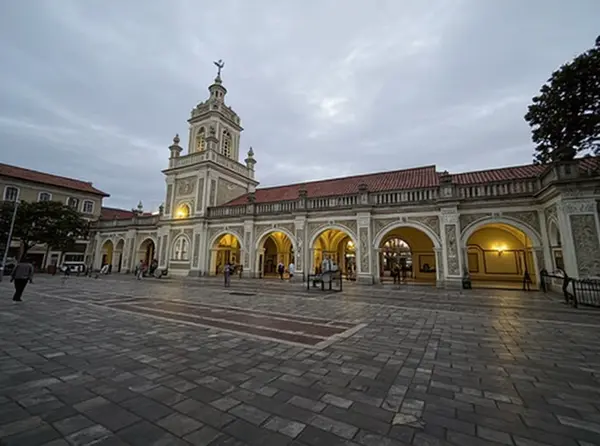
1. Intramuros (Historic Walled City)
Historic Walled City
Step into centuries of Philippine history behind imposing stone walls. Wander cobbled streets, colonial churches, museums, and sunset views from the ramparts.
Quick facts: Sunlight slants across mossy stone walls, horse-drawn carriages clip-clop over cobblestones, and cafés spill acoustic music into narrow plazas. More than a dozen restored fortifications and colonial buildings now host museums, art galleries, and rooftop gardens, so wandering feels like stepping into a living time capsule.
Highlights: Wander sun-warmed cobblestone streets past San Agustin Church, completed in 1607, and under the arched gateway of Fort Santiago, where rusted Spanish cannons from the 17th century still point toward the bay and the Rizal Shrine marks the cell where José Rizal was held before his 1896 execution. By day horse-drawn kalesas clip-clop over the stones and workshops pedal out dozens of bamboo tour bikes, the air threaded with frying oil, jasmine, and the faint metallic tang of the river, so you can feel three centuries of layered smells and stories at once.
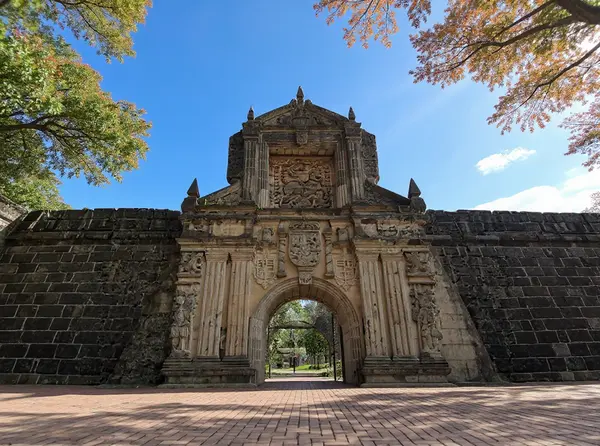
2. Fort Santiago
Stone-walled Fort Santiago reveals Manila's Spanish colonial and wartime past. Walk leafy courtyards, see the Rizal Shrine, and gaze over the Pasig from the old ramparts.
Quick facts: Thick volcanic-stone walls and a quiet moat create a cinematic hush, where colonial architecture and wartime scars can still be felt underfoot. Visitors often pause at the small museum and the narrow cell where José Rizal wrote his last poems, imagining the hush before his final march.
Highlights: Walk into the dim cell where José Rizal spent his final nights before his execution on December 30, 1896, the rough brick walls still scratched with names and a faint metallic tang from the old cannons. Every December 30th, hundreds of students and members of Masonic lodges gather to lay wreaths and light candles at the small marble marker, the hush broken only by a lone bugle that plays the national lament.
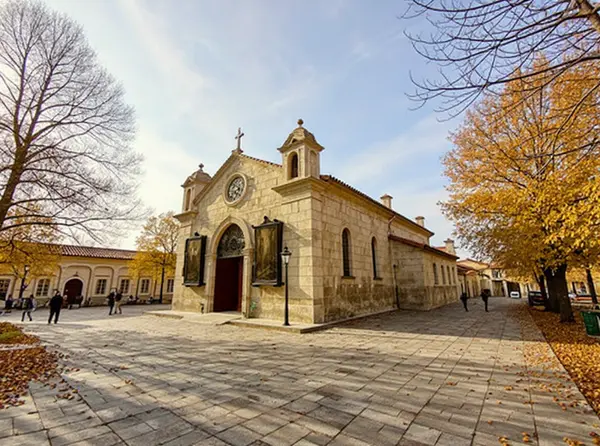
3. San Agustin Church and Museum
Step into Spanish-era Manila at San Agustin Church, a UNESCO Baroque landmark. Marvel at gilded altars, trompe l'oeil ceilings, and a compact museum of colonial artifacts.
Quick facts: Wander inside and you'll be struck by warm, honeyed stone and lavish baroque ornamentation, while trompe-l'œil ceilings seem to breathe with painted clouds. Upstairs a compact museum cradles centuries of ecclesiastical treasures, from embroidered vestments to gleaming reliquaries, and the whole building remarkably survived bombardments that flattened much of its neighborhood.
Highlights: Built in 1607, the stone basilica has stood for more than 400 years, and under its nave lies the tomb of conquistador Miguel López de Legazpi whose carved epitaph you can still trace with your fingers. In the museum's dim rooms a whisper of beeswax and old paper hangs over glass cases holding 17th- and 18th-century vestments, silver liturgical vessels, and wooden processional saints whose cracked polychrome faces glow under a single lamp.
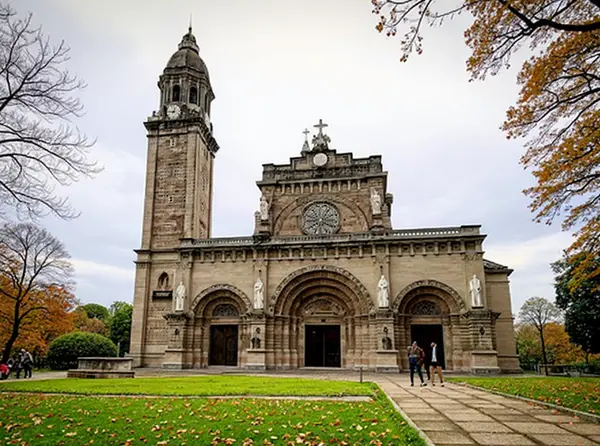
4. Manila Cathedral
Experience centuries of Manila history in a grand colonial cathedral in the heart of Intramuros. Admire restored baroque and Romanesque details, stained glass, and a peaceful interior.
Quick facts: Sunlight streaming through high stained-glass windows splashes color across polished marble, and the vaulted acoustics make organ and choir performances especially resonant. Silent plaques and repaired stonework tell a dramatic story of surviving multiple earthquakes and wartime damage, while a revered, centuries-old image inside draws pilgrims and curious visitors alike.
Highlights: Step inside and you'll be standing in a church that has been rebuilt eight times since the 16th century, so the marble floors, neoclassical columns, and baroque carvings form a layered timeline you can read with your eyes. On many afternoons an elderly choir practices Gregorian hymns until the sunlight through the stained glass turns the aisle into bands of ruby and gold, and parishioners often tuck tiny folded notes into the iron grille by the altar, their paper edges softened by years of incense.
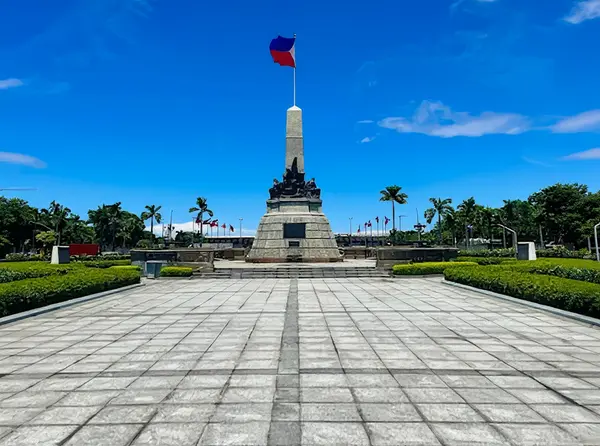
5. Rizal Park (Luneta)
Luneta
Historic park at Manila's heart, where national memory meets everyday life. Walk the Rizal Monument, relaxed gardens, and lively plazas for photos and people-watching.
Quick facts: Morning light reveals sprawling green lawns threaded with ornamental fountains and shaded promenades, where locals practice tai chi and families picnic among blooming acacias. A dramatic national monument anchors the center, drawing crowds for ceremonies and quiet reflection while flocks of pigeons add to the lively urban soundtrack.
Highlights: Right at the center stands a 12.8-meter bronze monument to José Rizal, where locals quietly leave small candles and hand-strung sampaguita garlands after sunset, the wax and flower perfume mixing with the evening air. On December 30 each year hundreds to thousands gather before dawn for a wreath-laying and flag ceremony, school choirs belt out the national anthem, and street vendors sell tiny paper flags and rice cakes for around 10 to 20 pesos.
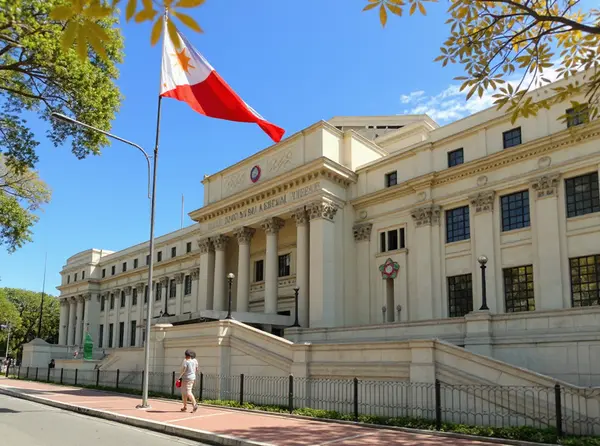
6. National Museum of the Philippines (National Museum Complex)
National Museum Complex
Explore the Philippines' art, history and biodiversity in one central complex. See Juan Luna's Spoliarium, the Natural History Tree of Life, and rich cultural artifacts.
Quick facts: Step inside and you'll be struck by vast neoclassical halls showcasing Juan Luna's Spoliarium alongside dazzling precolonial goldwork and richly woven textiles. Quiet corners invite lingering study of fossil specimens, ceremonial objects, and monumental paintings, making a visit feel like a compact sweep through centuries of culture.
Highlights: Stand beneath the pale neoclassical rotunda and Juan Luna's Spoliarium swallows your eye, a canvas roughly 4 by 7 meters whose dark umbers and crimson highlights deepen when conservators gently work on its varnish, releasing a faint scent of turpentine. The painting earned a gold medal in Madrid in 1884, a triumph guides still narrate as a spark for Filipino nationalist pride, and hearing that backstory while the gallery hushes makes the scene feel unexpectedly cinematic.
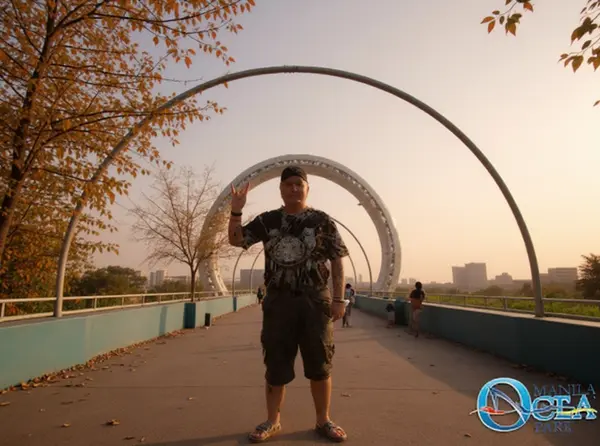
7. Manila Ocean Park
See Philippine marine life up close in a large interactive aquarium. Walk a long glass tunnel, watch feeding shows, and meet penguins.
Quick facts: Glowing blue lights and a curved glass tunnel let you watch sharks and stingrays glide inches above your head, making the walk feel like an underwater postcard. Over 3,000 marine animals inhabit themed tanks, and daily feedings turn what could be classroom facts into hands-on, heart-racing experiences.
Highlights: Every evening the aquarium dims to ocean-blue lights and stages a "feeding serenade" where a school of about 200 glimmering sardines is choreographed to swim the length of the glass tunnel, the water whispering like distant rain while families press their palms to the acrylic. Longtime diver Kuya Danny narrates the show in Tagalog, offering brave kids a chance to feel a smooth sea cucumber's cool, velvet skin and teaching them the local names of the fish, which always turns squeals into proud, wide-eyed chatter.
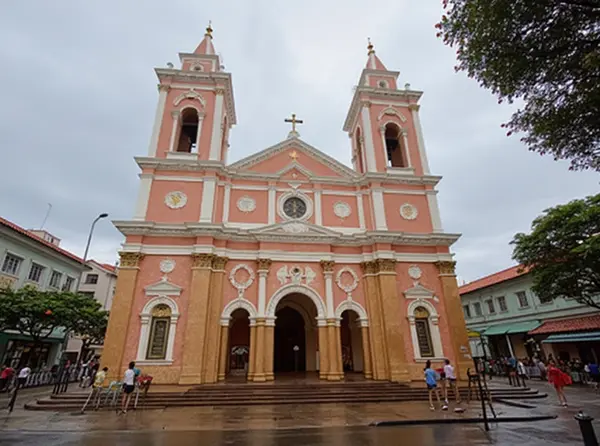
8. Binondo Church (Minor Basilica of San Lorenzo Ruiz)
Minor Basilica of San Lorenzo Ruiz
Experience centuries of Chinese-Filipino Catholic history at Binondo Church. Admire the ornate baroque interior and witness local devotions up close.
Quick facts: A warm haze of incense and colorful lanterns greets visitors, revealing a surprising blend of Baroque altars and Chinese decorative motifs. Many come to venerate the country's first canonized saint, and lively weddings and community rituals keep the aisles humming with devotion.
Highlights: Founded in 1596 to serve Chinese-Filipino traders, the church is one of the country’s oldest parishes and still fills with thick incense and the clack of wooden rosaries during the big September 28 feast. A quirky local practice has visitors tucking tiny folded petitions and red prayer ribbons into the iron grilles around the side chapels, so you can see dozens of handwritten slips and faded ribbon tails fluttering in the drafts.
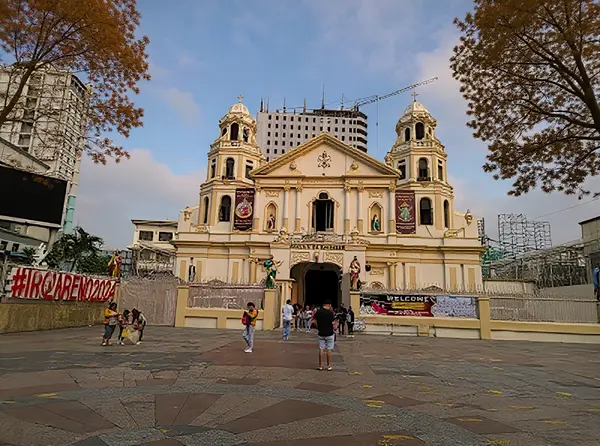
9. Quiapo Church (Minor Basilica of the Black Nazarene)
Minor Basilica of the Black Nazarene
Witness deep popular devotion and Manila's living history at the Minor Basilica of the Black Nazarene. Experience vibrant masses, candlelit votive offerings, and close views of the Black Nazarene image.
Quick facts: Crowds squeeze through fragrant, candlelit aisles to touch a dark wooden image, creating a thunder of prayers and whispered offerings that vibrates through the packed church. Legendary devotees attribute countless answered petitions to the statue, and the annual procession draws hundreds of thousands who jostle along the streets for a brief brush with the sacred figure.
Highlights: Under clouds of candle smoke and the metallic clink of rosaries, worshippers press faded scarves and small towels against a life-size dark wooden statue of Christ, said to date from the 17th century, hoping a cloth will pick up a blessing. Each January roughly 1 million devotees join the frenetic Traslacion procession, bodies packed shoulder to shoulder for more than 12 hours as people shout prayers and try to touch the carriage or its rope to claim a miracle.

10. Divisoria Market (shopping district)
shopping district
Find unbeatable bargains on clothes, fabrics and accessories in Manila's busiest market. Navigate crowded, colorful lanes while sampling street food and bargaining for low prices.
Quick facts: Narrow lanes pulse with a stacked maze of stalls offering everything from bolts of fabric to bargain electronics, so haggling feels like a sport. Seasoned bargain hunters love combing through wholesale bins and street-food carts, scoring bulk deals and quirky finds amid the constant calls of vendors.
Highlights: Rows of stalls cram so close you can taste the garlic from a vendor grilling fish balls, while a nearby seller hawks identical LED lamps for as little as ₱10, bolts of fabric piled ten feet high under buzzing fluorescent lights. Longtime shoppers have a cheeky ritual: they issue a "last price" countdown with three quick chops on the counter, and when the seller flicks a green pen the deal is sealed, turning bargaining into a street-side performance.
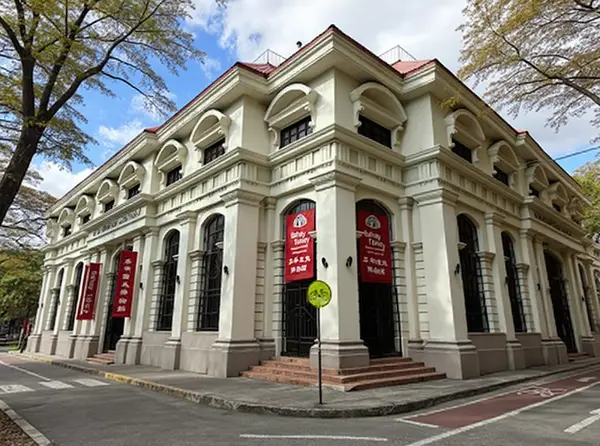
11. Visit Bahay Tsinoy Museum
Discover the rich heritage of Chinese Filipinos through rare artifacts and vivid stories. Step into history with sounds and sights that bring the past to life.
Quick facts: The place showcases the stories of over 1.2 million Chinese Filipinos and their influence on Philippine culture and history. Exhibits include intricate ancestral records and artifacts dating back more than 300 years.
Highlights: Visitors can experience a unique sound exhibit where traditional Chinese instruments are played alongside old Manila street sounds, creating an immersive time travel effect. A highlight features a detailed diorama of the Binondo district as it looked in the early 1900s with over 500 miniature figures.
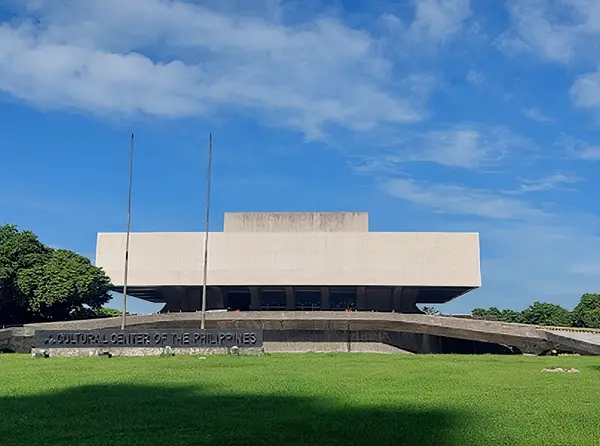
12. Cultural Center of the Philippines
Experience the pulse of Filipino performing arts. Catch dynamic plays, concerts, and exhibits in an architecturally unique setting that celebrates local culture.
Quick facts: A striking feature of this place is the tanghalang nicanor abelardo, a theater known for its acoustic design that lets every word and note reach the last seat clearly. Over 50 performances and art exhibits happen here monthly, attracting artists and audiences nationwide.
Highlights: Watch performers pass a ceremonial torch before each major event to honor Filipino artistry, a tradition started by the original cultural director. The main theater seats 1,800 people and features a chandelier made from capiz shells, reflecting local craftsmanship under the lights.
Where to Stay in Manila, Philippines
Selected by City Buddy based on guest reviews and proximity to top attractions
Search all hotels in Manila, PhilippinesPowered by agoda
Opening days in Manila, Philippines
Which of the top sights close on which day of the week — the classic trip-ruiner, checked for you.
Monday: 9 of 19 top sights closed — plan museums for another day.
Closed on Monday · 9 closed, 10 open
Opening days from Google Maps (checked 2026-03-14). Public holidays, strikes and seasonal hours can differ — check the official website before you go.
Traditional Sweet Dishes
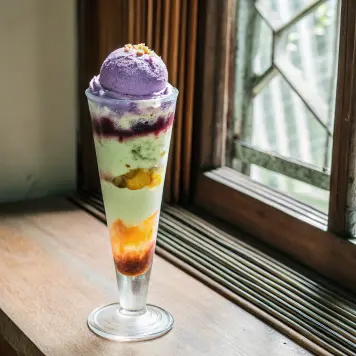
halo-halo
Halo-halo literally means 'mix', it evolved from Japanese shaved ice and Filipino sweet preserves, and today its rainbow layers topped with leche flan or ube ice cream are a summer symbol across Manila.
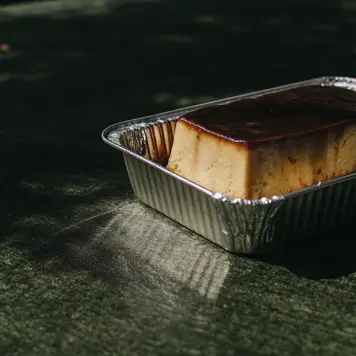
leche flan
Leche flan in the Philippines is denser and richer than its Spanish cousin because cooks use many egg yolks and condensed milk, and it is traditionally steamed in a tin mold called a llanera for a silky, custardy texture.
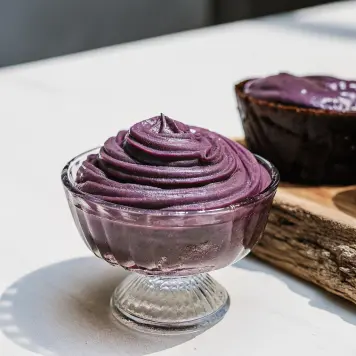
ube halaya
Ube halaya is a vivid purple jam made from purple yam, its color and nutty-sweet flavor turned it into a signature ingredient that elevates everything from halo-halo to pastries and ice cream.
Traditional Savory Dishes
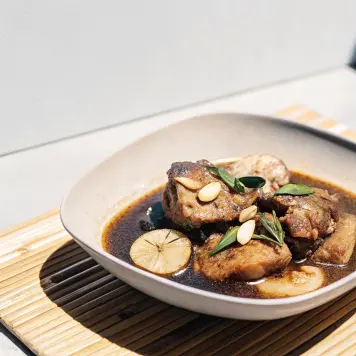
adobo
Adobo is more a method than a single recipe, vinegar and soy sauce preserve and flavor meat, and nearly every Filipino family in Manila guards a version they call their own.

sisig
Sisig began as a resourceful Kapampangan dish made from pig's head and ears, it was revived as a sizzling, tangy bar favorite in Manila and is often finished with a raw egg on the hot plate.
lechon
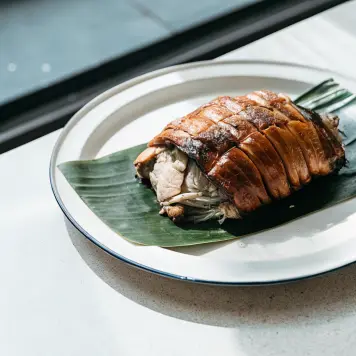
Lechon, a whole roasted pig with crackling skin and juicy meat, is the unmistakable centerpiece of Filipino fiestas and its carving announces celebration across Manila.
Traditional Beverages

sago't gulaman
Sago't gulaman pairs chewy tapioca pearls with jiggly agar jelly in a sweet brown sugar syrup, it became a beloved street drink because it is both refreshing and texturally playful.

buko juice
Buko juice is the clear, slightly sweet water from young coconuts, sold straight from halved shells by vendors and prized as a natural electrolyte on hot Manila days.

tuba
Tuba is freshly tapped coconut sap that ferments into a mildly alcoholic palm wine, it has long been woven into Filipino rituals and fiestas and can be distilled into the stronger spirit lambanog.
Know before you go
What a day costs in Manila, and the rip-offs to avoid
Top rip-offs to avoid
- Unlicensed airport drivers. Use the official coupon taxi counter inside the terminal or book Grab from the app before exiting arrivals.
- Meter tampering. Check the meter is reset when you start and the rate matches the posted daytime flag-down. Prefer Grab for fixed pricing.
- Poor-rate exchange booths. Use bank branches or reputable money changers with posted rates. Count your pesos at the counter before walking away.
Fair taxi from the airport: ₱700 - ₱1,000 (€10 - €14)
Cheaper option: Airport Jeepney or the official airport shuttle/UV Express to central areas like Baclaran or Taft MRT station (₱50)
All scams, fair prices and rulesFrequently Asked Questions about Manila, Philippines
Best time to visit Manila, Philippines?
Is Manila, Philippines expensive?
How to get around Manila, Philippines?
Is Manila, Philippines safe to visit?
How many tourists visit Manila annually?
Get a PDF with the most popular attractions sent to your email
Get a PDF with all attractions, ratings, and tips. Perfect for offline use.
Most popular day trips
Tagaytay (Taal view)
Cool ridge with panoramic views of Taal Volcano.
Taal Volcano (via Talisay)
Boat trip to the volcanic island on Taal Lake.
Pagsanjan Falls (Laguna)
Scenic gorge and classic canoe (shooting the rapids) trip.
Anilao (Mabini, Batangas)
Popular snorkeling/diving spot with clear waters.
Getting there
Train stations
PNR South Main Line (to Laguna, Lucena, Bicol)
MRT-3 / LRT-2 (major Metro Manila interchange)
LRT-1 / connecting buses to airport/Metro
From NAIA take a metered taxi or Grab; expect heavy traffic—allow 1–2 hours.
Useful information for Manila, Philippines
Overview for Manila, Philippines
Want a day-by-day plan for Manila, Philippines? Open the trip planner
Plan your perfect trip to Manila, Philippines
Get a complete travel plan built just for you in under 30 seconds, with daily routes, local food tips, budget estimates and more.
Are any of these especially important to you?
Select all that apply
Getting around
How do you want to move between places?
Plan language: EnglishMost popular itineraries for Manila, Philippines
Browse trip plans created by other travelers
14-Day Authentic Philippines Adventure for Budget Backpackers
Discover the Philippines off the beaten path from Manila's local streets to Balabac's rugged islands and Boracay's hidden coves in this budget-friendly, authentic 14-day journey.
15-Day Manila Spring Immersion
Discover Manila’s rich history, vibrant culture, and local flavors in this 15-day spring adventure through famous landmarks and authentic experiences.