 CityBuddy
 Français

Que faire à Jinan, China
Photo prise par meitetsu chin sur Pexels.com
Quand visiter
Attractions les plus populaires à Jinan, China
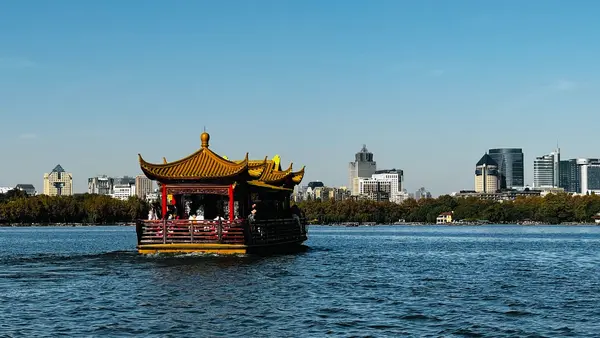
To explore Jinan's attractions, things to do in Jinan, China should begin with a boat ride on Daming Lake, a body of water covering about 46 hectares built during the Song Dynasty, surrounded by lotus flowers with distinct scenery in every season. Next, take a walk to Baotu Spring, where the three main spring eyes can surge up to 1.5 meters high, making its water flow the most abundant in the Qilu region. Finally, climb Thousand Buddha Mountain, which stands 285 meters tall, and from the summit you can enjoy a panoramic view of Jinan, with the night scenery of the Spring City being especially enchanting in the evening.
1. Daming Lake
This is no ordinary park, but a great lake formed by natural springs. Walk along the shore, watch the springs surge and willows droop over the banks, and you can even take a boat out to the pavilion at the lake's center.
Faits rapides: This spring-fed lake draws its water from hundreds of underground springs throughout Jinan's city center, earning the nickname 'springs in every home, willows by every door.' It covers about 46 hectares, reaches depths of up to 4 meters, and the water stays at around 18°C year-round.
Points forts: At the heart of the lake stands an ancient pavilion called 'Lixia Pavilion,' where Du Fu once wrote the famous lines, 'This ancient pavilion of the eastern sea, Jinan is home to many a scholar.' In the early morning, a thin mist often rises over the lake surface, and swallows skim low across the water, making it feel like a scene from a fairy tale.
2. Baotu Spring
Gledajte kako tri snažna izvora izbijaju iz dubina zemlje u srcu Jinana. Osjetite hladnu maglu na licu dok vas okružuje ikonična buka vode.
Faits rapides: 泉水每秒喷出约4立方米,几分钟便能灌满一个游泳池。泉水常年保持在稳定的18℃,因此冬暖夏凉。
Points forts: 泉水的三股激流能将水喷出数英尺高,发出的持续轰鸣声从公园入口就能听见。当地人会自带水瓶来灌装著名的甘甜泉水,几个世纪以来人们都相信这种水有益健康。
3. Spring City Square
Want to feel the modern heart of the old city in one place? Here, shops, dining, and street art are stacked in the same building. After exploring, you can slip straight into the underground passage and reach nearby Furong Street in five minutes.
Faits rapides: The entire area covers about 400,000 square meters and is a large urban complex combining a shopping mall, office towers, and hotels. The three-level underground parking garage connects directly to the metro station, and the current average daily foot traffic is around 80,000 visitors.
Points forts: From the rooftop sky garden at dusk, you can see the golden reflection of the entire moat, a shooting spot privately treasured by local photographers. During holidays, hundreds of lanterns descend from the atrium skylight, paired with traditional folk music performances, as if transporting the bustling street life of old Jinan into the modern glass facade.
4. Jinan Great Southern Mosque
If you want to feel the most authentic Muslim street life of old Jinan, this is its heart. Passing through the beef and mutton stalls and the naan ovens, you will step into a timber hall that has stood in quiet stillness for centuries.
Faits rapides: This mosque is the largest Islamic place of worship in Jinan. It sits deep within the Hui Muslim neighborhood, surrounded by bustling beef and mutton markets and halal snack stalls. On every Jumu'ah, it can hold over a thousand Muslims in congregational prayer, and the wooden structure of the prayer hall is several centuries old.
Points forts: The carved wooden coffered ceiling and painted beams and pillars inside the main hall are remarkably well preserved. When sunlight streams through the tall windows, it casts intricate patterns of light and shadow across the floor. What is most special is that before prayer, the imam slowly emerges from the side door and calls the faithful with a long, drawn-out chant, and in that moment, all the hustle and bustle of the Muslim lane falls silent.
5. Lingyan Temple
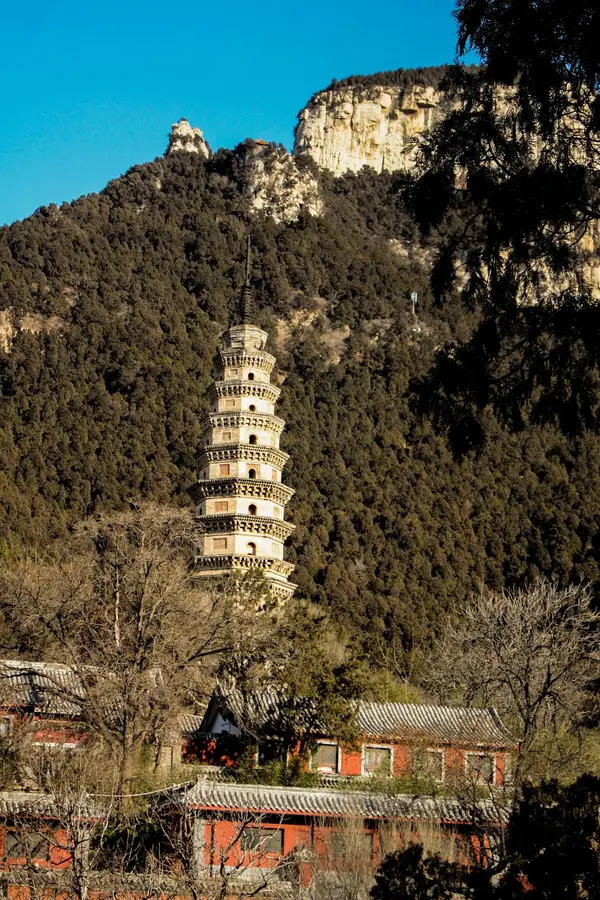
Climb the fifty-three stone steps, where an ancient temple and hills full of green cypress appear and vanish in the morning mist. The moment you step into the Hall of a Thousand Buddhas, forty arhats with varied expressions seem to speak to you with their eyes.
Faits rapides: Les quelque quarante tours de briques de la dynastie Song disséminées dans les collines de ce temple millénaire comprennent la Pagode Bizhi, haute de 54 mètres, qui est la plus haute tour de briques de style pavillon de la dynastie Song encore existante en Chine. Dans la salle des Mille Bouddhas, les quarante statues d'arbats en argile colorée ont été saluées par Liang Qichao comme les « premières sculptures du pays » ; les plis de leurs vêtements sont si fins qu'on peut distinguer chaque fil.
Points forts: Le plus fascinant est le Bouddha Vairocana entièrement doré au centre de la salle des Mille Bouddhas. Chaque année, le sixième jour du sixième mois lunaire, jour d'exposition des sutras au soleil, les rayons du soleil traversent la lucarne du toit et frappent avec précision le joyau sur le front du Bouddha pendant une heure entière. Le vieux moine qui garde la salle raconte que cette statue n'a jamais été restaurée depuis son moulage sous la dynastie Song, mais que la feuille d'or sur son visage devient de plus en plus brillante à mesure qu'on la frotte, comme si elle respirait.
6. Shandong Museum
Step into this world and take in five thousand years of Qilu civilization at a glance. From Dawenkou painted pottery to Ming and Qing painting and calligraphy, you will slow your steps before Han carved-stone reliefs and Confucius's robes and cap.
Faits rapides: The collection here holds more than 200,000 artifacts, including the largest number of Han Dynasty stone relief carvings excavated in the Shandong region anywhere in the country. The crown jewel is the collection of Confucian cultural treasures, represented by Ming Dynasty clothing of the Duke Yansheng, each piece embroidered with exquisite craftsmanship.
Points forts: The most striking gallery in the museum is 'The Han Spirit of Qi and Lu.' On the remarkably preserved gilded bronze chariot fittings from the Western Han Dynasty, even the coiling dragon pattern on the chariot rail is still as clear as new. Another delightful discovery is a long scroll of cursive calligraphy by the Ming Dynasty master Zhu Yunming, where the flying white strokes in the ink seem to still carry the scent of the ink of that era.
Where to Stay in Jinan, China
Selected by City Buddy based on guest reviews and proximity to top attractions
Search all hotels in Jinan, ChinaPowered by agoda
Plats sucrés traditionnels
Honey Pearl Date Cake (Mixian Cake)
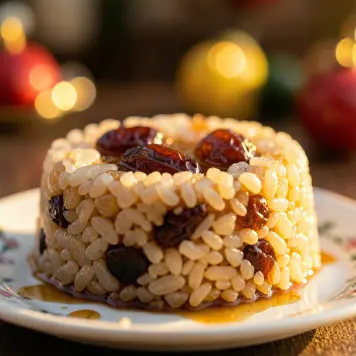
This steamed rice cake is made with sticky rice, honey dates, and osmanthus syrup. It is known for its chewy texture and is often served during festive celebrations in Jinan.

Osmanthus Lotus Root (Guihua Ouzi)
Sticky rice is stuffed into lotus root holes, then simmered in rock sugar syrup. It is a beloved spring and summer dessert because of its light and fragrant sweetness.
Jinan Fried Cake (Tanga)
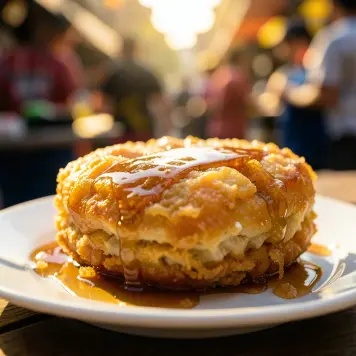
This crispy golden dessert is made from wheat flour dough that is deep fried and dipped in maltose syrup. Street vendors have sold it in Jinan for over a century.
Plats salés traditionnels

Braised Pork in Sour Soy Sauce (Bazi Rou)
This traditional braised pork dish uses a signature blend of soy sauce, aged vinegar, and rock sugar. The meat is slow cooked until it is so tender it nearly melts on the tongue.

Sweet and Sour Carp (Tangcu Liyu)
The carp is fried whole with its tail curled upward to symbolize a leaping dragon. It is served with a glossy sweet and sour sauce made from Jinan spring water and local vinegar.
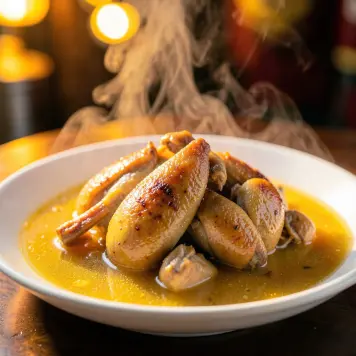
Jinan Yellow Braised Chicken (Huangmen Jitang)
This rich chicken stew uses a two stage cooking method where the chicken is first braised and then steamed. It is prized for its golden broth and deeply infused flavors.
Boissons traditionnelles

Baotu Spring Tea (Baotuquan Cha)
This green tea is brewed with water drawn directly from the famous Baotu Spring. Locals believe the spring water's mineral content brings out a uniquely smooth and sweet tea flavor.
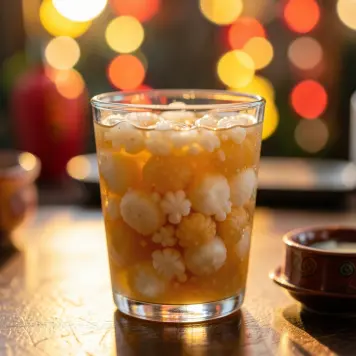
Sweet Fermented Rice Drink (Jiuzao Tangyuan Tang)
This warm beverage is made from fermented glutinous rice blended with small rice dumplings. It is traditionally enjoyed during winter festivals to warm the body and aid digestion.

Jinan Black Beer (Laozha Pijiu)
Brewed using the pure spring water of Jinan, this dark beer has a malty and slightly smoky taste. It has been a local favorite since the early 20th century and pairs well with braised dishes.
Questions fréquentes sur Jinan, China
Is Jinan safe for tourism?
How many days are appropriate for a trip to Jinan?
When is the best season to travel to Jinan?
Is traveling to Jinan expensive?
What is the most convenient way to get around in Jinan?
Recevez un PDF avec les attractions les plus populaires envoyé à votre email
Obtenez un PDF avec toutes les attractions, évaluations et conseils. Parfait pour une utilisation hors ligne.
Excursions d'une journée les plus populaires
Tai'an (Mount Tai)
Sacred mountain with sunrise views and ancient stone stairways.
Qufu
Birthplace of Confucius with temples, mansions, and ceremonial sites.
Zibo
Ancient city offering museums of ceramics, history, and local delicacies.
Weifang
Kite capital of the world with folk art and vibrant markets.
Liaocheng
Historic water town with scenic lakes and ancient canal heritage.
Comment y arriver
Gares
Major hub on Beijing to Shanghai high speed corridor; connects to Tai'an, Qufu, and Zibo.
High speed rail services to Beijing, Shanghai, Qingdao, and other major cities.
Regional rail connections for surrounding Shandong towns.
From Yaoqiang Airport, take the airport shuttle bus or metro line 3 to the city center in about 50 minutes. Taxis are also readily available.
Informations utiles pour Jinan, China
Aperçu de Jinan, China
Vous voulez un plan jour par jour pour Jinan, China ? Ouvrez le planificateur de voyage
Quand partez-vous à Jinan, China ?
Choisissez vos dates et style de voyage pour obtenir :
Qu'est-ce qui est particulièrement important pour vous ?
Sélectionnez tout ce qui s'applique
Se déplacer
Comment souhaitez-vous vous déplacer entre les lieux ?
Langue du plan : Français