 CityBuddy
 Français
Que faire à Nanjing, China
Photo prise par Abderrahmane Habibi sur Pexels.com
Quand visiter
Attractions les plus populaires à Nanjing, China
Vous cherchez les meilleures activités à faire à Nanjing, en Chine ? Commencez par le mausolée de Sun Yat-sen, perché sur la montagne Pourpre avec ses 392 marches de granit. Parcourez la muraille de Nanjing à la porte Zhonghua, une forteresse vieille de 600 ans s'étendant sur près de 22 miles. Terminez au temple de Confucius (Fuzimiao), où les bateaux-lanternes de la rivière Qinhuai attirent les visiteurs depuis des siècles.
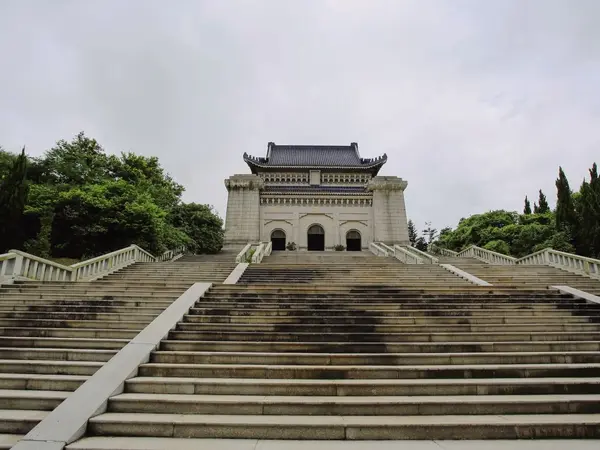
1. Sun Yat-sen Mausoleum
A 392-step climb through towering pine forests leads to one of the most symbolic monuments in modern Chinese history. At the top, sweeping views of the Purple Mountain and the bell-shaped architectural complex unfold before you.
Faits rapides: Plus de 3 millions de visiteurs gravissent chaque année les 392 marches menant au mausolée. L'ensemble du complexe a été conçu en forme de cloche massive, symbolisant l'appel à éveiller le peuple chinois.
Points forts: La statue en marbre blanc de l'homme se trouve à l'intérieur d'un hall dont le plafond arbore un superbe symbole du ciel bleu du Kuomintang à douze pointes, parfaitement aligné avec le motif du sol en dessous. Depuis la plateforme supérieure, regardez en arrière à travers l'arche et remarquez comment l'escalier entier disparaît de la vue, créant l'illusion que vous marchez directement dans le flanc de la montagne.
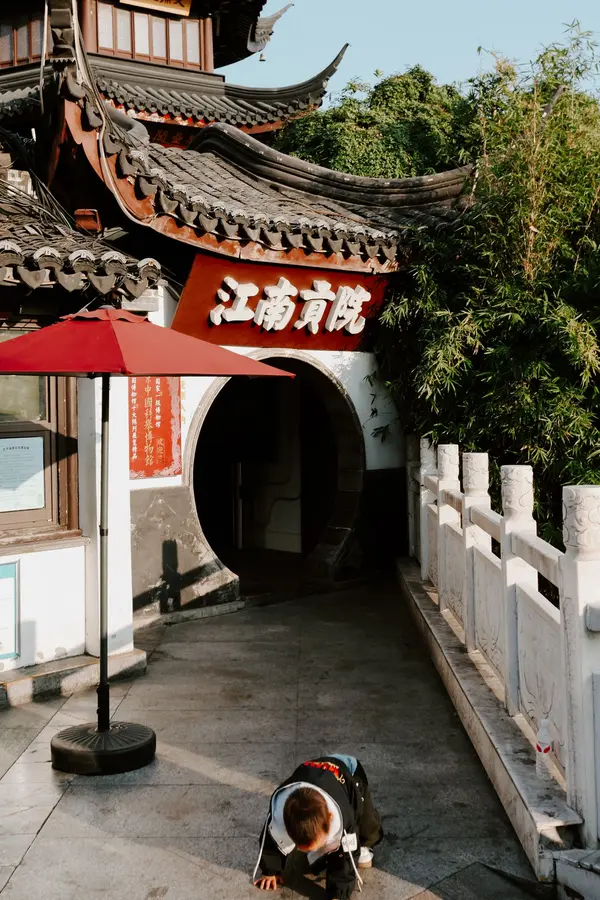
2. Confucius Temple (Fuzimiao)
Fuzimiao
Wander through a 1,000-year-old temple complex surrounded by a lively night market and canal district. Sample street food, browse calligraphy shops, and watch boats glide under moon bridges on the Qinhuai River.
Faits rapides: Le complexe du Temple de Confucius de Nanjing date de 1034, bien que la plupart des structures aient été reconstruites après que la rébellion des Taiping a dévasté la ville dans les années 1850. Le quartier marchand environnant attire plus de 50 millions de visiteurs par an, ce qui en fait l'une des zones piétonnes les plus visitées de Chine.
Points forts: Entrez dans le hall principal pour découvrir l'une des plus grandes statues de Confucius en pierre sculptée de Chine, flanquée d'instruments de musique anciens qui sont encore joués lors des cérémonies traditionnelles. La nuit, le reflet de milliers de lanternes rouges dans la rivière Qinhuai crée un effet miroir si précis que l'on peut compter le jumeau de chaque lanterne dans l'eau en dessous.
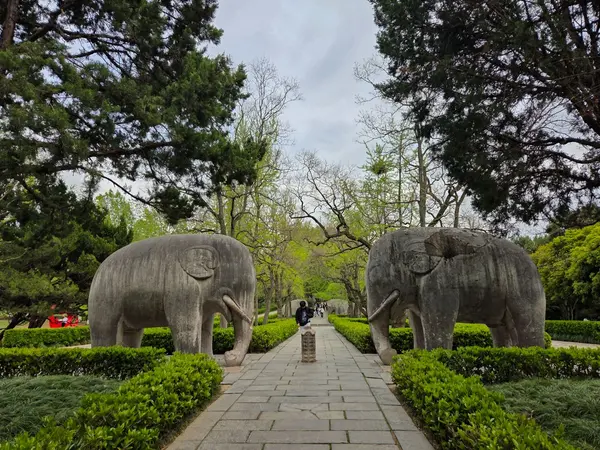
3. Ming Xiaoling Mausoleum
Explore the resting place of a founding emperor, where ancient stone guardians have stood watch for six centuries. Stroll a 1,800-meter sacred pathway lined with giant beasts and climb to a crimson-walled tower with sweeping forest views.
Faits rapides: Le complexe du mausolée a nécessité plus de 25 ans et 100 000 ouvriers pour être achevé. Sa tortue de pierre massive, pesant plus de 80 tonnes, est l'une des plus grandes sculptures antiques en pierre de Chine.
Points forts: Parcourez la Voie Sacrée bordée de 12 animaux en pierre colossaux, chacun sculpté dans un seul bloc de granit, silencieux depuis plus de 600 ans. La « Tour de l'Âme » en brique carrée s'élève à 33 mètres de haut, ses murs rouges et son toit doré brillant nettement sur la canopée forestière verte.
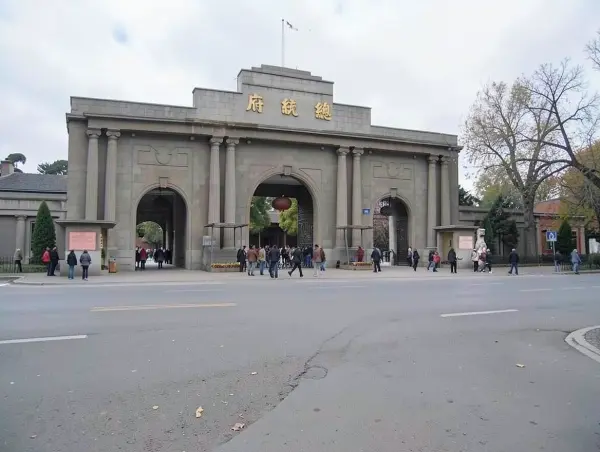
4. Presidential Palace of Nanjing
Walk through the actual offices and courtyards where China's modern history was written by emperors, rebels, and presidents. Stand in the same rooms where treaties were signed and dynasties fell.
Faits rapides: Neuf gouvernements chinois différents ont fait de ce vaste complexe leur quartier général, des rebelles Taiping dans les années 1850 jusqu'à la victoire communiste en 1949. Le complexe s'étend sur plus de 120 000 mètres carrés et contient plus de 1 000 pièces réparties entre jardins traditionnels chinois et bâtiments administratifs de style occidental.
Points forts: Dissimulé dans le complexe se trouve un jardin tranquille de style occidental et un ascenseur ancien installé par le gouvernement de Tchang Kaï-chek, l'un des premiers ascenseurs en état de marche de toute la Chine à l'époque. Vous pouvez encore entrer dans cette cabine d'ascenseur d'origine, avec sa grille en laiton et sa porte coulissante manuelle, une pièce surprenante de technologie des années 1930 cachée parmi les pavillons anciens.
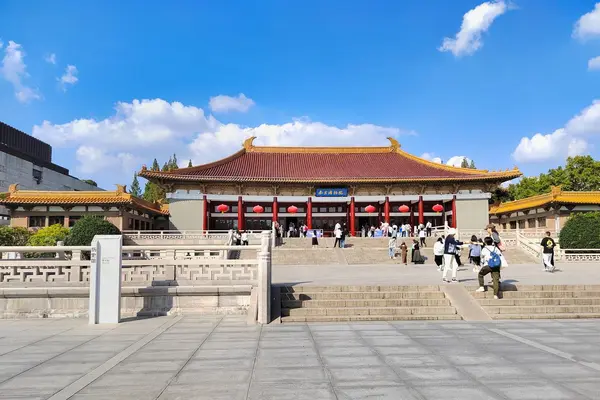
5. Nanjing Museum
Step into a museum that holds one of China's greatest cultural treasure troves. Wander halls filled with ancient jade, imperial porcelain, and a remarkably preserved Ming dynasty tomb.
Faits rapides: Plus de 400 000 artefacts sont conservés dans ce musée, dont seule une fraction est exposée à tout moment. La collection s'étend de la préhistoire jusqu'aux dynasties Ming et Qing, offrant un voyage vertigineux à travers des millénaires de civilisation chinoise.
Points forts: Cherchez la « Cigale d'Or » de la dynastie Han, un petit ornement funéraire sculpté dans un seul morceau de jade avec des ailes si fines que l'on peut voir la lumière à travers elles. La salle des trésors souterraine du musée conserve plus de 2 000 pièces parmi les plus raffinées dans l'obscurité climatisée, ne les sortant qu'une fois par décennie pour préserver leur état.
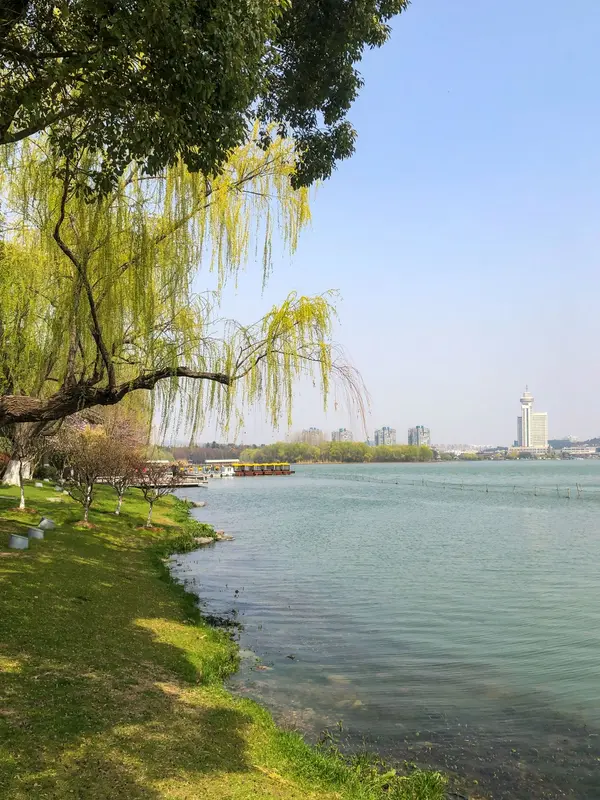
6. Xuanwu Lake Park
Swap Nanjing's neon bustle for a five-island escape where 444 hectares of water and willow trees await. Cycle past lotus ponds under 600-year-old city wall ruins, then join morning tai chi groups by the shore.
Faits rapides: S'étendant sur 444 hectares, le parc entoure un lac qui couvre environ les trois quarts de sa superficie totale, avec cinq îlots interconnectés reliés par des ponts voûtés et des chaussées. Les visiteurs matinaux peuvent voir les habitants pratiquer le tai chi le long du sentier côtier de 9,5 kilomètres, un rituel quotidien partagé par des centaines de personnes.
Points forts: Sur le plus grand îlot, un segment de muraille de la ville de la dynastie Ming du XVe siècle est toujours debout, et vous pouvez gravir une section vieille de plus de 600 ans pour une vue panoramique où les remparts antiques rencontrent les tours de verre du Nanjing moderne. Le parc recèle également un secret littéraire discret : le célèbre érudit de la dynastie Qing, Yuan Mei, composait autrefois de la poésie ici en contemplant les fleurs de lotus du lac.
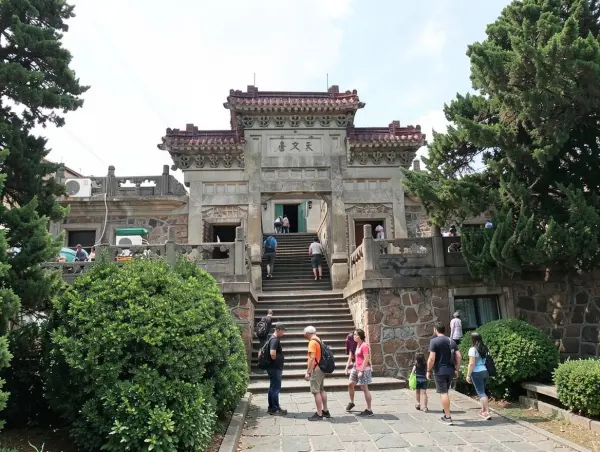
7. Purple Mountain Observatory
Stand where China's first modern astronomers did, among ancient bronze instruments and century-old telescopes. Walk through domed observation rooms, touch real meteorite fragments, and see the Milky Way through a telescope that has tracked stars since the 1930s.
Faits rapides: Le premier observatoire astronomique moderne de Chine se trouve au sommet d'une montagne à 267 mètres d'altitude, abritant plus de 30 télescopes dont un superbe réfracteur Zeiss de 60 centimètres datant de 1934. Les terrains de l'observatoire contiennent d'anciens instruments astronomiques chinois comme la sphère armillaire et le gnomon, certains datant du XVe siècle et déplacés ici pour leur conservation.
Points forts: Caché parmi les pins se trouve l'astrographe jumeau Zeiss de 1934, monté sur un massif pilier en béton qui l'isole de la moindre vibration du sol. Par nuits claires, cet instrument vieux de près d'un siècle peut encore suivre les étoiles avec une précision mécanique, manœuvré par des astronomes qui tirent un toit coulissant à la main pour révéler le ciel.
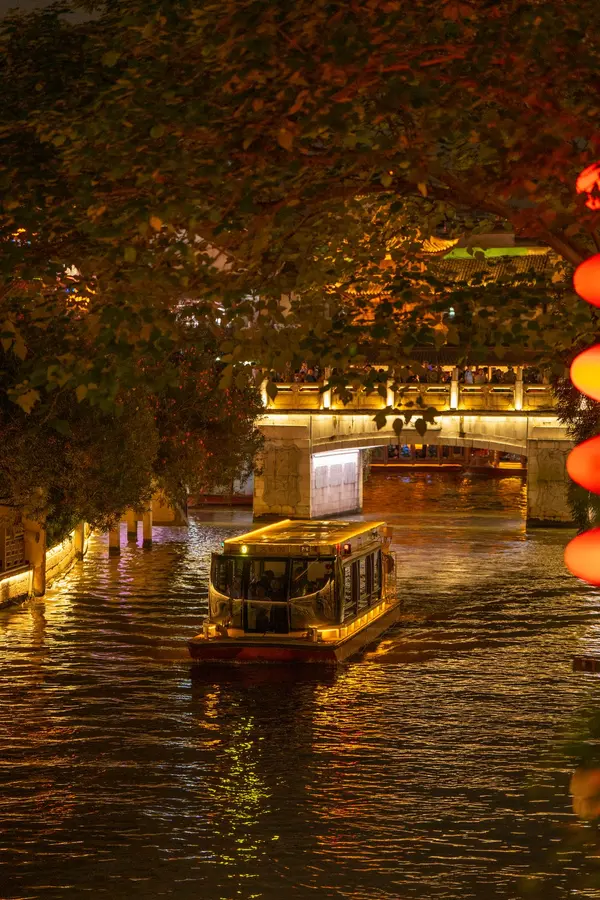
8. Qinhuai River Scenic Belt
Nowhere else on earth can you glide past 1,500 years of history while listening to musicians serenade you from wooden boats. Expect lantern-lit waterways, ancient temples reflected in dark water, and the scent of street food drifting across the bridges.
Faits rapides: S'étendant sur environ 110 kilomètres du Jiangsu jusqu'à Shanghai, cette voie navigable servait autrefois d'artère centrale pour les expéditions impériales de céréales. Des bateaux de plaisance éclairés aux lanternes glissent sur ces eaux depuis la dynastie Tang, une tradition qui se poursuit ce soir.
Points forts: Chaque soir vers le crépuscule, des musiciens locaux en tenue traditionnelle montent à bord de bateaux en bois et interprètent le pingtan, un art populaire du conte, en dérivant devant le Temple de Confucius vieux de 1 500 ans. La combinaison de poésie chantée, de cordes de pipa et de l'eau clapotant contre les murs de pierre crée une expérience acoustique qui est restée inchangée pendant des siècles.
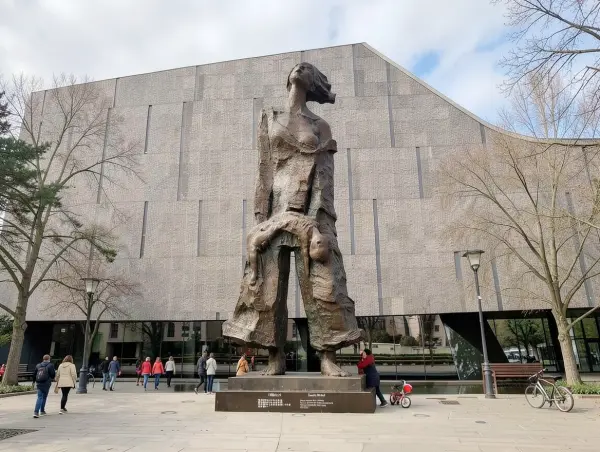
9. Memorial Hall of the Victims in Nanjing Massacre
One of the most solemn and powerful memorials in the world, documenting a tragedy that must never be forgotten. You will walk through galleries of personal artifacts, survivor testimonies, and an outdoor sculpture garden designed to stir quiet reflection.
Faits rapides: Le complexe commémoratif se dresse sur le site d'une fosse commune contenant les restes de plus de 10 000 victimes. Les spécialistes du génocide considèrent celui-ci comme l'un des massacres de masse les mieux documentés du XXe siècle, le hall exposant plus de 5 000 pièces physiques incluant des témoignages de victimes et des photographies rares.
Points forts: Les visiteurs traversent un vaste hall de galets blancs éparpillés, où chaque pierre représente silencieusement une victime perdue pendant l'occupation de six semaines. Les noms de 10 642 victimes vérifiées sont inscrits sur le massif « Mur des Douleurs », s'étendant sur 40 mètres de long, avec les caractères chinois sculptés si profondément que vous pouvez les tracer du bout des doigts.
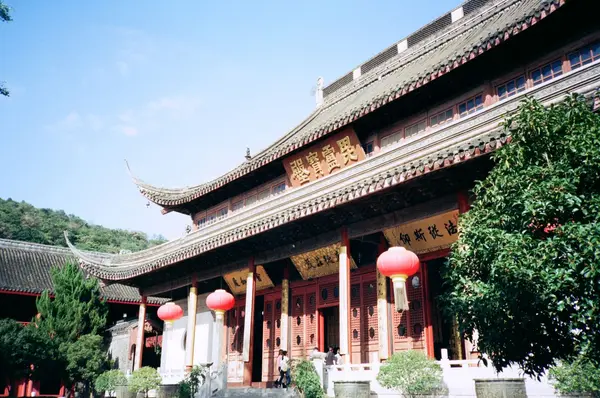
10. Qixia Mountain
Venez pour le feu de l'automne : 50 variétés d'érables embrasent des pentes entières de cramoisi en novembre. Flânez sur des escaliers moussus entre des temples millénaires, des bouddhas de falaise et des forêts paisibles.
Faits rapides: Novembre embrase ce flanc de colline, lorsque près de 50 variétés d'érables flambent en rouge, orange et or sur les pentes. Plus de 500 Bouddhas sculptés contemplent la paroi rocheuse derrière le complexe de temples vieux de 1 400 ans.
Points forts: Derrière la salle principale se dresse une pagode de pierre de 18 mètres datant de 601 après J.-C., dont les 8 faces sont gravées de musiciens célestes dansants, de lions et de motifs de lotus. Par un vif après-midi de novembre, la lumière oblique baigne d'or les visages de Bouddha sculptés dans la falaise, exactement la lueur chaleureuse que les tailleurs de pierre espéraient sans doute.
11. Lao Men Dong
Des ruelles éclairées aux lanternes, de l'opéra en direct et des bols de soupe dont vous rêverez des années. Marchez une nuit et vous goûterez, entendrez et sentirez une soirée complète dans un vieux quartier bien vivant.
Faits rapides: Plus de 40 ruelles sans voiture rayonnent depuis une porte de pierre en arche, et l'odeur de pâte à frire et de bouillon de canard emplit l'air dès midi. Un rempart de la dynastie Ming long de 35 kilomètres surplombe les toits, ses tours de guet en pierre éclairées par des projecteurs après la tombée de la nuit.
Points forts: Écartez-vous de l'artère principale et vous découvrirez des sculptures de briques vieilles de plusieurs siècles représentant des chauves-souris et des pivoines, toujours nichées au-dessus des portes, là où les habitants souhaitaient autrefois fortune et famille. Après la tombée de la nuit, le théâtre comique local lance son spectacle de crosstalk, et les rires s'échappent dans la ruelle éclairée par les lanternes, un rituel nocturne qui se prolonge après vingt-deux heures.
Where to Stay in Nanjing, China
Selected by City Buddy based on guest reviews and proximity to top attractions
Search all hotels in Nanjing, ChinaPowered by agoda
Jours d'ouverture à Nanjing, China
Quels sites incontournables ferment quel jour de la semaine, le classique gâcheur de voyage, vérifié pour vous.
lundi : 2 sur 4 sites incontournables fermés, prévoyez les musées un autre jour.
Fermé le lundi · 2 fermés, 2 ouverts
Jours d'ouverture issus de Google Maps (vérifié le 2026-07-02). Jours fériés, grèves et horaires saisonniers peuvent varier, consultez le site officiel avant de partir.
Plats sucrés traditionnels
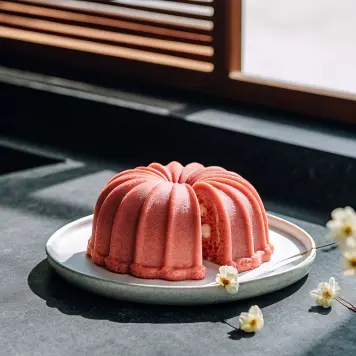
Sweet Osmanthus Cake (Gui Hua Gao)
This steamed sponge cake is infused with sweet osmanthus flowers that bloom across Nanjing in autumn. The cake's delicate floral aroma and fluffy texture have made it a beloved snack since the Ming Dynasty.

Nanjing Salted Duck and Glutinous Rice Balls (Tangyuan)
For a sweet twist on a savory city, Nanjing style tangyuan are often filled with black sesame or osmanthus and served in fermented rice soup. They are a must eat during the Lantern Festival celebrations in the city.
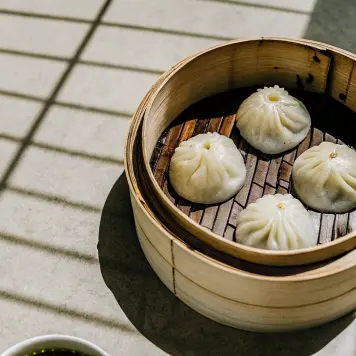
Plum Cake (Mei Hua Gao)
Named after Nanjing's city flower (the plum blossom), this diamond shaped cake is made from rice flour and red bean paste. Vendors have sold it from street stalls near the Ming City Wall for generations.
Plats salés traditionnels

Nanjing Salted Duck (Yan Shui Ya)
Nanjing's most famous dish uses a dry salt curing method that dates back over 1,000 years. The duck is slowly brined and then gently poached, resulting in incredibly tender meat and silky skin.

Nanjing Pan Fried Beef Dumplings (Niu Rou Guo Tie)
These crescent shaped dumplings have a crispy, lacy golden bottom from pan frying in a special iron skillet. They are typically served with a vinegary soy dipping sauce that locals insist must include freshly shredded ginger.

Duck Blood and Vermicelli Soup (Ya Xue Fen Si Tang)
This hearty soup features duck blood cubes, glass vermicelli, tofu puffs, and fresh duck parts in a rich broth. It is such a staple of Nanjing street food that countless small shops have spent generations perfecting their family recipes.
Boissons traditionnelles

Osmanthus Sake (Gui Hua Jiu)
Nanjing's sweet osmanthus flowers are steeped in rice wine to create this fragrant, lightly sweet liquor. It has been produced in the region since the Tang Dynasty and is traditionally drunk during the Mid Autumn Festival.

Yuxing Plum Juice (Suan Mei Tang)
This tangy and refreshing sour plum drink is made from smoked plums, rock sugar, osmanthus, and hawthorn berries. It is the classic thirst quencher of Nanjing, especially popular during the sweltering summer months along Confucius Temple street.

Nanjing Green Tea (Yu Hua Cha)
Named after the famous Rainflower Pebbles found in Nanjing, this green tea has a distinctive pine needle shape and a clean, chestnut like flavor. It was awarded the title of one of China's top ten famous teas.
Questions fréquentes sur Nanjing, China
"Nankin, en Chine, est-elle sûre pour les touristes ?"
"Combien de jours dois-je prévoir à Nankin, en Chine ?"
"Quelle est la meilleure période pour visiter Nankin, en Chine ?"
"Est-ce que Nankin, en Chine, est une destination chère ?"
"Comment se déplacer à Nankin, en Chine ?"
Recevez un PDF avec les attractions les plus populaires envoyé à votre email
Obtenez un PDF avec toutes les attractions, évaluations et conseils. Parfait pour une utilisation hors ligne.
Excursions d'une journée les plus populaires
Suzhou
Classical gardens and water towns, a UNESCO World Heritage site
Hangzhou
Famous West Lake, tea plantations and historic temples
Comment y arriver
Aéroports
Gares
Beijing-Shanghai High-Speed Railway, Shanghai-Nanjing Intercity Railway
Beijing-Shanghai Railway, Ningxi Railway
From Lukou Airport, take Metro Line S1 to Nanjing South Station (about 50 minutes). Taxi to city center takes 40 minutes.
Informations utiles pour Nanjing, China
Aperçu de Nanjing, China
Vous voulez un plan jour par jour pour Nanjing, China ? Ouvrez le planificateur de voyage
Quand partez-vous à Nanjing, China ?
Choisissez vos dates et style de voyage pour obtenir :
Qu'est-ce qui est particulièrement important pour vous ?
Sélectionnez tout ce qui s'applique
Se déplacer
Comment souhaitez-vous vous déplacer entre les lieux ?
Langue du plan : Français