 CityBuddy
 Français
Que faire à Lincoln, United Kingdom
Photo prise par Brett A sur Pexels.com
Quand visiter
Attractions les plus populaires à Lincoln, United Kingdom
Pour les meilleures activités à Lincoln, au Royaume-Uni, commencez par l'imposante cathédrale de Lincoln, dont la flèche de 525 pieds en a fait le plus haut bâtiment du monde pendant plus de 200 ans. Parcourez les remparts médiévaux du château de Lincoln, qui abrite l'un des quatre exemplaires encore existants de la Magna Carta. Descendez ensuite Steep Hill, une rue à forte pente bordée de commerces indépendants.
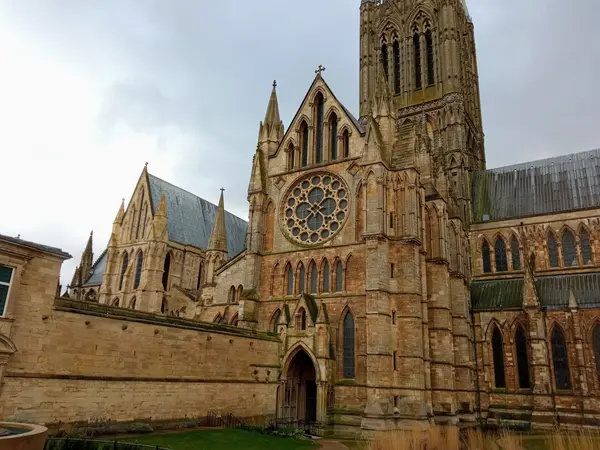
1. Lincoln Cathedral
Step inside a medieval masterpiece that once held the world's tallest spire and still guards one of four surviving Magna Carta copies. You will wander through soaring stone arches, encounter cheeky stone imps, and feel 900 years of history in every corner.
Faits rapides: Trois exemplaires originaux de la Magna Carta existent encore, et la cathédrale de Lincoln en conserve un dans sa magnifique salle capitulaire voûtée. Sa flèche centrale en faisait autrefois le plus haut bâtiment du monde avec ses 160 mètres, jusqu'à ce qu'une tempête la fasse tomber en 1549.
Points forts: Levez les yeux vers le plafond du chœur des Anges et vous verrez plus de 300 anges sculptés qui vous regardent, chacun avec des expressions et des poses différentes. Le "Lincoln Imp" médiéval sculpté dans un pilier est une petite créature en pierre espiègle à la jambe croisée, et la légende raconte qu'un ange a transformé un lutin en pierre en plein milieu de ses bêtises ici même.
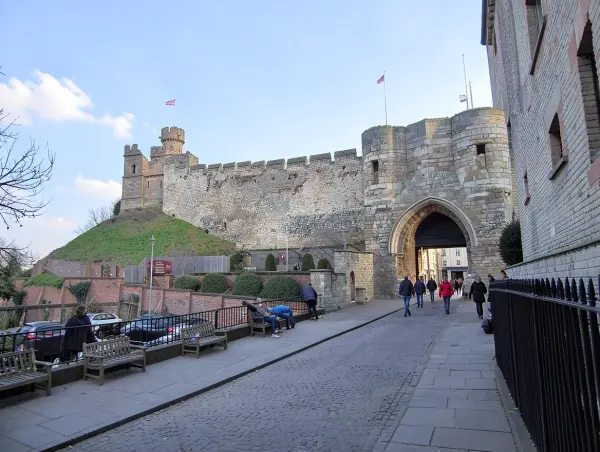
2. Lincoln Castle
Walk the same medieval ramparts where Viking and Norman soldiers once patrolled. You'll stand 360 degrees above the rooftops, then descend into a candlelit Victorian prison and handle an original 1215 Magna Carta.
Faits rapides: One of only two castles in the UK to appear on the 1987 £1 coin reverse design. Its wall walk offers views across three counties from a 360-degree elevated pathway that wasn't fully reopened to the public until 2015.
Points forts: Deep beneath the castle lawns sits a Victorian prison that remained in use until 1878, where inmates could step into a box to be weighed every morning to monitor their health. The prison chapel still holds its original individual pews designed like confessionals so prisoners could hear sermons without seeing each other, one of only two examples left in England.
3. Steep Hill
Climb one of England's steepest medieval streets for views that stretch across three counties. Cobblestones, curious independent shops, and a cathedral gradually rising above you with every step.
Faits rapides: With a gradient of 1 in 7 (about 14.5 degrees), this medieval thoroughfare connects the uphill cathedral quarter to the downhill city center. The street earned its name from the sheer physical effort required to climb it, and local tradition says a penny used to be paid to those who could run up carrying a sack of coal.
Points forts: Look for the tiny 12th-century Jewish houses tucked between the shops, their doorways set low to the ground and windows barely a meter tall. At the top, pause outside the 13th-century medieval guildhall where you can still see the original iron rings used to tether horses hundreds of years ago.
4. The Collection Museum
Where else can you stand between a Roman coin and a Spitfire in one afternoon? You'll walk through 300,000 objects spanning prehistoric beasts, Viking raids, and Lincolnshire's role in both World Wars.
Faits rapides: Plus de 1 000 ans d'histoire du Lincolnshire sont concentrés dans un seul bâtiment moderne et élégant, doté d'une façade en verre qui reflète la cathédrale médiévale au-dessus. Une pièce d'or romaine du IVe siècle se trouve à quelques pas d'une épée viking rouillée, illustrant à quel point le pouvoir a radicalement changé dans les terres des Midlands de l'Est.
Points forts: La galerie d'archéologie du musée expose les ossements réels d'un chevalier médiéval découverts sous un parking de Lincoln, portant encore des fragments de cotte de mailles. Vous pouvez coller votre nez contre la vitre et voir l'endroit exact où une balle de mousquet a fracturé sa côte, une connexion viscérale avec une mort vieille de 500 ans.
5. International Bomber Command Centre
Walk among the names of nearly 58,000 fallen airmen and stand where their stories come alive. You'll climb to the spire for panoramic Lincolnshire views, then explore interactive exhibits that put you inside the bomber experience.
Faits rapides: Le International Bomber Command Centre se trouve sur un site qui faisait autrefois partie de la RAF Canwick Hill, une station radar durant la Seconde Guerre mondiale. Son impressionnant mémorial de 31 mètres de haut est parfaitement aligné pour pointer directement vers la piste de la RAF Scampton, où était basé le célèbre escadron des Dambusters.
Points forts: Placez-vous au centre du mur commémoratif et vous verrez les noms de 57 861 aviateurs tombés au combat venus de tout le Commonwealth gravés dans la pierre, un nombre qui correspond au total des pertes du Bomber Command. L'ombre de la flèche balaie les noms tout au long de la journée, conçue délibérément pour que chaque nom soit touché par l'obscurité et la lumière à un moment donné.
6. Brayford Waterfront
Lincoln's Roman harbor has transformed into a lively waterside hub where boaters, diners and strollers all converge. Walk the boardwalk past floating restaurants and canal boats, then watch the sunset paint the cathedral in gold above the water.
Faits rapides: Le Brayford Waterfront se trouve sur l'un des plus anciens ports intérieurs de Grande-Bretagne, construit à l'origine par les Romains il y a près de 2 000 ans. Aujourd'hui, son lac de 27 acres accueille plus de 200 bateaux et attire plus de 1,5 million de visiteurs chaque année.
Points forts: Au lever du soleil, l'ensemble du bassin reflète la cathédrale de Lincoln et le château sur la colline, créant un reflet parfait que les photographes s'empressent de capturer. Les cygnes et les cygneaux du bord de l'eau glissent jusqu'aux convives attablés le long de la promenade, sans se soucier de la foule.
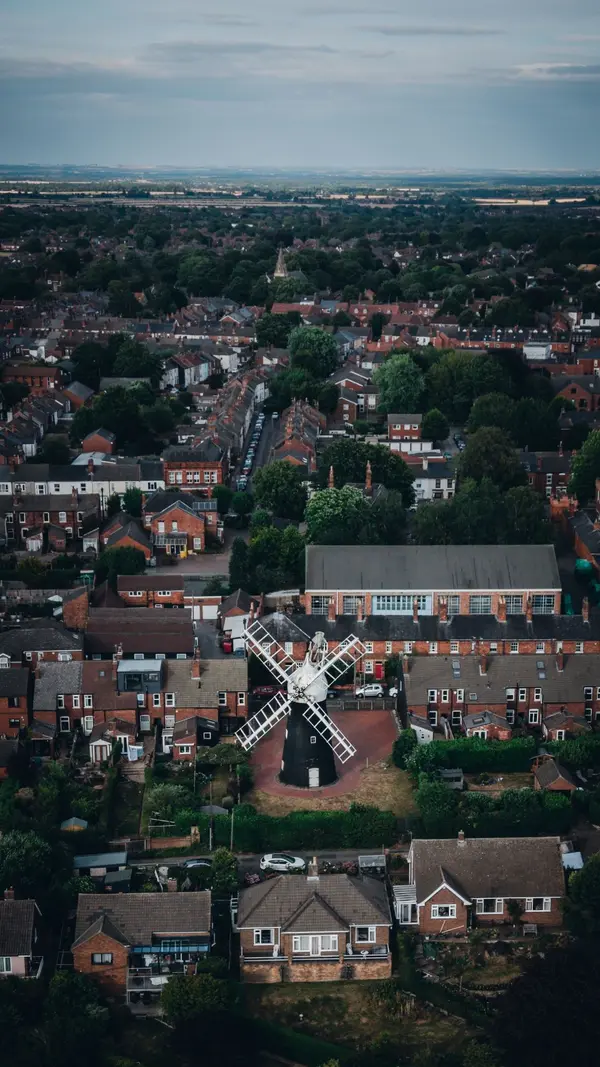
7. Museum of Lincolnshire Life
Wander through a Victorian street, climb inside a WWII tank, and peek into a 1920s cinema. Over 250,000 objects tell the story of ordinary Lincolnshire folk across three centuries.
Faits rapides: One of the largest social history museums in the county, it houses over 250,000 objects spanning three centuries of daily life. The collection includes a fearsome 1941 World War II tank, a Victorian schoolroom complete with original ink-stained desks, and a 1920s cinema that still shows films.
Points forts: You can climb inside a fully restored 1960s caravan tucked inside the museum's outdoor area, complete with floral-patterned cushions and a tiny stove. The real magic happens in the historic workshops where the smells of oil and wood transport you straight into a blacksmith's forge from the 1800s.
8. Lincoln Arboretum
A 23-acre patch of Victorian woodland romance in the middle of the city. Wander beneath 130 tree varieties and find quiet ponds, a bandstand, and old stone bridges around every bend.
Faits rapides: Plus de 130 variétés d'arbres couvrent ses 9,3 hectares, créant une collection botanique vivante en plein centre-ville. Deux étangs de l'époque victorienne et un réseau de sentiers sinueux lui donnent une impression de taille bien plus grande que sa superficie réelle.
Points forts: Un bosquet de plus de 40 essences de conifères forme un jardin d'hiver paisible que la plupart des visiteurs dépassent sans le voir. Par les matins glacials, la lumière du soleil accroche la rosée sur les toiles d'araignée tendues entre les branches, faisant scintiller tout le bosquet.
9. Hartsholme Country Park
Swap the city noise for the sound of rustling leaves and gently lapping water. Wander through ancient woodlands, spot wildlife along quiet lakesides, and feel like you've escaped to the countryside without leaving Lincoln.
Faits rapides: Local families have been feeding the park's resident swans and geese for decades, with some birds returning year after year to the same ponds. The park sits on 200 acres of ancient woodland and lakes, originally part of a 19th century estate built around a Victorian boating lake.
Points forts: Walk past the main lake toward the quieter western edge, and you'll find a hidden heronry where grey herons have nested in the same treetops for over 30 years. On quiet mornings, you can watch them swoop down to fish in the still water just meters from the path.
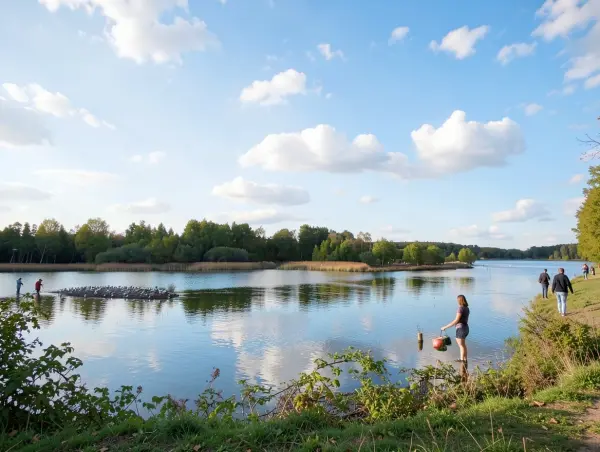
10. Whisby Nature Park
Escape into a landscape where old gravel pits have become thriving lakes and wetlands. Wander boardwalks through reed beds, spot kingfishers darting across the water, and breathe in air scented with wild mint and willow.
Faits rapides: Spread across 90 acres of reclaimed gravel pits, this nature reserve features four lakes that attract over 180 species of birds throughout the year. Walking trails wind through woodlands, meadows, and reed beds where you might spot kingfishers, dragonflies, and even the occasional deer.
Points forts: Three of the four lakes were once gravel quarries that supplied materials for the construction of nearby Lincoln Cathedral. You can still see the 27-meter-tall weighing tower standing as a relic of the site's industrial past, now surrounded by willow trees and wildlife.
Where to Stay in Lincoln, United Kingdom
Selected by City Buddy based on guest reviews and proximity to top attractions
Search all hotels in Lincoln, United KingdomPowered by agoda
Jours d'ouverture à Lincoln, United Kingdom
Quels sites incontournables ferment quel jour de la semaine, le classique gâcheur de voyage, vérifié pour vous.
lundi : 1 sur 7 sites incontournables fermés, prévoyez les musées un autre jour.
Fermé le lundi · 1 fermés, 6 ouverts
Jours d'ouverture issus de Google Maps (vérifié le 2026-08-11). Jours fériés, grèves et horaires saisonniers peuvent varier, consultez le site officiel avant de partir.
Plats sucrés traditionnels
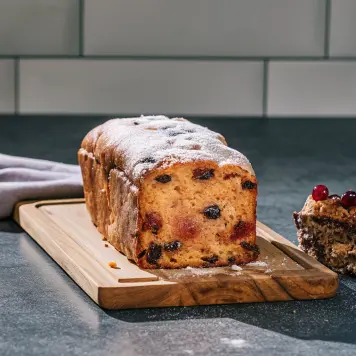
Lincolnshire Plum Bread
This dense, fruited bread has been made in Lincolnshire for centuries. It was traditionally baked for special occasions like harvest festivals and Christmas, and unlike many fruit loaves, it contains no actual plums. The name comes from the local dialect where "plum" meant any dried fruit.

Lincolnshire Poacher Cheese (served with fruitcake)
While best known as a savory cheese, Lincolnshire Poacher is famously paired with local fruitcake and chutney. This hard, unpasteurized cow's milk cheese has a nutty, pineapple-like tang that makes it a perfect companion to sweet accompaniments.

Grantham Gingerbread
Unlike traditional gingerbread, Grantham Gingerbread is a pale, cracked white biscuit with a light ginger flavor. It was invented accidentally by a baker named Eggleston in the town of Grantham, Lincolnshire in 1740, and Queen Victoria was known to be a fan.
Plats salés traditionnels
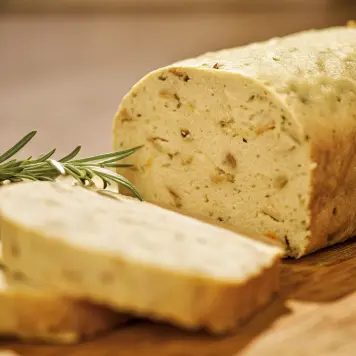
Lincolnshire Sausage
This iconic coarse-textured pork sausage is seasoned with sage, thyme, and black pepper, giving it a distinct herbal flavor. It has Protected Geographical Indication (PGI) status, meaning true Lincolnshire sausages must be made within the county using a specific recipe.
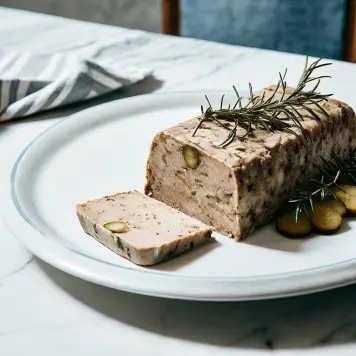
Haslet
A traditional Lincolnshire pork meatloaf made with sage, onion, and breadcrumbs, haslet is a staple of local butcher shops. Unlike the more common American meatloaf, it is typically served cold in thick slices with pickles or in a sandwich.

Stuffed Chine
This historic Lincolnshire specialty consists of a cut of salt-cured pork belly stuffed with a vibrant green paste made from parsley, herbs, and breadcrumbs. It was traditionally prepared for sheep-shearing celebrations and is now a rare delicacy that few butchers still make.
Boissons traditionnelles

Lincolnshire Ale
Lincolnshire has a long brewing heritage dating back to medieval monasteries, and local ales are known for their rich malt character. The county was once home to over 200 breweries, and today craft breweries like Batemans in Wainfleet continue the tradition using local barley and water.
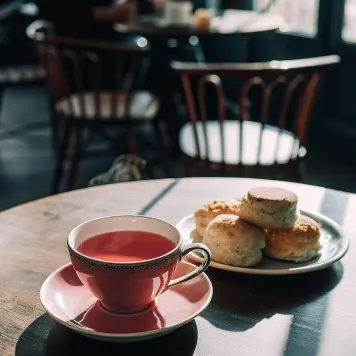
Lincolnshire Tea
The city of Lincoln has a strong tea culture, with traditional tearooms like the famous Brown's Pie Shop serving pots of tea alongside local baked goods. Lincolnshire's agricultural landscape once included tea gardens, and the county remains a key stop on England's tea-trade routes.

Lincolnshire Apple Cider
Lincolnshire's apple orchards produce excellent traditional cider made from heritage apple varieties. The county's clay-rich soil and cool climate create crisp, dry ciders that perfectly complement the region's famous pork dishes and cheeses.
Questions fréquentes sur Lincoln, United Kingdom
"Lincoln, Royaume-Uni, est-ce sûr ?"
"Combien de jours passer à Lincoln, Royaume-Uni ?"
"Quelle est la meilleure période pour visiter Lincoln, Royaume-Uni ?"
"Lincoln, Royaume-Uni, est-ce cher ?"
"Comment se déplacer à Lincoln, Royaume-Uni ?"
Recevez un PDF avec les attractions les plus populaires envoyé à votre email
Obtenez un PDF avec toutes les attractions, évaluations et conseils. Parfait pour une utilisation hors ligne.
Excursions d'une journée les plus populaires
Newark-on-Trent
Historic market town with a medieval castle ruins and charming old town.
Woodhall Spa
Victorian spa village with natural springs and scenic walking trails.
Grantham
Market town home to Sir Isaac Newton's birthplace and Belton House.
Sleaford
Quaint town with a historic market square and the National Centre for Craft and Design.
Boston
Historic port town famous for the magnificent St Botolph's Church or Boston Stump.
Comment y arriver
Aéroports
Gares
East Midlands Railway and Northern services to Nottingham, Newark, Sheffield, and London Kings Cross
From East Midlands Airport, take the Skylink bus to Nottingham station then a direct train to Lincoln Central. Journey takes about 2 hours total.
Informations utiles pour Lincoln, United Kingdom
Aperçu de Lincoln, United Kingdom
Vous voulez un plan jour par jour pour Lincoln, United Kingdom ? Ouvrez le planificateur de voyage
Quand partez-vous à Lincoln, United Kingdom ?
Choisissez vos dates et style de voyage pour obtenir :
Qu'est-ce qui est particulièrement important pour vous ?
Sélectionnez tout ce qui s'applique
Se déplacer
Comment souhaitez-vous vous déplacer entre les lieux ?
Langue du plan : Français