 CityBuddy
 English
Things to Do in Copenhagen, Denmark
Photo made by Abhishek Navlakha on Pexels.com
When to visit
Plan your perfect trip to Copenhagen, Denmark
Get a complete travel plan built just for you in under 30 seconds, with daily routes, local food tips, budget estimates and more.
Are any of these especially important to you?
Select all that apply
Plan language: EnglishMost popular attractions in Copenhagen, Denmark
Things to do in Copenhagen, Denmark, include exploring Tivoli Gardens, a historic amusement park opened in 1843 featuring rides and concerts near the city center. Stroll along Nyhavn, a 17th-century waterfront famous for its colorful buildings and lively cafes. Visit The Little Mermaid statue, a 1.25-meter bronze icon inspired by Andersen's fairy tale.
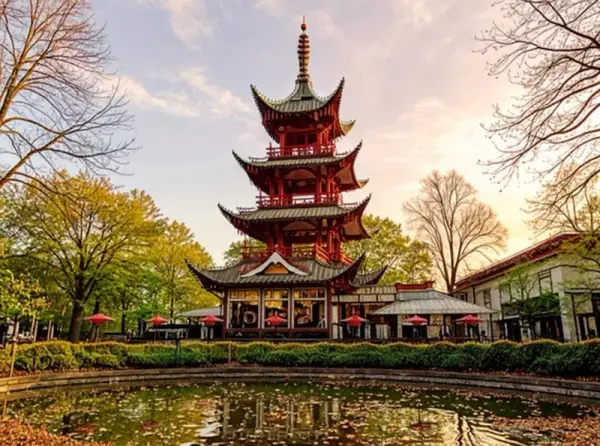
1. Tivoli Gardens
Historic amusement park with fairy-tale gardens and nostalgic rides. Expect live concerts, gourmet street food, and classic roller coasters under twinkling lights.
Quick facts: Twinkling lights, fragrant food stalls, and a blend of historic wooden rides with modern coasters create a fairytale atmosphere that can flip into an adrenaline rush in a single turn. Nightly concerts and seasonal shows keep the place feeling fresh, and with over four million visitors annually it ranks among Europe's most densely enjoyed amusement spots.
Highlights: Step under a canopy of more than 2,000 twinkling bulbs and paper lanterns, where the hundred-year-old wooden roller coaster Rutschebanen, built in 1914, clacks over oak beams so close you can catch the warm resin scent. Every summer evening around 9:30 pm the park's brass band plays a century-old tune that signals the nightly lights show, and couples still cling to the carved carousel horses as if following a 19th-century courting ritual.
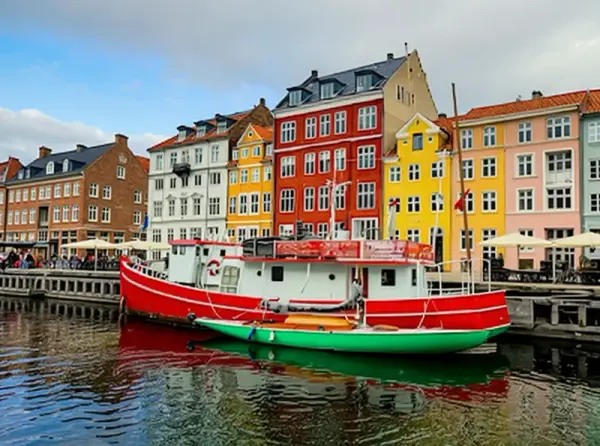
2. Nyhavn
Colorful waterfront and lively canal life in Copenhagen. Stroll past painted 17th-century houses, sit at a waterside café, and join a canal boat tour.
Quick facts: Bright, candy-colored facades along the canal frame a nonstop parade of cafés, wooden ships and lively terrace dining. A surprising number of famous writers once lived on those quays, and live music with clinking glasses often drifts across the water at dusk.
Highlights: Brightly painted 17th- and 18th-century townhouses in about a dozen candy-bright hues lean over the canal, while weathered wooden sailing ships with masts over 20 meters bob beside cafés, so the air carries salt, frying onions and strong coffee. House No. 20 once sheltered Hans Christian Andersen, and locals still say sailors used to toast his table with aquavit at the blue-painted inn on the quay.
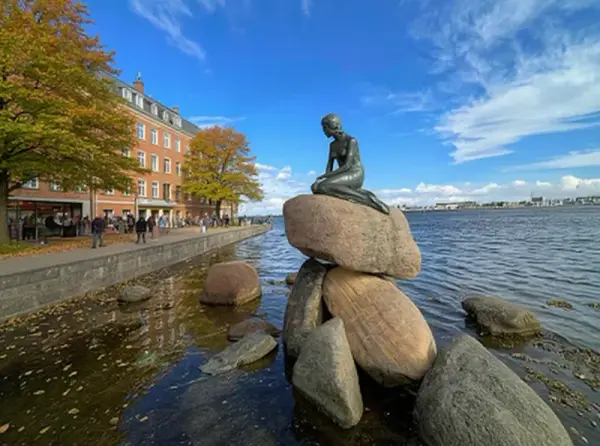
3. The Little Mermaid (Den lille Havfrue)
Den lille Havfrue
Iconic waterfront statue symbolizing Copenhagen's maritime story. Stand on the quay for close-up photos and watch boats glide by.
Quick facts: Perched on a low rock by the water, a small bronze figure draws more camera clicks per square meter than many grander monuments, and pranksters have repeatedly targeted it for headlines. Visitors notice how tiny the silhouette is up close, the salt air and ferry horns making the scene unexpectedly intimate while its literary inspiration keeps sparking debates among locals and tourists.
Highlights: Edvard Eriksen sculpted the bronze figure in 1913, using actress Ellen Price's head and his wife Eline Eriksen's body as models, and the statue is only about 1.25 meters tall so people often climb onto the rock to sit beside her for photos with salt spray and gull calls in the air. A famous little-known story is that the head was stolen in 1964, and despite repeated vandalism locals still leave flowers, beer cans, or small knitted hats on the rock as an odd apology and celebratory gesture.
Have you heard of free walking tours?
After traveling to 30+ countries, there's one thing I wish someone had told me from day one, and it completely changed how I experience new cities.
Free walking tours. Yes, actually free. No credit card needed. No catch.
Local guide, 2-3 hours
Major sights, hidden gems, local stories
100% tip-based
Guides earn only tips, so they give their absolute best
You tip what feels right
At the end, just tip whatever you feel is right
I've done these in dozens of cities and they've been the highlight of almost every trip. If you're visiting Copenhagen, Denmark, do this on your first day. You'll thank me later.
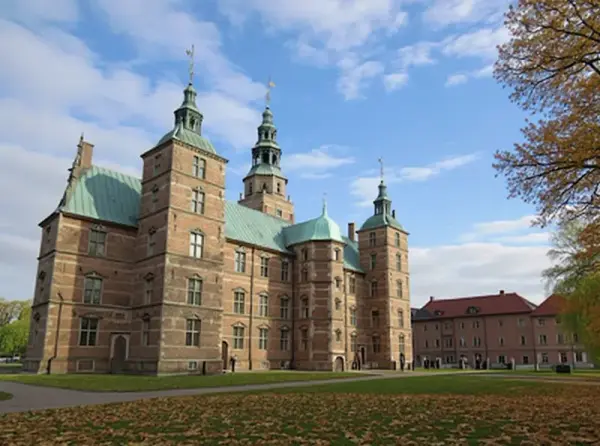
4. Rosenborg Castle (Rosenborg Slot) and Kongens Have
A compact royal palace with dazzling crown jewels and intimate Renaissance rooms. Stroll the adjoining King's Garden, with roses, lawns and picture-perfect moat views.
Quick facts: Step into a glittering royal treasury where crowns and sceptres catch the light under glass, while an atmospheric Long Hall displays tapestries and armor that make royal pageantry feel surprisingly close. Wander a beloved city garden where riotous tulip beds and trimmed parterres invite picnics and people-watching, ancient trees provide cool shade, and statues and winding paths reward slow exploration.
Highlights: Built between 1606 and 1624 for King Christian IV, the red-brick castle still houses the royal treasury where crowns and orbs glint under warm conservation lights, and the oak-panelled rooms smell faintly of beeswax and old leather when the museum's curators open the displays. Laid out originally as a 17th-century pleasure garden, the park preserves a long lime allée and a 200-meter plane-tree corridor where locals spread blankets to eat warm, sugar-dusted pastries and listen for church bells mixing with the sweet scent of horse-chestnut blossoms.
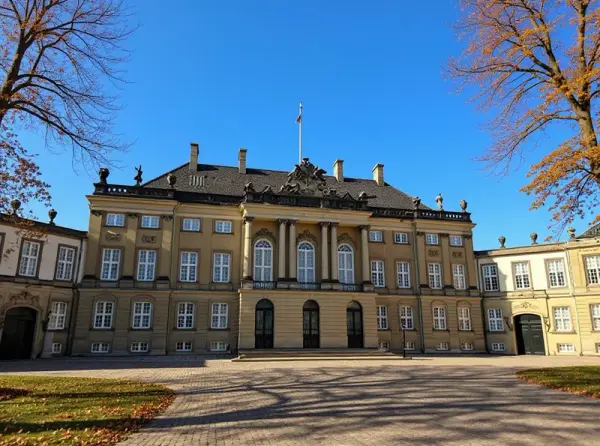
5. Amalienborg Palace
See Denmark's royal residence and elegant octagonal courtyard. Watch the band-led Changing of the Guard and explore the royal rooms and museum.
Quick facts: Visitors often pause in the hushed central square to watch the ceremonial guard, where polished horses and ringing sabers give even casual passersby a sense of pageantry. Opulent facades conceal private royal apartments, and guided tours reveal porcelain, gilded mirrors, and a surprisingly intimate glimpse of modern monarch life.
Highlights: Step into an octagonal courtyard dominated by a 1771 bronze equestrian statue of King Frederik V, where four identical rococo palaces frame the square and the clink of cavalry sabers and muffled drumrolls herald the daily changing of the Royal Life Guards at noon. Look up during a royal residence and you'll see a red and white Dannebrog snapping above one of the palaces, a small but strict signal that the monarch is home, and on certain winter nights the guard's bearskin hats leave a faint pine-needle scent in the cold air.
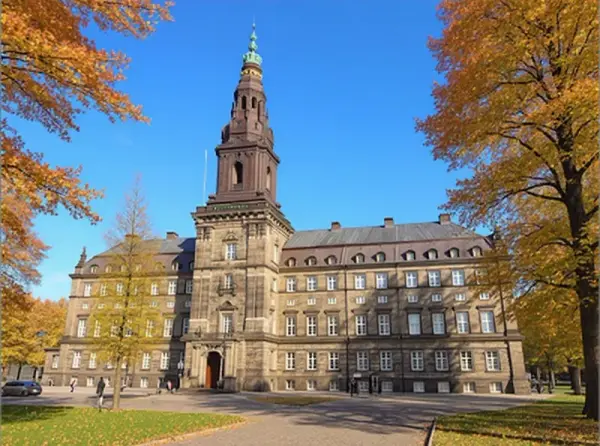
6. Christiansborg Palace
Explore Denmark's working palace where parliament meets royal reception rooms. Wander grand state rooms, rooftop views, royal stables and archaeological ruins below.
Quick facts: Marble halls resonate with ceremonial footsteps, while a lofty tower rewards curious climbers with sweeping city panoramas that often catch visitors by surprise. Beneath the ceremonial rooms lie medieval ruins and a maze of preserved royal kitchens where everyday objects surface during digs, offering a tactile glimpse into past court life.
Highlights: A single building houses the country's parliament, the supreme court, and the prime minister's office under one roof, with over 800 rooms that range from wood-paneled debating chambers to glittering royal reception halls. Behind the scenes the royal stables shelter the gilded Golden Coupé and roughly 20 carriage horses used in state processions, while the palace cellars reveal archaeological layers you can walk over, with cobbles and 900-year-old masonry underfoot.
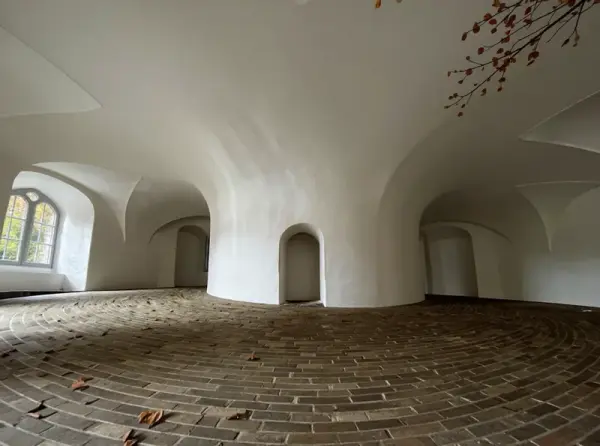
7. Round Tower (Rundetårn)
Rundetårn
Climb a 17th-century observatory with a spiral ramp and rooftop views over Copenhagen. Walk the ramp, explore the old library and spot city landmarks.
Quick facts: A gently sloping corkscrew ramp winds around the hollow tower for about 210 meters, letting visitors reach the summit without climbing a single stair. Visitors step onto a circular viewing platform with sweeping city panoramas and a small seventeenth-century observatory that still hosts occasional public stargazing nights.
Highlights: Built for King Christian IV in 1642, the tower's 36-meter height is reached by a 210-meter spiral ramp that winds 7.5 turns, wide enough that in the 17th century horses and carts were driven to the top to move telescopes and books. At the summit the old observatory's wooden floor creaks underfoot and brass instruments glint in thin winter light, leaving a faint metallic tang and the soft echo of centuries of footsteps.
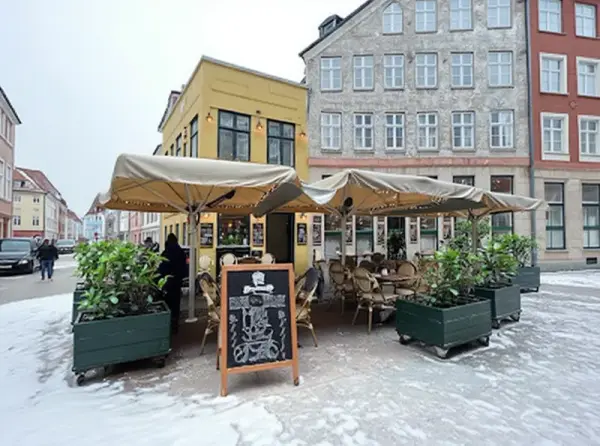
8. Strøget (pedestrian shopping street)
pedestrian shopping street
Copenhagen's lively pedestrian street with historic facades and iconic Danish design. Enjoy street performers, flagship shops, cosy cafés and people-watching.
Quick facts: Crowds spill along a long pedestrian avenue where street performers, designer windows, and cafés create a lively parade. Nearly a million footsteps cross the avenue on busy weekends, turning shopping into a people-watching sport.
Highlights: Stretching about 1.1 kilometers, the pedestrian artery threads through narrow cobblestone corridors and ornate 17th-century facades, where living statues hold impossible poses for more than an hour while crowds count down the seconds on their phones. A quirky local tradition sees buskers timing finales to the chime of the square's clock, so a violinist will often end a set the instant a bell rings, prompting spontaneous applause and a cloud of cinnamon scent from nearby bakeries.
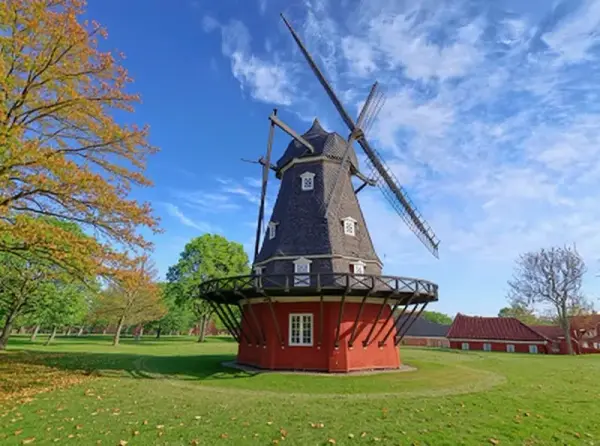
9. Kastellet (The Citadel)
The Citadel
Walk a star-shaped 17th-century fortress with green ramparts and harbour views. Stroll tree-lined paths, see the old windmill, and photograph the Little Mermaid skyline.
Quick facts: Crunchy gravel paths and the tang of salt air lead you along grassy bastions where old cannons sit quietly, giving unexpectedly peaceful city views. A star-shaped layout invites wandering across earthworks, while a daily changing of the guard and a resident flock of mute swans add theatrical local charm.
Highlights: A perfectly star-shaped fortress with five grass-covered bastions and a water-filled moat invites you to walk its ramparts, where angled earthworks and cannon embrasures still read like a 17th-century map. Climb the northern rampart to hear a wooden windmill from 1847 creak on its axle, smell warm timber and cut grass, and watch locals time a casual loop at about 20 minutes while feeding the ducks.
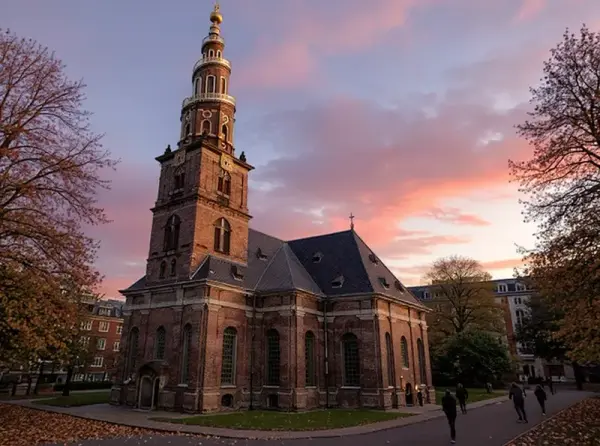
10. Church of Our Saviour (Vor Frelsers Kirke)
Vor Frelsers Kirke
Iconic corkscrew spire with dramatic city views. Climb a twisting outdoor staircase to a panoramic lookout over Christianshavn.
Quick facts: Clinging to the outside of the tower is a dramatic corkscrew staircase that lets you climb around the spire, ending at a gilded globe crowned by a small statue that frames unforgettable panoramic city views. Visitors often mention the surprising sensation of climbing exposed steps in open air, then stepping back inside to a hushed, richly decorated nave where light pools on ornate woodwork.
Highlights: An exposed corkscrew staircase wraps around the 90 meter spire in a climb of roughly 400 steps, so you end up walking outdoors with wind in your face and gulls shrieking overhead. At the top a narrow platform squeezes beneath a gilded globe, where the canals and copper roofs spread out like a miniature model and the city sounds fall away to a distant hum.
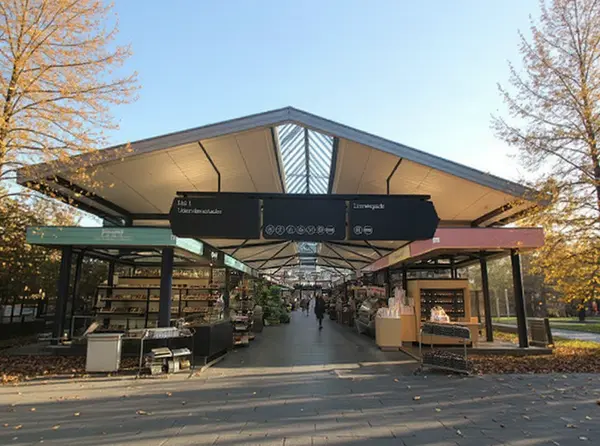
11. Torvehallerne Food Market
Top-quality Nordic food in lively glass halls near Nørreport. Sample smørrebrød, pastries, seafood and specialty coffee while browsing stall-to-stall.
Quick facts: Expect a lively, modern market set inside twin glass halls where more than 60 stalls line the aisles, offering everything from artisanal chocolate to freshly shucked oysters. Locals swing by for rye bread and perfectly pulled espresso, while foodies treat the place like a tasting route for Nordic cheeses, cured fish, and seasonal preserves.
Highlights: Tucked into a corner, a tiny counter pours 40-ml shots of single-origin hot chocolate at 70% cacao, the thick sip cutting through cold days and selling out before noon. A vendor piles open-faced sandwiches up to five layers high, and the pickled herring, crisp rye and herb oil create a bright, briny aroma that hits you across the hall.
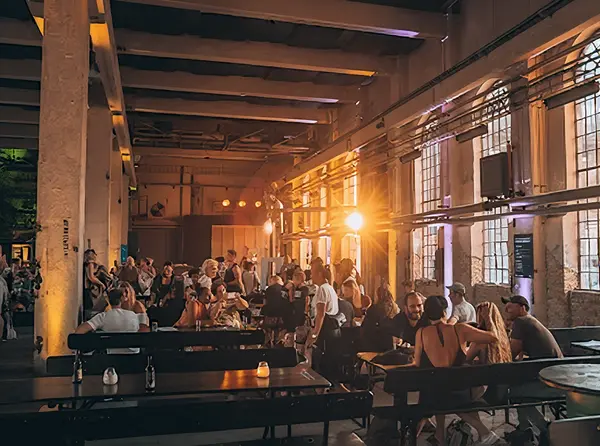
12. Street Food at Reffen
Fresh, global street food in a lively waterfront warehouse district. Expect communal benches, food trucks, craft beer and a boisterous local crowd.
Quick facts: A sprawling patchwork of converted shipping containers and picnic tables serves more than 30 cuisines under open sky, the air thick with charred meat, soy, and freshly fried dough. Locals and long-distance foodies line up at popular stalls by 5 PM, with some vendors selling out within an hour on sunny weekends.
Highlights: A little-known counter run by chef Maria flips exactly 800 potato pancakes every Saturday, her technique finished with smoked paprika and lemon that people queue up to taste. Evenings sometimes erupt into a neighborhood block party with five rotating vinyl DJs, string lights, and a salty breeze that carries laughter and the smell of grilled fish across the courtyard.
Where to Stay in Copenhagen, Denmark
Selected by City Buddy based on guest reviews and proximity to top attractions
Search all hotels in Copenhagen, DenmarkPowered by agoda
Traditional Sweet Dishes

Danish pastry
Danish pastries were popularized in Copenhagen by Austrian bakers in the 19th century, and their flaky, butter-layered spirals became a national obsession sold in cafés all over the city.

Rødgrød med fløde
Rødgrød med fløde is a berry pudding so famously Danish that its name is used as a playful pronunciation test for visitors. It mixes summer berries with a silky cream that is a staple at Copenhagen summer markets.
Kransekage
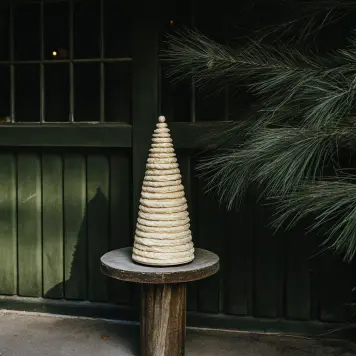
Kransekage is a tower of almond rings served at Danish celebrations in Copenhagen, and its dramatic, marzipan-like flavor makes it a showstopper at weddings and New Year parties.
Traditional Savory Dishes
Smørrebrød
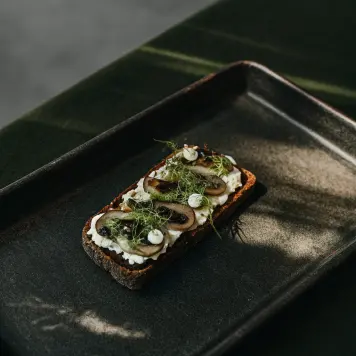
Smørrebrød are open-faced rye sandwiches that turned Copenhagen lunch culture into an art form, with elaborate toppings like pickled herring, liver pate, and delicate herbs arranged like tiny, edible paintings.

Frikadeller
Frikadeller are Danish pan-fried meatballs prized in Copenhagen homes and bistros for their crisp exterior and tender interior, and every family claims a secret ingredient that makes theirs the best.

Stegt flæsk
Stegt flæsk, crispy pork belly served with potatoes and parsley sauce, is so beloved in Copenhagen that it was voted Denmark's national dish, and locals insist the crackling must be perfectly crunchy.
Traditional Beverages

Akvavit
Akvavit is a caraway or dill flavored spirit traditionally enjoyed in Copenhagen during festive toasts, and its complex herbal profile often changes from family to family based on secret spice blends.

Glogg
Glogg, a warm spiced wine served in Copenhagen during winter, is often made with almonds and raisins so each cup doubles as a cozy, fragrant dessert and a holiday ritual.
Danish beer
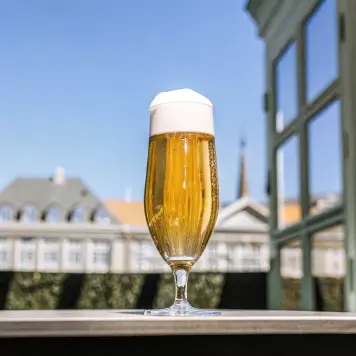
Copenhagen's beer scene blends centuries-old brewing traditions with modern craft innovation, and you can sip a historic pilsner in a 19th-century tavern or a hop-forward IPA at a cutting-edge microbrewery within the same neighborhood.
Frequently Asked Questions about Copenhagen, Denmark
Is Copenhagen, Denmark safe for travelers?
What is the best time to visit Copenhagen, Denmark?
Is Copenhagen, Denmark expensive for tourists?
How do I get around Copenhagen, Denmark?
Can I drink tap water in Copenhagen, Denmark?
Get a PDF with the most popular attractions sent to your email
Get a PDF with all attractions, ratings, and tips. Perfect for offline use.
Most popular day trips
Helsingør (Elsinore)
Home of Kronborg Castle (Hamlet) and seaside views.
Malmö, Sweden
Vibrant city with modern architecture and Lilla Torg.
Hillerød (Frederiksborg Castle)
Baroque Frederiksborg Castle and lakefront gardens.
Humlebæk (Louisiana Museum)
Famous modern art museum with seaside sculpture park.
Getting there
Train stations
InterCity, regional, S-train, Öresund trains to Sweden
Regional and Öresund trains; connections to northern suburbs
Take the M2 metro from CPH to central Copenhagen (~15 min); regional trains connect across Øresund.
Find flights to Copenhagen, Denmark
Click to get eSim for Copenhagen, Denmark
The easiest and most affordable way to get mobile internet wherever you travel.
Useful information for Copenhagen, Denmark
Overview for Copenhagen, Denmark
Most popular itineraries for Copenhagen, Denmark
Browse trip plans created by other travelers
Comments (7)
Tivoli at night felt magical, though lines were long and snacks cost an arm. Go for the atmosphere, not bargain food.
Skip restaurants on Nyhavn, walk two blocks inland for better prices and real food. Most places prefer contactless cards, bring one.
Loved the canals and Scandi design shops, but crowds and steep prices made parts feel touristy. Still fun for a long weekend.
Small and walkable, cafes everywhere. Nightlife is mellow, museums are excellent if you like design and history.
Charming city with amazing bike lanes and pastries, gray weather but cozy. Three nights was perfect, food is pricey but worth splurging once.