 CityBuddy
 English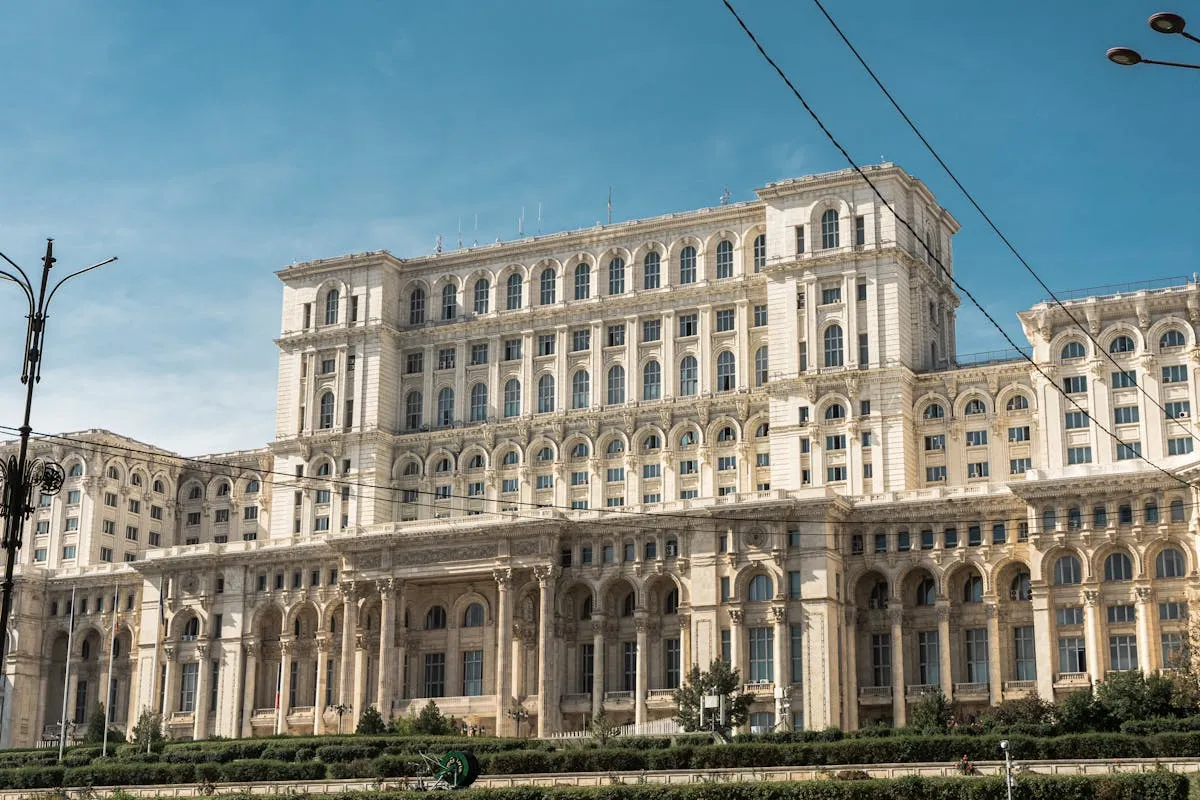
Things to Do in Bucharest, Romania
Photo made by Uiliam Nörnberg on Pexels.com
When to visit
Plan your perfect trip to Bucharest, Romania
Get a complete travel plan built just for you in under 30 seconds, with daily routes, local food tips, budget estimates and more.
Are any of these especially important to you?
Select all that apply
Plan language: EnglishMost popular attractions in Bucharest, Romania
Exploring things to do in Bucharest, Romania offers a mix of history, culture, and nature. Walk through Old Town Lipscani, just 2 kilometers from the city center, or visit the colossal Palace of the Parliament, one of the largest administrative buildings worldwide. A stroll in King Michael I Park provides a peaceful break with its sprawling greenery.
1. Palace of the Parliament (Palatul Parlamentului)
Palatul Parlamentului
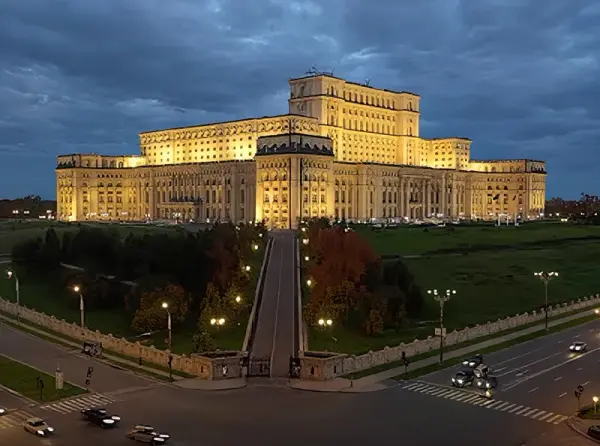
One of the world's largest civic buildings, impressive in scale and ornament. Guided interior tours reveal vast halls, marble staircases and political history.
Quick facts: Walk into the grand halls and the echo is swallowed by vast swathes of marble and huge crystal chandeliers, the building contains about 1,100 rooms and is often counted among the heaviest structures on Earth. Guided tours point out lavish interiors made from local stone and wood, and the sheer scale of the project reshaped entire neighborhoods.
Highlights: Imagine walking under chandeliers so massive their crystals click softly when the heating kicks in, past more than 1,100 rooms and endless ribbons of pink and green marble carved by Romanian artisans. Locals sometimes whisper that it is the second-largest administrative building in the world after the Pentagon, and with halls that host concerts and state banquets you can still hear faint echoes of orchestras in the cavernous rooms.
2. Old Town Lipscani (Centrul Vechi)
Centrul Vechi
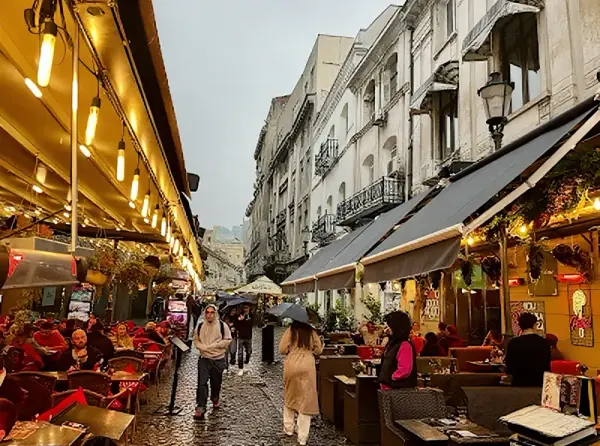
Historic quarter of restored 19th-century facades and lively nightlife. Wander cobbled lanes, sip coffee in courtyards, then hop bars, galleries, and antique shops.
Quick facts: Cobbled alleys pulse with nightlife and more than a hundred bars and restaurants, where live music spills onto the streets and terraces fill with conversation. Beneath the pavement, archaeological layers reveal market ruins and old cellars, while the skyline mixes ornate neoclassical facades with lively bohemian street art.
Highlights: Wander the narrow, cobbled alleys where 19th-century façades lean so close you can hear the clink of porcelain from three tiny cafés sharing a single courtyard. On weekend nights more than 40 bars and small music venues pulse with live bands and impromptu street dancing under strands of warm bulbs, and a quirky tradition has some shopkeepers leaving an old brass key in their windows as a playful invitation to explorers.
3. Romanian Athenaeum (Ateneul Român)
Ateneul Român
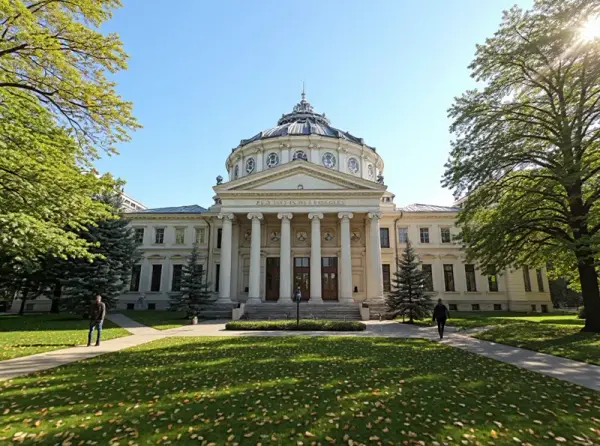
A masterpiece of neoclassical architecture with a richly painted domed auditorium. Hear exceptional acoustics at a concert or take a guided walk through the ornate hall.
Quick facts: Step inside and you're greeted by a jewel-like domed auditorium where a sweeping 75-meter fresco wraps around the stage, making every note shimmer. Audiences rave about the warm, natural acoustics, and the hall serves as the home of the George Enescu Philharmonic and the eponymous festival that draws world-class orchestras.
Highlights: Step inside the columned circular hall and your eyes follow a 700-square-meter fresco by Costin Petrescu, an ochre and ultramarine panorama of Romanian history that wraps the upper walls like a visual timeline. A resident orchestra named for George Enescu tunes beneath a glowing chandelier, and during silence you can hear the soft rasp of 19th-century varnished wood as the hall breathes with each bowed note.
Have you heard of free walking tours?
After traveling to 30+ countries, there's one thing I wish someone had told me from day one, and it completely changed how I experience new cities.
Free walking tours. Yes, actually free. No credit card needed. No catch.
Local guide, 2-3 hours
Major sights, hidden gems, local stories
100% tip-based
Guides earn only tips, so they give their absolute best
You tip what feels right
At the end, just tip whatever you feel is right
I've done these in dozens of cities and they've been the highlight of almost every trip. If you're visiting Bucharest, Romania, do this on your first day. You'll thank me later.
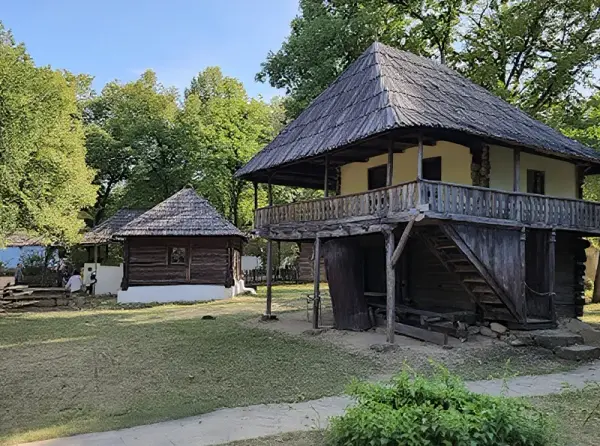
4. Village Museum - Dimitrie Gusti (Muzeul Național al Satului "Dimitrie Gusti")
Muzeul Național al Satului "Dimitrie Gusti"
Step back into rural Romania's past among authentic farmhouses and wooden churches. Wander peaceful paths, watch craftsmen at work, and compare regional architecture.
Quick facts: Strolling along its tree-shaded paths feels like stepping into a living storybook, where hundreds of traditional wooden houses, churches and windmills create immersive scenes of rural life. Local festivals and folk craftsmen bring the air alive with baked bread scents and the clack of looms, offering hands-on experiences from folk costumes to seasonal rituals.
Highlights: Imagine slipping between 272 authentic rural buildings transported from across the country, where a 19th-century wooden church creaks under your hand and the air carries wood smoke, fresh hay, and the metallic tang of copper pots. Founded in 1936 by sociologist Dimitrie Gusti, the place still stages live craft demonstrations and seasonal rituals: on certain Sundays you can watch a woman in a white headscarf weave on a loom exactly as her grandfather did, and smell bread pulled hot from a low earthen oven.
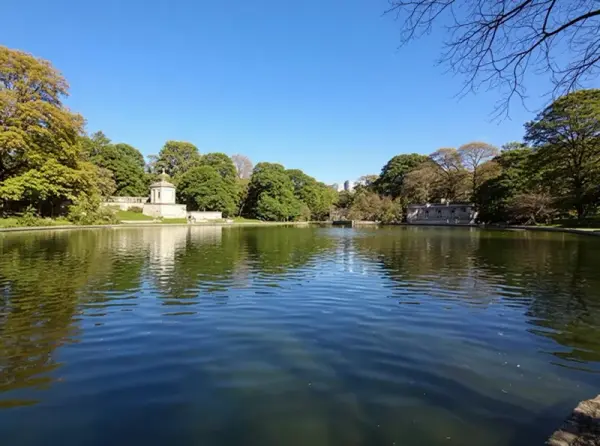
5. King Michael I Park / Herăstrău Park (Parcul Regele Mihai I / Parcul Herăstrău)
Parcul Regele Mihai I / Parcul Herăstrău
Large lakeside park in northern Bucharest, perfect for walking, cycling and outdoor cafés. Enjoy boat rentals, open-air concerts, museums and relaxed local life.
Quick facts: A leafy ribbon of paths and shimmering water invites joggers, pedal-boaters, and picnickers to carve out quiet corners and people-watch against a skyline backdrop. Visitors can hop a small boat, catch an outdoor concert by the shore, or cycle long loops that feel miles from the surrounding traffic.
Highlights: Step off the lakeside promenade and you can wander into a reconstructed village assembled in 1936 by ethnographer Dimitrie Gusti, where clay ovens puff wood smoke and carved wooden gates creak under your hand. On sunny weekends families rent small wooden rowboats and feed dozens of bold mallards that will clamber onto the prow for bread, quacking and splashing like an improvised comedy.
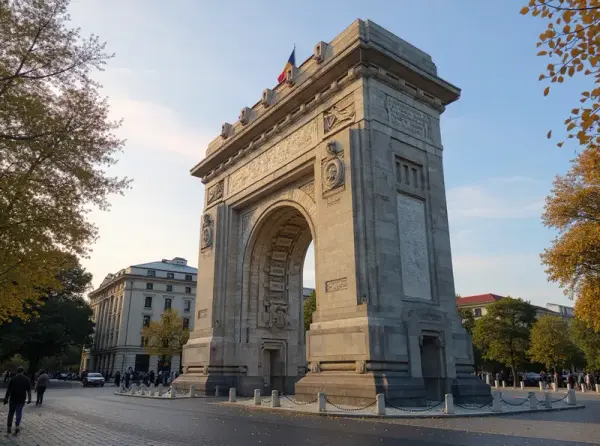
6. Arch of Triumph (Arcul de Triumf)
Arcul de Triumf
A towering symbol of Romania's national history and celebration. Climb to the top for sweeping city views, monuments and occasional ceremonial parades.
Quick facts: Stand beneath towering stone reliefs and feel the hush that falls when military parades funnel through the central arch. Climb the narrow internal staircase and you'll be rewarded with close-up views of sculpted battle scenes and a neat neoclassical silhouette that anchors national celebrations.
Highlights: Each year on December 1 more than 10,000 people pack the avenue to watch a thunderous military parade pass beneath the arch, the drums and brass hitting you in the chest while uniformed battalions march in perfect columns. Originally erected as a simple wooden triumphal gate in 1878, the monument evolved into the present stone form designed by architect Petre Antonescu in the 1930s, and a quirky local habit has couples drive under it after their wedding while friends toss confetti and honk car horns for luck.
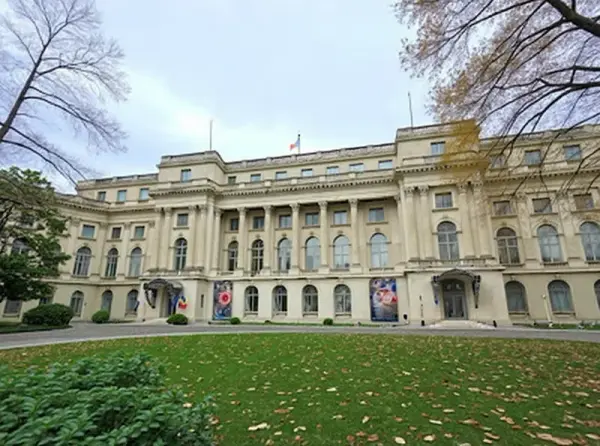
7. National Museum of Art of Romania (Muzeul Național de Artă al României)
Muzeul Național de Artă al României
Romania's premier art collection housed in a grand former royal palace. Explore Romanian masters and European old masters across elegant, frescoed rooms.
Quick facts: Step into hushed galleries and you'll encounter a striking mix of medieval icons and bold 19th- and 20th-century paintings, which together map the evolution of Romanian art. Golden skylights and ornate rooms highlight dramatic European canvases and intimate local portraits, so each gallery feels like a conversation between royal collections and modern sensibilities.
Highlights: Slip into the former royal palace and you'll find a dim, carpeted corridor where afternoon light slices across gilded frames, making centuries of varnish glow like amber and throwing dust motes into slow, visible galaxies. Occasionally curators wheel out a 17th-century icon under glass for a conservation demonstration, the brass hinges singing softly and the scent of beeswax and old paint rising warm and sweet.
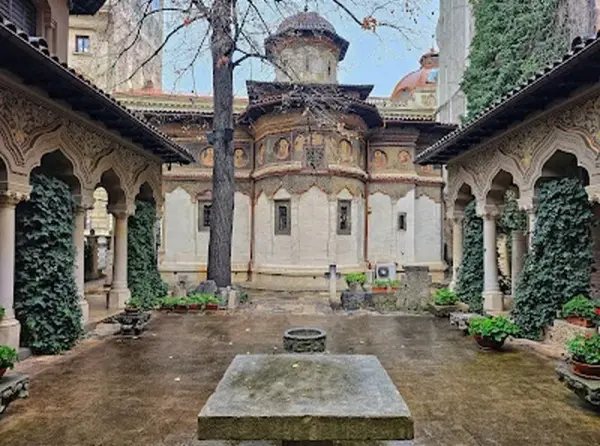
8. Stavropoleos Church (Biserica Stavropoleos)
Biserica Stavropoleos
An 18th-century Orthodox church famed for carved stonework and a jewel-like wooden iconostasis near Bucharest Old Town. Enjoy the quiet courtyard, rich icons, and occasional choir.
Quick facts: Sunlight through narrow stained-glass windows makes the little interior glow, highlighting a jewel-like iconostasis and exquisitely carved Brâncovenesc stone and wood details. A tiny monastic choir preserves resonant Byzantine chant while an attached library houses rare illuminated liturgical manuscripts, so visitors are often surprised by the church’s intense acoustic and artistic atmosphere.
Highlights: Step inside and warm beeswax and incense perfume the air, while over 50 tiny silver votive plaques hammered by worshipers glint around the gilded iconostasis. On feast days the tiny choir of about a dozen singers pours out timeless Byzantine chants without microphones, so the low bass notes make the floor hum under your feet like a private invitation.
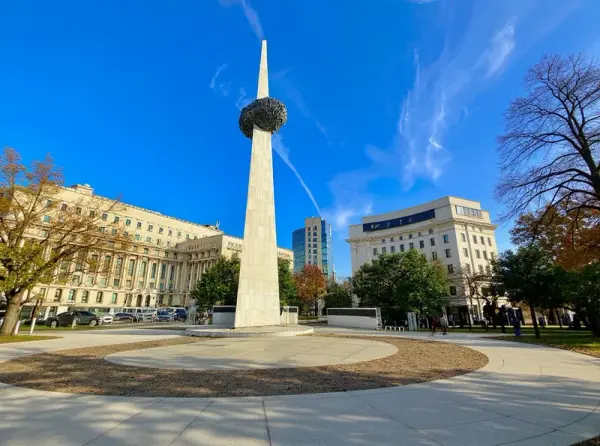
9. Revolution Square (Piața Revoluției)
Piața Revoluției
Experience the heart of Romania's 1989 revolution, beside the Romanian Athenaeum and historic palaces. Walk the square, photograph monuments, and read the memorials that mark the city's political past.
Quick facts: Evenings here feel cinematic, neoclassical facades glowing in amber while street musicians and chatter spill across the wide stone steps. Crowds once surged into the plaza during the 1989 uprising, and today memorial plaques and guided walks help visitors imagine those intense public moments.
Highlights: You can stand where thousands chanted on December 21, 1989 and look up at the former Communist Party headquarters, whose balcony is the exact spot Nicolae Ceaușescu used for his final televised address before he fled by helicopter the following morning. Every December 22 locals cluster around the bronze equestrian statue of King Carol I, leaving candles and red carnations until the stone base smells faintly of wax and dust, a quiet, floral wake that still draws hundreds each year.
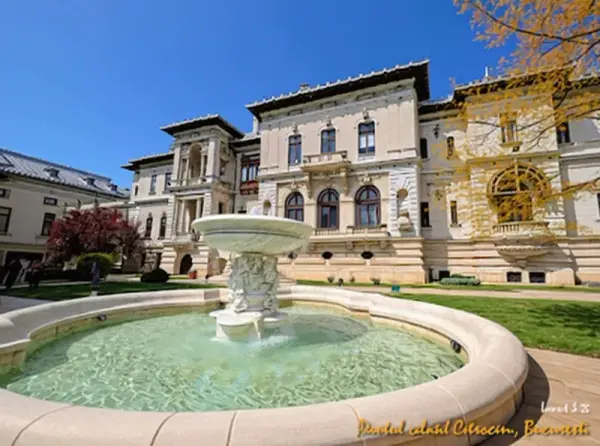
10. Cotroceni Palace (Palatul Cotroceni)
Palatul Cotroceni
Palatul Cotroceni showcases Romania's royal and presidential history in richly decorated rooms and gardens. Guided tours take you through state halls, private apartments, and a small museum.
Quick facts: Sunlight pours through stained-glass windows onto marble staircases and gilded ceilings, so wandering the state rooms feels like stepping into a living painting. Guided tours reveal surprising details: a vast presidential art collection and a hidden network of service corridors that once linked private apartments with official halls.
Highlights: Step into the marble-lined main foyer and you'll notice a tiny brass plaque dated 1893 with the architect Paul Gottereau's name, a reminder that the current shell was reshaped for King Carol's court. In the quieter wings a faded silk wallpaper still smells faintly of lavender and mothball, and a portrait of Queen Marie watches over a single velvet armchair that's been kept exactly where she used to sit, rumor has it because staff never dared move it.
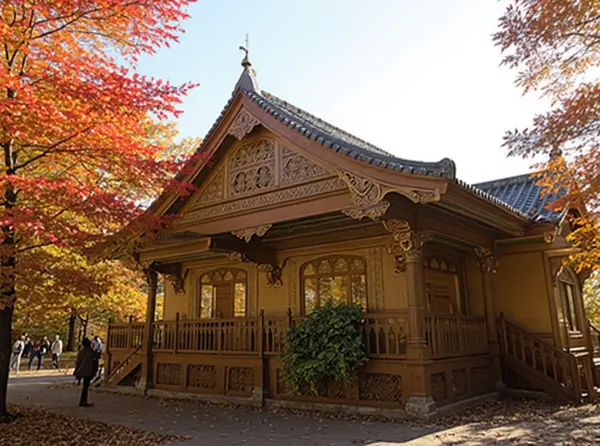
11. Caru' cu Bere
Ornate historic brewery-restaurant in Bucharest's Old Town, prized for stained glass and carved wood. Expect hearty Romanian food, house-brewed beer, and great mezzanine photo angles.
Quick facts: Vaulted ceilings, carved woodwork and stained-glass mosaics give the dining room a warm, theatrical glow under amber lamps. Local brewers kept a house beer tradition for decades, and the menu pairs rustic dishes like sarmale and mămăligă with hearty draft pours.
Highlights: Stepping beneath a dozen crystal chandeliers, you'll hear violin and accordion threads weaving through old folk tunes as waiters balance steaming plates and heavy glass steins. A quirky tradition sees the lead vocalist awarded folded banknotes at the end of a set, the crowd stamping along and the air filling with garlic, smoke and beer-sweet warmth.
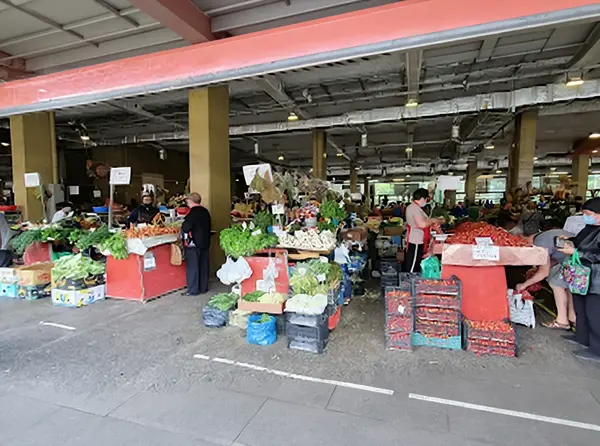
12. Obor Market
Authentic Bucharest market full of fresh produce and Romanian specialties. Expect lively stalls, bargaining vendors and plenty of street food to try.
Quick facts: Rows of stalls sell everything from fresh fruit and vegetables to secondhand electronics, and the air often smells of fried dough and strong coffee. On bustling days more than 1,000 vendors squeeze into the market's lanes, where colorful produce piles and noisy bargaining create a lively, almost theatrical atmosphere.
Highlights: One beloved tradition features the Popescu family's cellar-sour cabbage, sold by the kilogram from hand-labeled 50-liter barrels and often sampled with a small glass of țuică. Navigate past a bright wall of pickled peppers and you'll find a vendor who calls out quick recipes and measurements, the shouted spices and sizzling pans making the whole corner feel like a pop-up kitchen.
Where to Stay in Bucharest, Romania
Selected by City Buddy based on guest reviews and proximity to top attractions
Search all hotels in Bucharest, RomaniaPowered by agoda
Traditional Sweet Dishes
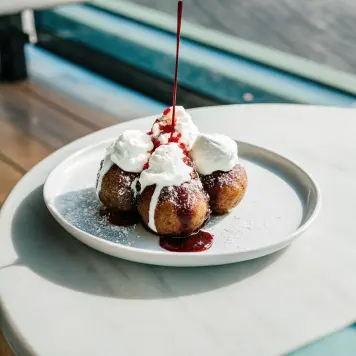
papanasi
Papanasi are pillowy fried cheese doughnuts topped with sour cream and jam, and their sweet-and-savory contrast makes them a playful favorite at Bucharest cafes and family tables.
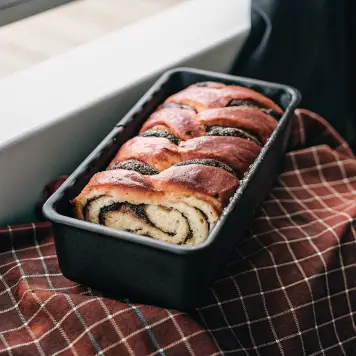
cozonac
Cozonac is a braided, rich holiday bread filled with walnuts or poppy seeds, and Romanians often judge a family recipe by how tall and beautifully swirled the loaf turns out.
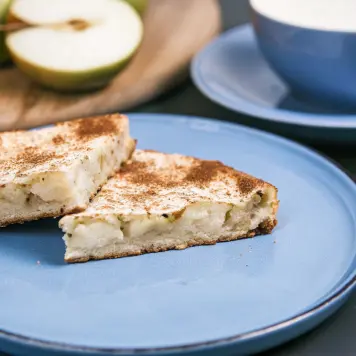
placinta cu mere
Plăcintă cu mere is a thin, flaky apple pie dusted with cinnamon, and street vendors in Bucharest serve it warm so locals can enjoy its crisp layers with coffee on the go.
Traditional Savory Dishes
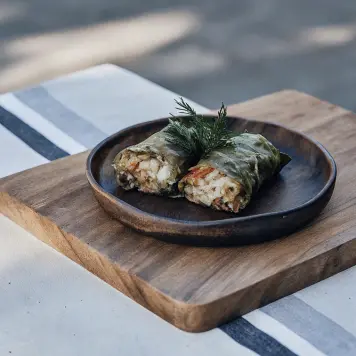
sarmale
Sarmale are cabbage rolls filled with seasoned pork and rice, and they are slow-cooked for hours so each bite becomes tender, making them the star of festive tables in Bucharest.
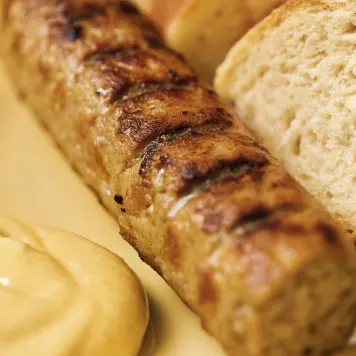
mici
Mici are skinless, charcoal-grilled rolls of spiced meat that locals eat with mustard and bread, and their irresistible charred crust draws crowds to Bucharest grill stands.

ciorba de burta
Ciorbă de burtă is a silky, sour tripe soup enriched with egg and sour cream, and many Bucharesters swear it is the go-to cure after a night of celebration.
Traditional Beverages
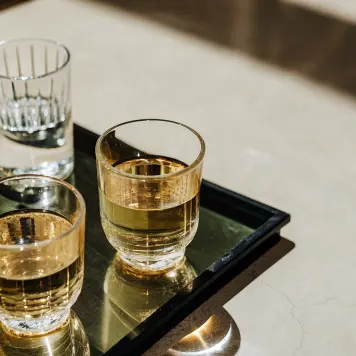
tuica
Țuică is a clear plum brandy traditionally distilled at home after the autumn harvest, and in Bucharest it is still offered to guests as a warm, welcoming shot.
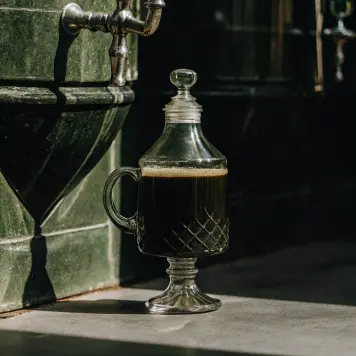
palinca
Palincă is a double-distilled fruit brandy that can be very high in alcohol, and connoisseurs in Bucharest savor it slowly to appreciate its intense fruit aromas.
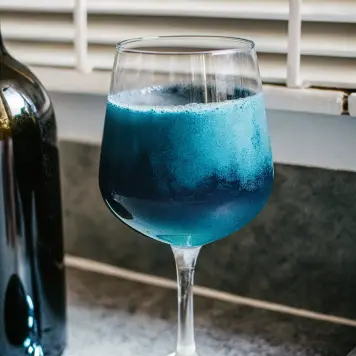
wine
Romanian wine has roots that go back to Roman times, and in Bucharest you can taste local varieties like Fetească Neagră that surprise visitors with bold, spicy character.
Frequently Asked Questions about Bucharest, Romania
Is Bucharest, Romania safe for tourists?
How many days should I spend in Bucharest, Romania?
What is the best time to visit Bucharest, Romania?
Is Bucharest, Romania expensive to travel to?
How to get around Bucharest, Romania?
Get a PDF with the most popular attractions sent to your email
Get a PDF with all attractions, ratings, and tips. Perfect for offline use.
Most popular day trips
Sinaia (Peleș Castle)
Mountain resort with the ornate Peleș Castle and hiking trails.
Bran (Bran Castle / Dracula)
Famous castle set in scenic hills, popular historic site.
Constanța (Black Sea coast)
Seaside city with beaches, Roman ruins, and a lively port.
Snagov Monastery
Island monastery said to be Vlad Țepeș's burial place.
Rent a car in Bucharest, Romania
Getting there
Train stations
Main national & international hub: Bucharest–Brașov, Bucharest–Constanța, Budapest/Belgrade links
Local/regional lines and metro/transfer connections
From OTP take the airport train or express bus to Gara de Nord; taxis and rideshares are widely available.
Find flights to Bucharest, Romania
Click to get eSim for Bucharest, Romania
The easiest and most affordable way to get mobile internet wherever you travel.
Comments (6)
Buy a 24 or 72 hour metro pass at any station if you plan to hop around, cheaper than single tickets and saves queue time.
Unexpectedly loved Bucharest, great cheap food and nightlife, friendly people. 3 nights gave time for Old Town, museums and a day trip.
Palace of Parliament is massive, worth the tour but the guide felt rushed and ticket lines were long on weekends.
Skip restaurants on Strada Lipscani, walk two blocks toward Calea Victoriei for cheaper, tastier local spots and real portions.
Felt mostly safe, but avoid wandering poorly lit side streets after midnight, and watch out for aggressive taxi drivers.