 CityBuddy
 English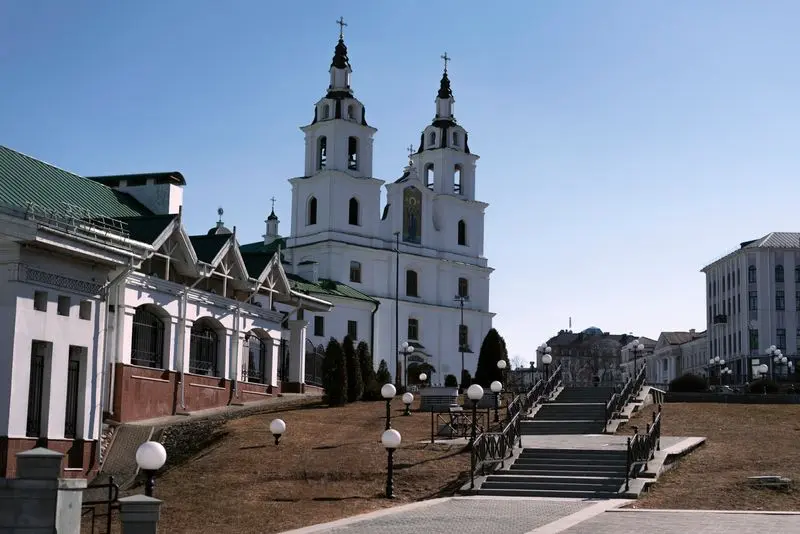
Things to Do in Minsk, Belarus
Photo made by Vitali Adutskevich on Pexels.com
When to visit
Plan your perfect trip to Minsk, Belarus
Get a complete travel plan built just for you in under 30 seconds, with daily routes, local food tips, budget estimates and more.
Are any of these especially important to you?
Select all that apply
Plan language: EnglishMost popular attractions in Minsk, Belarus
When looking for things to do in Minsk, Belarus, start at Independence Square, home to the towering 70-meter granite obelisk and the Red Church with its striking neo-Gothic spires. Then visit the National Library of Belarus, a 74-meter rhombicuboctahedron that transforms into a glowing beacon of 4,646 LED panels at night. A short walk leads to the somber Island of Tears, a memorial to Belarusian soldiers lost in the Soviet-Afghan war.
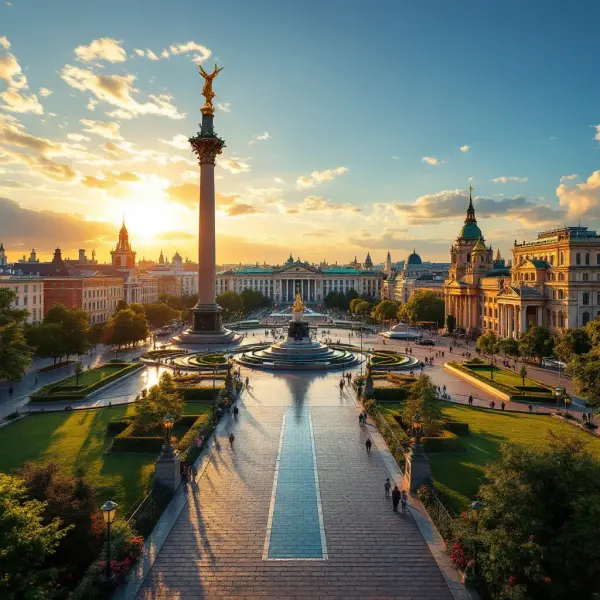
1. Independence Square
Where everyday life unfolds against a backdrop of controversial history. Walk the same cobblestones where festivals, concerts, and quiet protests have reshaped a nation's story.
Quick facts: The central square spans 4.5 hectares and can hold up to 50,000 people for concerts and state events. Its silhouette features the Church of Saints Simon and Helena, a striking red brick Catholic church that survived both world wars and Soviet anti-religious campaigns.
Highlights: Late at night, the square's cobblestones still echo with footsteps from the 2020 protests when hundreds of thousands of people gathered peacefully wearing white and holding flowers. The red church glows under floodlights while the nearby KGB headquarters stands silent, creating a strange mix of resilience and tension that you can feel in your chest.
2. National Library of Belarus
A visit here means standing inside a giant diamond-shaped spaceship of a building that feels both futuristic and strangely monumental. Take the elevator to the sky lounge and watch the sunset paint the city from 75 meters up.
Quick facts: The rhombicuboctahedron shape of the building was chosen to resemble a diamond, symbolizing the value of knowledge. Its massive scale is immediately apparent up close: 20 stories tall, the structure contains over 500,000 volumes and requires specially designed cleaning drones to maintain its glass facade.
Highlights: From the observation deck on the 22nd floor, the panoramic view transforms Minsk into a geometric grid of Soviet avenues and leafy parks stretching to the horizon. The exterior color literally changes throughout the day as 18,000 square meters of glass panels reflect the shifting Belarusian sky.
3. Victory Square
The ceremonial heart of the capital where Belarus remembers its wartime past. Stand between the grand obelisk and the Eternal Flame while guards march in precise formation.
Quick facts: One of Europe's largest city squares spans nearly 7 hectares, an area equivalent to about 10 football fields. The square's granite paving stones bear witness to everything from solemn military parades to massive rock concerts drawing over 100,000 people.
Highlights: At the square's heart stands the 38-meter granite Obelisk topped with the Order of Victory, but the truly moving part is the three bronze bas-reliefs around its base. Each panel depicts a different stage of the war: the call to fight, the partisan struggle in the forests, and the victorious return, with real human faces etched into the metal that seem to change expression as sunlight shifts across them.
4. Island of Tears
A quiet island memorial that turns the horror of war into something deeply personal. Walk across the arched bridge to find a chapel that physically tilts beneath your feet, a bronze angel weeping, and 771 names carved in stone.
Quick facts: This man-made island in the Svisloch River was created in the 1950s to anchor a memorial complex. Locals call it "Ostrov Slyoz" or "Island of Tears" because a grieving mother's tears supposedly created a nearby stream.
Highlights: Inside the central chapel, the floor slopes inward like the deck of a sinking ship, a disorienting detail that mirrors the chaos of war. A bronze figure of a weeping angel stands guard outside, with real water trickling from its eyes year-round.
5. Mir Castle Complex
Three architectural eras collide in a single fortress, each telling a different chapter of Eastern European power struggles. Walk through Gothic halls, Renaissance courtyards, and Baroque gardens all within the same stone walls.
Quick facts: Red brick walls rise 25 meters high, their Gothic forms blending with Renaissance and Baroque additions from later centuries. Over 30 different architectural styles are woven into this single complex, the result of nearly 500 years of continuous construction and reconstruction.
Highlights: Step through the main gate and notice the shift from red brick to whitewashed walls, a deliberate design trick that makes the castle appear larger from the inside. Underground tunnels stretch over 200 meters beneath the moat, connecting the castle to a hidden chapel that only a handful of visitors ever find.
6. Nesvizh Castle
Step into a fairy-tale fortress where Polish magnates once hosted bear hunts and secret council meetings. Walk through grand halls, eerie dungeon tunnels, and a manicured French park with its own lake.
Quick facts: The castle's 34-meter tall towers served as both defense fortifications and a statement of the Radziwiłł family's immense wealth. More than 200 rooms inside were once connected by a secret underground passage system stretching over 40 kilometers.
Highlights: Look closely at the ceilings inside the Golden Hall: they are painted with a trompe-l'oeil technique that makes the flat surface appear as a massive dome rising three stories high. The frescoes were hidden under layers of plaster for decades after World War II, only rediscovered during a 1990s restoration when workers accidentally chipped through to find the original 16th-century paintings intact.
7. Minsk City Hall
The symbolic heart of Minsk's sovereignty and civic pride. Stand in the cobblestone square where city councils once governed, hear the hourly trumpet call, and explore the elegant halls inside.
Quick facts: The current building is a faithful 2004 reconstruction of the original 1602 city hall, which was demolished in 1857 on orders from the Russian Empire. Its clock tower chimes every hour with a melody composed specifically for Minsk, and the square in front hosts the city's official Christmas tree each winter.
Highlights: Watch the clock tower at noon when a small door opens and a figure of a trumpeter emerges to play a short melody, a tradition revived from the 17th century. The building's basement still contains original foundation stones from 1602, which you can see through a glass panel in the floor of the main hall.
8. Church of Saints Simon and Helena
One of the few Catholic churches to survive the Soviet era intact, still holding mass since 1910. You'll walk under soaring 80-meter twin towers into a peaceful interior of stained glass and white marble.
Quick facts: The striking red and white Catholic church in central Minsk was built as a gift from a wealthy local family and took over five years to complete. Its twin towers rise 80 meters high, making them visible from much of the city center.
Highlights: Three hauntingly beautiful stained glass windows inside depict scenes from the lives of Saints Simon and Helena, casting deep reds and blues across the marble floor at midday. The main altar is carved from pure white Italian marble, a surprising and extravagant feature for a church in this part of Europe.
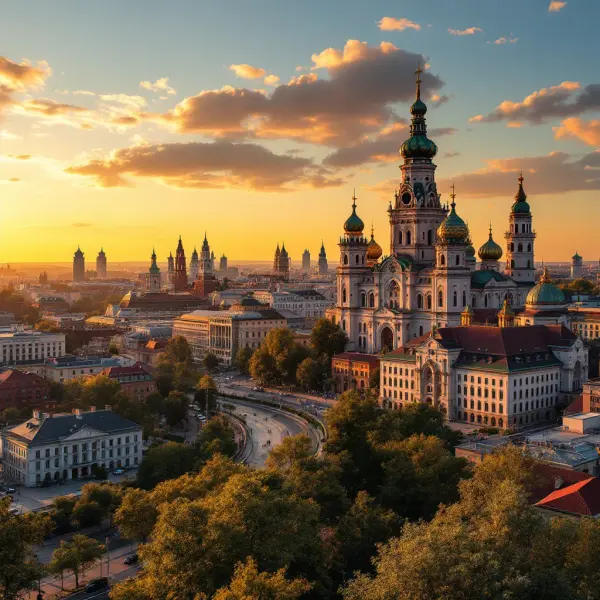
9. Upper City
Wander through three centuries of architecture packed into a single sloping hill. Cobblestone lanes, cathedral domes, and hidden courtyards reveal the old soul of the capital.
Quick facts: The High Town was medieval Minsk's political and religious heart, where the city council and wealthy merchants settled. Three former city gates still stand here: the Resurrection Church gate, the Bernardine convent gate, and the Holy Spirit Cathedral bell tower gate.
Highlights: At the eastern edge of the square stands a red brick town hall reconstructed in 2004, exactly where the original was built after Minsk received Magdeburg rights in 1499. If you stand at the town hall steps at noon, you might catch a small reenactment of the city's medieval trumpet signal that once opened the market days.
10. Gorky Park
A sprawling urban escape where Soviet history meets contemporary leisure. Wander shaded pathways, ride a 54-meter Ferris wheel, and stumble upon socialist realist sculptures along the river.
Quick facts: Sprawling across nearly 40 hectares, this urban park offers a mix of Soviet-era monumentalism and modern leisure spaces. Its Ferris wheel rises 54 meters high, giving riders panoramic views of the Svisloch River and city skyline.
Highlights: Tucked along the riverside, a 17-meter tall replica of the Fisherman statue stands dramatically against the water, a beloved photo spot for locals. Nearby, a quirky open-air exhibition features Soviet-era sculptures, including a towering Lenin bust and socialist realist mosaics that feel frozen in time.
Where to Stay in Minsk, Belarus
Selected by City Buddy based on guest reviews and proximity to top attractions
Search all hotels in Minsk, BelarusPowered by agoda
Traditional Sweet Dishes

Kletski
Kletski are dumplings filled with sweet berries or poppy seeds. They are often served with sour cream and a dusting of sugar for a comforting dessert.
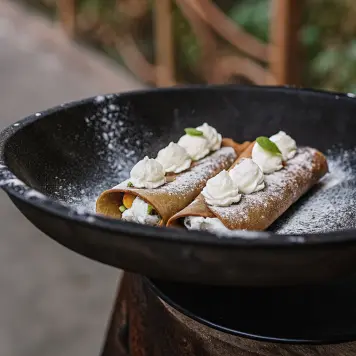
Nalisniki
These thin Belarusian crepes are typically filled with sweet cottage cheese, fruit, or jam. They are rolled up and lightly fried, then topped with sour cream or powdered sugar.

Kissel
Kissel is a thick, fruity dessert jelly made from berries such as cranberries or bilberries. It has been enjoyed in Belarus for centuries and is often served chilled with milk or cream.
Traditional Savory Dishes

Draniki
Draniki are crispy potato pancakes that are considered the national dish of Belarus. They are typically served with sour cream and can be stuffed with meat, mushrooms, or cheese.

Machanka
Machanka is a rich, hearty sauce made from pork fat, flour, and sour cream, often served with thick Belarusian pancakes called bliny. It is a beloved comfort food in Minsk, especially during cold winters.
Kholodnik
Kholodnik is a cold beetroot soup, often bright pink in color, made with sour cream, fresh vegetables, and sometimes hard-boiled eggs. It is a refreshing summer staple in Belarusian cuisine.
Traditional Beverages

Kvass
Kvass is a slightly fermented, tangy beverage made from rye bread, sugar, and yeast. It has been a traditional Slavic drink for over a thousand years and is still sold from street kiosks across Minsk.
Kompot
Kompot is a sweet, non-alcoholic beverage made by boiling fresh or dried fruits like apples, cherries, and berries in water with sugar. It is commonly served cold as a refreshing drink with meals or at family gatherings.
Berezoviy Sok
Berezoviy Sok, or birch sap, is harvested in early spring by tapping birch trees. This clear, slightly sweet liquid is rich in minerals and vitamins and is believed to have cleansing and health-boosting properties.
Frequently Asked Questions about Minsk, Belarus
Is Minsk, Belarus safe?
How many days in Minsk, Belarus?
Best time to visit Minsk, Belarus?
Is Minsk, Belarus expensive?
How to get around Minsk, Belarus?
Get a PDF with the most popular attractions sent to your email
Get a PDF with all attractions, ratings, and tips. Perfect for offline use.
Most popular day trips
Mir Castle
UNESCO-listed 16th-century Gothic castle in the small town of Mir
Nesvizh Castle
Magnificent Renaissance palace and park complex, also UNESCO listed
Brest Fortress
Iconic WWII memorial complex and heroic fortress in Brest
Belovezhskaya Pushcha
Ancient primeval forest and UNESCO site home to European bison
Stalin Line Museum
Open-air military museum with WWII fortifications and equipment
Getting there
Airports
Train stations
Moscow, Warsaw, Berlin, Vilnius, Brest, regional routes
Bus 300E runs from the airport to Minsk Central Station in about 50 minutes. Taxis cost around 30-40 BYN.
Find flights to Minsk, Belarus
Click to get eSim for Minsk, Belarus
The easiest and most affordable way to get mobile internet wherever you travel.
Comments (10)
Mixed feelings. Interesting history and very affordable, but the language barrier was tougher than I thought. Not everyone speaks English.
The city is incredibly clean and organized. Felt totally safe walking alone at night as a woman. That matters a lot.
Went in November and it was freezing. Like bone cold. Summers are probably better but the gray sky killed the mood for me.
Most museums have free entry on the first Sunday of the month. Plan around that and you save maybe $30 total across a few days.
Honestly found it a bit dull. Architecture is mostly Soviet blocks and not much nightlife. Would only return if visiting friends.