 CityBuddy
 English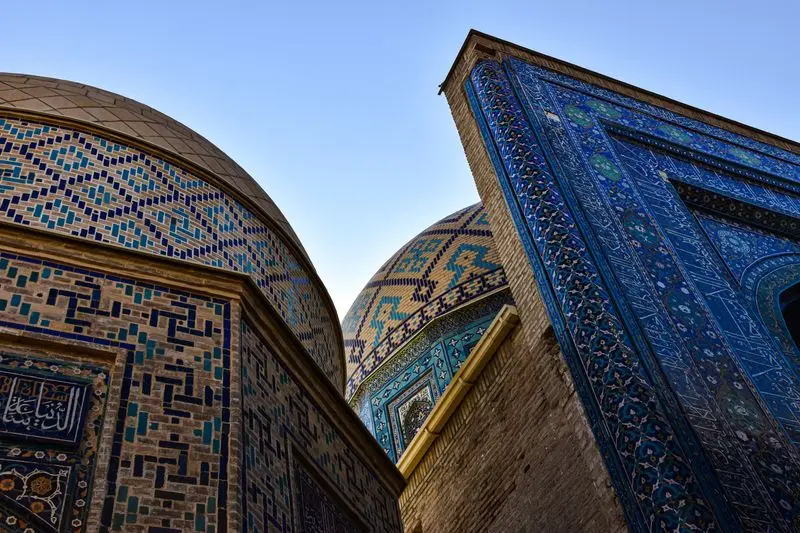
Things to Do in Samarkand, Uzbekistan
Photo made by AXP Photography on Pexels.com
When to visit
Plan your perfect trip to Samarkand, Uzbekistan
Get a complete travel plan built just for you in under 30 seconds, with daily routes, local food tips, budget estimates and more.
Are any of these especially important to you?
Select all that apply
Plan language: EnglishMost popular attractions in Samarkand, Uzbekistan
1. Registan Square
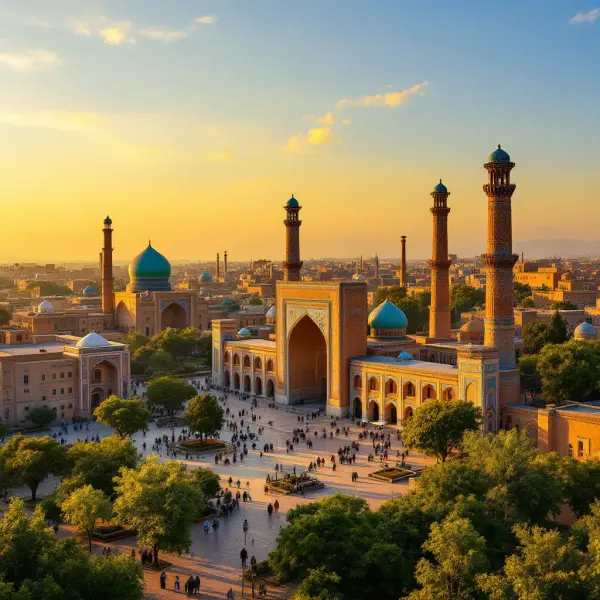
Experience one of Central Asia's most magnificent squares, where the echoes of history can be felt in every stone. Let yourself be enchanted by the blue mosaics that glow in the sunset.
Quick facts: Three madrasas surround the square and their blue domes shift in color depending on the time of day. Over 6 million visitors annually are drawn here by the spectacular symmetry and the hand-painted tile work.
Highlights: When the sun goes down, the lighting is turned on and the entire square transforms into a sea of golden and blue shades. Each tile is handmade and placed according to geometric patterns that mathematicians still study.
2. Bibi-Khanym Mosque
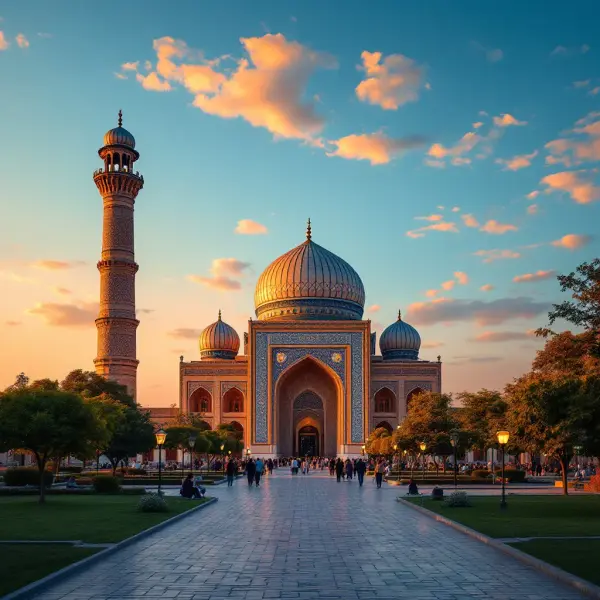
Here you encounter one of the Timurid Empire's most magnificent buildings, with a portal reaching 35 meters toward the sky. Walk under the dizzying dome and feel the weight of history in the blue-tiled walls.
Quick facts: Timur's favorite wife ordered the construction of the mosque while he was away on a military campaign, a story that gave the building its name. The 35-meter-high entrance portal was the tallest vault structure in Central Asia at the time, and the mosque could hold over 10,000 worshippers at once.
Highlights: Under the mosque's dome you can hear how a whisper from one side echoes clearly on the opposite side, an acoustic property that no one knows whether Timur planned or if it occurred by chance. The marble Quran pulpit in the middle of the courtyard is carved from a single stone from China and weighs over 12 tons.
3. Shah-i-Zinda
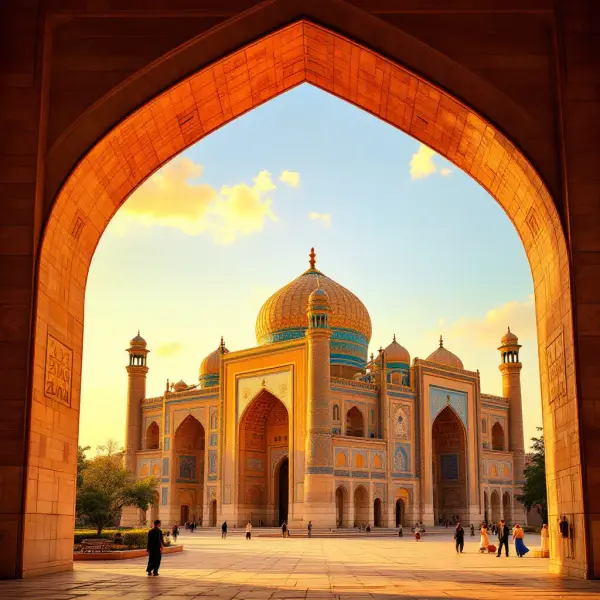
An alley of blue domes rising against the turquoise sky. You walk through an outdoor corridor of 600-year-old grave monuments, the silence broken only by doves and the call to prayer.
Quick facts: Over 40 mausoleums crowd along a narrow alley, each covered in blue and turquoise glazed bricks. The burial complex grew over 300 years and each ruler tried to outdo the previous one with their magnificent tomb chamber.
Highlights: At the top of the stairs lies the grave of Kusam ibn Abbas, a cousin of the Prophet Muhammad who according to legend did not die but lives on underground. That is why the place is called "The Tomb of the Living King" and you can still see pilgrims leave small notes with prayers at his mausoleum.
4. Ulugh Beg Observatory
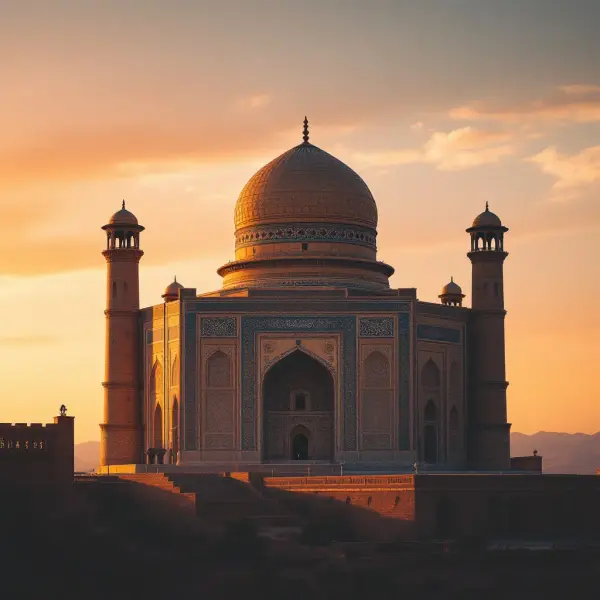
Here sat the 15th century's most precise eye on the sky, long before the telescope. See the underground sextant at 40 meters and stand where astronomers once mapped the cosmos with the naked eye.
Quick facts: Here, the astronomer Ulugh Beg measured the positions of the stars with a sextant that had a radius of 40 meters. His star catalog from the 15th century was so accurate that it was used by Western astronomers several hundred years later.
Highlights: The giant sextant is not above ground but dug deep into the earth crevice, so only an arc of marble sticks up. On its 40-meter-long arc, Ulugh Beg measured the positions of the sun and planets with an accuracy that would take two centuries before the Europeans matched it.
5. Khazrat-Khizr Mosque
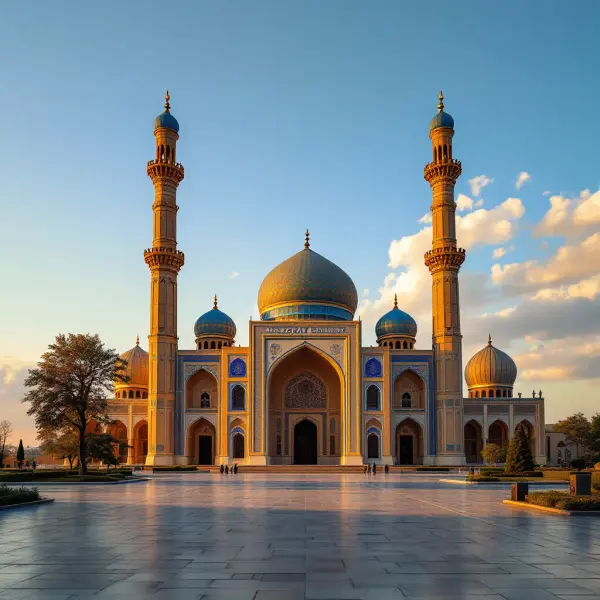
Here you get Samarkand's best panoramic view of Registan and Bibi-Khanym. Sit on the steps at sunset and watch the dome glow in golden light.
Quick facts: On a hill opposite Shah-i-Zinda lies this mosque, which is dedicated to the prophet Khizr, Islam's water-living mystic who is said to have drunk from the fountain of eternity. The mosque was originally built in the 8th century, but the current structure from 1854 has a unique hourglass dome that shifts color in the sunlight.
Highlights: From the mosque's terrace you have one of Samarkand's most breathtaking views: the entire Registan square and the Bibi-Khanym mosque spread out like a living painting below. Inside the prayer hall there is a 130-year-old cedar wood door with hand-carved floral patterns that the local population believes protects against the evil eye.
6. State Museum of the History of Culture of Uzbekistan
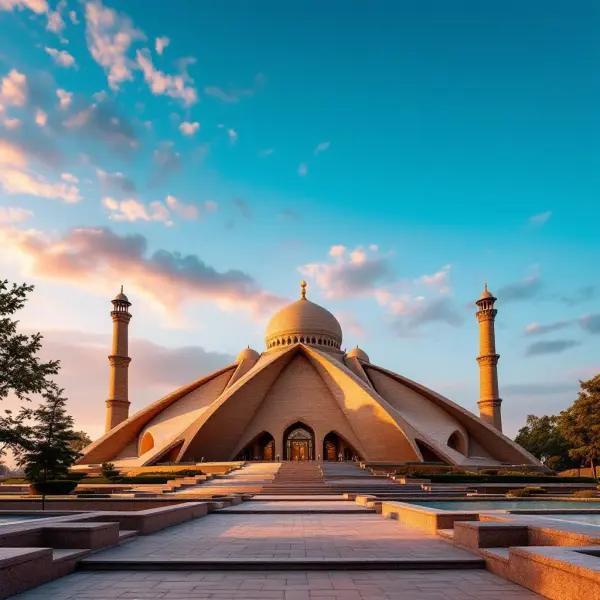
Take a journey through 40,000 years of Central Asian history under one roof. Here awaits everything from mammoth tusks and Zoroastrian bone repositories to Timurid manuscripts in gold.
Quick facts: Over 250,000 objects are in the collections, from Stone Age tools to magnificent textiles from the 19th century. One of the museum's most fascinating objects is a 2,000-year-old bronze cauldron from the Greco-Bactrian kingdom.
Highlights: An entire hall is dedicated to the wall paintings from Afrasiab's palace, where a 7-meter-long colorful scene shows a procession with horses, camels and foreign dignitaries from the 7th century. The paintings were first discovered in 1965 and are considered one of the most important archaeological finds in Central Asia.
Where to Stay in Samarkand, Uzbekistan
Selected by City Buddy based on guest reviews and proximity to top attractions
Search all hotels in Samarkand, UzbekistanPowered by agoda
Traditional Sweet Dishes
Nisholda
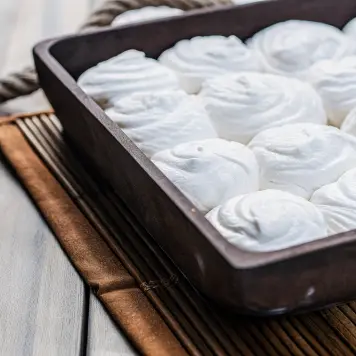
Nisholda is a snowy white halva made from whipped egg whites, sugar, and licorice root extract. It is traditionally prepared overnight and served at dawn during the Ramadan fasting month as an energy-boosting sweet.
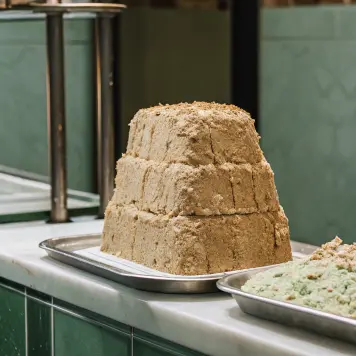
Samarkand Halva
Samarkand Halva is a dense, crumbly confection made from sesame seeds, sugar, and nuts. It has been made for centuries along the ancient Silk Road and travelers would carry it for sustenance on long journeys.
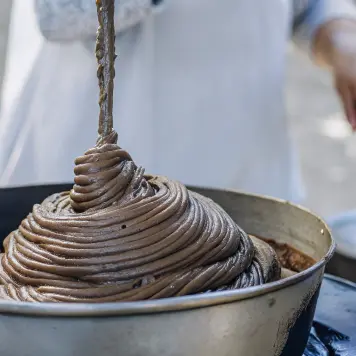
Sumalak
Sumalak is a thick, sweet paste made from germinated wheat that is cooked for over 24 hours until it caramelizes. It is prepared ceremonially for Nowruz (Persian New Year) and women sing traditional songs while stirring the giant cauldron.
Traditional Savory Dishes
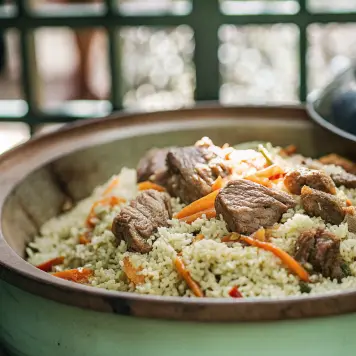
Samarkand Plov (Palov)
Samarkand Plov differs from other Uzbek plovs because the rice, carrots, and meat are cooked separately and then layered, resulting in a lighter colored dish. It is so central to Samarkand culture that it is often called the "king of Uzbek cuisine."
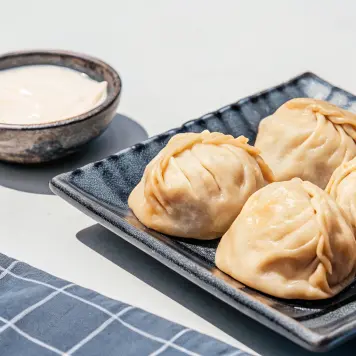
Manti
Manti are large steamed dumplings filled with minced lamb, onions, and cumin, often topped with yogurt and tomato sauce. In Samarkand, families gather to make dozens of manti by hand, pleating each dumpling with precise folds.
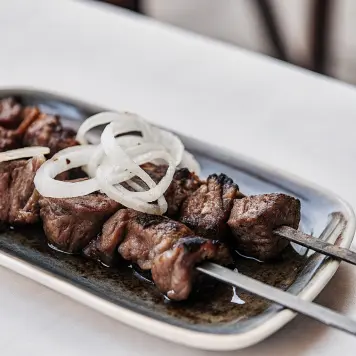
Shashlik
Shashlik is skewered and grilled marinated lamb or beef cooked over open coals, often served with raw onion rings and non bread. The meat is traditionally marinated in vinegar or pomegranate juice, giving it a distinctive tangy flavor.
Traditional Beverages
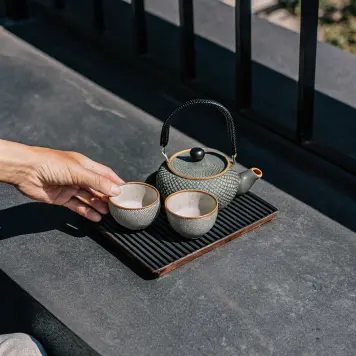
Kok Choy (Green Tea)
Green tea is the national drink of Uzbekistan and is served with every meal in Samarkand, often from a beautiful teapot into small bowls called piyola. It is customary to pour tea three times and return it to the pot before serving to ensure the perfect temperature and strength.

Ayran
Ayran is a refreshing chilled drink made by diluting yogurt with water and adding a pinch of salt. It is the perfect companion to hearty plov and shashlik, especially during Samarkand's hot summers.

Kompot
Kompot is a sweet, non-alcoholic beverage made by boiling fresh or dried fruits like apricots, apples, and cherries in sugar water. Samarkand's abundant fruit orchards make this drink especially flavorful and popular in the region.
Frequently Asked Questions about Samarkand, Uzbekistan
Is Samarkand, Uzbekistan safe to travel to?
How many days do you need in Samarkand, Uzbekistan?
What is the best time to visit Samarkand, Uzbekistan?
Is Samarkand, Uzbekistan expensive to travel to?
How do you get around Samarkand, Uzbekistan?
Get a PDF with the most popular attractions sent to your email
Get a PDF with all attractions, ratings, and tips. Perfect for offline use.
Most popular day trips
Shahrisabz
Birthplace of Amir Timur with the Ak-Saray Palace ruins
Panjakent, Tajikistan
Ancient Sogdian ruins and a fascinating archaeological museum
Nurata
Desert oasis with ancient fortress ruins and sacred springs
Bukhara
UNESCO-listed Silk Road city with stunning madrasas and minarets
Getting there
Train stations
Afrosiyob high-speed train to Tashkent (2h) and Bukhara (1.5h); regular trains to Moscow and other cities
From the airport, take taxi for about 10 minutes to the city center. The Afrosiyob high-speed train from Tashkent is the most comfortable way to reach Samarkand.
Find flights to Samarkand, Uzbekistan
Click to get eSim for Samarkand, Uzbekistan
The easiest and most affordable way to get mobile internet wherever you travel.
Comments (12)
Came in October and the weather was perfect. Blue skies every day, not too crowded. Prob the best time to visit.
Mixed feelings. The Registan is incredible but everything else felt a bit samey after a while. And constant touts got old fast.
Food was amazing but damn, the bread is everywhere. Got sick of non by day 4. Plov at the central market is a must though.
Skip the restaurants on Registan square. Walk 10 mins to the neighborhood behind the Bibi-Khanym mosque for real food at half the price.
Such a magical place. The tilework is unreal and locals were so warm. Stayed 2 nights, wished I had booked 4.