 CityBuddy
 English
Things to Do in Dubrovnik, Croatia
Photo made by invisiblepower on Pexels.com
When to visit
Plan your perfect trip to Dubrovnik, Croatia
Get a complete travel plan built just for you in under 30 seconds, with daily routes, local food tips, budget estimates and more.
Are any of these especially important to you?
Select all that apply
Plan language: EnglishMost popular attractions in Dubrovnik, Croatia
Top things to do in Dubrovnik, Croatia include walking the nearly 2-kilometer-long Walls of Dubrovnik for stunning Adriatic views, exploring Stradun, the city's lively main street paved with limestone, and visiting Fort Lovrijenac, a fortress perched 37 meters above the sea. Don't miss the Dubrovnik Cable Car to Mount Srđ for panoramic cityscapes or a ferry ride to peaceful Lokrum Island just 15 minutes away.
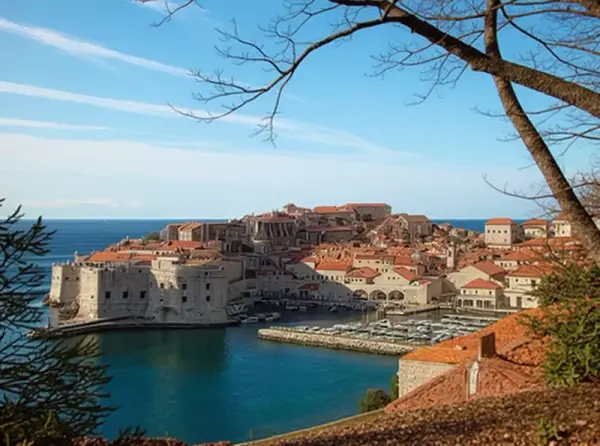
1. Walls of Dubrovnik (City Walls)
City Walls
Medieval city walls deliver sweeping views over Dubrovnik's red roofs and the Adriatic. Walk the full loop to pass forts, cannons, and ocean-facing terraces.
Quick facts: Wind-ruffled sea breezes and the echo of footsteps over worn limestone make a walk along the high ramparts feel cinematic, while nearly two kilometers of continuous walls are punctuated by imposing towers and bastions. A surprising number of hidden stairways and narrow passages reveal how defenders funneled attackers, and the elevated walkway still grants sweeping sea views that have drawn film crews and photographers.
Highlights: Walk the nearly 2-kilometre ring of sun-warmed limestone ramparts and you’ll feel centuries of footsteps smoothed into shallow grooves, hear gulls ricochet off the towers, and see the red-tiled roofs flash like rows of coins below. A little-known historic quirk: in 1377 the city set up lazarettos and made arriving sailors wait 30 days before landing, a medieval public-health ritual whose docking stones and faded markers you can still spot from the walls.
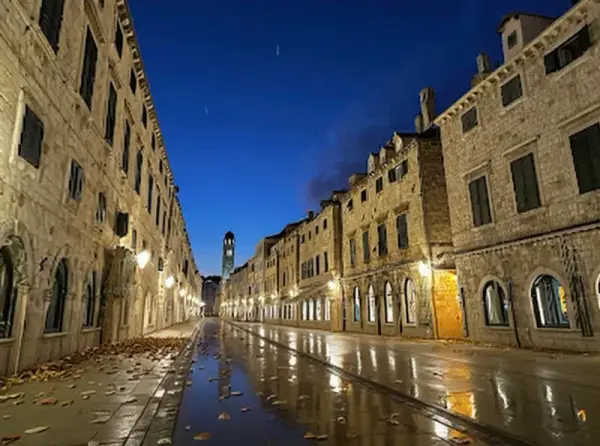
2. Stradun (Placa) — Dubrovnik's main street
A sun-worn marble avenue that captures Dubrovnik's medieval heart. Walk beneath baroque facades, watch street performers, and soak in sea-scented city life.
Quick facts: Sunlight skitters across the polished limestone, turning a leisurely walk into a parade of reflections and lively chatter. Nighttime fills the street with music and footsteps, and the stones have been smoothed so thoroughly by generations of wear that they gleam like a mirror underfoot.
Highlights: At dawn the 300-meter-long limestone street takes on a warm rose hue as the first light hits the slabs, and centuries of footsteps have polished each stone so smoothly your shoe soles whisper against the surface. On February 3rd locals still honor the old Saint Blaise procession by walking in near-silent lines carrying a single candle each, a tradition locals say has been kept alive for over 150 years and makes the pale pavement glow with hundreds of tiny flames.
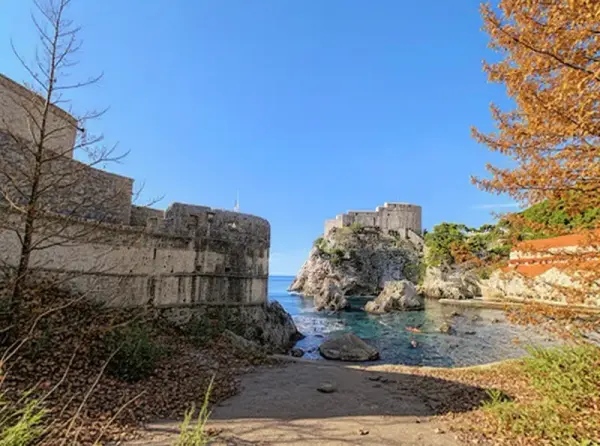
3. Fort Lovrijenac (St. Lawrence Fortress)
St. Lawrence Fortress
Dramatic clifftop fortress with panoramic views over Dubrovnik and the Adriatic. Climb the ramparts, explore vaulted chambers, and watch waves crash on the rocks below.
Quick facts: Perched on a jagged rock by the sea, the fortress delivers jaw-dropping views and a visceral thrill as you stand where cannon fire once echoed. Visitors linger over the massive, angled walls and flock to evening stage performances that fill the surprisingly roomy interior with music and light.
Highlights: Perched on a sheer 37-meter-high rock beyond the city wall, the fortress greets you with an iron-studded wooden gate topped by the Latin phrase 'Non bene pro toto libertas venditur auro', a blunt reminder that freedom was never for sale. Every summer the inner courtyard turns into a candlelit theatre for the city's Summer Festival where Shakespeare is staged under stars, and if you press your ear to the outer wall you can feel the sea's deep, rhythmic roar coming up from the cliffs below.
Have you heard of free walking tours?
After traveling to 30+ countries, there's one thing I wish someone had told me from day one, and it completely changed how I experience new cities.
Free walking tours. Yes, actually free. No credit card needed. No catch.
Local guide, 2-3 hours
Major sights, hidden gems, local stories
100% tip-based
Guides earn only tips, so they give their absolute best
You tip what feels right
At the end, just tip whatever you feel is right
I've done these in dozens of cities and they've been the highlight of almost every trip. If you're visiting Dubrovnik, Croatia, do this on your first day. You'll thank me later.
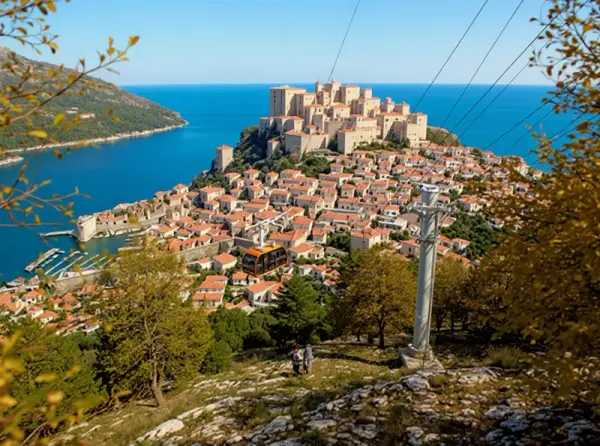
4. Mount Srđ and Dubrovnik Cable Car
Panoramic views over Dubrovnik's Old Town and the Adriatic. Ride the cable car to a hilltop fortress with viewpoints, walking trails, and a café.
Quick facts: From the ridge you can inhale pine-scented air while scanning terracotta rooftops and the shimmering sea, where a hilltop fortress stands as a poignant reminder of recent conflicts. Gliding up in a compact cabin delivers a vertigo-tinged five-minute climb of roughly 400 meters, rewarding riders with postcard panoramas and a sudden hush above the city.
Highlights: A glass-fronted lift, first installed in 1969 and rebuilt in 2010 after being shelled during the 1991 siege, whisks you roughly 412 meters up in about four minutes and deposits you beside a fortress whose bullet-marked walls you can press your palm against. At the top, pine-salty air and chiming church bells hit your face as red-tiled roofs, a patch of deep blue sea, and a tiny green island arrange themselves like a living postcard photographers line up at sunrise to capture.
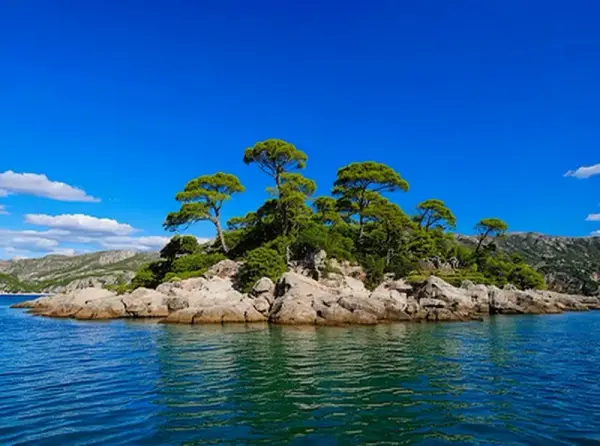
5. Lokrum Island
Quiet island refuge minutes from Dubrovnik's Old Town. Wander botanical gardens, climb a fortress for sea views, and swim in rocky coves.
Quick facts: Sea salt air and peacocks parading through fragrant pine groves give the island a dreamlike mood, while a hidden saltwater lake tempts swimmers. Curious rabbits roam around an atmospheric Benedictine monastery where botanical collections nestle among ruins, and rocky viewpoints offer dramatic sea vistas.
Highlights: A centuries-old Benedictine monastery hides behind cypress and olive trees, its stone courtyards mottled with lichen while peacocks and tame rabbits patrol sun-warmed paths and the air tastes sharply of pine and brine. A small saltwater lake called Mrtvo More, roughly 70 metres across, makes a warm, bathtub-like swimming hole where locals say you can spot porcelain-white pebbles through the clear water and hear frogs trilling at dusk.
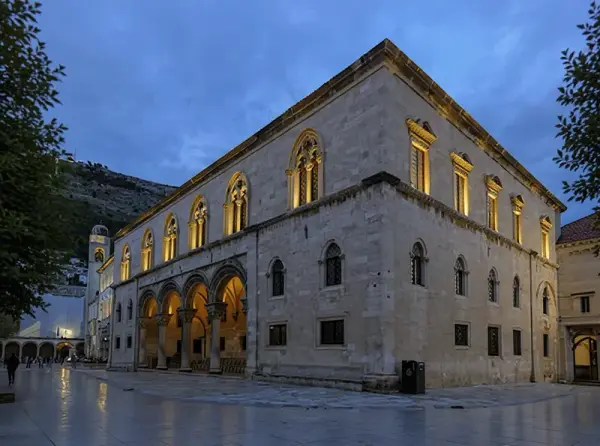
6. Rector's Palace
A compact Gothic-Renaissance seat of Dubrovnik's old government, full of carved stone and period rooms. Wander the ornate courtyard, vintage council chamber, and the small history museum.
Quick facts: Walking through the cool, echoing courtyard feels cinematic, with carved stone windows and layered Gothic, Renaissance and Baroque details that reward a slow gaze. Hushed chambers once directed civic life and now host rotating exhibitions, and some original stonework survived major earthquakes and restorations.
Highlights: For centuries the city's rector was literally required to live inside the palace for a strict one-month term, forbidden to leave the republic while he worked from a single austere chamber and ate meals served through a small barred window. Walk the marble-floored courtyard and you can see the building's layers: late-Gothic arcades, Renaissance motifs and the Baroque stonework added after the devastating 1667 earthquake, all of which create a surprising collage of textures and echoes.
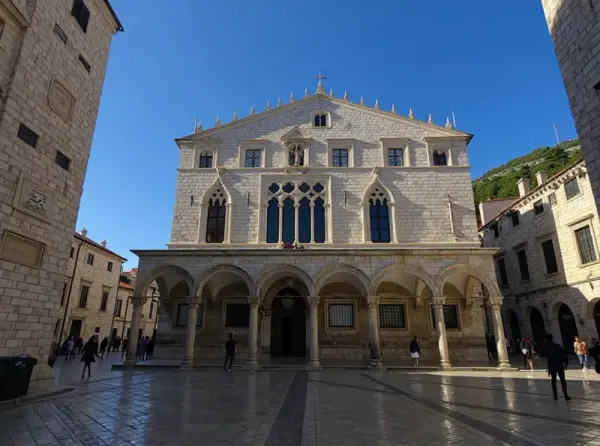
7. Sponza Palace
16th-century stone palace in Dubrovnik's Old Town, showcasing carved arches and ornate loggias. Wander the sunlit courtyard and admire centuries-old stonework up close.
Quick facts: Stepping into the cool, colonnaded courtyard, you can almost hear merchants' footsteps and sea breezes threading through sun-warmed stone. Behind the ornate carved capitals, former civic offices once stored the city's records and vaults, while today the intimate acoustics make small concerts unexpectedly mesmerizing.
Highlights: Built in 1516, the palace hides the city's state archives where thousands of parchment documents, some dated to the 1200s, sit in oak chests and lend the air a dry scent of dust and ink. Locals still rub a worn column in the inner courtyard for luck, a superstition traced back to survivors of the 1667 earthquake, and at about 9 AM sunlight slices through the loggia to paint the flagstones a warm amber, revealing centuries-old graffiti and tiny coin marks from merchants.
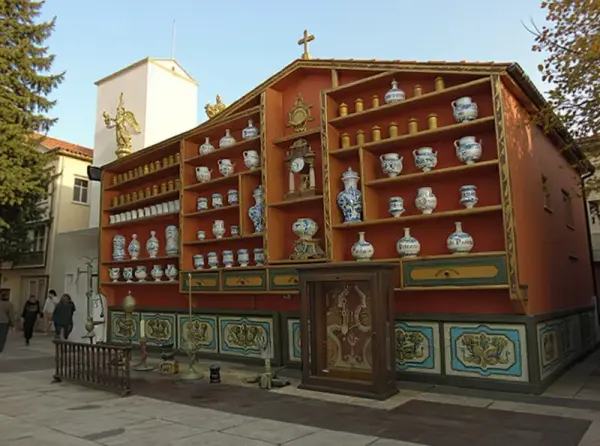
8. Franciscan Monastery and Old Pharmacy
Explore a medieval cloister with Renaissance art and one of Europe's oldest pharmacies. Experience ornate altarpieces, fragrant herb cabinets and a calm inner garden.
Quick facts: Step inside and you'll find a medieval apothecary where earthenware jars, original oak cabinets, and mortar-and-pestle tools preserve centuries of herbal lore. Wandering the cloister, you can admire luminous Romanesque-Gothic arcades and a tiny medicinal garden, while manuscripts reveal surprising plague-era remedies once used by monks.
Highlights: Behind a sun-worn stone cloister, a dim, wood-paneled apothecary still displays glass jars with Latin labels and a heavy jar marked 'Theriac', a place whose documentary roots trace back to 1317 and whose air smells faintly of rosemary, honey, and beeswax. Local friars occasionally hand out tiny rosewater-soaked wafers and perform an 18th-century mortar-and-pestle routine over centuries-old recipe books, a quirky living ritual that connects the preserved cabinets and medicinal lore to today's visitors.
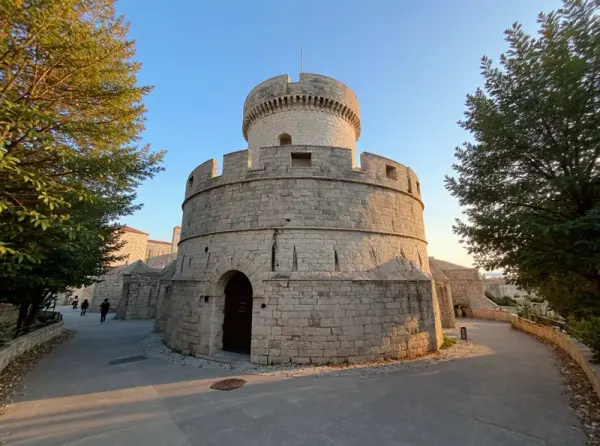
9. Minceta Tower (Tower of Minceta)
Tower of Minceta
Medieval tower with one of the best panoramic views over Dubrovnik and the Adriatic. Climb narrow steps to the circular rooftop for dramatic city-wall vistas and photos.
Quick facts: A massive cylindrical keep punctuates the city wall, its walls over two meters thick and pierced by narrow arrow slits that still evoke medieval siegecraft. Climb the tight spiral stair to the rooftop battlements for a dizzying panorama, where weathered limestone underfoot and the cry of gulls make the past feel surprisingly immediate.
Highlights: Climbing the rounded stone ramp to the top feels like entering a chest of secrets: sunlight slices through narrow loopholes, the air smells of salt and warm limestone, and the city’s terracotta roofs unfurl below like a miniature theater. Local legend says a lone night watchman once hid a tiny silver charm in a mortar joint to bring luck during storms, and centuries later you can still spot the scuffed spot where visitors touch the wall for luck.
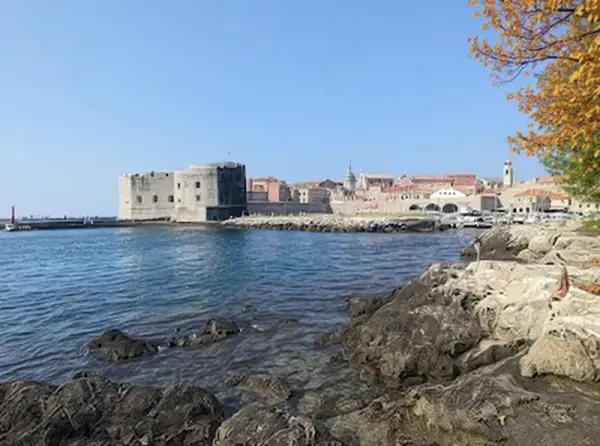
10. Banje Beach
Great beach close to Dubrovnik Old Town with clear water and city views. Swim, sunbathe on pebbles, and enjoy beach bars and panoramic photos.
Quick facts: Pebbly shore glistens under the sun, with crystal-clear water perfect for quick swims and paddleboard rentals clustered along the promenade. From the beach you can watch sunset hues wash over medieval city walls while nearby cafés pour chilled local wine and summer DJs keep the atmosphere buzzing.
Highlights: Every evening in summer about 20 local kayakers stage an informal 300-meter dash from the stone jetty to a red buoy, and the winner rings an old brass bell on the promenade to roaring applause. By day the water is an astonishing aquamarine you can see down to roughly 6 meters, while shore cafes blast chilled electro-Balkan beats and hand out tiny glasses of maraschino to toast the sunset.
Where to Stay in Dubrovnik, Croatia
Selected by City Buddy based on guest reviews and proximity to top attractions
Search all hotels in Dubrovnik, CroatiaPowered by agoda
Traditional Sweet Dishes

Rozata
Rozata is a silky caramel custard flavored with lemon and often a hint of rose, its glossy top and creamy center have made it a Dubrovnik dessert staple for centuries.

Rafioli
Rafioli are delicate, almond-filled pastries traditionally made for weddings and holidays, their thin, folded shapes reflect recipes passed down from convents and old family kitchens.
Traditional Savory Dishes

Peka
Peka is a cooking method where meat and vegetables are slow-roasted under a bell covered in hot embers, the result is smoky, tender food with a crisp, caramelized exterior and a communal, celebratory serving tradition.

Crni rižot
Crni rižot gets its dramatic black color from cuttlefish or squid ink, which turns the dish into a briny, ocean-rich risotto that brightens with a squeeze of lemon.

Pašticada
Pašticada is a lavish, slow-braised beef stew marinated in vinegar and spices and cooked in a sweet-sour sauce with wine and dried fruit, it is the showpiece of festive Dalmatian feasts and requires many hours to reach its melt-in-your-mouth texture.
Traditional Beverages

Rakija
Rakija is a strong fruit brandy often distilled from plums, kept in family stills for generations and offered as a warm welcome or a digestive after a meal.

Maraschino
Maraschino is a clear, aromatic liqueur made from Marasca cherries, historically exported from Dalmatia and cherished by bartenders for its bright, tart, and slightly bitter cherry character.
Frequently Asked Questions about Dubrovnik, Croatia
What is the best time to visit Dubrovnik, Croatia?
How expensive is Dubrovnik, Croatia?
Is the tap water safe to drink in Dubrovnik, Croatia?
How do I get around Dubrovnik, Croatia?
How many tourists visit Dubrovnik each year?
Get a PDF with the most popular attractions sent to your email
Get a PDF with all attractions, ratings, and tips. Perfect for offline use.
Most popular day trips
Lokrum Island
Small island reserve with beaches, botanical garden and monastery.
Mljet National Park
Lush island with saltwater lakes, cycling and quiet beaches.
Korčula (town)
Historic walled town, reputed birthplace of Marco Polo.
Kotor, Montenegro
Scenic UNESCO-listed bay town with fortress and old town.
Rent a car in Dubrovnik, Croatia
Getting there
Airports
Train stations
Zagreb–Split (national rail network); regional connections
Regional lines; limited passenger services to southern Dalmatia
From DBV take the airport shuttle to Pile (30–40 min) or prebook a taxi/transfer; expect queues in high season.
Find flights to Dubrovnik, Croatia
Click to get eSim for Dubrovnik, Croatia
The easiest and most affordable way to get mobile internet wherever you travel.
Useful information for Dubrovnik, Croatia
Overview for Dubrovnik, Croatia
Most popular itineraries for Dubrovnik, Croatia
Browse trip plans created by other travelers
10-Day Spring Journey Through Dubrovnik and Split
Explore the stunning Adriatic coast from historic Dubrovnik to vibrant Split with perfect springtime weather and captivating sights.
3-Day Dubrovnik for Culture and Hidden Gems
Discover Dubrovnik's rich history, cultural treasures, and secret local spots on a captivating 3-day spring journey.
Comments (6)
Grab a week bus pass from the kiosk by Pile gate if you plan to island hop, it beats buying singles and saves time queuing for tickets.
Beautiful coastline and crystal water, yet restaurants near the port hit your wallet. Found cheaper, tastier meals two streets in.
Crowds are brutal in July, but early morning wander through Old Town is pure magic. Take water, wear good shoes and plan for lines.
Skip the sunset cable car rush, go right after opening for clear views and shorter lines, and bring sunscreen for the intense sun.
Pretty but overrated for nightlife, bars shut early and many spots are tourist traps. Good for history lovers, not party seekers.