 CityBuddy
 Lietuvių
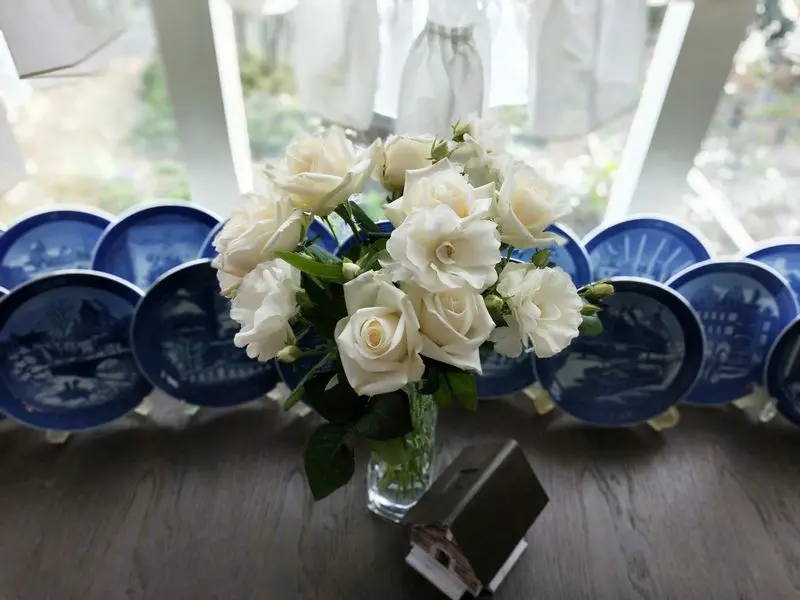
Ką veikti Maebashi, Japan
Nuotrauką padarė April Miyako Pexels.com
Kada lankytis
Populiariausios lankytinos vietos Maebashi, Japan
Geriausia, ką verta veikti Maebašyje, Japonijoje, yra pasinerti į istoriją ir mėgautis kvapą gniaužiančiais vaizdais. Užkopkite į 23-iąją Gunmos prefektūros pastato observatorijos aukštą ir pamatysite 360 laipsnių Kanto lygumos panoramą, o tada pasivaikščiokite šimtametį istoriją menančiame Maebašio parke, kuriame sezoniniai žydėjimai įrėmina Kozukue pilies griuvėsius. Užbaikite savo kelionę Maebašio miesto literatūros muziejuje, įsikūrusiame XX a. trečiojo dešimtmečio vakarietiško stiliaus pastate, ir susipažinkite su regiono literatūrine siela.
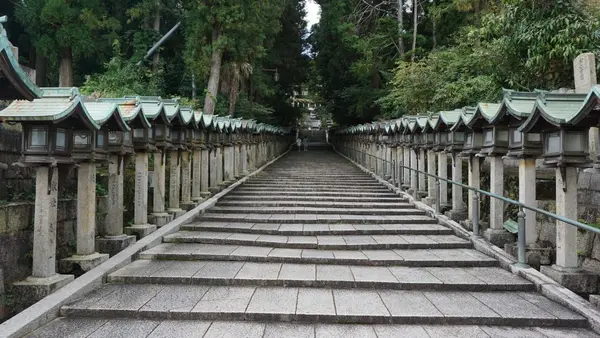
1. Akagi Shrine
Escape the city for a sacred mountain retreat with sweeping views. Climb stone steps through an ancient forest to reach a peaceful shrine where hikers and pilgrims gather.
Greiti faktai: This Shinto shrine sits on the slopes of Mount Akagi, a sacred peak that's actually a dormant volcanic complex. It's a popular spot for hikers who climb up to pay respects before tackling the mountain trails.
Akcentai: The approach to the shrine winds through towering cedar trees that have stood for centuries, their trunks thick enough to wrap your arms around twice. Local legend says the mountain itself is home to a powerful deity, and the shrine's quiet forest setting feels wonderfully removed from the city below.
2. Maebashi Park
More than 300 cherry trees explode into bloom each spring, drawing families and couples to the riverbanks. Expect woven picnic mats, warm sake, and petals drifting across the water at dusk.
Greiti faktai: Spring brings over 300 cherry trees into bloom, turning the riverside grounds into one of the region's favorite picnic spots. The park sits along the Hirosegawa River, where locals gather for early morning walks and evening hanami under the lantern-lit branches.
Akcentai: During cherry blossom season, the riverbank becomes a moving corridor of picnickers who lay out tarps hours ahead to claim their spots, and the petals drift across the water like pink snow. On clear evenings, the reflection of the blossoms on the river surface creates a doubled canopy that photographers wait all day to capture.
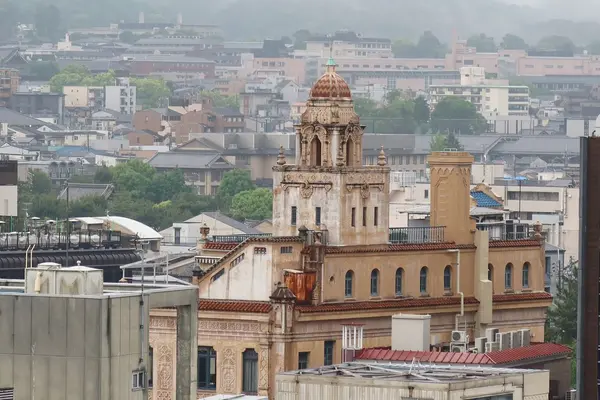
3. Gunma Prefectural Office Building Observatory
Free panoramic views of the Kanto Plain from 150 meters up, with no crowds and no entry fee. Ride the elevator to the 32nd floor and watch Mount Asama and the Tokyo skyline share the same horizon.
Greiti faktai: Free observation decks on the 32nd floor look out over the Kanto Plain, and on clear winter days you can see the snowy peaks of two mountain ranges in the distance. The building doubles as the administrative hub for Gunma Prefecture, so you will share the elevators with government workers heading to their offices.
Akcentai: The view from the 32nd floor stretches nearly 100 kilometers on a clear day, letting you spot both the Tokyo skyline and Mount Asama's smoking crater. What most visitors miss is that sunset transforms the whole Kanto Plain into a shimmering grid of lights, with the mountain silhouettes turning deep purple behind it.
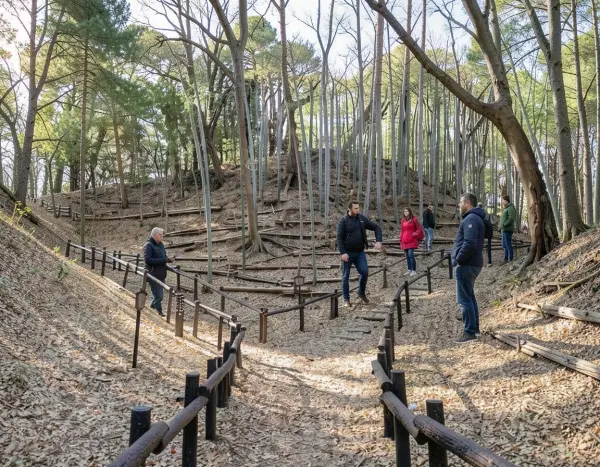
4. Kozukue Castle Ruins
Step into a feudal-era stronghold where layered moats and earthen walls still trace the old defenses. Wander forested terraces and reach a summit view that spans the surrounding plains.
Greiti faktai: This site is a fortified hilltop complex from the Sengoku period, a time when regional warlords fought for control across central Japan. Stone foundations and earthwork terraces remain scattered through the forested slopes, giving a clear sense of the original defensive layout.
Akcentai: The network of dry moats and earthen ramparts wraps around the hillside in layers, so you can actually walk through the old defensive rings and picture where guards once stood watch. Climbing to the upper terrace rewards you with a wide view over the surrounding plains, the same sight a castle lord would have surveyed centuries ago.
5. Maebashi City Museum of Literature
Step into the world of Japan's first modern poet without the crowds. Walk past his worn writing desk and trace the ink strokes of his original manuscripts.
Greiti faktai: Sakutaro Hagiwara, often called the father of modern Japanese poetry, has his memory preserved at this museum inside a building that also houses the city's literary archive. The museum displays his handwritten manuscripts, personal letters, and his prized books, giving visitors a direct look into the poet's daily life.
Akcentai: The museum sits within a building designed with a distinctive western-style facade, a nod to the poet's own fascination with Western culture and his poem "The Bleaching of a Potato." Visitors can see his actual writing desk and the room where he spent his final days, a quiet, intimate space that feels preserved in time.

6. Gunma Prefectural Museum of History
Seven decades of Gunma's past under one roof make this the region's richest cultural archive. Wander past Jomon pottery, samurai gear, and a full-scale reconstructed village inside.
Greiti faktai: The Gunma Prefectural Museum of History preserves archaeological finds and cultural artifacts spanning from prehistoric times through the modern era. Over 100,000 items are housed here, including Jomon pottery and samurai armor recovered from regional excavation sites.
Akcentai: A full-scale replica of the Yayoi period settlement at the nearby Maebashi ruins lets visitors step inside reconstructed pit dwellings with simulated hearth smoke and cooking smells. The museum's dramatic spiral gallery descends through eight floors of chronological exhibits, culminating in a room that re-creates an Edo-era inn interior with authentic tatami and lantern lighting.
7. Shikishima Park
A riverside escape where the Tone River meets open green space and seasonal blossoms. Stroll the promenade, picnic on the lawns, and watch the sunset paint the water gold.
Greiti faktai: This spacious riverside park stretches along the Tone River in the heart of Maebashi, offering sweeping views of the water and the surrounding Gunma hills. The park's wide-open lawns and promenades make it a favorite local escape, especially during cherry blossom season when hundreds of trees burst into bloom.
Akcentai: During late March and early April, the riverside cherry tree canopy turns the walking path into a pink tunnel, with petals drifting onto the water below. On clear mornings, Mount Akagi rises dramatically behind the river, creating a picture-perfect backdrop that locals flock to photograph.
8. Hirosegawa Riverside Park
Follow the Hirose River through Maebashi's leafy green heart and escape the city buzz in minutes. Expect gentle walking paths, riverside scenery, and seasonal blooms all along the way.
Greiti faktai: Šis žaliasis koridorius vingiuoja palei Hirose upę per centrinę Maebašį, suteikdamas ramybės juostelę gamtos apsuptyje miesto viduryje. Parkas sujungia keletą svarbiausių Maebašio įžymybių, todėl tai mėgstamiausias vietinių gyventojų maršrutas einant tarp miesto centro ir upės kranto.
Akcentai: Pėsčiųjų takas prie upės atskleidžia sezoninius pokyčius, kurių miesto parkuose dažnai pasigendama: pavasarį virš vandens pasvirusios vyšnių žiedų šakos, o rudenį pakrantėse augantys auksiniai ginkmedžiai. Ateikite apie saulėlydį ir pamatysite vietinius, kurie žvejoja, ir šeimas, besivaikštančias palei vandenį, tai kasdienio Maebašio gyvenimo atkarpa.
Where to Stay in Maebashi, Japan
Selected by City Buddy based on guest reviews and proximity to top attractions
Search all hotels in Maebashi, JapanPowered by agoda
Darbo dienos mieste Maebashi, Japan
Kurie iš pagrindinių lankytinų vietų uždaromos kurią savaitės dieną , klasikinis kelionės griovėjas, patikrintas už jus.
pirmadienis: 1 iš 8 pagrindinių lankytinų vietų uždaroma , muziejus planuokitės kitai dienai.
Uždaryta pirmadienis · uždaryta: 1, atvira: 7
Darbo dienos pagal Google Maps (tikrinta 2026-10-23). Valstybinių švenčių, streikų ir sezoninis darbo laikas gali skirtis , prieš vykdami patikrinkite oficialią svetainę.
Tradiciniai saldūs patiekalai
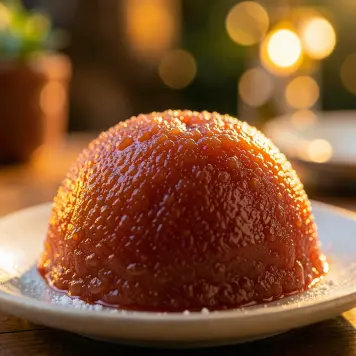
Konnyaku Kan
Konnyaku Kan is a jiggly, gummy-like dessert made from konjac flour and fruit juice. It was invented in Maebashi in 1986 and became a national sensation for its bouncy texture and low calorie content.
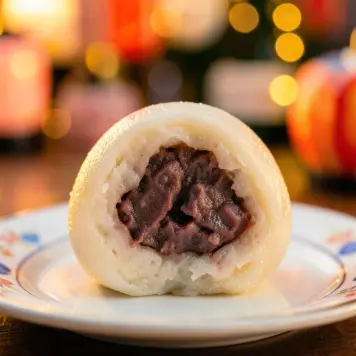
Shimanchu
Shimanchu is a traditional soft dumpling filled with sweet red bean paste, made from mochi rice grown in Gunma Prefecture. Its name sounds playful and it is often served during local festivals and celebrations.
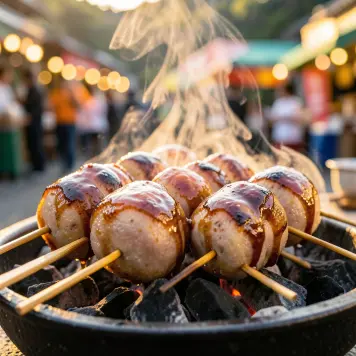
Yaki Manju
Yaki Manju is a Maebashi specialty where sweet red bean buns are skewered and grilled over charcoal, then brushed with a sweet soy glaze. The caramelized exterior gives it a smoky, irresistible aroma found at street stalls and hot spring towns across Gunma.
Tradiciniai sūrūs patiekalai
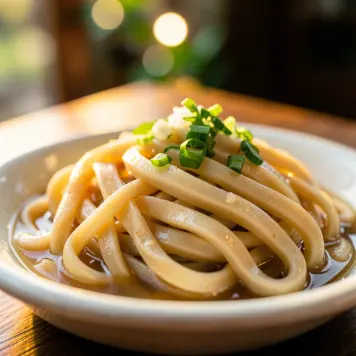
Mizusawa Udon
Mizusawa Udon is one of Japan's three great udon noodles, made with local Gunma wheat and spring water. The noodles are hand-kneaded and aged for over two days, giving them an incredibly firm, springy texture that pairs perfectly with a light dipping broth.
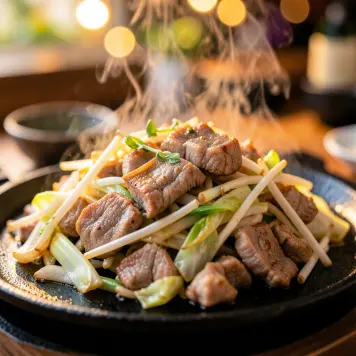
Sutamina Yaki
Sutamina Yaki is a sizzling stir-fry of pork, cabbage, bean sprouts, and garlic served on a hot iron plate. The name means stamina grill, and it is a beloved working-class dish that locals claim gives you energy for the whole day.
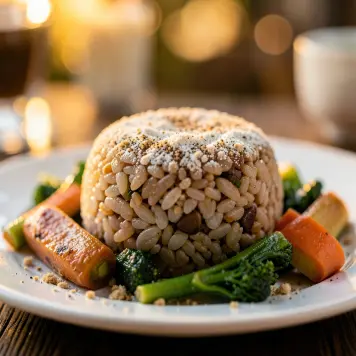
Gunma No Bota Mochi
This savory rice cake is coated with seasoned soybean flour and served alongside hearty local vegetables. It reflects Maebashi's agricultural heritage as a major producer of soybeans and rice in the Kanto region.
Tradiciniai gėrimai
Kawaba Beer
Kawaba Beer is a craft brew born in nearby Numata but deeply tied to Maebashi's vibrant local food scene. The brewery uses pristine Gunma spring water and offers a signature white ale that has earned medals at international competitions.
Gunma Sake (Jomon No Shiradashi)
Jomon no Shiradashi is a smooth, dry sake brewed in Gunma using locally grown rice and the region's pure underground water. The name evokes ancient Jomon heritage, celebrating Gunma's long history of rice cultivation.

Konnyaku Drink
This unique beverage is made from konjac extract, which Maebashi produces more of than any other city in Japan. It is a refreshing, low calorie drink with a slightly jelly-like texture and is sold as a health drink across the region.
Dažnai užduodami klausimai apie Maebashi, Japan
Ar Maebašis, Japonija, yra saugus?
Kiek dienų turėčiau praleisti Maebašyje, Japonijoje?
Koks geriausias laikas aplankyti Maebašį, Japoniją?
Ar Maebašis, Japonija, yra brangus aplankyti?
Kaip judėti po Maebašį, Japonijoje?
Gaukite PDF su populiariausiomis lankytinomis vietomis į savo el. paštą
Gaukite PDF su visomis lankytinomis vietomis, įvertinimais ir patarimais. Puikiai tinka naudoti neprisijungus.
Populiariausios dienos išvykos
Kusatsu Onsen
Famous hot spring town with historic yubatake sulfur baths
Takasaki
Historic castle town known for Daruma doll temple and gardens
Ikaho Onsen
Scenic hot spring resort with iconic stone steps and onsens
Oze National Park
Pristine highland marshlands with scenic boardwalk hiking trails
Kaip nuvykti
Oro uostai
Geležinkelio stotys
JR Joetsu Line, JR Ryomo Line
Joetsu Shinkansen, JR Joetsu Line
From Tokyo, take the Joetsu Shinkansen to Shin-Maebashi in about 1 hour, then transfer to a local train for 5 minutes to Maebashi Station.
Naudinga informacija apie Maebashi, Japan
Apžvalga apie Maebashi, Japan
Norite dienos plano Maebashi, Japan? Atidarykite kelionės planuoklį
Kada keliaujate į Maebashi, Japan?
Pasirinkite datas ir kelionės stilių, kad gautumėte:
Ar kas nors iš šių jums ypač svarbu?
Pažymėkite visus, kurie tinka
Judėjimas mieste
Kaip norite keliauti tarp vietų?
Plano kalba: Lietuvių