 CityBuddy
 Norsk Bokmål
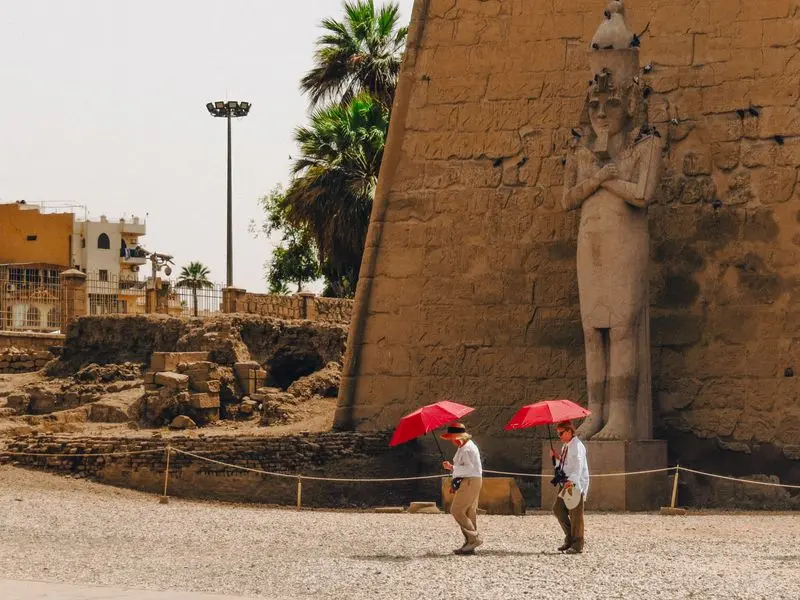
Ting å gjøre i Luxor, Egypt
Foto tatt av Mert Çelik på Pexels.com
Når bør du besøke
Mest populære attraksjoner i Luxor, Egypt
Hvis du leter etter ting å gjøre i Luxor i Egypt, begynn med Karnak-tempelet, verdens største tempelkompleks på over 100 hektar. Kryss deretter Nilen til Kongenes dal, hvor 63 faraoers graver venter. Til slutt er det gravtempelet til Hatshepsut i Deir el-Bahri, hvor tre terrasser med søyleganger ruver.
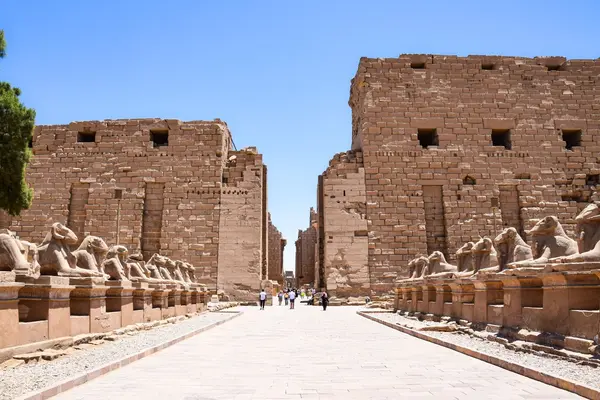
1. Karnak Temple
De gamle egypterne bygget noe så storslått at verden fortsatt beundrer det i dag. Du vandrer mellom 134 kolossale søyler, der morgenlyset og steinens farger er så vakre at du glemmer tiden.
Raske fakta: Nesten to tusen års byggearbeid resulterte i et enkelt tempelkompleks som over tretti faraoer formet. I hypostilhallen står 134 kolossale steinsøyler, og de største er 23 meter høye og nesten 15 meter i omkrets.
Høydepunkter: Hovedhallen er stor nok til at Romas Peterskirke og Notre-Dame i Paris kunne få plass inne i den samtidig. Morgenlyset som strømmer gjennom de høye søyleåpningene, farger overflatene på de 23 meter høye søylene i dyp oransjerød, som om selve steinen var levende.
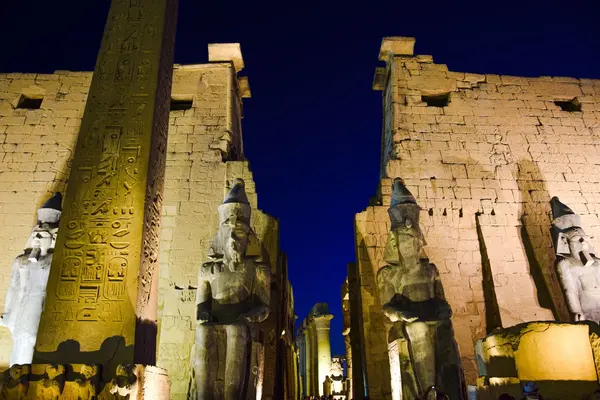
2. Luxor Temple
The only temple of ancient Egypt that can be visited in the evening, and it is even more mystical when illuminated. Enjoy the solitude of the 3000-year-old walls among the rows of sphinxes.
Raske fakta: The architectural enterprise directed by Ramses is only part of what stands today, because Alexander the Great, the Romans, and the Mamluk sultans all added to the complex. At sunset, the entire facade glows in a golden rose color, while the row of sphinxes leads you from the entrance to the main courtyard.
Høydepunkter: On the stones they show the spot where a certain archaeologist found a painted wall in 1882 that preserved the original colors of the temple walls. Most visitors walk right past it, yet if you stand in the central courtyard in the evening light, you can almost see the priests filing between the two obelisks of Amenhotep III before your eyes.
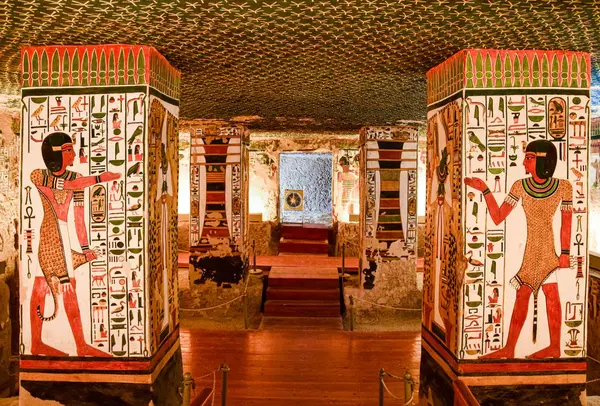
3. Valley of the Kings
Among the royal tombs of the pharaohs, nowhere else can you see the final resting place of so many of Egypt's greatest rulers. You can sink into a world of gilded walls and hieroglyphs while the desert wind blows over the valley.
Raske fakta: Mer enn 60 faraoer og kongelige har fått gravene sine hogd inn i de nakne klippene, men bare Tutankhamons grav ble funnet helt intakt, med mer enn 5000 skatter inni. Det største komplekset, KV5, åpner seg inn i over 120 kamre, og forskere tror at det fortsatt kan ligge flere graver skjult under dalen.
Høydepunkter: In Tutankhamun's tomb, visitors can enter the chamber where Howard Carter found the golden mask, and the frescoes on its walls still glow in vivid colors after 3,000 years. The entrances to the tombs open at the end of stepped corridors carved into the hillside, where the cool air and the scenes from the Book of the Dead almost carry you back in time.
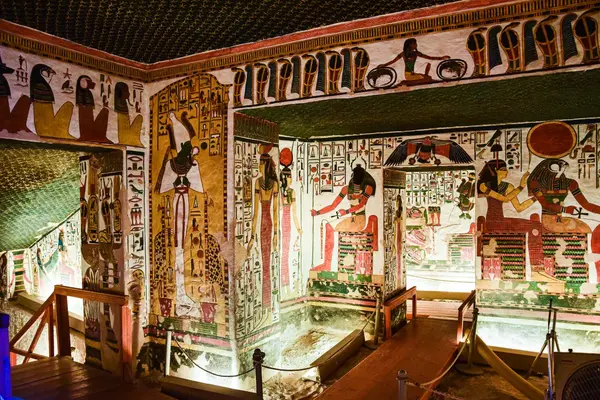
4. Valley of the Queens
Here you can glimpse Egypt's most beautiful tomb paintings, made for the wives of the pharaohs. The colors shine as if they were painted yesterday, even though they are more than three thousand years old.
Raske fakta: Around 90 tombs of queens and royal children lie here, including the stunning burial site of Nefertari, wife of Ramesses the Great. The colors on the tomb chamber walls have survived so vividly that many people think they were recently restored.
Høydepunkter: The ceiling of Nefertari's tomb (QV66) is covered with golden stars that shine against a jet-black background, as if you were looking at a real night sky. The wall paintings are so detailed that researchers are still deciphering new rows of hieroglyphs along the 18-meter-long corridors to this day.
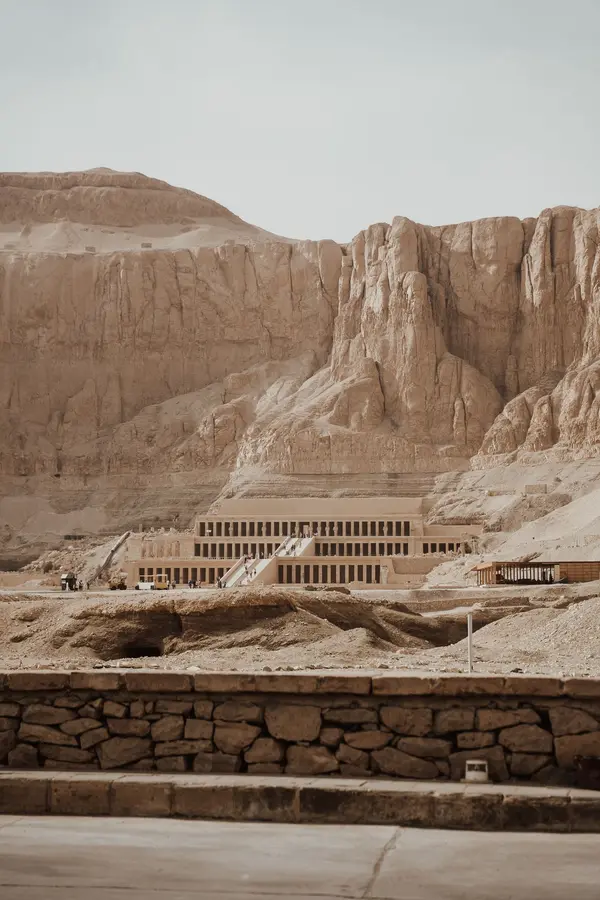
5. Mortuary Temple of Hatshepsut
The three-story temple nestled into the rock face pays tribute to ancient Egypt's most famous female pharaoh. As you ascend between the terraces, incredible reliefs and desert panoramas unfold before you.
Raske fakta: The rock-cut facade of the terraced temple rising on three levels is more than 97 meters wide, and the limestone cliffs towering behind it embrace it on all sides. The 3,500-year-old structure was the burial center of the only powerful female pharaoh in Egyptian history.
Høydepunkter: It is the burial place of a female ruler who held a royal title but wanted to be recognized as a man, so she had herself depicted with a beard and pharaonic regalia. Among the reliefs adorning the walls, you can find the depiction of the Punt expedition, which shows in life-size images the ships laden with frankincense trees and the inhabitants of distant lands.
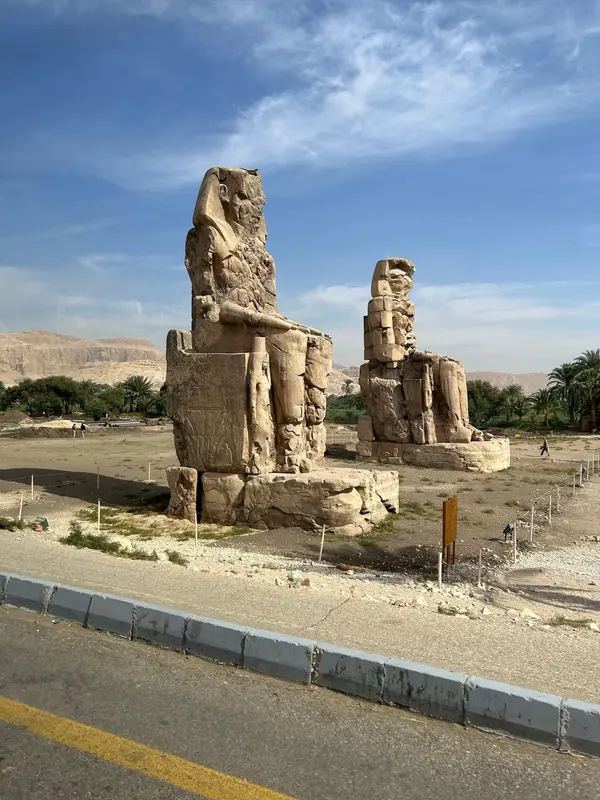
6. Colossi of Memnon
One of the world's oldest tourist attractions, which even the ancient Romans traveled to see. At dawn, the golden light of the sun emerging behind the statues offers a nearly haunting sight.
Raske fakta: Two colossal stone statues guard the site, each 18 meters tall and weighing about 720 tons, at the entrance to the mortuary temple of Pharaoh Amenhotep III. Of the statues raised in the 14th century BC, the northern one used to emit a strange, singing sound at dawn, which the Greeks called the song of Memnon.
Høydepunkter: After the earthquake of AD 27, one of the statues made a hissing, weeping sound at dawn, which Roman tourists listened to for hours in reverence. The sound was caused by the morning dew flowing through the cracks, and it continued until the restoration of AD 199, when the imperial repair silenced it forever.
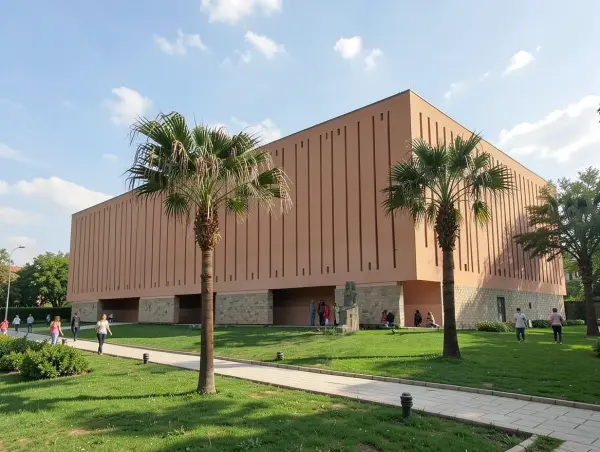
7. Luxor Museum
In few places can you see the most beautiful objects of the pharaohs' world this close. In a modern museum setting, standing directly in front of the artifacts, you can discover the heights of Egyptian art.
Raske fakta: Samlingen rommer bare noen få hundre gjenstander, men hver eneste en er av fremragende kvalitet, noe som gjør den til et av verdens beste små museer. Utstillingen presenterer faraoenes tidsalder sine mesterverker i moderne museumsinnredning med utmerket belysning, noe det knapt finnes maken til i Egypt.
Høydepunkter: Den største sensasjonen er de to kongelige mumiene fra Tutankhamons grav, som ble brakt hit i 2019, og som nå kan sees i en egen sal i klimastyrte glassmontre. Museets andre vidunder er krokodillehall-skulpturene fra Amenhotep IIIs tid, som ble funnet på 1900-tallet på et eneste, perfekt bevart skjulested.
8. Mummification Museum
One of the world's most extraordinary mummy collections awaits you, where you can see real human bodies preserved for millennia up close. You will learn how the embalmers prepared the bodies and what rituals accompanied the burial.
Raske fakta: Det huser mer enn 150 mumier og dyrelevninger, blant annet krokodiller som ble ofret til fruktbarhetsguden Sobek. I samlingen kan du også se en kongelig mumie fra den tidligere ypperstepresten Maszahrtas grav, som fortsatt er i imponerende tilstand.
Høydepunkter: Det mest rystende synet er mumien av en ung mann som ble begravet med et bredt smil, og ansiktet hans har bevart dette uttrykket i over tre tusen år. I en del av utstillingen vises hele balsameringsprosessen med ekte redskaper, leirkrukker og originale tekstilrester, slik at du nesten kan se prestene i arbeid foran deg.
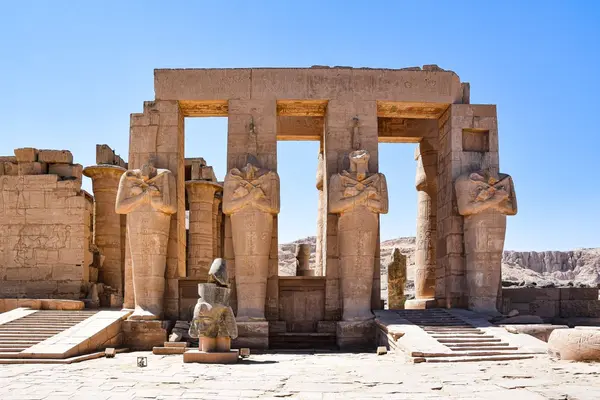
9. Ramesseum
Den 19 meter høye kolossen som falt til jorden, bærer faraoens titaniske storhet og inspirerte også Shelley. Pylonens øvre deler og morgenlyset på hodet bærer det gamle Egypt.
Raske fakta: Den engelske poeten Shelleys sonett «Ozymandias» ble inspirert av den gigantiske kolossen som lå veltet på bakken og avbildet Ramses II. Kolossen var en gang omtrent 19 meter høy og nesten 1000 tonn tung, og hodet alene var 2,5 meter langt.
Høydepunkter: Kolossens hode, omtrent 2,5 meter høyt og 7 tonn tungt, ligger fortsatt på bakken, og Shelley brukte hodet som musa for sonetten. Det astronomiske brystsmykket viser himmelgudinnen Nut, og etter nesten 3000 år har det forblitt helt intakt.
Where to Stay in Luxor, Egypt
Selected by City Buddy based on guest reviews and proximity to top attractions
Search all hotels in Luxor, EgyptPowered by agoda
Åpningsdager i Luxor, Egypt
Hvilke av de beste severdighetene er stengt hvilken ukedag. Den klassiske reiseødeleggeren, sjekket for deg.
Gode nyheter: alle 8 toppseverdigheter med kjente åpningstider er åpne alle dager i uken.
Stengt på mandag · 0 stengt, 8 åpne
Ingenting er stengt på mandag. Alle 8 severdigheter med kjente åpningstider er åpne.
Åpningsdager fra Google Maps (sjekket 2026-09-09). Helligdager, streiker og sesongbaserte åpningstider kan variere. Sjekk den offisielle nettsiden før du drar.
Tradisjonelle søte retter
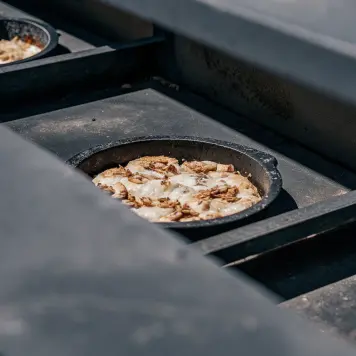
Umm Ali
Umm Ali is Egypt's beloved bread pudding, made with puff pastry, milk, sugar, and nuts, then baked until golden and gooey. Legend says the dish was invented in the 13th century when the wife of a sultan created it to celebrate his victory.
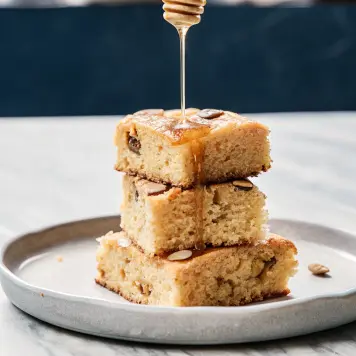
Basbousa
Basbousa is a dense semolina cake soaked in sweet syrup and often topped with almonds or coconut. In Luxor it is usually served warm with a drizzle of creamy honey syrup and a sprinkle of pistachios.
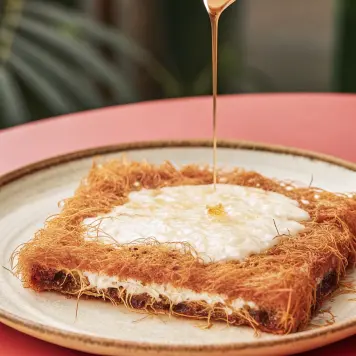
Kunafa
Kunafa features crispy shredded pastry wrapped around a molten layer of sweet cheese or cream. Street vendors in Luxor spin the golden threads by hand and serve it piping hot with sugar syrup poured over the top.
Tradisjonelle salte retter
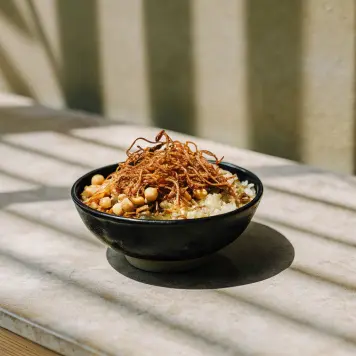
Koshari
Koshari is Egypt's national comfort dish, layering rice, lentils, macaroni, chickpeas, and crispy fried onions under a spicy tomato sauce. In Luxor it is a beloved street food eaten at any time of day.
Fattah
Fattah is a festive dish of tender mutton or beef layered over crispy toasted bread and rice, finished with a garlicky vinegar-tomato sauce. Across Luxor it is the traditional centerpiece of Eid al-Adha celebrations.
Molokhia
Molokhia is a velvety green soup made from finely chopped jute leaves cooked with garlic and coriander, usually served over rice with rabbit or chicken. It is a signature of Upper Egypt, where families in Luxor have perfected the recipe for generations.
Tradisjonelle drikker
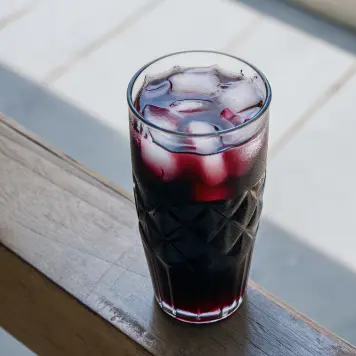
Karkade
Karkade is a deep red hibiscus drink that is famously served ice cold in Luxor and Aswan. Locals drink it for its tart, cranberry-like flavor and believe it helps beat the desert heat and lower blood pressure.
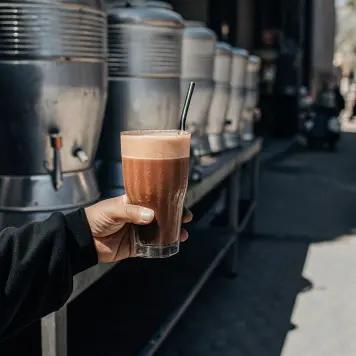
Tamr Hindi
Tamr Hindi is a sweet and tangy tamarind juice that has been enjoyed in Egypt since ancient times. Street vendors in Luxor chill it in big glass urns and serve it year-round as a refreshing cooler.
Sahlab
Sahlab is a warming, thick milk drink made from orchid root powder, sugar, and rosewater, topped with cinnamon and crushed nuts. It is a cozy winter favorite in Luxor's cafes and tea houses.
Ofte stilte spørsmål om Luxor, Egypt
Er Luxor i Egypt trygt?
Hvor mange dager bør du tilbringe i Luxor?
Når er det best å besøke Luxor?
Er Luxor dyrt?
Hvordan kan du komme deg rundt i Luxor?
Få en PDF med de mest populære attraksjonene sendt til din e-post
Få en PDF med alle attraksjoner, vurderinger og tips. Perfekt for offline bruk.
Mest populære dagsturer
Valley of the Kings
Pharaonic rock tombs on the West Bank, home of Tutankhamun's burial chamber.
Dendera Temple
Remarkably preserved temple of Hathor near Qena, north of Luxor.
Esna Temple
Ptolemaic temple of Khnum partly below street level in Esna town.
Edfu Temple
Grand Ptolemaic temple of Horus, the best preserved in Egypt.
Abydos Temple
Memorial temple of Seti I with the famous king list carvings.
Hvordan komme dit
Flyplasser
Togstasjoner
Cairo, Aswan, and Qena on the Nile Valley line
Local commuter stops between Luxor and Aswan
Take a taxi or minibus from the airport into town; use the public ferry to reach West Bank sites.
Nyttig informasjon for Luxor, Egypt
Oversikt for Luxor, Egypt
Vil du ha en dag-for-dag-plan for Luxor, Egypt? Åpne reiseplanleggeren
Når skal du til Luxor, Egypt?
Velg dine datoer og reise-stil for å få:
Er noen av disse spesielt viktige for deg?
Velg alle som gjelder
Komme seg rundt
Hvordan vil du bevege deg mellom stedene?
Planspråk: Norsk Bokmål