 CityBuddy
 Português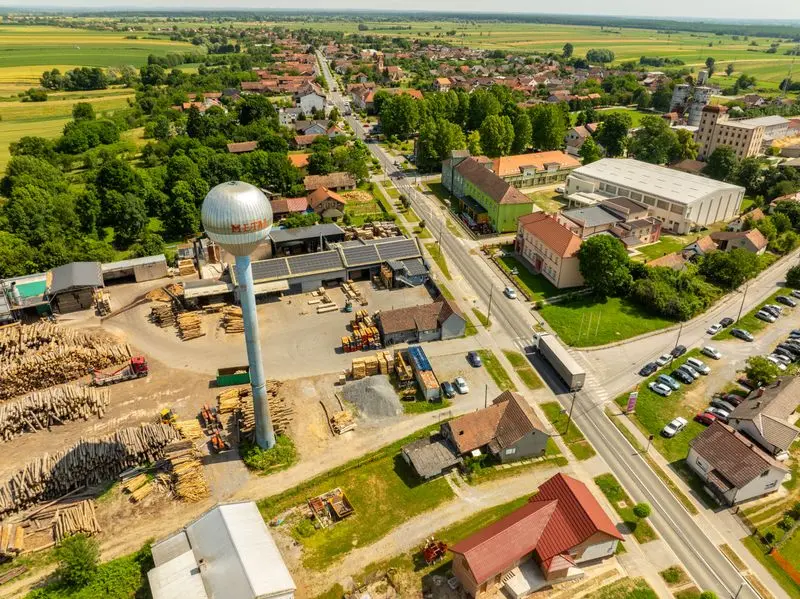
O que fazer em Hrodna, Belarus
Foto feita por Vladimir Srajber no Pexels.com
Quando visitar
Atrações mais populares em Hrodna, Belarus
As principais atividades em Hrodna, Bielorrússia, giram em torno de sua notável concentração de arquitetura medieval e barroca. Passeie pelos terrenos da Igreja Kalozha dos Santos Boris e Gleb, do século XI, a estrutura mais antiga da cidade. Compare-a com a Catedral de São Francisco Xavier, do século XVII, cujas torres de 100 metros de altura dominam o horizonte. Visite tanto o Castelo Antigo de Hrodna quanto o Castelo Novo de Hrodna, situados lado a lado na margem alta do Rio Niemen.
1. Hrodna Old Castle
Onde séculos de história polonesa, lituana e bielorrussa colidem dentro de uma única fortaleza. Percorra salões onde reis dormiram e toque paredes marcadas por tiros de canhão reais.
Fatos rápidos: Columns rise in three distinct architectural styles, as each century left its mark on the stone walls. Cannonballs from the 1656 siege are still embedded in the outer fortifications near the main gate.
Destaques: A secret passage beneath the castle once connected it to the Bernardine monastery across the Niemen River, allowing soldiers to move unseen. Climb the southwest tower at sunset, when the low light turns the river into liquid gold and the entire Hrodna skyline unfolds before you.
2. St. Francis Xavier Cathedral
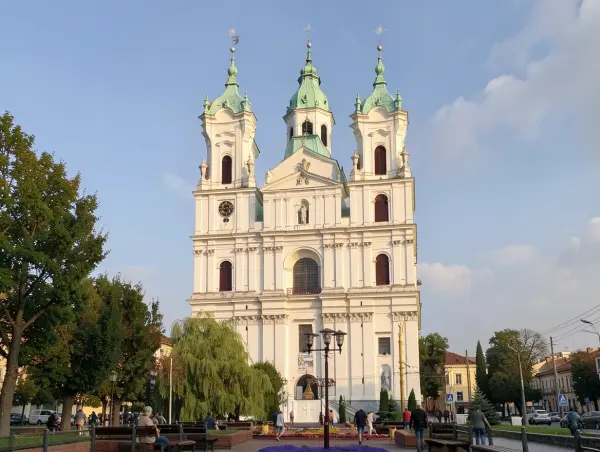
Uma obra-prima barroca imponente que sobreviveu a duas guerras mundiais e ao ateísmo soviético praticamente intacta. Atravessar suas portas revela um dos interiores de igreja originais do século XVIII mais completos da Europa.
Fatos rápidos: One of the world's tallest Baroque church towers stands at 65 meters and can be seen from kilometers away. The cathedral features a rare surviving 18th century fresco cycle painted by a single artist over the course of a decade.
Destaques: Step inside and look up: the ceiling frescoes seem to ripple like fabric, painted with such illusionistic skill that the flat plaster appears to bulge and fold. Local legend claims the artist fell from his scaffolding three times while completing the work, yet never broke a single bone.
3. Kalozha Church of Sts. Boris and Gleb
Entre em uma das igrejas ortodoxas mais antigas da Europa Oriental, ainda ativa após séculos de história. Você estará dentro de um santuário onde paredes de pedra bruta, luz bruxuleante de velas e grafites antigos contam histórias de fiéis medievais.
Fatos rápidos: As paredes são decoradas com milhares de cruzes de pedra coloridas e azulejos de cerâmica incrustados diretamente na alvenaria. Centenas de grafites antigos únicos cobrem o interior, deixados por fiéis ao longo dos últimos 800 anos.
Destaques: Ao contrário de qualquer outra igreja ortodoxa sobrevivente daquela época, as paredes externas nunca foram rebocadas, deixando os intrincados padrões de pedras coloridas polidas e placas de cerâmica vidrada totalmente expostos aos elementos. Olhe atentamente para a fachada e você verá pequenas cruzes de pedra, azulejos verdes e amarelos e até fragmentos de mármore, todos dispostos em desenhos geométricos que brilham de forma diferente conforme a luz do sol se desloca.
4. Soviet Square
Veja a luz do sol dançar sobre os paralelepípedos no ponto central de encontro de Hrodna, onde séculos de história convergem. Sinta o pulso da vida urbana enquanto moradores conversam em bancos sob castanheiras e crianças correm atrás de pombas pela praça geométrica de pedra.
Fatos rápidos: The square hosts a striking statue of Lenin that remains a focal point, contrasting with the surrounding colorful 19th century buildings. Its pavement features a unique circular pattern that creates an optical illusion when viewed from above.
Destaques: At the center stands one of Belarus' last remaining Lenin statues that locals have affectionately nicknamed "Grandfather," with fresh flowers often appearing at its base from both older residents and young couples. The square transforms at dusk when the surrounding historic facades glow amber from hidden uplighting, revealing intricate architectural details invisible during the day.
5. Drama Theatre
Entre em uma obra-prima do design modernista soviético onde cada apresentação parece íntima, mesmo em um salão de 700 lugares. Espere arquitetura dramática, acústica surpreendente e uma programação variada de drama, balé e espetáculos experimentais.
Fatos rápidos: O Teatro Dramático de Hrodna apresenta mais de 300 espetáculos por temporada, ocupando quase todos os assentos de seus salões com capacidade para 700 pessoas. A fachada branca austera e as linhas geométricas do edifício foram inspiradas pelo modernismo soviético dos anos 1960, fazendo com que se destaque em meio à arquitetura mais antiga da cidade.
Destaques: Poucos visitantes sabem que o auditório principal foi projetado com um fosso de orquestra retrátil que desaparece sob o palco, permitindo que o espaço se transforme para peças intimistas ou produções completas de balé. Durante os espetáculos de inverno, as janelas do saguão do chão ao teto capturam o parque nevado do lado de fora, criando um cenário que muda a cada estação.
6. Augustow Canal
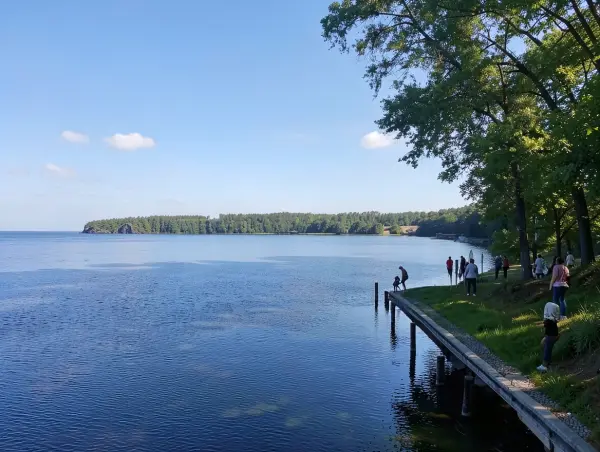
Flutue por um curso d'água florestal intocado que pouco mudou desde a década de 1830. Pedale por caminhos sombreados, atravesse eclusas manuais e aviste águias voando sobre corredores verdes serenos.
Fatos rápidos: Estendendo-se por 101 quilômetros entre a Polônia e a Bielorrússia, esta via navegável do século XIX liga os rios Vístula e Neman através de 18 eclusas e 22 comportas. Os engenheiros projetaram o canal com tanta precisão que seus mecanismos originais de eclusas, operados manualmente com vigas de madeira, ainda funcionam após quase 200 anos.
Destaques: Ao contrário da maioria dos canais, este atravessa uma reserva da biosfera listada pela UNESCO, onde castores, lontras e águias-de-cauda-branca patrulham as águas ao lado dos barcos que passam. As eclusas mudam a elevação em até 3 metros cada, e você pode ver os mecanismos originais de manivela ganharem vida enquanto a água jorra através dos portões centenários de carvalho.
7. Museum of Religion History
Onde mais você pode percorrer um mosteiro de 300 anos e ver de rolos medievais da Torá a propaganda ateísta soviética em uma tarde? Você passará por corredores de pedra ecoantes com ícones iluminados por velas e então entrará em um pátio silencioso onde monges cultivavam ervas.
Fatos rápidos: Housed in a former Roman Catholic monastery complex from the 17th century, the museum's collection spans over 2,000 artifacts across four permanent exhibitions. Visitors can see rare printed Bibles, Jewish liturgical objects, and a reconstructed 19th-century synagogue interior.
Destaques: One hall displays a single room completely covered in hand-painted frescoes depicting biblical scenes, where the original pigments still glow in shades of ochre and lapis lazuli. The museum's attic holds a dusty collection of Soviet-era religious artifacts that were secretly preserved by locals during state-mandated atheism.
Where to Stay in Hrodna, Belarus
Selected by City Buddy based on guest reviews and proximity to top attractions
Search all hotels in Hrodna, BelarusPowered by agoda
Dias de abertura em Hrodna, Belarus
Quais das principais atrações fecham em qual dia da semana, o clássico estraga-planos, verificado para você.
segunda-feira: 1 de 3 atrações principais fechadas. Planeje museus para outro dia.
Fechado em segunda-feira · 1 fechado, 2 aberto
Dias de abertura do Google Maps (verificado em 2026-08-04). Feriados, greves e horários sazonais podem variar. Verifique o site oficial antes de ir.
Pratos doces tradicionais

Krambambula
Krambambula is a spiced honey liqueur often used in desserts and believed to have originated in the Grand Duchy of Lithuania. Its name comes from a popular 18th century drinking song.
Sochen with poppy seeds
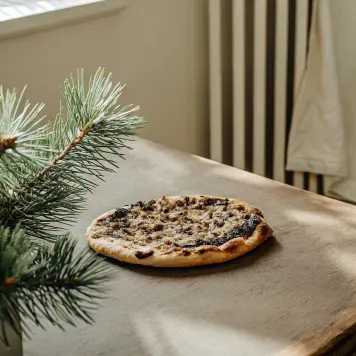
Sochen is a thin unleavened flatbread traditionally baked for Christmas Eve and served with a sweet poppy seed filling. In Hrodna, locals often add crushed nuts and dried apples for extra flavor.
Draniki with apple and cinnamon
While draniki are usually savory potato pancakes, in Hrodna they are often sweetened with grated apple and cinnamon. They are served with sour cream or honey as a beloved local dessert.
Pratos salgados tradicionais

Draniki
Draniki are crispy potato pancakes that are considered the national dish of Belarus. In Hrodna, they are often served with sour cream, fried onions, or mushroom sauce.
Machanka
Machanka is a thick, hearty gravy made from pork fat, flour, and sour cream, traditionally served with thick Belarusian pancakes called bliny. It is a rustic winter comfort food beloved in the Hrodna region.
Kolduny
Kolduny are stuffed dumplings similar to pierogi, filled with meat and mushrooms. In Hrodna, the local version is sometimes called "magic dumplings" and was a favorite of the Polish-Lithuanian nobility.
Bebidas tradicionais

Krambambula (drink version)
This spiced honey liqueur is one of the most famous beverages from the Hrodna region. It was historically brewed by Dominican monks in the city and is still made today with honey, spices, and alcohol.
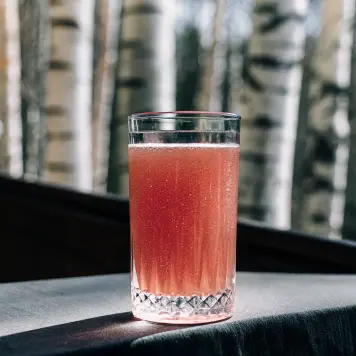
Bierzo
Bierzo is a traditional Belarusian birch sap drink collected in early spring. Hrodna locals tap birch trees in March for this refreshing, slightly sweet beverage that is believed to cleanse the blood.
Kvass
Kvass is a fermented rye bread drink that is a staple across Belarus. In Hrodna, it is often homemade with local rye bread and flavored with mint, berries, or dried fruits.
Perguntas frequentes sobre Hrodna, Belarus
"Hrodna, na Bielorrússia, é segura para turistas?"
"Quantos dias em Hrodna, na Bielorrússia, são suficientes?"
"Melhor época para visitar Hrodna, na Bielorrússia?"
"Visitar Hrodna, na Bielorrússia, é caro?"
"Como se locomover em Hrodna, na Bielorrússia?"
Receba um PDF com as atrações mais populares no seu e-mail
Receba um PDF com todas as atrações, avaliações e dicas. Perfeito para uso offline.
Passeios de um dia mais populares
Mir Castle
A UNESCO World Heritage castle with Gothic and Renaissance architecture.
Nesvizh Castle
Historic palace and park complex, another UNESCO listed site.
Augustow Canal
Scenic 19th century canal connecting Belarus and Poland, great for walks and boat trips.
Bialowieza Forest
Ancient primeval forest and UNESCO site, home to European bison.
Como chegar
Estações de trem
Minsk, Brest, Vilnius, Warsaw
From Grodno Airport, take a taxi or bus to city center (20 min). From Minsk, take a direct train (4h) or bus (4.5h).
Informações úteis para Hrodna, Belarus
Visão geral de Hrodna, Belarus
Quer um plano dia a dia para Hrodna, Belarus? Abra o planejador de viagem
Quando você vai para Hrodna, Belarus?
Escolha suas datas e estilo de viagem para receber:
Algum destes é especialmente importante para você?
Selecione todos que se aplicam
Como se locomover
Como você quer se deslocar entre os lugares?
Idioma do plano: Português