 CityBuddy
 Español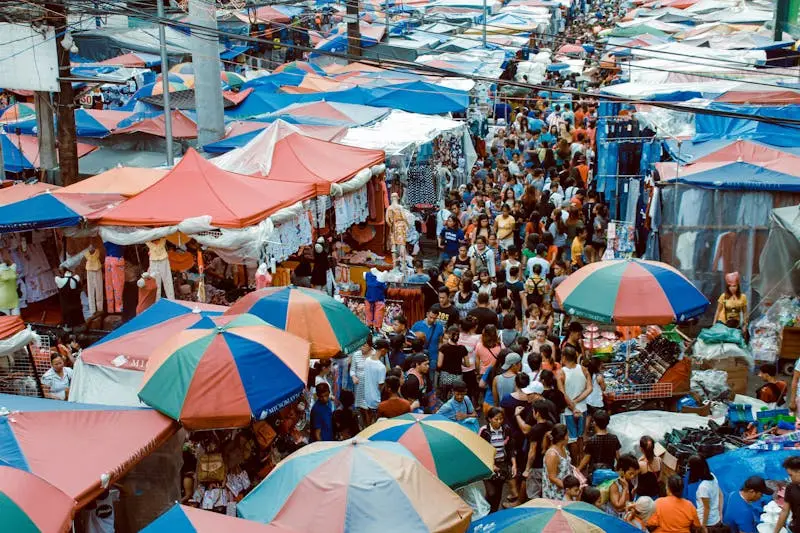
Qué hacer en Manila, Philippines
Foto realizada por NIC LAW en Pexels.com
Cuándo visitar
Manila es la #14 ciudad más amigable con los extranjeros del mundo, según nuestros datos de cientos de destinos.
Atracciones más populares en Manila, Philippines
Las principales actividades para hacer en Manila, Filipinas incluyen explorar Intramuros, la histórica ciudad amurallada que data del período colonial español. Visita el Fuerte Santiago, una ciudadela con una rica historia a solo 600 metros de la costa. No te pierdas la Iglesia y Museo de San Agustín, la iglesia de piedra más antigua del país, que ofrece artefactos fascinantes y arquitectura impresionante.
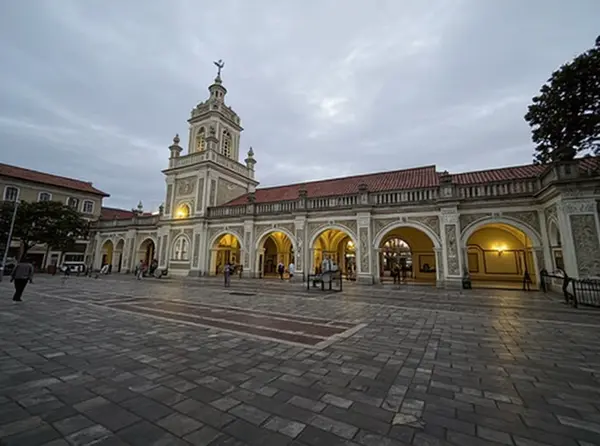
1. Intramuros (Historic Walled City)
Historic Walled City
Adéntrate en siglos de historia filipina tras imponentes muros de piedra. Pasea por calles empedradas, iglesias coloniales, museos y disfrute de vistas al atardecer desde las murallas.
Datos rápidos: La luz del sol se desliza a través de paredes de piedra cubiertas de musgo, carruajes tirados por caballos hacen clip-clop sobre los adoquines, y los cafés derraman música acústica en estrechas plazas. Más de una docena de fortificaciones y edificios coloniales restaurados ahora albergan museos, galerías de arte y jardines en las azoteas, por lo que deambular se siente como entrar en una cápsula del tiempo viva.
Destacados: Camina por las calles adoquinadas calentadas por el sol frente a la Iglesia de San Agustín, terminada en 1607, y bajo el arco de la entrada de Fort Santiago, donde los cañones españoles oxidados del siglo XVII aún apuntan hacia la bahía y el Santuario Rizal marca la celda donde José Rizal fue encarcelado antes de su ejecución en 1896. Durante el día, las kalesas tiradas por caballos hacen clip-clop sobre las piedras y los talleres sacan docenas de bicicletas de bambú para tours, el aire se llena de aceite de fritura, jazmín y un leve sabor metálico del río, por lo que se pueden sentir tres siglos de olores e historias superpuestas a la vez.
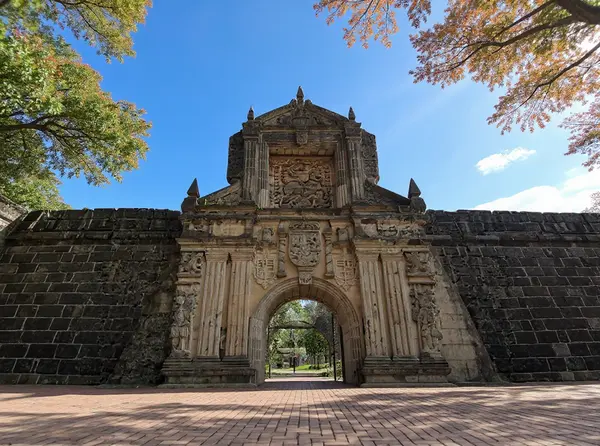
2. Fort Santiago
El Fuerte Santiago, con sus muros de piedra, revela el pasado colonial español y bélico de Manila. Recorre patios arbolados, visita el Santuario Rizal y contempla el Pasig desde las antiguas murallas.
Datos rápidos: Paredes gruesas de piedra volcánica y un tranquilo foso crean un silencio cinematográfico, donde la arquitectura colonial y las cicatrices de la guerra aún se sienten bajo los pies. Los visitantes a menudo se detienen en el pequeño museo y en la estrecha celda donde José Rizal escribió sus últimos poemas, imaginando el silencio antes de su marcha final.
Destacados: Entra en la celda oscura donde José Rizal pasó sus últimas noches antes de su ejecución el 30 de diciembre de 1896, las ásperas paredes de ladrillo todavía rayadas con nombres y un débil olor metálico de los antiguos cañones. Cada 30 de diciembre, cientos de estudiantes y miembros de logias masónicas se reúnen para colocar coronas y encender velas en el pequeño marcador de mármol, un silencio roto solo por una solitaria corneta que toca el lamento nacional.
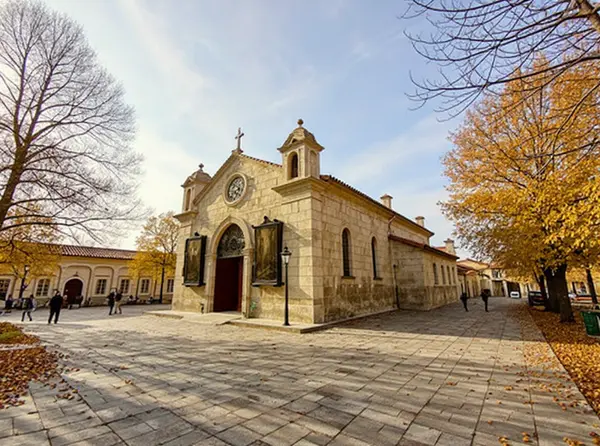
3. San Agustin Church and Museum
Entra en la Manila de la era española en la Iglesia de San Agustín, un monumento barroco declarado Patrimonio de la Humanidad por la UNESCO. Maravíllate con los altares dorados, techos trompe l'oeil y un museo compacto de artefactos coloniales.
Datos rápidos: Al entrar, te sorprenderán la piedra cálida y dorada y la ornamentación barroca exuberante, mientras los techos trompe-l'œil parecen respirar con nubes pintadas. En el piso superior, un museo compacto alberga siglos de tesoros eclesiásticos, desde vestimentas bordadas hasta relicarios brillantes, y todo el edificio sobrevivió notablemente a bombardeos que aplastaron gran parte de su vecindario.
Destacados: Construida en 1607, la basílica de piedra ha existido por más de 400 años, y bajo su nave yace la tumba del conquistador Miguel López de Legazpi cuyo epitafio tallado puedes aún trazar con tus dedos. En las salas oscuras del museo, un susurro de cera de abejas y papel viejo flota sobre vitrinas que sostienen vestimentas del siglo XVII y XVIII, vasos litúrgicos de plata y santos procesionales de madera cuyos rostros policromados agrietados brillan bajo una sola lámpara.
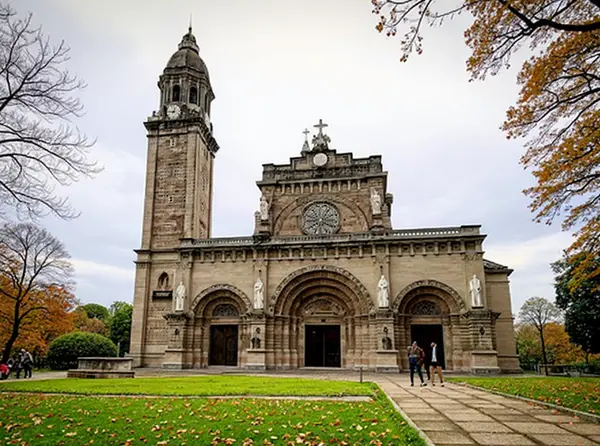
4. Manila Cathedral
Vive siglos de historia de Manila en una gran catedral colonial en el corazón de Intramuros. Admira detalles barrocos y románicos restaurados, vitrales y un interior tranquilo.
Datos rápidos: La luz del sol que entra por las altas ventanas de vitrales salpica color sobre el mármol pulido, y la acústica abovedada hace que las actuaciones del órgano y el coro sean especialmente resonantes. Placas silenciosas y piedra reparada cuentan una historia dramática de supervivencia tras múltiples terremotos y daños de guerra, mientras que una imagen venerada y centenaria en el interior atrae tanto a peregrinos como a visitantes curiosos.
Destacados: Al entrar, estarás en una iglesia que ha sido reconstruida ocho veces desde el siglo XVI, por lo que los pisos de mármol, columnas neoclásicas y tallas barrocas forman una línea de tiempo en capas que puedes leer con la vista. En muchas tardes, un coro anciano practica himnos gregorianos hasta que la luz del sol a través de los vitrales convierte el pasillo en franjas de rubí y oro, y los feligreses a menudo dejan pequeñas notas dobladas entre la reja de hierro junto al altar, sus bordes de papel suavizados por años de incienso.
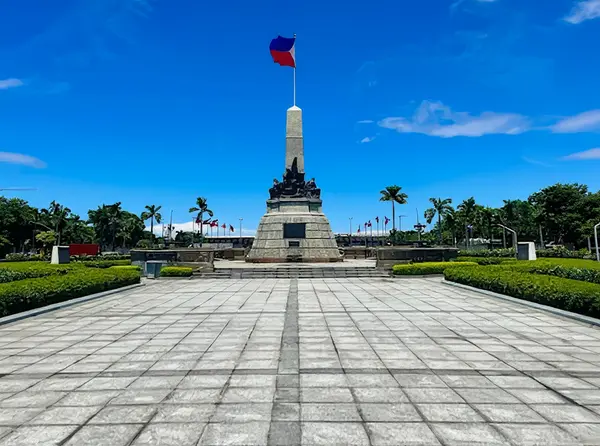
5. Rizal Park (Luneta)
Luneta
Parque histórico en el corazón de Manila, donde la memoria nacional se encuentra con la vida cotidiana. Pasea por el Monumento a Rizal, jardines relajantes y plazas animadas para fotos y observar gente.
Datos rápidos: La luz de la mañana revela extensos céspedes verdes atravesados por fuentes ornamentales y paseos sombreados, donde los locales practican tai chi y las familias hacen picnic entre acacias florecientes. Un monumento nacional dramático ancla el centro, atrayendo multitudes para ceremonias y reflexión tranquila mientras bandadas de palomas añaden vida al sonido urbano.
Destacados: Justo en el centro se encuentra un monumento de bronce de 12.8 metros a José Rizal, donde los locales dejan silenciosamente pequeñas velas y guirnaldas de sampaguita hechas a mano después del atardecer, la cera y el perfume de las flores se mezclan con el aire de la tarde. Cada 30 de diciembre, cientos a miles se reúnen antes del amanecer para la colocación de una corona y ceremonia de la bandera, coros escolares entonan el himno nacional y vendedores ambulantes venden pequeñas banderas de papel y pasteles de arroz por alrededor de 10 a 20 pesos.
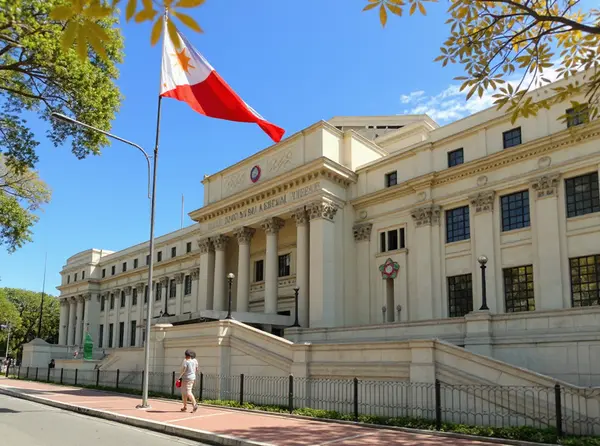
6. National Museum of the Philippines (National Museum Complex)
National Museum Complex
Explora el arte, historia y biodiversidad de Filipinas en un complejo central. Ve el Spoliarium de Juan Luna, el Árbol de la Vida de Historia Natural y ricos artefactos culturales.
Datos rápidos: Al entrar, te impresionarán los vastos salones neoclásicos que exhiben el Spoliarium de Juan Luna junto con deslumbrantes trabajos de oro precoloniales y ricas telas tejidas. Rincones tranquilos invitan a estudiar especímenes fósiles, objetos ceremoniales y pinturas monumentales, haciendo que la visita se sienta como un recorrido compacto por siglos de cultura.
Destacados: Párate bajo la pálida rotonda neoclásica y el Spoliarium de Juan Luna captura tu mirada, un lienzo de aproximadamente 4 por 7 metros cuyos oscuros tonos ocre y toques carmesí profundizan cuando los conservadores trabajan suavemente en su barniz, liberando un leve aroma a trementina. La pintura ganó una medalla de oro en Madrid en 1884, un triunfo que los guías aún narran como un impulso para el orgullo nacional filipino, y escuchar esa historia mientras la galería guarda silencio hace que la escena se sienta cinematográfica de manera inesperada.

7. Manila Ocean Park
Observa de cerca la vida marina filipina en un gran acuario interactivo. Camina por un largo túnel de vidrio, mira espectáculos de alimentación y conoce pingüinos.
Datos rápidos: Luces azules brillantes y un túnel de cristal curvado te permiten observar tiburones y rayas deslizándose a pocos centímetros sobre tu cabeza, haciendo que la caminata se sienta como una postal submarina. Más de 3,000 animales marinos habitan en tanques temáticos, y las alimentaciones diarias convierten lo que podrían ser datos de aula en experiencias prácticas y emocionantes.
Destacados: Cada noche el acuario se ilumina con luces azul oceánico y presenta una "serenata de alimentación" donde un banco de aproximadamente 200 sardinas brillantes nada coreográficamente a lo largo del túnel de cristal, el agua susurrando como lluvia lejana mientras las familias presionan sus palmas contra el acrílico. El buzo veterano Kuya Danny narra el espectáculo en tagalo, ofreciendo a los niños valientes la oportunidad de sentir la piel fresca y aterciopelada de un pepino de mar y enseñándoles los nombres locales de los peces, lo que siempre convierte los gritos en charlas orgullosas y asombradas.
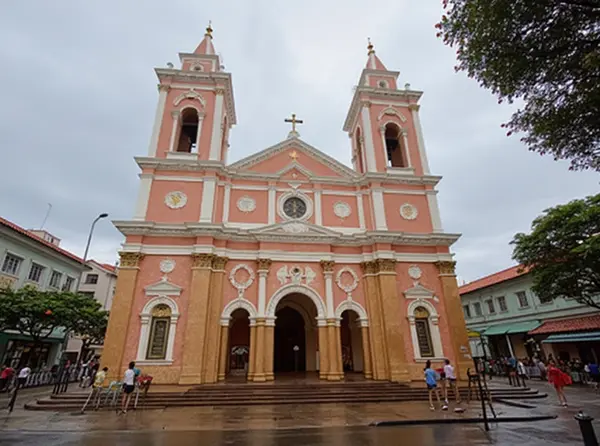
8. Binondo Church (Minor Basilica of San Lorenzo Ruiz)
Minor Basilica of San Lorenzo Ruiz
Vive siglos de historia católica chino-filipina en la Iglesia de Binondo. Admira el interior barroco ornamentado y presencia las devociones locales de cerca.
Datos rápidos: Una cálida neblina de incienso y faroles de colores recibe a los visitantes, revelando una sorprendente mezcla de altares barrocos y motivos decorativos chinos. Muchos vienen a venerar al primer santo canonizado del país, y bodas animadas y rituales comunitarios mantienen los pasillos vibrantes con devoción.
Destacados: Fundada en 1596 para servir a comerciantes chino-filipinos, la iglesia es una de las parroquias más antiguas del país y aún se llena con denso incienso y el clic de rosarios de madera durante la gran fiesta del 28 de septiembre. Una práctica local peculiar hace que los visitantes coloquen pequeñas peticiones dobladas y cintas de oración rojas en las rejas de hierro alrededor de las capillas laterales, por lo que se pueden ver docenas de papeles escritos a mano y colas de cintas descoloridas que ondean en las corrientes de aire.
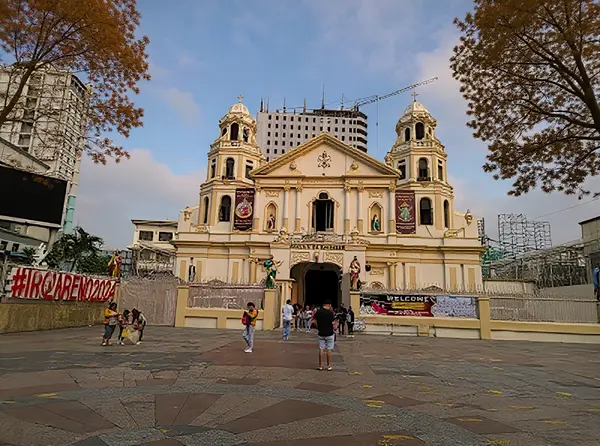
9. Quiapo Church (Minor Basilica of the Black Nazarene)
Minor Basilica of the Black Nazarene
Sé testigo de la profunda devoción popular y la historia viva de Manila en la Basílica Menor del Nazareno Negro. Experimenta misas vibrantes, ofrendas votivas a la luz de las velas y vistas cercanas de la imagen del Nazareno Negro.
Datos rápidos: Las multitudes se aprietan por los pasillos fragantes y iluminados por velas para tocar una imagen oscura de madera, creando un estruendo de oraciones y ofrendas susurradas que vibra en la iglesia llena. Devotos legendarios atribuyen incontables peticiones respondidas a la estatua, y la procesión anual atrae a cientos de miles que se empujan por las calles para un breve roce con la figura sagrada.
Destacados: Bajo nubes de humo de vela y el tintinear metálico de los rosarios, los fieles presionan pañuelos descoloridos y pequeñas toallas contra una estatua de madera oscura de tamaño real de Cristo, que se dice data del siglo XVII, esperando que la tela recoja una bendición. Cada enero, aproximadamente un millón de devotos se unen a la frenética procesión de Traslación, cuerpos apretados hombro con hombro por más de 12 horas mientras las personas gritan oraciones e intentan tocar la carroza o su cuerda para reclamar un milagro.

10. Divisoria Market (shopping district)
shopping district
Encuentra gangas inigualables en ropa, telas y accesorios en el mercado más concurrido de Manila. Navega por calles llenas de gente y color mientras pruebas comida callejera y negocias precios bajos.
Datos rápidos: Callejones estrechos laten con un laberinto apilado de puestos que ofrecen desde rollos de tela hasta electrónicos económicos, así que regatear se siente como un deporte. Los cazadores experimentados de gangas disfrutan rebuscando en contenedores mayoristas y carritos de comida callejera, obteniendo ofertas al por mayor y hallazgos curiosos entre los constantes llamados de los vendedores.
Destacados: Filas de puestos se apiñan tan cerca que puedes saborear el ajo de un vendedor que cocina bolas de pescado a la parrilla, mientras un vendedor cercano ofrece lámparas LED idénticas por tan solo ₱10, rollos de tela apilados a tres metros bajo luces fluorescentes zumbantes. Los compradores habituales tienen un ritual pícaro: emiten una cuenta regresiva de "último precio" con tres golpes rápidos en el mostrador, y cuando el vendedor gira un bolígrafo verde el trato queda sellado, convirtiendo el regateo en una actuación callejera.
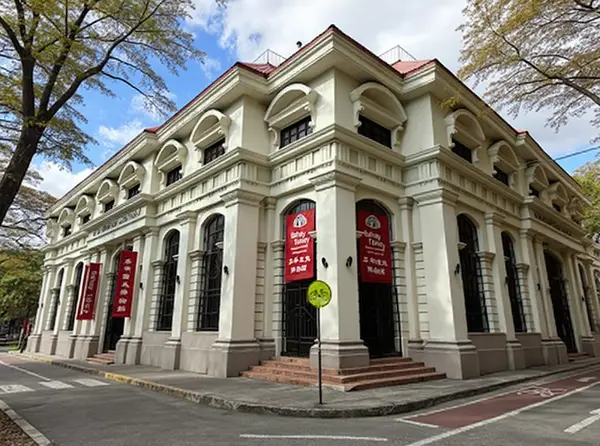
11. Visit Bahay Tsinoy Museum
Descubre la rica herencia de los chinos filipinos a través de artefactos raros e historias vívidas. Sumérgete en la historia con sonidos y vistas que dan vida al pasado.
Datos rápidos: El lugar muestra las historias de más de 1.2 millones de chinos filipinos y su influencia en la cultura e historia filipina. Las exhibiciones incluyen registros ancestrales intrincados y artefactos que datan de hace más de 300 años.
Destacados: Los visitantes pueden experimentar una exhibición sonora única donde se tocan instrumentos tradicionales chinos junto con sonidos de las antiguas calles de Manila, creando un efecto inmersivo de viaje en el tiempo. Un punto destacado es un diorama detallado del distrito de Binondo tal como lucía a principios del siglo XX con más de 500 figuras en miniatura.
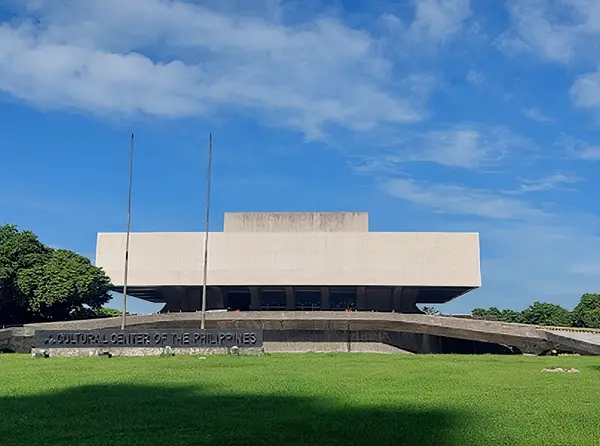
12. Cultural Center of the Philippines
Siente el pulso de las artes escénicas filipinas. Disfruta de piezas dinámicas, conciertos y exposiciones en un espacio arquitectónicamente único que celebra la cultura local.
Datos rápidos: Una característica llamativa de este lugar es el tanghalang nicanor abelardo, un teatro conocido por su diseño acústico que permite que cada palabra y nota llegue claramente hasta el último asiento. Más de 50 presentaciones y exhibiciones de arte se llevan a cabo aquí mensualmente, atrayendo a artistas y público de todo el país.
Destacados: Observe a los artistas pasar una antorcha ceremonial antes de cada evento importante para honrar la artesanía filipina, una tradición iniciada por el director cultural original. El teatro principal tiene capacidad para 1,800 personas y cuenta con una lámpara de araña hecha de conchas de capiz, que refleja la artesanía local bajo las luces.
Where to Stay in Manila, Philippines
Selected by City Buddy based on guest reviews and proximity to top attractions
Search all hotels in Manila, PhilippinesPowered by agoda
Días de apertura en Manila, Philippines
Cuáles de las mejores atracciones cierran cada día de la semana, el clásico arruina-viajes, ya comprobado por ti.
lunes: 9 de 19 atracciones principales cerradas. Planifica los museos para otro día.
Cerrado el lunes · 9 cerradas, 10 abiertas
Días de apertura según Google Maps (verificado el 2026-03-14). Los días festivos, las huelgas y los horarios de temporada pueden variar. Consulta la web oficial antes de ir.
Platos dulces tradicionales

halo-halo
Halo-halo literally means 'mix', it evolved from Japanese shaved ice and Filipino sweet preserves, and today its rainbow layers topped with leche flan or ube ice cream are a summer symbol across Manila.
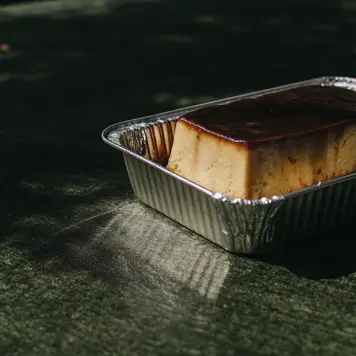
leche flan
Leche flan in the Philippines is denser and richer than its Spanish cousin because cooks use many egg yolks and condensed milk, and it is traditionally steamed in a tin mold called a llanera for a silky, custardy texture.

ube halaya
Ube halaya is a vivid purple jam made from purple yam, its color and nutty-sweet flavor turned it into a signature ingredient that elevates everything from halo-halo to pastries and ice cream.
Platos salados tradicionales
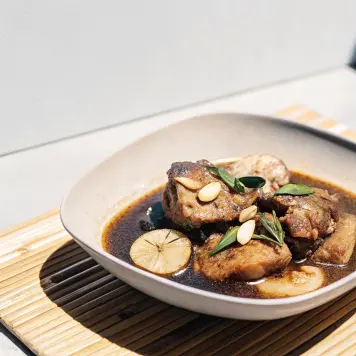
adobo
Adobo is more a method than a single recipe, vinegar and soy sauce preserve and flavor meat, and nearly every Filipino family in Manila guards a version they call their own.

sisig
Sisig began as a resourceful Kapampangan dish made from pig's head and ears, it was revived as a sizzling, tangy bar favorite in Manila and is often finished with a raw egg on the hot plate.
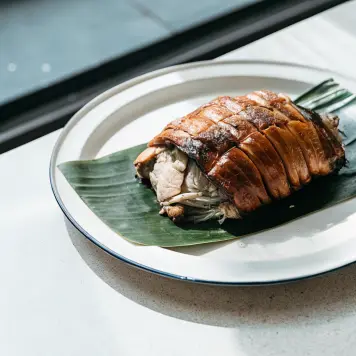
lechon
Lechon, a whole roasted pig with crackling skin and juicy meat, is the unmistakable centerpiece of Filipino fiestas and its carving announces celebration across Manila.
Bebidas tradicionales

sago't gulaman
Sago't gulaman pairs chewy tapioca pearls with jiggly agar jelly in a sweet brown sugar syrup, it became a beloved street drink because it is both refreshing and texturally playful.

buko juice
Buko juice is the clear, slightly sweet water from young coconuts, sold straight from halved shells by vendors and prized as a natural electrolyte on hot Manila days.

tuba
Tuba is freshly tapped coconut sap that ferments into a mildly alcoholic palm wine, it has long been woven into Filipino rituals and fiestas and can be distilled into the stronger spirit lambanog.
Infórmate antes de ir
Cuánto cuesta un día en Manila y las estafas que debes evitar
Costo por persona por día
Principales estafas a evitar
- Unlicensed airport drivers. Use the official coupon taxi counter inside the terminal or book Grab from the app before exiting arrivals.
- Meter tampering. Check the meter is reset when you start and the rate matches the posted daytime flag-down. Prefer Grab for fixed pricing.
- Poor-rate exchange booths. Use bank branches or reputable money changers with posted rates. Count your pesos at the counter before walking away.
Taxi justo desde el aeropuerto: 700 ₱ - 1 000 ₱ (10 € - 14 €)
Opción más barata: Airport Jeepney or the official airport shuttle/UV Express to central areas like Baclaran or Taft MRT station (50 ₱)
Todas las estafas, precios justos y normasPreguntas frecuentes sobre Manila, Philippines
¿Cuál es la mejor época para visitar Manila, Filipinas?
¿Es Manila, Filipinas, un lugar caro?
¿Cómo moverse por Manila, Filipinas?
¿Es seguro visitar Manila, Filipinas?
¿Cuántos turistas visitan Manila anualmente?
Recibe un PDF con las atracciones más populares en tu correo electrónico
Obtén un PDF con todas las atracciones, valoraciones y consejos. Perfecto para uso sin conexión.
Excursiones de un día más populares
Tagaytay (Taal view)
Cool ridge with panoramic views of Taal Volcano.
Taal Volcano (via Talisay)
Boat trip to the volcanic island on Taal Lake.
Pagsanjan Falls (Laguna)
Scenic gorge and classic canoe (shooting the rapids) trip.
Anilao (Mabini, Batangas)
Popular snorkeling/diving spot with clear waters.
Cómo llegar
Estaciones de tren
PNR South Main Line (to Laguna, Lucena, Bicol)
MRT-3 / LRT-2 (major Metro Manila interchange)
LRT-1 / connecting buses to airport/Metro
From NAIA take a metered taxi or Grab; expect heavy traffic—allow 1–2 hours.
Información útil para Manila, Philippines
Resumen de Manila, Philippines
¿Quieres un plan día a día para Manila, Philippines? Abre el planificador de viajes
¿Cuándo vas a Manila, Philippines?
Elige tus fechas y estilo de viaje para obtener:
¿Alguno de estos es especialmente importante para ti?
Selecciona todos los que apliquen
Cómo moverse
¿Cómo quieres moverte entre los lugares?
Idioma del plan: EspañolMost popular itineraries for Manila, Philippines
Browse trip plans created by other travelers
14-Day Authentic Philippines Adventure for Budget Backpackers
Discover the Philippines off the beaten path from Manila's local streets to Balabac's rugged islands and Boracay's hidden coves in this budget-friendly, authentic 14-day journey.
15-Day Manila Spring Immersion
Discover Manila’s rich history, vibrant culture, and local flavors in this 15-day spring adventure through famous landmarks and authentic experiences.