 CityBuddy
 Bahasa Indonesia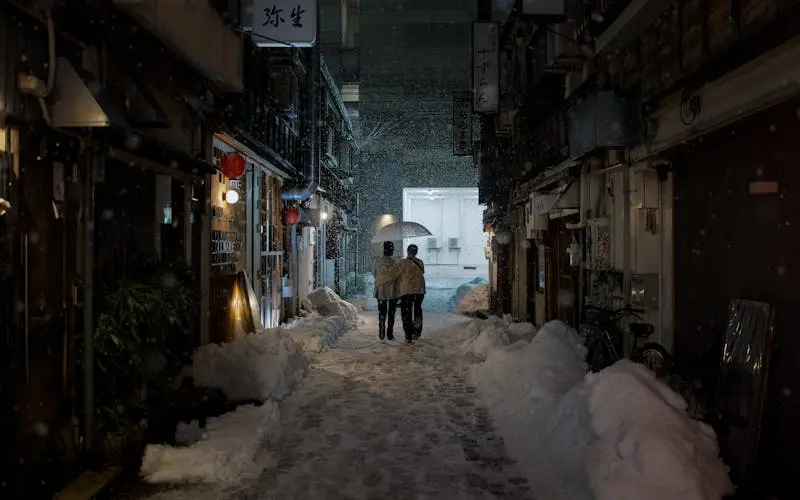
Hal yang Dapat Dilakukan di Kanazawa, Japan
Foto dibuat oleh Julien di Pexels.com
Kapan berkunjung
Kanazawa adalah #8 kota terbersih di dunia, berdasarkan data kami dari ratusan destinasi.
Atraksi paling populer di Kanazawa, Japan
Hal-hal terbaik yang dapat dilakukan di Kanazawa, Jepang termasuk menjelajahi Taman Kenroku-en, salah satu dari tiga taman besar di negara ini, dan berjalan-jalan melalui Distrik Higashi Chaya yang bersejarah dengan rumah tehnya yang terawat baik. Jangan lewatkan Taman Istana Kanazawa, yang menampilkan dinding batu yang mengesankan dan lahan luas yang ideal untuk jalan-jalan santai.
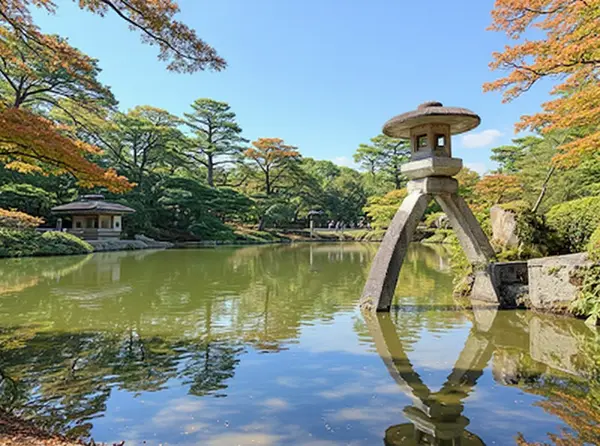
1. Kenroku-en Garden
Salah satu taman lanskap tercantik di Jepang, kaya akan kolam, rumah teh, dan pemandangan musiman. Berjalanlah di jalur yang dipenuhi pohon pinus, lihat lentera Kotoji dan tali yukitsuri di musim dingin.
Fakta cepat: Karpet lumut dan jalan setapak berliku menciptakan pemandangan terbuka yang berubah seiring musim, dari aroma bunga plum di musim semi hingga lanskap salju putih nan sunyi di musim dingin. Rumah teh, lentera batu, dan kolam pulau yang indah mengundang jalan-jalan santai dan banyak sudut foto yang sempurna.
Sorotan: Tali Yukitsuri menyangga ujung dahan setiap musim dingin, tali-tali halus itu membentuk bayangan seperti mahkota di atas salju segar dan menciptakan pola anyaman yang fotogenik. Pemandu senang menunjuk pohon pinus karasaki, cabang-cabangnya yang tertiup angin bersandar di atas kolam yang diterangi lentera sehingga siluetnya tampak seperti lukisan tinta Jepang saat senja.
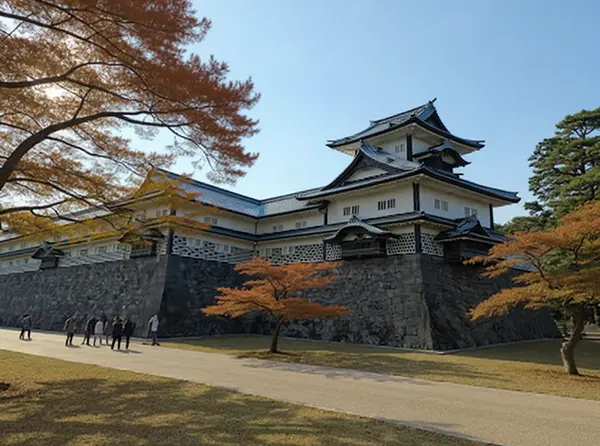
2. Kanazawa Castle Park
Kastil era samurai yang terawat baik dengan dinding batu yang dramatis dan gerbang kayu yang dipugar. Berjalanlah di area yang luas, naik ke menara, dan nikmati pemandangan ke Taman Kenrokuen.
Fakta cepat: Dinding besar berplester putih dan gerbang kayu menjulang membingkai labirin jalan batu dan parit tempat ikan koi meluncur tepat di bawah jembatan kecil, cukup dekat untuk mendengar riak airnya. Tur berpemandu dan papan interpretasi menunjukkan batu asli dan menara yang direkonstruksi, memberikan gambaran langsung tentang pertukangan kayu tradisional dan pertahanan kastil.
Sorotan: Naiki tangga kayu dari salah satu dari tiga menara yang telah dipugar dan Anda akan mencium aroma resin serta mendengar bunyi hampa dari balok-balok tebal, sementara sebuah plakat kecil menyebutkan nama serikat tukang kayu setempat. Cahaya kuning lembut dari lebih dari 50 lentera mengambang sering menyinari parit pada acara malam hari, pantulannya mengubah dinding batu menjadi permadani bergerak yang terasa hampir sinematik.
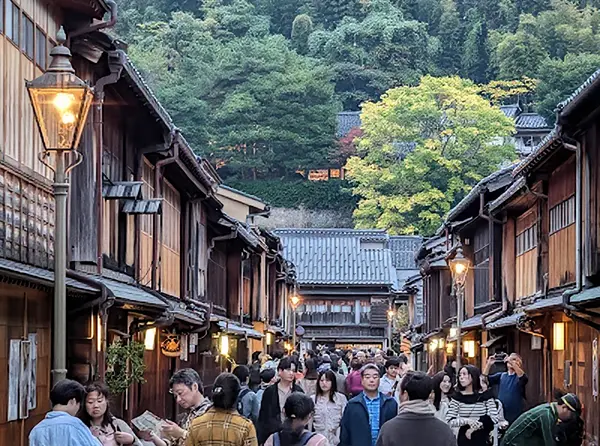
3. Higashi Chaya District
Masuki jalanan era Edo yang terawat baik di mana rumah teh kayu dan budaya geisha masih terasa. Jelajahi gang sempit, cicipi manisan lokal, dan saksikan pengrajin bekerja.
Fakta cepat: Lorong-lorong sempit yang dibingkai oleh kisi-kisi kayu bermadu terasa seperti melangkah ke set film, sementara interior berpernis kadang-kadang membiarkan suara shamisen yang lembut terdengar hingga ke jalan. Sebagai salah satu dari tiga kawasan rumah teh tradisional di kota ini, area ini masih menjadi tempat pertunjukan geisha dan toko-toko yang menjual daun emas dan barang lak yang indah.
Sorotan: Kejutan yang tidak terduga adalah es krim lembut daun emas, di mana para penjual melapiskan selembar emas 24 karat di atas es krim sehingga daunnya berkilau dan meleleh di lidah. Setelah senja, Anda mungkin menyaksikan pertunjukan geisha dua atau tiga orang di beranda yang ditinggikan, suara shamisen, gemerisik kimono berlapis, dan bisikan percakapan menyatukan kerumunan menjadi momen sinematik yang intim.
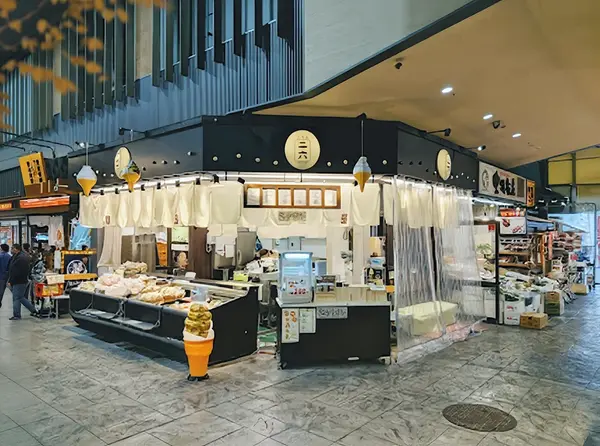
4. Omicho Market
Pasar ikan Kanazawa yang ramai dengan tangkapan paling segar dari Laut Jepang. Berjalan di lorong sempit, cicipi sashimi di konter, dan saksikan penjual menyiapkan hidangan spesial harian.
Fakta cepat: Uap harum dari kaldu yang mendidih dan takoyaki yang mendesis bercampur dengan aroma asin seafood segar, memenuhi lorong-lorong sempit di mana para pedagang berteriak menyebutkan harga. Lebih dari 200 kios dan warung kecil memenuhi tempat ini, dengan seafood yang datang setiap hari dari pelabuhan terdekat sehingga sashimi dapat disajikan dalam hitungan jam setelah ditangkap.
Sorotan: Warga setempat berkumpul saat seorang pedagang kepiting mengangkat kepiting salju seberat 1,5 kilogram ke atas timbangan kuningan tua, sambil menyebutkan harga dengan suara bernada yang bergema di sepanjang lorong. Di belakang satu jalur, dua belas konter rendah menaungi pelanggan di bawah lampu hangat di mana koki menyayat irisan tembus pandang dari kanburi dan menyajikannya dengan sedikit wasabi dan kecap.
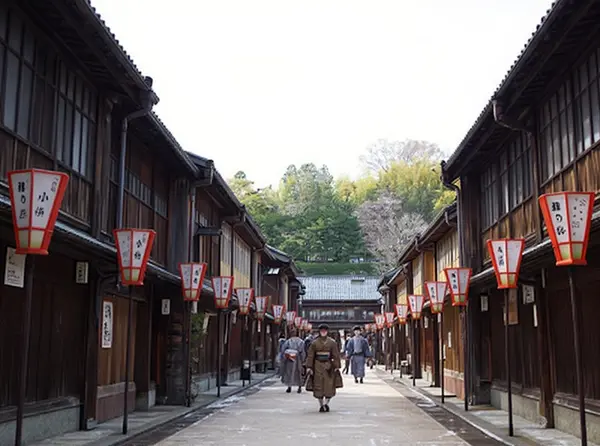
5. Nagamachi Samurai District
Masuki kehidupan samurai di tengah dinding tanah dan gang sempit yang terawat. Jelajahi kediaman yang dipugar, museum kecil, dan rumah teh taman yang tenang.
Fakta cepat: Lorong-lorong sempit berlapis tanah memperlihatkan dinding tanah liat tebal dan kisi-kisi kayu yang berbau tanah lembap setelah hujan. Pengunjung sering melewati gudang penyimpanan kura yang defensif dan kediaman samurai dengan pintu geser berpernis yang menampilkan lambang keluarga, beberapa rumah masih mempertahankan ruang tatami asli dan taman tersembunyi.
Sorotan: Masuklah ke lorong yang sunyi dan langkah kaki yang teredam, batu berlumut, serta aroma kayu berminyak membuat masa lalu terasa nyata dan dekat. Lebih dari 20 kediaman samurai yang masih ada tetap bertahan, dan sebuah rumah yang dipugar menunjukkan taman teh kecil serta ruang tatami yang bisa Anda intip melalui jendela berjeruji, melihat pernis hitam pekat dari dekat.

6. 21st Century Museum of Contemporary Art
Seni kontemporer berani di museum melingkar yang mencolok dekat Kastil Kanazawa. Jelajahi instalasi imersif, kolam reflektif, dan karya cahaya interaktif.
Fakta cepat: Anda dapat menjelajahi kampus melingkar yang dapat diakses di mana galeri mengalir ke plaza publik, sehingga karya kontemporer sering berpadu dengan kehidupan sehari-hari. Pengunjung biasanya menemukan ruangan minimalis, karya sensorik, dan ilusi optik yang playful yang membuat pandangan santai menjadi dua kali lipat.
Sorotan: Instalasi yang menantang gravitasi oleh Leandro Erlich menciptakan ilusi orang berjalan di bawah air sementara lainnya mengintip dari atas, menghasilkan foto surealis dan decak kagum. Cahaya alami hangat mengalir melalui dinding kaca lebar dan skylight, membanjiri lantai beton dengan warna biru dan emas yang berubah-ubah sehingga setiap kunjungan terasa berbeda secara visual dari jam ke jam.
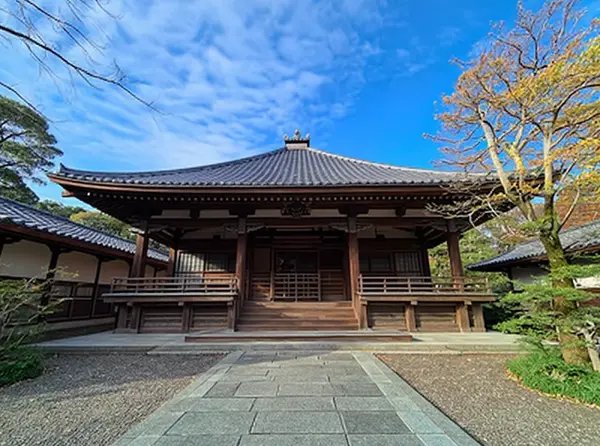
7. Myoryu-ji (Ninja Temple)
Ninja Temple
Kuil era Edo yang penuh dengan fitur pertahanan rahasia. Tur berpemandu mengungkap tangga sempit, pintu jebakan, dan ruang tersembunyi yang dulu digunakan untuk perlindungan.
Fakta cepat: Koridor batu dan pintu yang disembunyikan dengan cerdik menciptakan interior seperti labirin, di mana ruangan yang tampak biasa menyembunyikan tangga rahasia dan pintu jebakan. Pemandu sering menunjukkan lebih dari 20 fitur pertahanan yang dirancang untuk membingungkan penyusup, mulai dari lubang intip dan langit-langit palsu hingga jalur pelarian tersembunyi.
Sorotan: Suara kicauan tiba-tiba seperti burung di bawah kaki mengungkap kecerdasan tempat ini, beberapa papan 'uguisubari' atau papan burung bulbul dipasang sehingga penjaga bisa mendengar langkah kaki sebelum penyusup muncul. Saksikan panel geser terbuka ke belakang memperlihatkan lorong sempit yang lebarnya hanya 60 sentimeter, cukup untuk satu orang merapat sambil tetap tidak terlihat sama sekali.
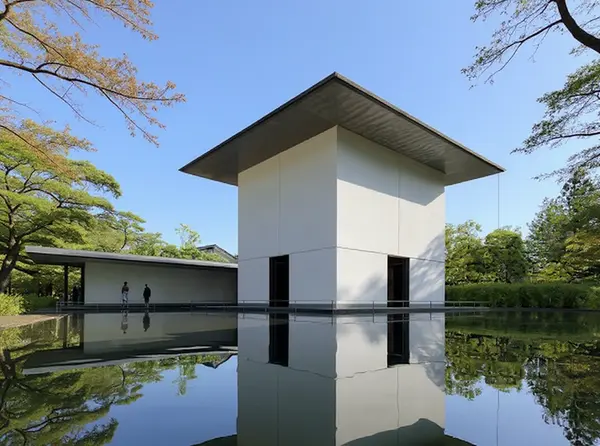
8. D.T. Suzuki Museum
Ruang meditatif oleh D.T. Suzuki menawarkan sudut ketenangan langka di Kanazawa. Galeri yang tenang, kolam reflektif, dan ruang baca mengundang eksplorasi yang perlahan dan penuh perhatian.
Fakta cepat: Dinding beton dan kolam dangkal membentuk setiap ruangan, membiarkan hujan dan langit menjadi bagian dari pameran. Keheningan diperlakukan seperti bagian dari koleksi, dan banyak pengunjung menghabiskan 15 hingga 20 menit duduk di dekat air, menyaksikan cahaya meluncur di atas batu dan baja tahan karat.
Sorotan: Sebuah kolam pantul dangkal tunggal berada di jantung situs ini, hanya beberapa sentimeter dalamnya sehingga pantulan langit dan pepohonan di sekitarnya tetap tajam dan seperti cermin. Cahaya redup yang menyebar dan suara gemericik air yang lembut mengubah galeri menjadi lanskap suara yang intim, membuat bisikan terasa jelas dan mendorong Anda untuk memperhatikan tekstur kecil serta sudut bayangan yang tepat.
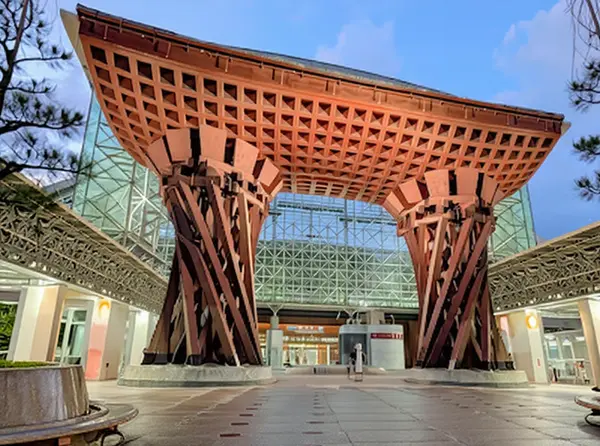
9. Kanazawa Station (Tsuzumi-mon Gate)
Tsuzumi-mon Gate
Gerbang kayu berbentuk tsuzumi yang mencolok dan kubah kaca menjulang menyambut Anda di Stasiun Kanazawa. Berjalanlah di bawah gerbang dan masuk ke dalam kubah untuk foto dramatis dan akses mudah ke kota.
Fakta cepat: Berjalan di bawah gerbang kayu besar berbentuk sepasang drum tangan dan rasakan perubahan mendadak dari kebisingan jalan menjadi ketenangan seperti katedral yang hening. Nada kayu cedar hangat bertemu dengan kanopi kaca yang melengkung, sehingga aula stasiun bersinar dengan cahaya pantulan dan suara rintik hujan sesekali menjadi bagian dari latar suara.
Sorotan: Masuklah ke halaman depan dan Anda akan menjumpai dua pilar kayu menjulang yang meniru drum tsuzumi tradisional dari teater Noh, serat kayu dan pita perunggunya terlihat dari dekat. Lampu amber menerangi kayu dan kanopi kaca setelah matahari terbenam, mengubah plaza menjadi panggung di mana gema langkah kaki lembut dan klakson kereta dari kejauhan terasa sinematik.
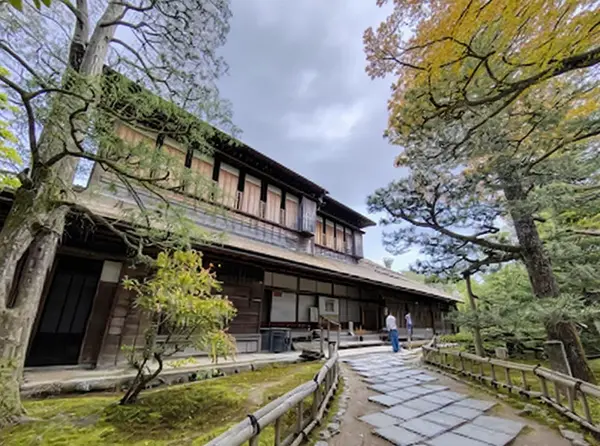
10. Seisonkaku Villa
Vila samurai elegan yang mencerminkan selera klan Maeda. Berjalanlah di ruang tatami, layar berornamen, dan taman tenang yang berubah seiring musim.
Fakta cepat: Bekas vila keluarga feodal ini memukau dengan layar geser berlapis emas dan interior berpernis yang menangkap cahaya, memancarkan pantulan hangat seperti madu di atas tatami. Anda akan melihat koleksi pribadi kimono bersulam dan furnitur berpernis, yang dirawat dengan hati-hati sehingga benang emas dan pigmen masih berkilau saat Anda mengamati dari dekat.
Sorotan: Telusuri beranda sempit menuju halaman berlumut di mana tepat 13 batu pijakan memandu langkah Anda, sebuah ritme yang disengaja yang memperlambat tamu selama kunjungan ritual. Sinar matahari yang menghangatkan papan lantai yang dipoles mengeluarkan aroma kamper samar, dan puluhan layar lukis menunjukkan sapuan kuas yang begitu halus sehingga Anda bisa melihat guratan individu dengan mata teliti.
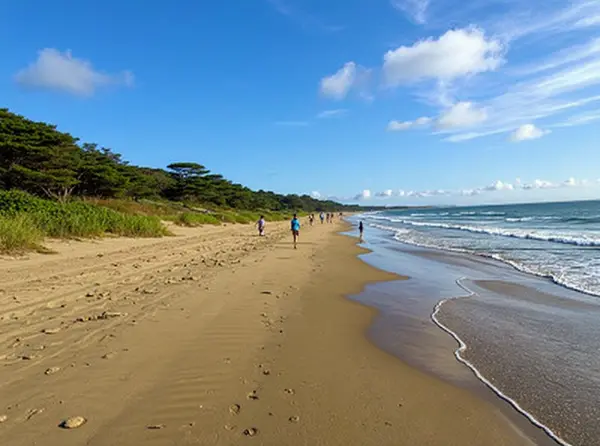
11. Chirihama Nagisa Driveway (beach driving)
beach driving
Satu-satunya jalan pantai legal di Jepang di mana ban Anda menyentuh garis pasang. Turunkan kaca jendela, rasakan hembusan angin laut, dan berkendaralah dengan samudra sebagai teman setia Anda.
Fakta cepat: Anda dapat mengendarai mobil sendiri tepat di sepanjang garis pantai di mana ombak terkadang menerpa hanya beberapa meter dari ban Anda, salah satu dari sedikit tempat di Jepang di mana berkendara di pantai adalah legal. Jalan sepanjang 8 kilometer dari pasir padat di antara hutan dan Laut Jepang telah menjadi jalan umum sejak 1965, gratis untuk digunakan siapa pun.
Sorotan: Saat air surut, pasir menjadi cukup padat sehingga mobil sedan kecil pun dapat melaju dengan kecepatan 50 km/jam dengan semprotan garam membasahi kaca depan. Berhentilah di mana saja di sepanjang jalan sepanjang 8 kilometer, buka bagasi, dan nikmati piknik pantai lengkap dengan stereo mobil yang diputar sementara ombak pecah beberapa langkah jauhnya.
Where to Stay in Kanazawa, Japan
Selected by City Buddy based on guest reviews and proximity to top attractions
Search all hotels in Kanazawa, JapanPowered by agoda
Hari buka di Kanazawa, Japan
Objek wisata terbaik mana yang tutup pada hari apa dalam seminggu, hal klasik yang bisa merusak perjalanan, sudah kami cek untuk Anda.
Selasa: 2 dari 11 objek wisata terbaik tutup, rencanakan kunjungan museum di hari lain.
Tutup pada Selasa · 2 tutup, 9 buka
Hari buka dari Google Maps (diperiksa 2026-06-08). Hari libur nasional, pemogokan, dan jam musiman dapat berbeda, cek situs resmi sebelum pergi.
Hidangan manis tradisional
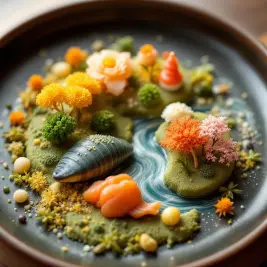
wagashi
Kanazawa wagashi are edible miniatures of the seasons, crafted with local ingredients and precise knife work so each sweet looks like a tiny landscape from Kenrokuen Garden.

gold leaf soft ice cream
Kanazawa produces over 99% of Japan's gold leaf, and vendors sometimes wrap an entire soft-serve cone in a paper-thin sheet of edible gold, creating a shimmering treat that is more about spectacle than flavor.
Hidangan gurih tradisional

kaga ryori
Kaga ryori, the refined cuisine of the old Kaga domain, arranges many small courses that highlight local mountain vegetables, freshwater fish and seasonal presentation, turning a meal into a visual and seasonal tour.

jibuni
Jibuni is a comforting Kanazawa stew of duck or chicken lightly dusted with flour, simmered in a savory dashi with soy and mirin, and it began as a favorite dish of samurai households.

seafood
Sitting on the Sea of Japan gives Kanazawa access to prized catches like winter snow crab, fatty nodoguro and migrating yellowtail, and chefs often serve them simply so the pure ocean flavors stand out.
Minuman tradisional

sake
Kanazawa and nearby Ishikawa breweries use soft, mineral-rich mountain water and cold winters to slow fermentations, producing elegant, complex sake that pairs naturally with local seafood and Kaga cuisine.

green tea
Kanazawa tea is central to its tea ceremony culture, with shade-grown leaves producing a rich umami and silky texture that is often enjoyed in the refined setting of Kenrokuen or a tea house.
Pertanyaan yang Sering Diajukan tentang Kanazawa, Japan
Apa waktu terbaik untuk mengunjungi Kanazawa, Jepang?
Apakah Kanazawa, Jepang mahal bagi wisatawan?
Seberapa amankah Kanazawa, Jepang bagi wisatawan?
Bagaimana cara berkeliling di Kanazawa, Jepang?
Berapa banyak wisatawan yang mengunjungi Kanazawa, Jepang setiap tahunnya?
Dapatkan PDF dengan atraksi paling populer dikirim ke email Anda
Dapatkan PDF dengan semua atraksi, penilaian, dan tips. Sempurna untuk digunakan secara offline.
Perjalanan sehari paling populer
Shirakawa-go
UNESCO gassho-zukuri village with thatched-roof houses.
Takayama
Well-preserved old town, morning markets, traditional crafts.
Noto Peninsula (Wajima)
Scenic coastal drives, Wajima morning market, lacquerware.
Kaga Onsen (Yamanaka, Yamashiro)
Hot spring towns with ryokan, gardens, local crafts.
Fukui (Echizen, Tojinbo)
Coastal cliffs, dinosaur museum, Echizen pottery.
Cara menuju ke sana
Stasiun kereta
Hokuriku Shinkansen, JR Hokuriku Line, IR Ishikawa Railway
Local JR and Noto Railway services
From Komatsu Airport take the direct airport bus to Kanazawa Station, about 40 minutes.
Informasi berguna untuk Kanazawa, Japan
Ikhtisar untuk Kanazawa, Japan
Ingin rencana harian untuk Kanazawa, Japan? Buka perencana perjalanan
Kapan Anda akan ke Kanazawa, Japan?
Pilih tanggal dan gaya perjalanan Anda untuk mendapatkan:
Apakah ada hal yang sangat penting bagi Anda?
Pilih semua yang sesuai
Transportasi
Bagaimana Anda ingin berpindah antar tempat?
Bahasa rencana: Bahasa Indonesia