 CityBuddy
 Português

O que fazer em Irkutsk, Russia
Foto feita por Дмитрий Зуев no Pexels.com
Quando visitar
Atrações mais populares em Irkutsk, Russia
The first thing to know about things to do in Irkutsk, Russia is that this city blends Siberian history with magnificent architecture. Kirov Square, the two-hectare city center, is surrounded by Soviet-era buildings and serves as the main parade ground. The Epiphany Cathedral, soaring 60 meters high, impresses with its green domes. Do not miss 130 Kvartal, a pedestrian area with more than 20 restored traditional wooden houses.
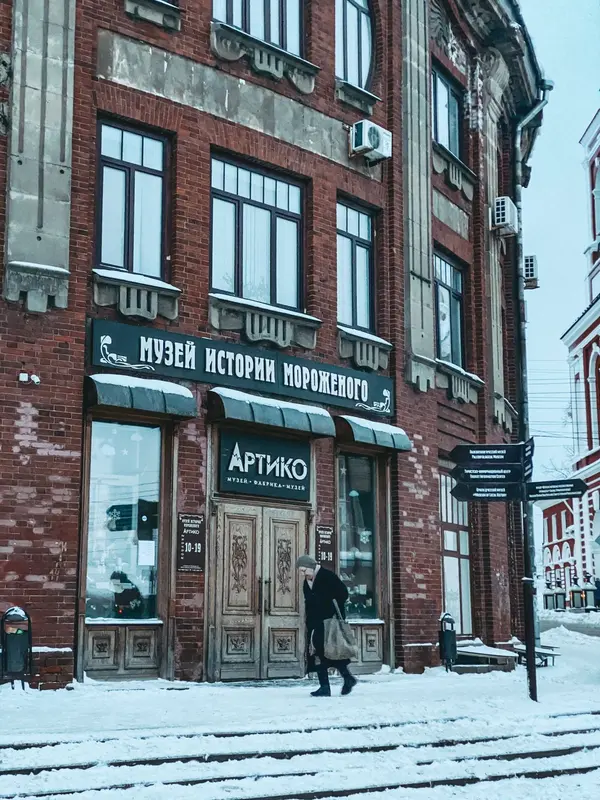
1. Kirov Square
Experience the heart of Siberia's capital where Soviet history mingles with modern nightlife. Enjoy warm coffee while watching ice fountains in winter or free concerts under the summer sun.
Fatos rápidos: This 5-hectare square becomes the city's center of celebration every year, attracting more than 50,000 residents on New Year's Eve. Its strategic position connects Karl Marx Street with Lenin Street, making it the zero kilometer point of the city of Irkutsk.
Destaques: In the middle of winter nights with temperatures of minus 30 degrees, the fountain here transforms into a giant ice sculpture illuminated by colorful lights during the annual snow festival. During summer, this area turns into an open stage for free concerts that draw up to 10,000 spectators sitting on the grass.
2. 130 Kvartal
Explore Siberia without a time machine. Wooden alleys, local artisans, and the aroma of freshly baked traditional pastries await you.
Fatos rápidos: Built to commemorate 130 years of the Trans-Siberian railway, this complex presents authentic 19th-century Siberian wooden architecture. Each building here was moved from various corners of the Irkutsk region and hand-restored.
Destaques: In one corner, there is a small former residence of Polish political exiles banished to Siberia in the 19th century. Its walls still bear their handwritten scribbles in Polish, allowing you to feel firsthand the suffering and hope left behind within the wooden planks.
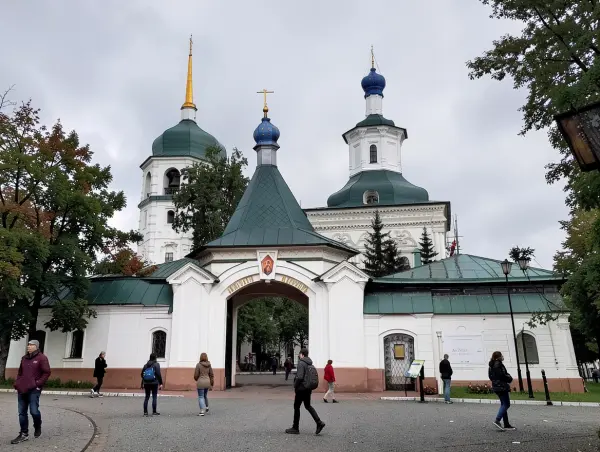
3. Znamensky Monastery
The only monastery in Siberia that preserves pre-revolution bells that were never melted down. The scent of incense and the sound of Russian hymns will greet you as you step into its inner courtyard.
Fatos rápidos: The monastery walls still preserve 900 fragments of original 19th-century murals, including a rare fresco technique combining oil paint and tempera. Its two main bells weigh 520 kg and 1,200 kg respectively, and are still rung every morning at 6:00 AM.
Destaques: Behind the main altar lies a hidden underground chapel that can only be accessed through a secret door behind the iconostasis. The chapel walls are covered with thousands of mosaic pieces handcrafted by monks who survived World War II, with no two mosaic pieces being the same shape.
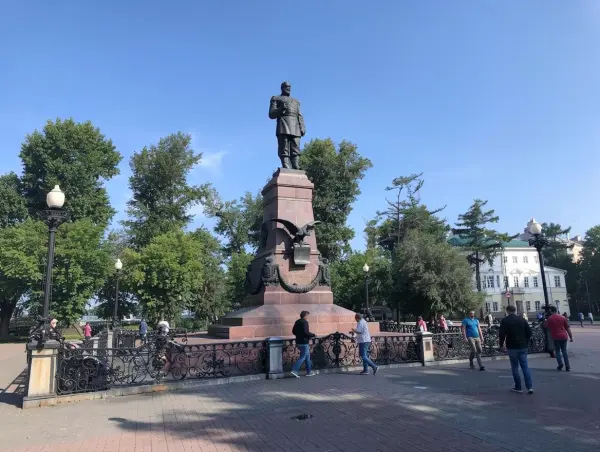
4. Monument to Alexander III
The only monument of Alexander III seated on a throne, not riding a horse. Enjoy the view of the Angara River and the surrounding colonial architecture.
Fatos rápidos: Built in memory of Tsar Alexander III, this equestrian statue weighs more than 4 tons. It stands on the banks of the Angara River, facing directly west toward Moscow.
Destaques: The emperor is depicted sitting on a large stone throne with a long robe, not on a horse like most Alexander III statues. Behind the statue, the view of the frozen Angara River in winter creates a dramatic contrast between the grandeur of granite stone and the expanse of white ice.
5. Irkutsk Dam
The only place in Siberia where the water stays warm in the middle of winter, attracting thousands of birds from all directions. Walk atop the dam while watching the frozen Angara River and the rows of pine forests in the distance.
Fatos rápidos: This 2.5-kilometer dam holds back the Angara River and was the first built in the Lake Baikal region. Its hydroelectric capacity reaches 662.4 MW, enough to power more than 300,000 homes in the Irkutsk region.
Destaques: In winter, the water flowing from the turbines never freezes, creating a 20-kilometer warm river that becomes a gathering place for thousands of water birds. These birds come from all over Siberia to spend the winter in the warm open water, a phenomenon that does not occur at other dams in the region.
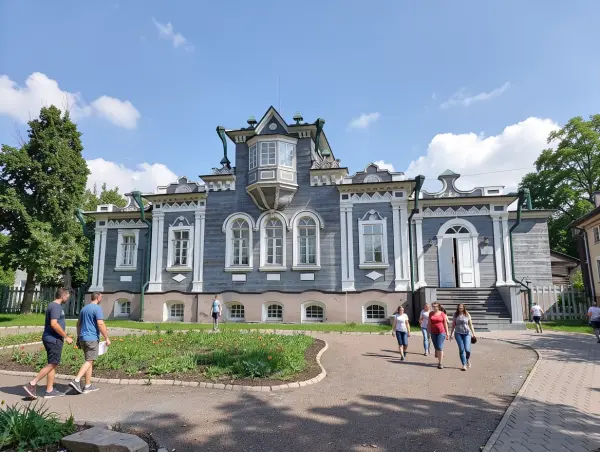
6. Museum of the Decembrists
Witness how noble rebels turned exile into a cultural revolution in Siberia. Take an emotional journey through their personal belongings, military uniforms, and workspaces.
Fatos rápidos: Para os nobres russos punidos pela revolta de 1825, cerca de 120 pessoas, foram exilados para esta região. Eles trouxeram consigo bibliotecas particulares, instrumentos musicais e costumes europeus que influenciaram profundamente a cultura siberiana.
Destaques: Em seu interior estão guardadas cartas de amor escritas pelos dezembristas às suas esposas, que deixaram a vida luxuosa em São Petersburgo para acompanhar os maridos no exílio. A história do sacrifício dessas mulheres nobres, que percorreram 6.000 quilômetros de carruagem em pleno inverno, faz deste museu um monumento ao amor e à resistência ao mesmo tempo.
Where to Stay in Irkutsk, Russia
Selected by City Buddy based on guest reviews and proximity to top attractions
Search all hotels in Irkutsk, RussiaPowered by agoda
Dias de abertura em Irkutsk, Russia
Quais das principais atrações fecham em qual dia da semana, o clássico estraga-planos, verificado para você.
terça-feira: 1 de 5 atrações principais fechadas. Planeje museus para outro dia.
Fechado em terça-feira · 1 fechado, 4 aberto
Dias de abertura do Google Maps (verificado em 2026-07-13). Feriados, greves e horários sazonais podem variar. Verifique o site oficial antes de ir.
Pratos doces tradicionais

Siberian Honey Gingerbread (Pryaniki)
These spiced honey cookies have been made in Irkutsk since the 18th century, often baked with local Baikal berries and intricate patterns pressed into the dough.

Baikal Blueberry Kissel
This thick, sweet fruit pudding is made from wild blueberries foraged from the forests surrounding Lake Baikal and is served chilled with a dollop of smetana (sour cream).

Siberian Vatrushka with Cottage Cheese
These open-faced cheese buns are a beloved tea-time treat in Irkutsk, often filled with sweetened tvorog (farmer's cheese) and a pinch of vanilla.
Pratos salgados tradicionais

Pozny (Pozy)
These steamed Buryat dumplings, filled with minced lamb or beef and onion, are a specialty of Irkutsk's indigenous Buryat culture and are eaten by hand with broth.

Siberian Pelmeni
Irkutsk pelmeni are traditionally made in huge batches during Siberian winters, frozen outdoors naturally, and served with butter, vinegar, and sour cream.

Omul Fish
This endemic whitefish from Lake Baikal is a culinary icon of Irkutsk, most famously prepared as "omul with a smoke" (lightly smoked and incredibly delicate).
Bebidas tradicionais

Siberian Sbiten
This ancient honey-based spiced beverage, infused with Siberian herbs and peppercorns, was traditionally sold by street vendors in Irkutsk to warm travelers during brutal winters.

Baikal Herbal Tea (Sagan Dailya)
Made from the fragrant Rhododendron adamsii leaves harvested near Lake Baikal, this local tea is believed by Buryat shamans to grant energy and longevity.

Kvass (Irkutsk style)
Irkutsk's version of this fermented rye bread drink is often infused with local taiga berries or horseradish, giving it a uniquely Siberian twist.
Perguntas frequentes sobre Irkutsk, Russia
Is Irkutsk, Russia safe for tourists?
How many days are ideal for visiting Irkutsk?
When is the best time to visit Irkutsk?
Are travel costs to Irkutsk expensive?
How do I get around Irkutsk?
Receba um PDF com as atrações mais populares no seu e-mail
Receba um PDF com todas as atrações, avaliações e dicas. Perfeito para uso offline.
Passeios de um dia mais populares
Listvyanka (Lake Baikal)
Picturesque village on the shores of Lake Baikal with a popular fish market.
Bolshie Koty
Remote Baikal shore village accessible by ferry from Listvyanka.
Taltsy Museum of Wooden Architecture
Open air museum featuring historic Siberian wooden buildings.
Olkhon Island
Largest island on Lake Baikal known for stunning landscapes and Shaman Rock.
Arshan Village
Mountain village with mineral springs and scenic Tunkinsky Valley views.
Como chegar
Aeroportos
Estações de trem
Trans-Siberian Railway (Moscow to Vladivostok)
Trans-Siberian Railway (suburban services)
From the airport, take bus 20 or a taxi to the city center in about 15 minutes. The train station is central and well connected.
Informações úteis para Irkutsk, Russia
Visão geral de Irkutsk, Russia
Quer um plano dia a dia para Irkutsk, Russia? Abra o planejador de viagem
Quando você vai para Irkutsk, Russia?
Escolha suas datas e estilo de viagem para receber:
Algum destes é especialmente importante para você?
Selecione todos que se aplicam
Como se locomover
Como você quer se deslocar entre os lugares?
Idioma do plano: Português