 CityBuddy
 English

Things to Do in Yerevan, Armenia
Photo made by Valeria Drozdova on Pexels.com
When to visit
Most popular attractions in Yerevan, Armenia
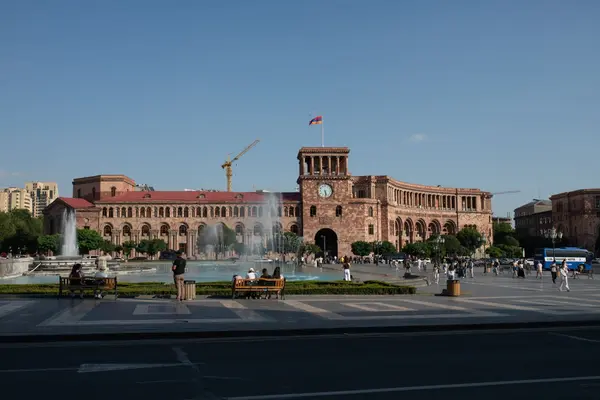
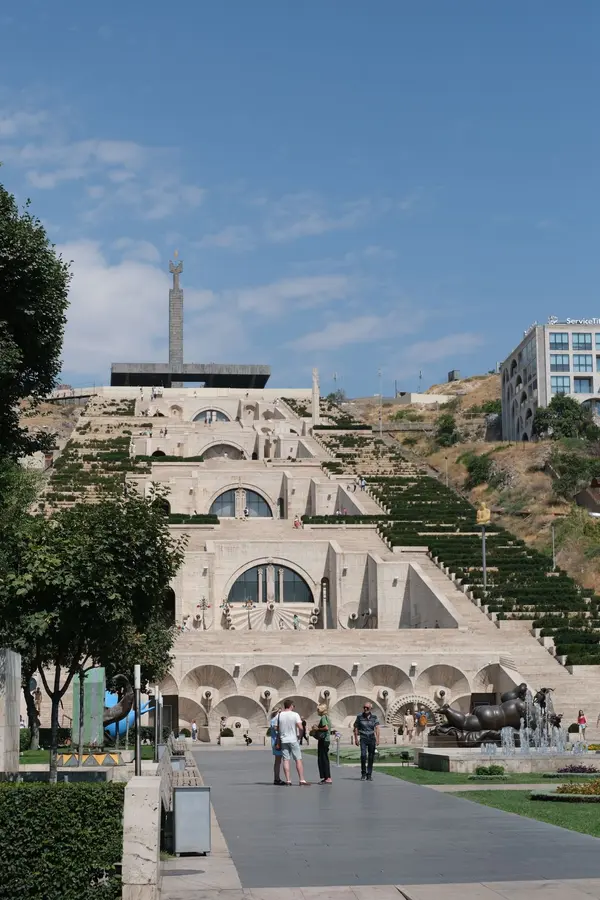
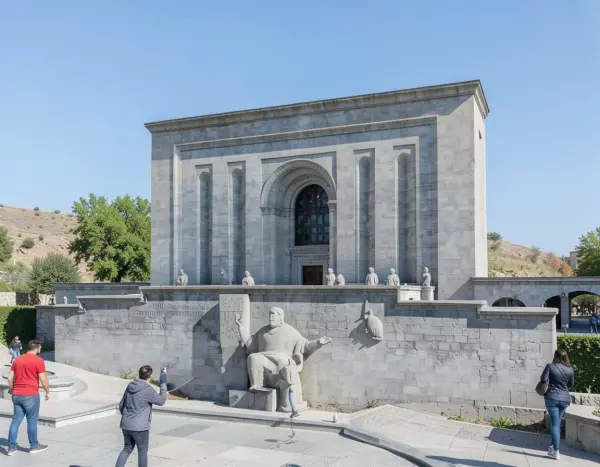
When exploring the top things to do in Yerevan, Armenia, start at Republic Square with its singing fountains and 122-meter clock tower. Walk up the Cascade Complex, a 500-step outdoor stairway connecting downtown to the Monument neighborhood. Then visit the Matenadaran, home to over 17,000 ancient manuscripts dating back to the 5th century.
1. Republic Square
The pulsing heart of the city where pink stone architecture meets nightly dancing fountains. Wander the arcaded walkways, sip coffee at outdoor cafes, and watch the light show unfold at dusk.
Quick facts: The main square spans an area equivalent to two football fields and is ringed by pink volcanic tuff buildings. Fountains dance in time to classical music most evenings from late spring through early autumn.
Highlights: Look down at the center of the square, where a mosaic map of ancient Armenia is set into the stone floor, surrounded by 2,700 hand-cut colored stones. Every evening at 9 PM, the fountains here sync to Komitas's folk arrangements, creating a light-and-water show that locals have been gathering around for over 50 years.
2. Cascade Complex
Climb past towering sculptures and cascading fountains to a panoramic view of Yerevan and Mount Ararat. Each level reveals a new piece of art, a new angle of the city, and a new reason to keep going.
Quick facts: The complex spans a vast outdoor stairway with nearly 572 steps climbing from the city center to the monument at the top. It houses the Cafesjian Center for the Arts, which displays a collection of over 5,000 works of modern and contemporary art, much of it gifted by Armenian-American businessman Gerard Cafesjian.
Highlights: The entire staircase is dotted with more than 30 surrealist and modern sculptures, including pieces by Fernando Botero and Jaume Plensa, making each landing a tiny open-air gallery. At dusk, hundreds of fountains lining the steps glow in synchronized color, and onlookers gather on the terraces to watch the light show over the city skyline.
3. Matenadaran
A fortress of parchment and ink where 17,000 handwritten stories have outlasted empires. You'll stand inches away from 1,000-year-old manuscripts, their gold leaf still gleaming under soft gallery lights.
Quick facts: Over 17,000 ancient manuscripts are housed here, including the world's largest illuminated Armenian manuscript weighing 28 kilograms. One of the most treasured items is the 7th-century "Vehamor" Gospel, which survived being buried underground for centuries.
Highlights: Tucked inside a reading room that smells of old parchment and dust, a single 13th-century medical manuscript contains detailed surgical illustrations that predate similar European works by 200 years. Scholars from around the world travel here to decode marginalia doodles left by medieval scribes, including an annoyed monk who sketched a cat playing chess with a mouse.
4. Tsitsernakaberd Genocide Memorial
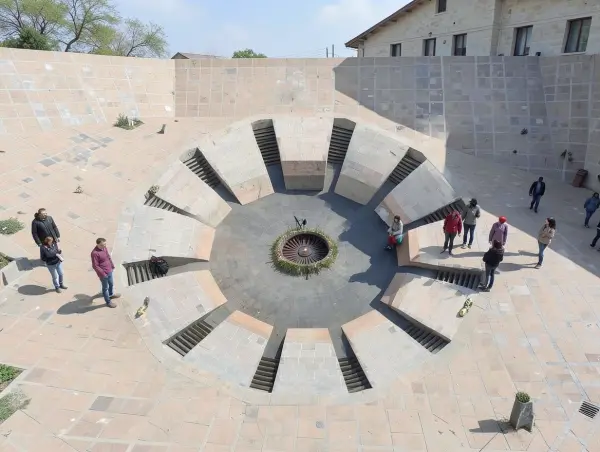
A place where silence speaks louder than words, etched into the bedrock of Armenian identity. Walk the circular path past 44 towering stone slabs toward an eternal flame that demands quiet reflection.
Quick facts: The memorial complex sits on a hill where the Hrazdan River bends, with 44 massive basalt slabs arranged in a circle to represent the lost provinces of Western Armenia. At its center, an eternal flame burns 1.5 meters deep in the ground, surrounded by a concrete circle where visitors place fresh flowers in memory of the 1.5 million victims.
Highlights: Every year on April 24, over 100,000 people converge here at sunset, creating a river of candlelight that snakes up the hillside as the sky darkens over Mount Ararat. The 12 slender basalt columns lean inward at a precise 11-degree angle, creating an intentional sense of unease and solemnity that shifts with your perspective as you walk the circular path.
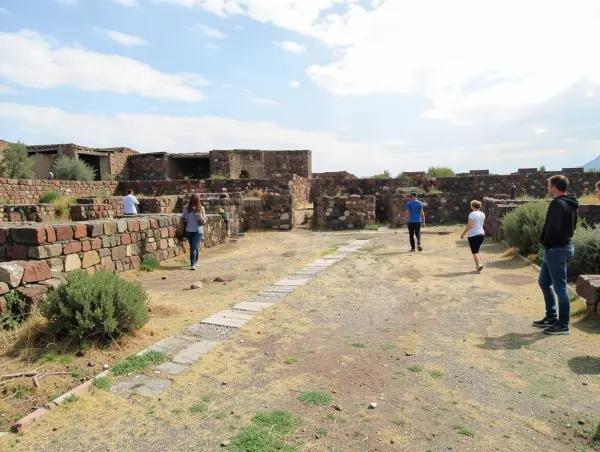
5. Erebuni Fortress
Step onto the exact hill where Yerevan was born, with sweeping views of Mount Ararat on clear days. You will walk through 2,800-year-old stone corridors, stand before Urartian cuneiform tablets, and gaze at vivid wall paintings that have survived millennia.
Quick facts: Perched on a rocky hill overlooking Yerevan, this 2,800-year-old Urartian stronghold predates the city itself and was the foundation upon which modern Yerevan was built. Archaeologists have unearthed over 30 rooms filled with vivid murals, cuneiform inscriptions, and massive wine storage jars that could hold thousands of liters.
Highlights: The original foundation stone of Yerevan is literally here: a cuneiform tablet carved into the fortress wall declares that King Argishti I built this city in 782 BC, making it older than Rome by centuries. Inside the on-site museum, you can press your fingers against the same basalt walls that Armenian kings touched, with original 8th-century BC frescoes of bulls, lions, and sacred trees still holding their ochre and blue pigments.
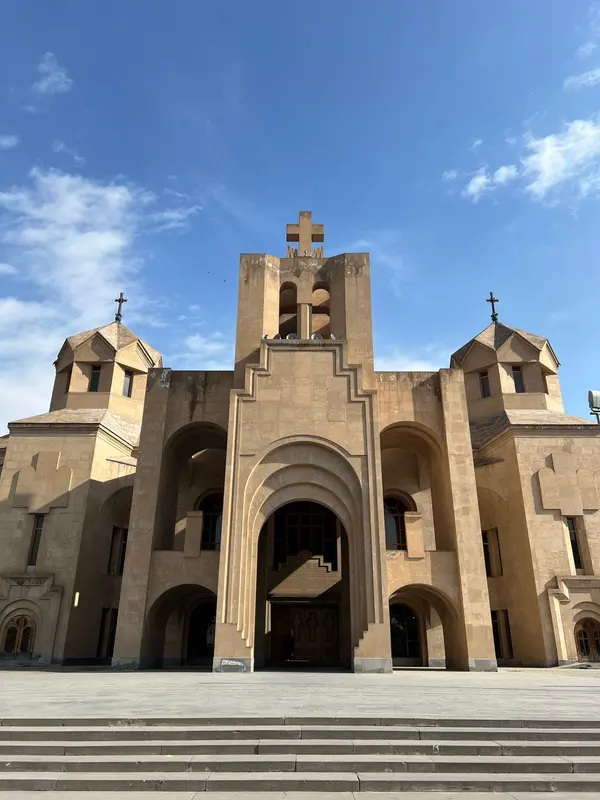
6. Saint Gregory the Illuminator Cathedral
Step into Armenia's spiritual heart where golden domes catch the Yerevan sun. Hear the haunting melodies of the choir echo through centuries-old stone walls.
Quick facts: The cathedral's main altar features a stunning fresco of the Virgin Mary that was painted by the Armenian artist Yeghishe Tadevosyan in the early 20th century. Its bell tower rises 50 meters high and offers panoramic views of the surrounding cityscape.
Highlights: A hidden spiral staircase behind the altar leads to a small rooftop terrace where you can see the intricate carvings of saints up close. The cathedral houses a fragment of Noah's Ark gifted by the Etchmiadzin Cathedral, displayed in a small glass case near the entrance.
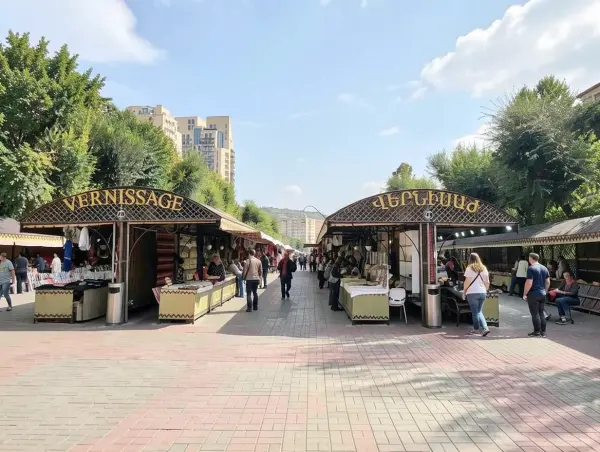
7. Vernissage Market
Where else can you haggle for a Soviet-era camera beside a vendor playing chess with his neighbor? Wander rows of colorful rugs, carved backgammon sets, and handmade jewelry while snacking on dried fruit.
Quick facts: Over 200 artists and vendors fill this open-air market with handmade crafts, antiques, and Soviet-era memorabilia. It operates every weekend along the leafy pedestrian zone of Arami Street, drawing locals and travelers alike for over four decades.
Highlights: Vendors here often inherited their spots from parents or grandparents, selling hand-painted ceramics, vintage Soviet cameras, and intricate woodwork passed down through generations. On any given Sunday, you might catch an impromptu jazz performance near the puppet stalls while the smell of freshly baked gata wafts through the crowd.
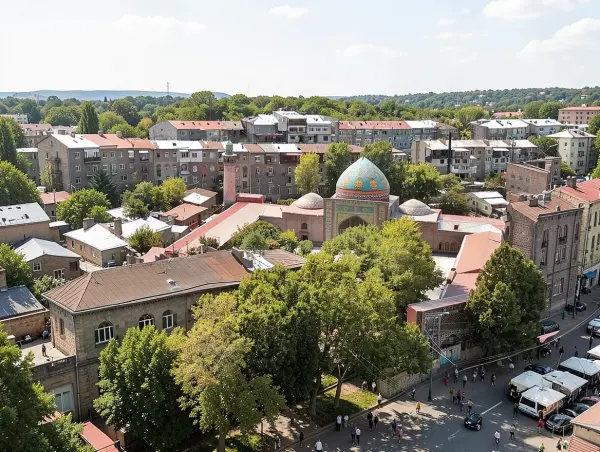
8. Blue Mosque
One of the few surviving Persian monuments in the Caucasus, its blue-tiled dome stands out against Yerevan's pink tuff skyline. Walk beneath the soaring iwan arch and explore the tranquil garden where local Iranians gather for chess and conversation.
Quick facts: Only 40% of this 18th-century mosque's original tilework survives today, with the vivid blue hues covering the dome created from locally sourced minerals. The mosque fell into disuse for decades during the Soviet era before reopening in the 1990s as a cultural center for Yerevan's small Iranian community.
Highlights: Step inside and look up: the dome's interior is a kaleidoscope of over 4,000 handmade ceramic tiles, each painted with intricate geometric patterns in deep cobalt and turquoise. On Friday mornings, the echoing call to prayer mixes with the sounds of Persian tea being poured in the courtyard, a sensory time capsule that feels worlds away from the city beyond the walls.
9. Opera House
A breathtaking example of Soviet modernism where glass and angled concrete meet Armenian pride. Inside, catch world-class opera and ballet performances wrapped in an architectural experience unlike any other.
Quick facts: The building's angular roof and glass facade were designed to evoke the silhouette of Mount Ararat, Armenia's national symbol. Each of the 1,200 seats in the main hall is arranged so the stage remains visible from any angle, a clever feat of Soviet-era engineering.
Highlights: On certain evenings, the glass walls transform the lobby into a giant lantern glowing amber across the square, visible from blocks away. Locals know to arrive 20 minutes early just to watch the sunset light bounce through the geometric panels and scatter rainbow patterns across the marble floor.
Where to Stay in Yerevan, Armenia
Selected by City Buddy based on guest reviews and proximity to top attractions
Search all hotels in Yerevan, ArmeniaPowered by agoda
Opening days in Yerevan, Armenia
Which of the top sights close on which day of the week — the classic trip-ruiner, checked for you.
Monday: 3 of 9 top sights closed — plan museums for another day.
Closed on Monday · 3 closed, 6 open
Opening days from Google Maps (checked 2026-06-17). Public holidays, strikes and seasonal hours can differ — check the official website before you go.
Traditional Sweet Dishes

Gata
Gata is a sweet pastry bread filled with butter, sugar, and flour, often baked with a coin inside for good luck. It is a staple at Armenian celebrations and family gatherings.

Pakhlava
Armenian pakhlava is a layered pastry made with phyllo dough, nuts, and honey syrup, and it is traditionally prepared for festive occasions like New Year and Easter. It is similar to baklava but often includes cinnamon and cloves for a distinct Armenian flavor.

Churchkhela
Churchkhela is a traditional Armenian candy made by dipping a string of walnuts into thickened grape juice called doshab, then drying it into a chewy, candle-shaped treat. It was historically carried by soldiers as a high-energy snack during long journeys.
Traditional Savory Dishes

Khorovats
Khorovats is Armenian barbecue, typically made with marinated chunks of pork, lamb, or chicken grilled over a wood fire on skewers. It is considered the centerpiece of Armenian cuisine and a must-have at any outdoor gathering.

Dolma
Armenian dolma consists of grape leaves stuffed with a mixture of minced meat, rice, and aromatic herbs, simmered in a tangy broth. There are also lenten versions filled with beans and grains for fasting days.

Harissa
Harissa is a thick, comforting porridge made from slow-cooked chicken or lamb and cracked wheat, often served during Armenian holidays. It is said to have been prepared for centuries as a dish of patience and community, stirred for hours until smooth.
Traditional Beverages

Tan
Tan is a traditional Armenian yogurt-based drink mixed with water and salt, similar to a savory buttermilk. It is a refreshing accompaniment to hearty dishes like khorovats and dolma.

Armenian Brandy
Armenian brandy, particularly from the Ararat brandy factory in Yerevan, is world-famous and was a favorite of Winston Churchill. It is made from indigenous Armenian grape varieties and aged in oak barrels for a rich, smooth flavor.

Jermuk Mineral Water
Jermuk is a naturally carbonated mineral water from the spa town of Jermuk in Armenia, known for its healing properties. It has a distinct slightly salty taste and is often served chilled alongside meals.
Know before you go
What a day costs in Yerevan, and the rip-offs to avoid
Cost per person per day
Top rip-offs to avoid
- Unofficial drivers at arrivals. Walk to the official taxi rank outside or book through an app like GG Taxi or Yandex Taxi. Confirm the app fare before accepting any ride.
- Poor-rate exchange booths. Use bank ATMs or recognized bank exchange desks. Compare the displayed rate with the board rate before handing over cash.
- Overpriced souvenirs and goods. Browse several stalls first and compare prices. Polite bargaining is common and expected in markets.
Fair taxi from the airport: ֏3,000 - ֏5,000 (€7.5 - €13)
Cheaper option: Airport shuttle or public bus into the city centre (֏300)
All scams, fair prices and rulesFrequently Asked Questions about Yerevan, Armenia
Is Yerevan, Armenia safe?
How many days in Yerevan, Armenia?
Best time to visit Yerevan, Armenia?
Is Yerevan, Armenia expensive?
How to get around Yerevan, Armenia?
Get a PDF with the most popular attractions sent to your email
Get a PDF with all attractions, ratings, and tips. Perfect for offline use.
Most popular day trips
Garni Temple
Hellenistic temple and stunning basalt canyon of Garni Gorge
Geghard Monastery
UNESCO-listed medieval monastery partially carved into a mountain
Lake Sevan
One of the largest freshwater high-altitude lakes in the world
Echmiadzin (Vagharshapat)
Spiritual center of Armenia with the famous Etchmiadzin Cathedral
Khor Virap Monastery
Monastery with stunning views of Mount Ararat
Getting there
Airports
Train stations
Connections to Gyumri, Tbilisi (Georgia), and other domestic routes
From Zvartnots Airport, take taxi (15-20 min, around 3000-5000 AMD) or bus route 201 to the city center.
Useful information for Yerevan, Armenia
Overview for Yerevan, Armenia
Compare Yerevan with other destinations
Prices, safety, weather and top attractions side by side, with a verdict for every kind of traveler.
Want a day-by-day plan for Yerevan, Armenia? Open the trip planner
Plan your perfect trip to Yerevan, Armenia
Get a complete travel plan built just for you in under 30 seconds, with daily routes, local food tips, budget estimates and more.
Are any of these especially important to you?
Select all that apply
Getting around
How do you want to move between places?
Plan language: English