 CityBuddy
 English
Things to Do in Burlington, Canada
Photo made by John Bravar on Pexels.com
When to visit
Plan your perfect trip to Burlington, Canada
Get a complete travel plan built just for you in under 30 seconds, with daily routes, local food tips, budget estimates and more.
Are any of these especially important to you?
Select all that apply
Getting around
How do you want to move between places?
Plan language: EnglishBurlington is the #8 city for English speakers in the world, based on our data across hundreds of destinations.
Most popular attractions in Burlington, Canada
The best things to do in Burlington, Canada start with 979 hectares of the Royal Botanical Gardens, where five garden sanctuaries bloom across the Niagara Escarpment. Stroll Spencer Smith Park's lakefront promenade to the 113-meter Brant Street Pier, then watch sunset over Lake Ontario; it is the city's favorite ritual.
1. Royal Botanical Gardens
Wander a living museum of 2,400 plant varieties across five themed worlds. Follow a cedar boardwalk to woodland trails and finish at a marsh where herons nest by the thousands.
Quick facts: Roughly 500,000 visitors pass through the gates yearly, drawn by 1,100 hectares of trails, wetlands, and five distinct gardening zones. Cootes Paradise, the 600-hectare marsh at the center of the grounds, shelters a great blue heron rookery and thousands of migrating waterfowl each spring and fall.
Highlights: Each May the lilac dell blooms with more than 250 cultivars, many bred over a century ago, and the whole hillside smells like honey. From the Cootes Paradise boardwalk at dusk, a colony of over 200 great blue herons lifts off in slow motion, each bird's wings stretching nearly two meters across.
2. Spencer Smith Park
A 100-meter pier, free summer festivals, and front-row sunset views over the lake. Stroll the shoreline, wade in cold clear water, or dance on the grass to live bands.
Quick facts: Roughly 150,000 people pack these lawns every June for Canada's oldest free music festival, the Sound of Music. Set on a 1.5-kilometer stretch of Lake Ontario shoreline, the park pairs a curling 100-meter pier with gardens that get replanted each spring and fall.
Highlights: The 100-meter pier curves so its tip points at the falling sun, and wave spray climbs high enough to cool you off on hot afternoons. On clear evenings, freighters slide through the harbor entrance and spin a sweep of orange light across the water as the sky catches fire.

3. Brant Street Pier
Walk out over Lake Ontario on a curve that puts waves beneath your feet. Cast a glance at anglers, catch the breeze, and watch the skyline glow across the water.
Quick facts: At 137 meters long, the curved walkway arcs into Lake Ontario with water visible on both sides of every step. A circular hub at the far end doubles as a fishing deck, where locals pull rainbow trout and Chinook salmon straight from the lake.
Highlights: The open circular deck at the far end turns a full 360 degrees of lake views, and on extra-clear evenings the Toronto skyline glows roughly 55 kilometers across the water. Locals say the best trick is arriving right after a summer storm clears, when the lake goes glassy and the whole curved arc reflects upside down in the waves.

4. Burlington Beach
Pack a towel and come for the lake, the longest sandy stretch near the city. Expect shallow warm water, a breezy pier, and golden-hour skies that feel endless.
Quick facts: Roughly 600 meters of soft sand edges the lake here, with a lakebed so shallow that wading stays easy far from shore. Daily water-quality results post each morning, and balmy summer weekends can pull 5,000 people or more to the shoreline.
Highlights: The shallow, sandy lakebed lets families wade dozens of meters out before the depth shifts, something almost unheard of at other spots along this shoreline. A leash-free zone at the park's far end turns the beach into a social club for dogs and their owners, with splashy greetings and spinning retrievers that reliably entertain everyone.

5. Joseph Brant Museum
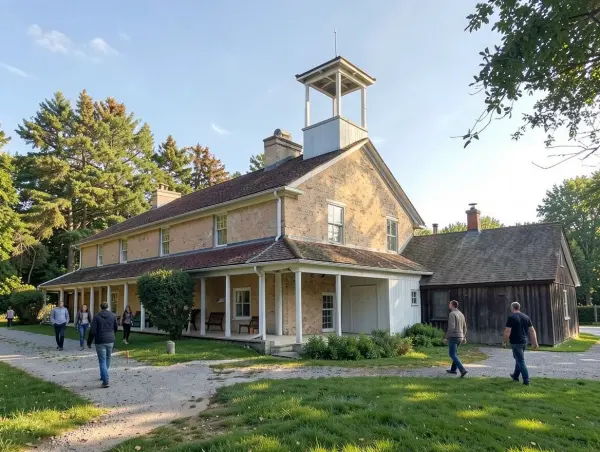
Waterfront history unfolds inside one story-filled lakeside house. Wander from a creaky 1830s farmhouse into glass galleries with 7,500 artifacts and sweeping lake views.
Quick facts: More than 7,500 artifacts fill the collection, from Indigenous beadwork stitched with near-invisible seed beads to stacks of century-old local photographs. A dedicated gallery traces Canada's first Black federal cabinet minister, while nearby cases follow a Mohawk leader and British ally through the 1700s.
Highlights: On a grassy bluff above the lake, the old 1830s farmhouse connects through a glass corridor to a bright modern wing, so sunlight bounces off both the water and the exhibits. From the top-floor windows you can watch sailboats cut across the bay while standing inches from 18th century Mohawk beadwork stitched with glass seed beads finer than a pinhead.
6. Ireland House Museum
Step into a farmhouse frozen in 150 years of family history. Pencil notes, calico dresses, and original furniture fill rooms where daily life stopped in 1986.
Quick facts: Generations of the same family slept under this roof for 150 years, and the last owner, Mary, moved out only in 1986. Nearly all the furniture and dishware on view came from that family's own attic, pantry, and barn.
Highlights: Mary kept the place so unchanged that visitors today walk into rooms arranged the way her great-grandmother left them. Guides unlock cupboards to reveal hand-mended clothing, original wallpaper, and the chicken-scratch grocery lists still penciled on the pantry wall.
7. Art Gallery of Burlington
See ceramics, glass, and silver jewelry that thrive in the hands. Live studio demos and a shop full of maker-made treasures make the visit a full experience.
Quick facts: More than 3,000 works of contemporary Canadian craft fill the shelves here, with ceramics, glass, and studio jewelry forming the deepest part of the holdings. A dozen or so exhibitions rotate through each year, mixing solo shows with thematic surveys of fiber, metal, and clay.
Highlights: Watch resident potters throw and trim clay in the open studio, where the whir of wheels and the scent of damp slip fill the air. A wall of hundreds of fired glaze chips shows color recipes most museums keep locked in archives, and that openness defines the whole place.
8. Paletta Lakefront Park
Claim a bench with lake water glittering at your feet. Stroll flower-lined terraces to a stone mansion, then watch freighters drift across the horizon.
Quick facts: More than 130 species of trees and shrubs line the walking paths of these formal lakefront gardens. The sandstone mansion at the centre was the home of Anton Paletta, an Italian-born winemaker whose family estate once ran the full length of this shore.
Highlights: The vast manicured lawn cascades toward the water in a way that makes the whole estate feel like an Italian villa dropped onto the lakeshore. Watch for great blue herons stalking the shallows while freighters drift across the horizon behind the skyline.
9. Mount Nemo Conservation Area
Cliff-top trails serve up sweeping views over the escarpment's patchwork farmland. Feel the breeze and watch climbers work the white limestone walls right below your feet.
Quick facts: Perched on a limestone shelf of the Niagara Escarpment, a 725-kilometer UNESCO World Biosphere Reserve, this clifftop lets you gaze over farmland that seems to spill to the horizon. Climbing aficionados know it best, with 40-plus bolted routes ranging from friendly warm-ups to real head-scratchers.
Highlights: Scrambling along the cliff-top trail, you duck between wind-stunted cedars that have gripped bare limestone for centuries, roots snaking over cracks you can actually touch. On clear days the overlook platform shows farmland stitched in shag-carpet squares below, with the lake glinting far off on the horizon.
10. Lowville Park
Escape into 2 kilometers of forested trails, a covered bridge, and a waterfall that appear in minutes from the city. Pack a picnic, wade the creek's shallows, and find the waterfall the crowds miss.
Quick facts: Roughly 2 kilometers of trails loop through mixed Carolinian forest, and hikers cross a century-old covered bridge spanning the creek. Lichens carpet the limestone boulders near the water, while great blue herons stalk the shallows every morning.
Highlights: Walk the floodplain trail after a heavy rain, when the creek swells into a white-water rush under the century-old covered bridge and spray beads on your face. Most people stop at the picnic meadow, so the waterfall 300 meters downstream stays nearly empty even on summer weekends.
Where to Stay in Burlington, Canada
Selected by City Buddy based on guest reviews and proximity to top attractions
Search all hotels in Burlington, CanadaPowered by agoda
Traditional Sweet Dishes
Butter tart
Butter tarts are a beloved Ontario classic with a flaky pastry shell and a gooey, buttery, sugary filling. They are so treasured that Ontario festivals have held competitions to crown the best butter tart in the province.
Maple taffy
Maple taffy, also called sugar on snow, is made by pouring hot maple syrup onto clean snow where it instantly becomes a chewy candy. It is a favorite during spring syrup season at the sugar bush farms around the Burlington and Halton region.
BeaverTail
The BeaverTail is a hand-stretched, fried whole wheat pastry shaped like a beaver's tail and topped with sweet toppings like cinnamon sugar. It became a Canadian icon found at festivals and ski hills across the country.
Traditional Savory Dishes
Poutine
Poutine is a hearty dish of crispy fries, squeaky cheese curds, and rich gravy, and it is a Canadian staple found at many local diners around Burlington. It originated in Quebec in the 1950s and has since spread across the country in countless variations.
Peameal bacon sandwich
A peameal bacon sandwich is a classic Ontario street food of tender cornmeal-crusted pork loin on a soft bun. The juicy, mild bacon gets a slightly sweet and grainy crust that makes it a brunch favorite.
Great Lakes pickerel fish and chips
Fresh pickerel from the Great Lakes is a prized catch near Burlington, often battered and fried into a golden fish and chips meal. Local restaurants proudly serve this lake-to-table dish that celebrates the waters of Lake Ontario.
Traditional Beverages
Ice wine
Ice wine is a sweet dessert wine made from grapes that freeze on the vine, and it is a proud specialty of the nearby Niagara region. Niagara produces so much ice wine that it rivals Germany and Austria as a global leader.
Caesar
The Caesar is a Canadian cocktail made with vodka, Clamato juice, hot sauce, and Worcestershire sauce, often garnished with a celery stick. It was invented in Calgary in 1969 and is a beloved brunch classic across the country.
Orchard apple cider
The orchards of the Niagara and Halton region produce crisp apples used to make refreshing traditional cider. Family-run farms near Burlington press apples into both sweet apple cider and dry alcoholic versions each autumn.
Frequently Asked Questions about Burlington, Canada
Is Burlington, Canada safe?
How many days in Burlington, Canada?
What is the best time to visit Burlington, Canada?
Is Burlington, Canada expensive?
How to get around Burlington, Canada?
Get a PDF with the most popular attractions sent to your email
Get a PDF with all attractions, ratings, and tips. Perfect for offline use.
Most popular day trips
Toronto
Canada's largest city with CN Tower, museums, and waterfont neighborhoods
Niagara Falls
Iconic waterfalls with boat tours, viewing platforms, and night illumination
Hamilton
Waterfall capital with over 100 cascades along the Niagara Escarpment
Niagara-on-the-Lake
Charming historic town with wineries, theaters, and boutique shops
Elora Gorge
Scenic limestone gorge with swimming, tubing, and quaint village streets
Getting there
Airports
Train stations
GO Transit Lakeshore West line to Toronto and Hamilton
GO Transit Lakeshore West and VIA Rail Corridor services
VIA Rail corridor connecting Toronto, Kingston, and Montreal
From YYZ take the UP Express or taxi; from YHM use bus or ride share. GO Transit Lakeshore West links Burlington to downtown Toronto.
Find flights to Burlington, Canada
Click to get eSim for Burlington, Canada
The easiest and most affordable way to get mobile internet wherever you travel.
Comments (7)
Early fall is the move. Did the Royal Botanical Gardens and just wandered, whole place was picture perfect.
Farmers market on Saturdays, get there before 10am for the good stuff. Bring cash, some vendors won't take debit.
Honestly overhyped. It's basically a suburb with a nice park. Came expecting more, left after a single day.
Waterfront at sunset is unreal. Stayed 3 days, could have done 2 but zero regrets. The pier walk blew me away.
Nice enough town. Clean and safe, food was just okay. If you're heading to Niagara it's a fine stop but don't plan a whole trip.