 CityBuddy
 English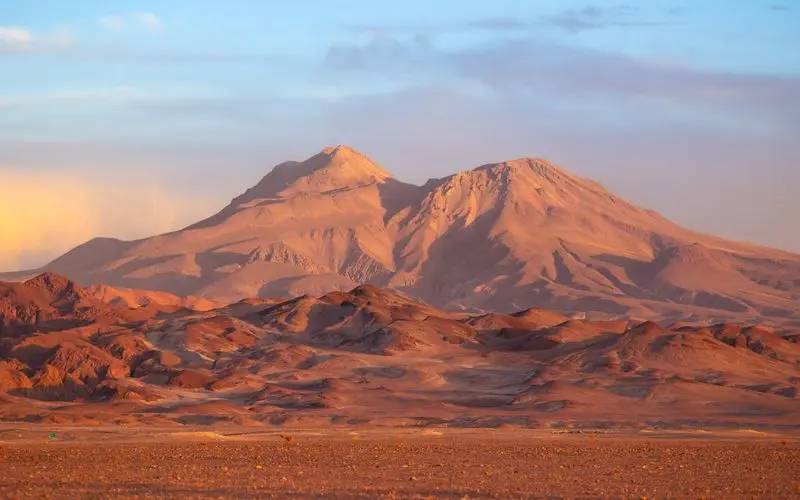
Things to Do in San Pedro de Atacama, Chile
Photo made by Marek Piwnicki on Pexels.com
When to visit
Plan your perfect trip to San Pedro de Atacama, Chile
Get a complete travel plan built just for you in under 30 seconds, with daily routes, local food tips, budget estimates and more.
Are any of these especially important to you?
Select all that apply
Getting around
How do you want to move between places?
Plan language: EnglishMost popular attractions in San Pedro de Atacama, Chile
The best things to do in San Pedro de Atacama, Chile, begin before sunrise. Geysers del Tatio spits steam at 4,300 meters altitude, while Valle de la Luna offers desert landscapes at 4,321 meters. Salar de Atacama, the world's third largest salt desert, offers flamingos and mirror-like surfaces at dawn.
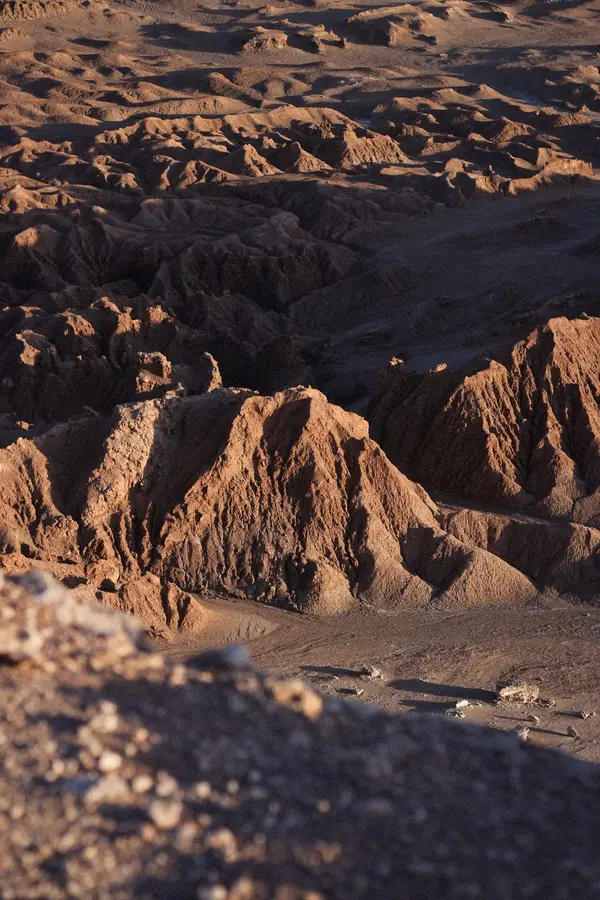
1. Valle de la Luna
A moon landing without a rocket, in the middle of the world's driest desert. Wander among salt crystals and giant dunes while the sky explodes in color.
Quick facts: Rain falls on average only a few millimeters per year, and some measuring stations in the desert landscape have never recorded a single drop. NASA has test-driven Mars rovers here because the soil is surprisingly similar to the surface of the red planet.
Highlights: Astronaut Neil Armstrong reportedly said the landscape reminded him of the moon's surface, and the name stuck after his visit. Stay seated on a salt ridge as the sun goes down, and the rock walls slowly shift from gold to pink to deep purple.
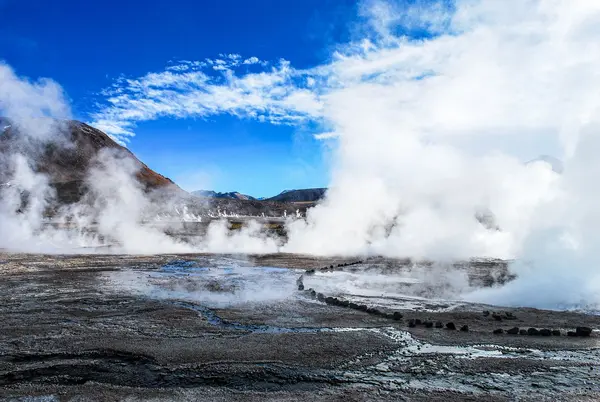
2. Geysers del Tatio
The dawn here is the most spectacular in the entire Andes. Follow boiling bubbles and columns of steam rising out of the frozen ground.
Quick facts: The field sits at an altitude of 4,320 meters, so boiling water spouts at just 86 degrees in the thin air. Around 80 active geysers get a chance to show off in the early morning hours before the sun warms things up and the steam disappears.
Highlights: The name tatio means "grandfather" in Kunza, the language of the people who lived here long before the Incas arrived. At dawn, the steam jets reach up to three meters in the freezing air, but just an hour later the field lies almost silent.
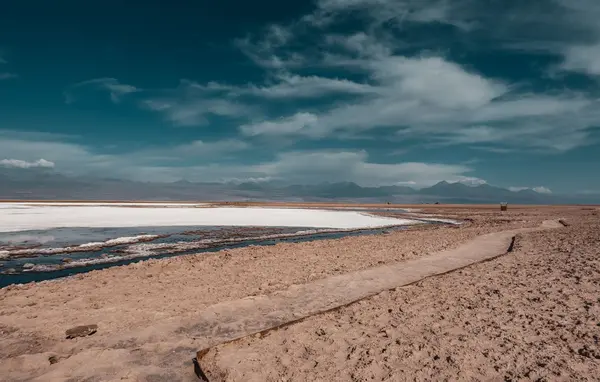
3. Salar de Atacama
Walk out onto chalk-white salt crystals with volcanoes on the horizon. Flamingos cry over the lagoons while your steps crunch in 3,000 square kilometers of silence.
Quick facts: Nearly 3,000 square kilometers of white salt crystal gleams here, one of the saltiest places on the planet. Beneath the surface lies one of the world's richest lithium sources, while three flamingo species thrive in the lagoons around.
Highlights: The salt forms perfect hexagonal crack patterns that crunch under your shoes, like giant porcelain dried in the sun. As the heat rises, the crystals' reflection makes the surrounding mountains seem to float, and the sound of your steps bounces strangely far across the surface.
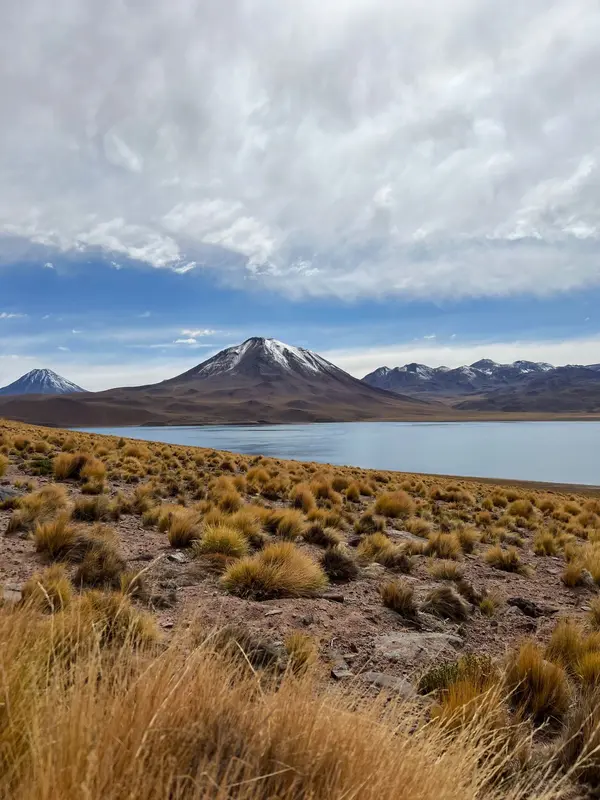
4. Lagunas Miscanti y Miñiques
One of the world's highest lake landscapes awaits you. Here you will meet mirror-still lagoons, drifting flamingos, and the silence 100 kilometers from the nearest town.
Quick facts: The lagoons are fed by meltwater from the two volcanoes and shimmer at over 4,100 meters above sea level. The color shifts from turquoise to deep blue as the light changes, while Andean flamingo species often feed at the water's edge.
Highlights: At eight in the morning the ice lies like fragile glass over the shallow water, and every step on the gravel sounds like a crunch in the total silence. A caracara often glides along the ridge while you have Miñiques' 5,910-meter peak right beside you.
5. Piedras Rojas
Red cliffs against turquoise water and white salt deposits that no photo does justice. You wander through crunching crystals while flamingos mirror themselves in the still lagoon.
Quick facts: At an altitude of 4,500 meters, the oxygen-thin air makes every step an effort, while the shallow lagoon shifts between turquoise and emerald depending on the sun. The iron oxides that color the rocks red stand in sharp contrast to the white salt crystals that have formed over thousands of years.
Highlights: Small Andean flamingos wade through the icy, mirror-still water and their reflections double the explosion of color against the blood-red stone. When the wind dies down, the surface becomes as silent as glass and the salt crystals crunch under your boots as you follow the trail across the chalk-white deposits.
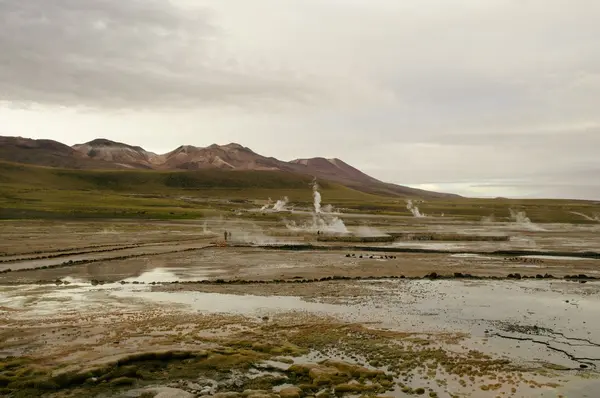
6. Termas de Puritama
Glide down into warm mineral pools in the middle of the Chilean desert. From the cliff edge you step between steaming pools with clear blue water and cacti all around.
Quick facts: Eight natural pools are constantly filled with 33-degree water that bubbles out of the mountain in a narrow canyon. The spring sits at an altitude of 3,475 meters and has been used by the desert's indigenous peoples for hundreds of years.
Highlights: The water holds a constant 33 degrees and flows in a gentle waterfall from pool to pool, while steam rises toward the cactus-covered canyon wall. Lying still in the warm, clear-blue spring while the desert wind cools your face is an experience few places can match.
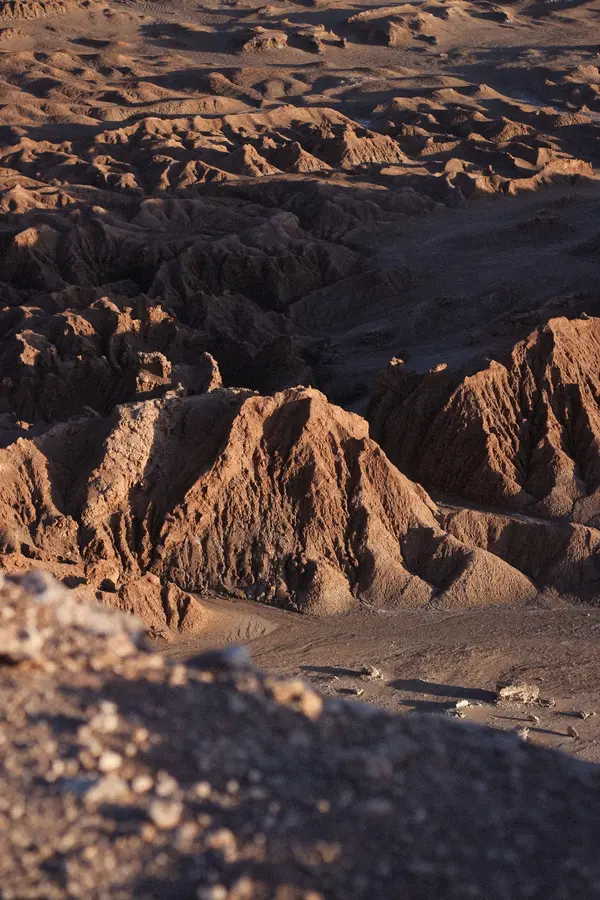
7. Valle de la Muerte
Step out into a salt and clay landscape that looks like an alien planet. Here you can trudge among crystals, sandboard down a big dune, and watch the mountains turn red as the sun sets.
Quick facts: The rock formations are made of salt and clay that wind and water have carved out over millions of years, and the humidity here is sometimes measured below five percent. The salt and clay layer stretches like a long spine through the desert, while the dune at the valley's edge attracts sandboarders from all over South America.
Highlights: On the valley floor, the salt crystals crunch underfoot like dry snow, while the afternoon sun makes the clay formations glow in pink, orange, and deep red. When the heat rises, the shimmering heat can create a mirage that makes the entire valley floor glisten like a water surface, even though rain here is a rarity in most years.
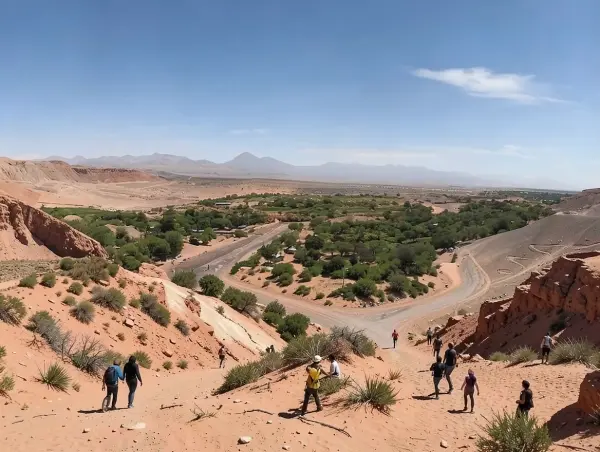
8. Pukará de Quitor
Climb up along a rocky path to a 700-year-old fortress with a view over the entire valley. From the top you capture the desert landscape and a huge volcano in the distance.
Quick facts: Around 15 stone structures lie scattered across a rocky height, a defensive fortress raised by the Atacameño people during the Middle Ages. A bloody battle in 1540 forced the defenders to leave the height, and the remains of the wall still stand today.
Highlights: A single narrow opening in the wall served as a gate, a defense so effective that a few could keep an entire army outside. Up on the crest, just over 100 meters above the river, you get the whole valley and the 5,916-meter-high Licancabur volcano in the same view.
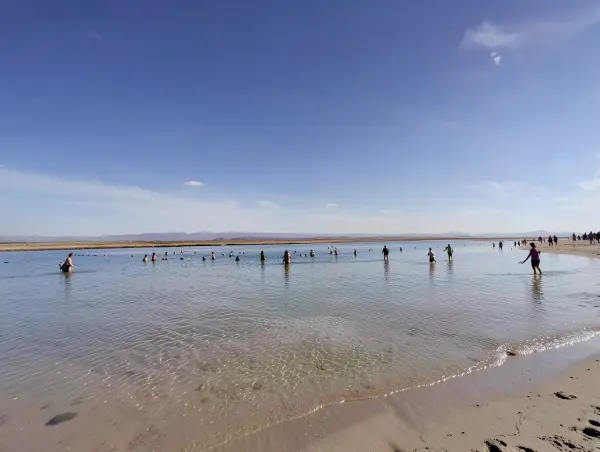
9. Laguna Cejar
Float here without moving a single muscle in one of the world's saltiest waters. Your body floats, salt crystals tingle under your skin, and the sun makes the surface sparkle like diamond.
Quick facts: With a salt content of around 28 percent, the water is almost ten times saltier than the sea, so your body floats without the slightest effort. The green-blue color comes from microscopic algae that thrive in the extreme environment, while the temperature stays around 20 degrees all year round.
Highlights: The water is so dense that nobody can dive, your body is pushed back up to the surface as if invisible hands carried it. Lie stretched out and hear the salt crystals crunch against your ears while the Andes' five-thousand-meter peaks reflect all around you.
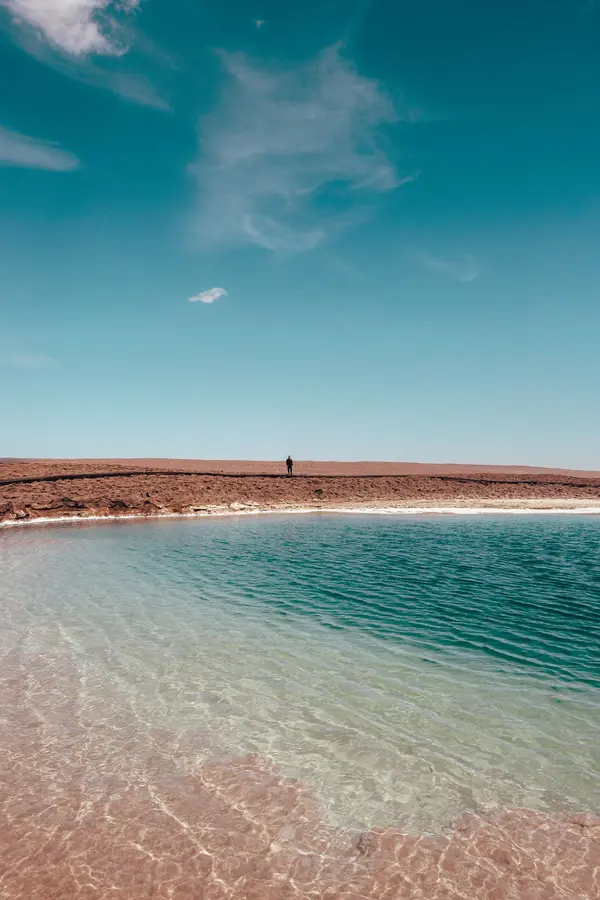
10. Laguna Chaxa
Pink flamingos and mirror-still lagoons in the world's third largest salt flat, an hour away. On the crust you hear only the wind and see the mountains doubled in the water.
Quick facts: The water holds nearly ten times the sea's salinity, yet it teems with life on the shallow bottom surfaces. Here at 2,300 meters above sea level, in the middle of the world's third-largest salt flat, up to 40,000 flamingos from three species gather when the season is at its best.
Highlights: A single flock eats itself pink: the flamingos' color comes from the tiny brine shrimp Artemia salina that swarm in the saltwater, and the more prey, the stronger the plumage. Walk out onto the crust when the wind dies down and hear how every step crunches like broken glass while mirror-still lagoons double the mountains.
Where to Stay in San Pedro de Atacama, Chile
Selected by City Buddy based on guest reviews and proximity to top attractions
Search all hotels in San Pedro de Atacama, ChilePowered by agoda
Traditional Sweet Dishes
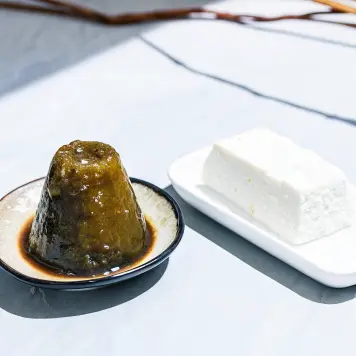
Dulce de chañar
Dulce de chañar is a thick, honey-like sweet paste boiled down from the fruit of the chañar tree. Locals often pair it with fresh white cheese for a classic desert treat.
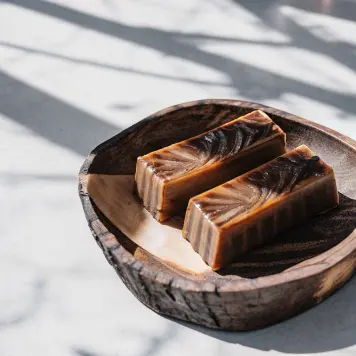
Algarrobo sweets
Algarrobo sweets are made from the toasted flour and syrup of the carob-like algarrobo tree. They taste naturally like caramel and need no added sugar at all.
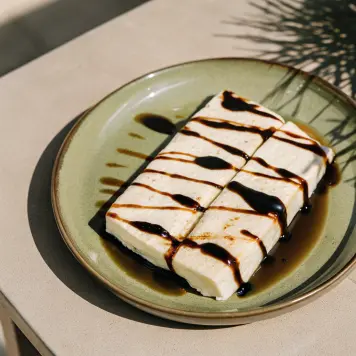
Quesillo con miel de chañar
Quesillo con miel de chañar is a simple plate of fresh artisan cheese drizzled with chañar syrup. It is one of the most beloved homemade desserts in San Pedro de Atacama.
Traditional Savory Dishes
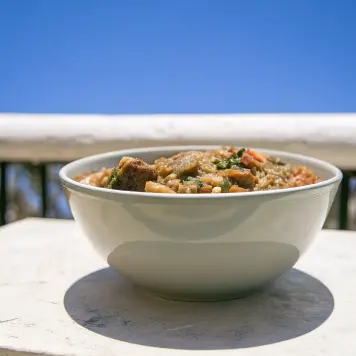
Patasca
Patasca is a hearty Andean stew built on wheat, corn, and lamb or llama meat. In the Atacama Desert it is a centerpiece of community fiestas and religious celebrations.
Calapurca
Calapurca is an ancient Atacameño dish where red-hot volcanic stones are dropped into a bowl of corn, potato, and meat stew. The stones make the broth sizzle and bubble dramatically at the table.
Charqui de llama
Charqui de llama is lean llama meat salted and sun-dried in the high desert air. This ancient preservation method gave travelers a protein-rich food that could survive long journeys across the Andes.
Traditional Beverages
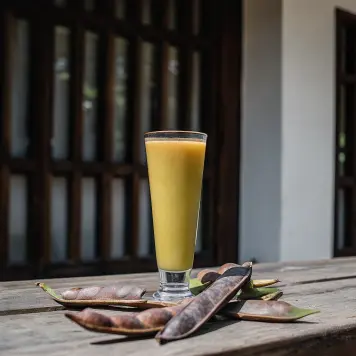
Añapa
Añapa is a refreshing, naturally sweet drink made by soaking and pressing algarrobo pods in water. It has been enjoyed by the Atacameño people for centuries without fermentation.
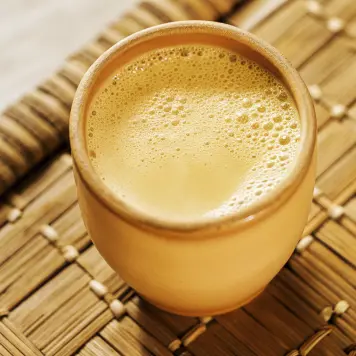
Chicha de chañar
Chicha de chañar is a lightly fermented drink made from the sweet chañar fruit. In the Atacama region it is traditionally shared during harvest festivals and community ceremonies.
Mate de coca
Mate de coca is a warm tea brewed from coca leaves, widely served in San Pedro de Atacama. Travelers drink it to ease the symptoms of high altitude in the Andes.
Frequently Asked Questions about San Pedro de Atacama, Chile
Is San Pedro de Atacama, Chile safe?
How many days in San Pedro de Atacama, Chile?
When is the best time to visit San Pedro de Atacama, Chile?
Is San Pedro de Atacama, Chile expensive?
How do you get around in San Pedro de Atacama, Chile?
Get a PDF with the most popular attractions sent to your email
Get a PDF with all attractions, ratings, and tips. Perfect for offline use.
Most popular day trips
Valle de la Luna
Moon Valley with surreal sand dunes and salt rock formations, best at sunset
El Tatio Geysers
High altitude geothermal field with erupting geysers, visit at dawn
Salar de Atacama and Laguna Cejar
Vast salt flat with floating lagoons and flamingo habitats
Lagunas Miscanti and Miniques
Twin turquoise lagoons at 4,200 m altitude below dramatic volcanoes
Piedras Rojas
Red rock landscape by Salar de Aguas Calientes with vivid lagoons
Termas de Puritama
Hot springs in a scenic desert canyon, a relaxing soak option
Getting there
Airports
Train stations
No current passenger rail service reaches the town; access is by road from Calama or Antofagasta
Long distance buses to San Pedro de Atacama, Antofagasta, and Santiago
Fly to Calama (CJC), then take a shared shuttle or bus to San Pedro de Atacama, about 1.5 hours. Book transfers in advance for late arrivals.
Find flights to San Pedro de Atacama, Chile
Click to get eSim for San Pedro de Atacama, Chile
The easiest and most affordable way to get mobile internet wherever you travel.
Comments (10)
Food scene surprised me. Lots of quinoa and llama dishes, way better than I expected for such a remote desert town.
We stayed 3 nights and honestly that was plenty. Saw the main sights, did the moon valley sunset, and wanted a softer bed by day 3.
Coca tea helps with the altitude but don't drink too much of it. And book your tours in person the day before, you'll pay less than online prices.
Got stuck in a tour that was 90% van time and 10% actual walking. Ask exactly how long you're on your feet, some operators cut corners.
Some tours leave super early like 4am, so find out the pickup time before booking. We missed one thinking it was 6am and lost the fee.