 CityBuddy
 English
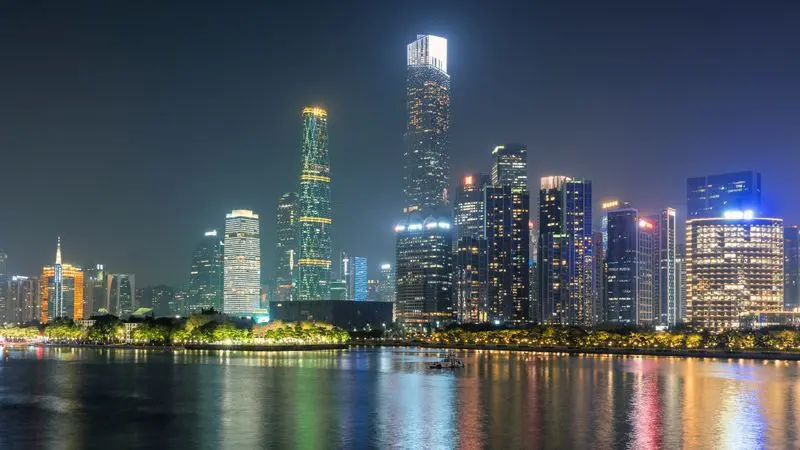
Things to Do in Guangzhou, China
Photo made by Lywin on Pexels.com
When to visit
Guangzhou is the #4 city for food lovers in the world, based on our data across hundreds of destinations.
Most popular attractions in Guangzhou, China
If you are compiling things to do in Guangzhou, China, start with Canton Tower, whose 600-meter silhouette dominates the skyline and offers panoramic views from its 488-meter observation deck. Wander Shamian Island's colonial lanes for European architecture, then admire the intricate woodcarvings inside Chen Clan Ancestral Hall, a 19th-century academy with over 4,000 exhibits.
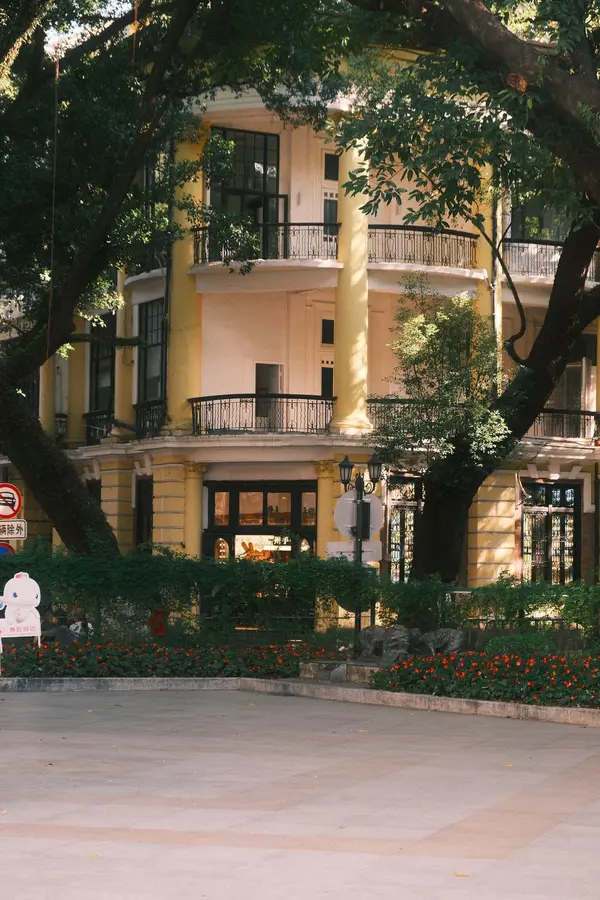
1. Shamian Island
Step into a leafy European-style island right in the middle of Guangzhou's concrete sprawl. Wander past colonial villas, riverside cafés, and shaded promenades that feel a world away from the city.
Quick facts: Eight-plus tree-lined streets fan out across roughly 300,000 square meters where the Pearl River once wrapped around this former British and French concession. Over 150 buildings here mix neoclassical, baroque, and colonial styles, many now housing cafés, art galleries, and boutiques.
Highlights: The island's oldest banyan trees have roots that cascade down like wooden curtains, some spreading so wide they shade entire blocks. A little-known statue of a bronze dog sits near the eastern tip, placed there by locals who remember the actual canine that patrolled this spot decades ago.
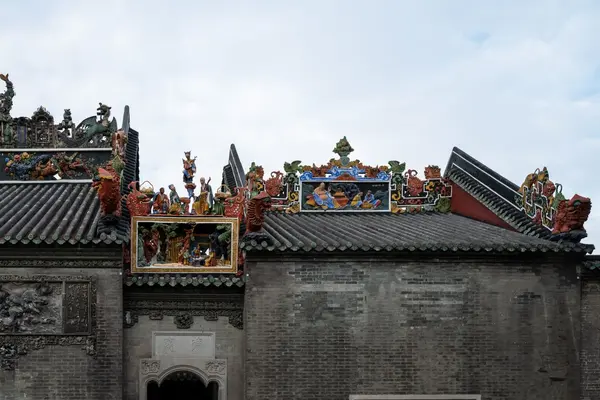
2. Chen Clan Ancestral Hall
One of the most ornamented structures in southern China, packed with sculpture on every surface. Visitors wander through courtyards where every beam, wall, and rooftop pushes the limits of traditional craftsmanship.
Quick facts: The complex houses over 20,000 ceramic figures and carvings across its halls, courtyards, and rooftops, many depicting folk tales and opera scenes. Its wood, stone, brick, and clay sculptures were crafted by some of Guangdong's finest artisans of the late 1800s.
Highlights: Walk into the main hall and look up at the gilded wood carvings, each panel tells a different opera story with dozens of tiny characters, and the detail is so fine you can see individual expressions. The roof ridges hold a parade of ceramic figures that have survived over a century of typhoons, each one glazed in colors that still pop today.
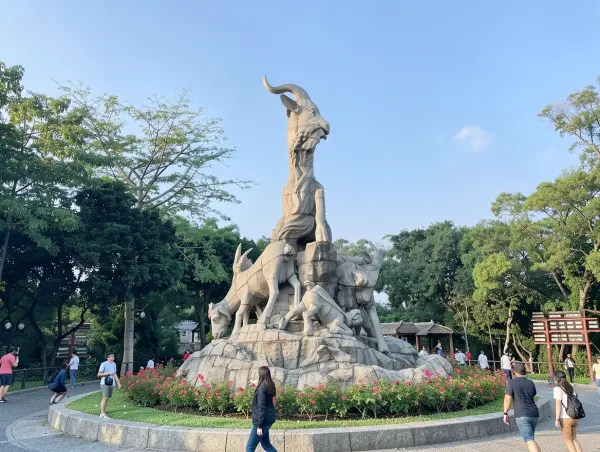
3. Yuexiu Park
Skip the crowded city streets and climb 2,000 years of history on this leafy green hill. You'll find ancient towers, sculpture gardens, and sweeping skyline views all in one walk.
Quick facts: The park sits atop a 70-meter hill that has served as a city landmark for over 2,000 years, with the famous Five Rams statue commemorating the legend of Guangzhou's founding. Its iconic white stone pagoda, the Zhenhai Tower, was rebuilt five times across several dynasties and now houses the Guangzhou Museum.
Highlights: Climb the 100-plus steps up to the Five Rams statue at sunrise and you'll catch local tai chi masters practicing in the mist while the city comes alive below. The green glazed tiles and copper bells of the Ming-dynasty Zhenhai Tower still ring out across the hilltop, a sight that's survived centuries of change.
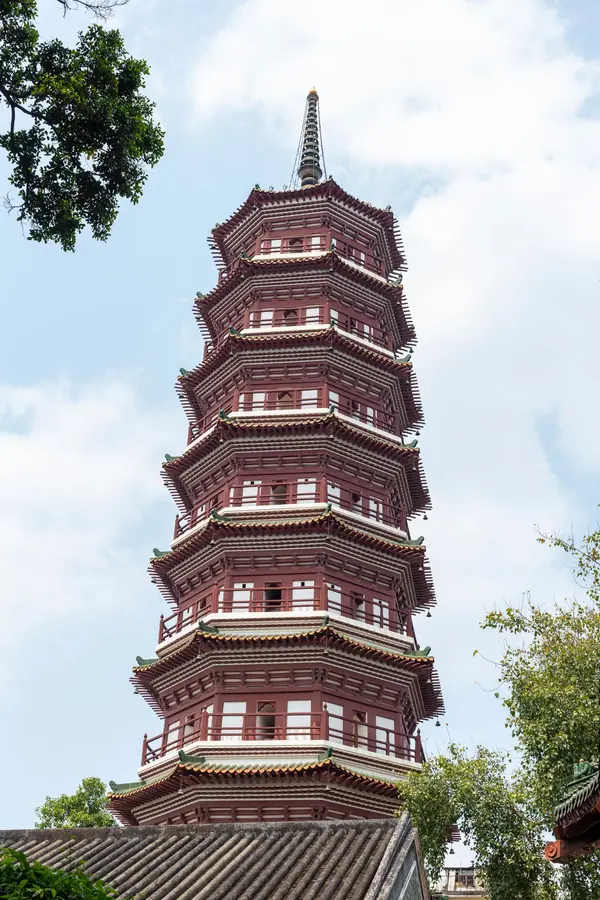
4. Temple of the Six Banyan Trees
Step into a thousand-year-old sanctuary where incense smoke curls between iron pagodas older than most nations. You'll wander moss-lined courtyards, hear monks chanting, and touch relics that predate the Song dynasty.
Quick facts: Two ancient iron pagodas, each around 1,000 years old, stand in the courtyard and rank among the oldest surviving iron structures in southern China. The temple complex dates to the late sixth century, making it one of Guangzhou's most senior Buddhist sites.
Highlights: One of the twin iron pagodas was cast in 963 and still bears hundreds of tiny Buddha statues molded into its seven tiers, each just a few centimeters tall. Visitors who look closely can spot the nearly invisible engravings and feel the rough, pitted texture of iron that has weathered ten centuries of typhoons.
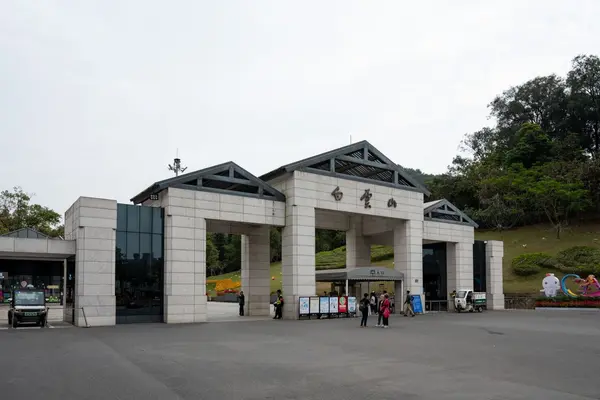
5. Baiyun Mountain
Escape the city heat in minutes on a mountain that feels a world away from downtown Guangzhou. Sweeping city panoramas, forest trails, and a cable car ride make this a half-day reset above the skyline.
Quick facts: The ridge stretches roughly 28 kilometers across the city's north side, with over 30 peaks linked by walking trails. Cable cars whisk riders up 300 meters in about 20 minutes, though some visitors prefer the 10,000-step wooden stairway that climbs through dense forest.
Highlights: From the summit, you can watch planes descend into Baiyun Airport appearing to skim right past the viewing deck below you. On clear mornings, locals gather with tea and radios to watch the city fog lift and reveal the Pearl River delta sprawling to the horizon.
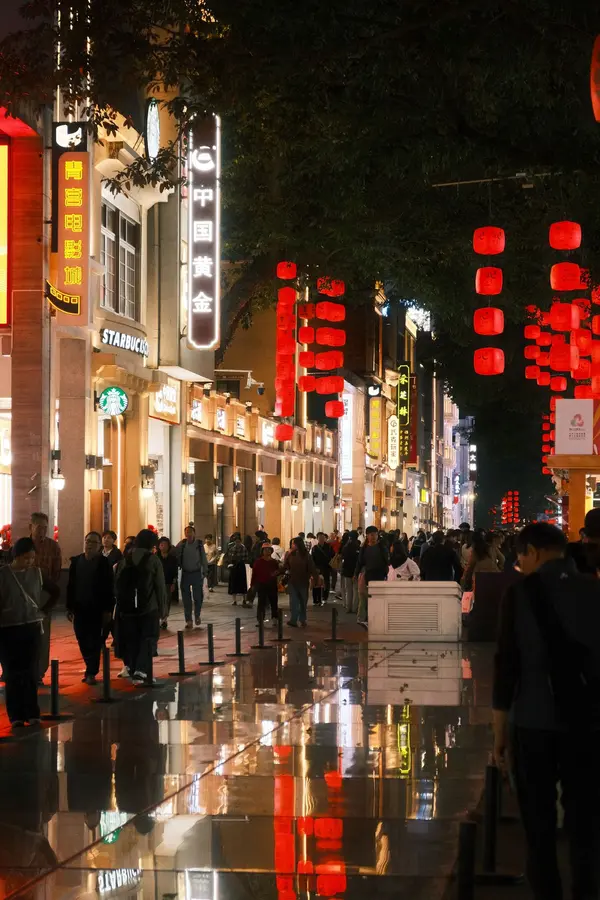
6. Beijing Road Pedestrian Street
Want to walk on history instead of just reading about it? Step onto glass floor panels and peer down at 1,000-year-old roads beneath your feet while modern neon glows overhead.
Quick facts: The management office sits at the northern entry point of one of Guangzhou's oldest commercial corridors, a stretch where over 2,000 years of layers are literally visible underfoot. Glass panels in the pavement reveal original Song and Ming dynasty road surfaces that date from the 10th to 17th centuries.
Highlights: Walk a few steps from the office entrance and you'll see the famous 10-meter-deep archaeological dig site where 11 dynasties of streets stack like a geological cake, from the Southern Han dynasty at the bottom up to the Republic period at the top. Local guides sometimes point out that the street's current elevation is roughly 2 meters higher than the oldest layer, showing how the city literally grew upward over centuries.
7. Sun Yat-sen Memorial Hall
See the grand hall where Guangzhou's revolutionary history lives on under one astonishing column-free dome. The blue-tiled octagon, statue gardens, and sweeping lawns make for a memorable afternoon.
Quick facts: The octagonal hall rises 49 meters high with an 8,700-square-meter footprint, and its blue glazed-tile roof is an eye-catching landmark near downtown Guangzhou. Inside, the main auditorium seats nearly 5,000 people with no supporting pillars in view, an engineering feat that continues to impress visitors.
Highlights: Step into the main hall and you'll find a massive 4,700-square-meter open space with zero interior columns, a trick pulled off with a steel-truss dome. On the front lawn, a 19-meter bronze statue of Sun Yat-sen stands on a white marble base that was installed in 1956, decades after the building first opened its doors in 1931.
Where to Stay in Guangzhou, China
Selected by City Buddy based on guest reviews and proximity to top attractions
Search all hotels in Guangzhou, ChinaPowered by agoda
Traditional Sweet Dishes
Double Skin Milk (Shuang Pi Nai)
This silky Cantonese custard is made by steaming buffalo milk twice, which creates two distinct layers of skin on top. It was invented in the 1850s in the town of Daliang near Guangzhou.
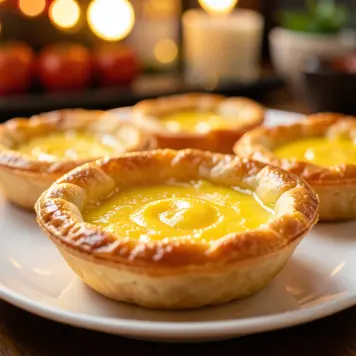
Egg Tarts (Dan Tat)
Guangzhou's egg tarts are a beloved dim sum classic with a flaky, buttery crust and a wobbly, golden custard center. They were inspired by Portuguese pastries and adapted by Cantonese bakers in the 1940s.
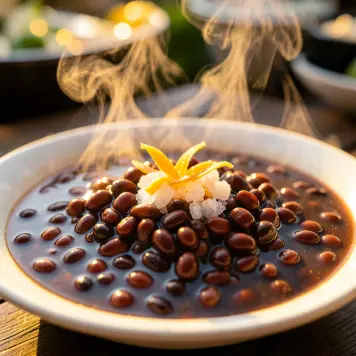
Red Bean Soup (Hong Dou Sha)
This comforting dessert soup is made from slow-cooked adzuki beans, rock sugar, and sometimes tangerine peel for a fragrant twist. It is traditionally served piping hot during winter and cold in summer across Guangzhou's dessert shops.
Traditional Savory Dishes
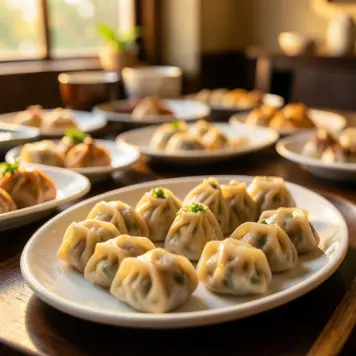
Dim Sum (点心)
Guangzhou is the birthplace of dim sum, where teahouses serve hundreds of small plates like har gow and siu mai. Morning dim sum culture, known as yum cha, has been a social ritual here for over a century.

White Cut Chicken (Bai Qie Ji)
This iconic dish is poached gently to keep the chicken silky and tender, then served with ginger and scallion oil. The secret is plunging the bird into an ice bath right after cooking for that signature springy skin.
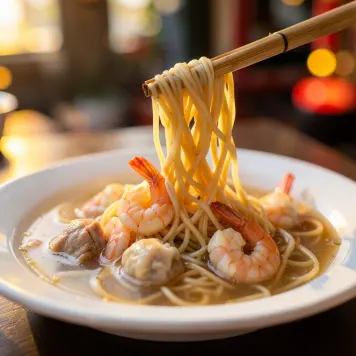
Wonton Noodles (Yun Tun Mian)
Guangzhou's wonton noodles feature thin, springy egg noodles topped with plump shrimp and pork wontons in a clear, savory broth. The noodles are famously made with a bamboo pole that the chef jumps on to achieve their unique bounce.
Traditional Beverages
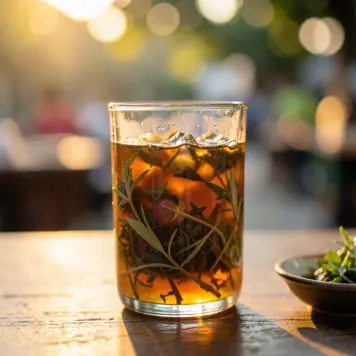
Cantonese Herbal Tea (Liang Cha)
This bitter medicinal drink is brewed from a blend of over 20 herbs and is believed to cool the body's internal heat. In Guangzhou, locals drink it from small glass bottles at dedicated herbal tea shops on almost every street corner.
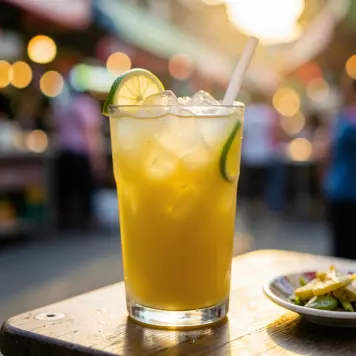
Sugarcane Juice (Gan Zhe Zhi)
Fresh sugarcane juice is squeezed on the spot at street stalls across Guangzhou and served icy cold with a squeeze of lemon or lime. It is prized not only for its sweetness but also for its cooling, hydrating properties in the subtropical heat.

Milk Tea (Nai Cha)
Cantonese milk tea blends strong black tea with evaporated milk and sugar for a rich, velvety texture. In Guangzhou, it is often served with chewy tapioca pearls or grass jelly, making it a favorite street beverage.
Frequently Asked Questions about Guangzhou, China
Is Guangzhou, China safe?
How many days in Guangzhou, China?
Best time to visit Guangzhou, China?
Is Guangzhou, China expensive?
How to get around Guangzhou, China?
Get a PDF with the most popular attractions sent to your email
Get a PDF with all attractions, ratings, and tips. Perfect for offline use.
Most popular day trips
Foshan
Historic city famous for kung fu, ceramics, and ancestral temples
Dongguan
Industrial hub with lush parks, ancient villages, and great seafood
Kaiping Diaolou
UNESCO World Heritage fortified watchtowers and village architecture
Zhuhai
Coastal tropical city with islands, beaches, and relaxed waterfront
Shenzhen
Modern metropolis with theme parks, tech museums, and shopping
Getting there
Train stations
High-speed rail to Hong Kong, Shenzhen, Wuhan, and Beijing
Conventional lines to nationwide destinations
Regional lines and connections to Hong Kong and nearby cities
Take Metro Line 3 from Baiyun Airport to downtown in about 40 minutes. Buses and airport express shuttles also connect to major hotels and districts.
Useful information for Guangzhou, China
Overview for Guangzhou, China
Want a day-by-day plan for Guangzhou, China? Open the trip planner
Plan your perfect trip to Guangzhou, China
Get a complete travel plan built just for you in under 30 seconds, with daily routes, local food tips, budget estimates and more.
Are any of these especially important to you?
Select all that apply
Getting around
How do you want to move between places?
Plan language: English