 CityBuddy
 English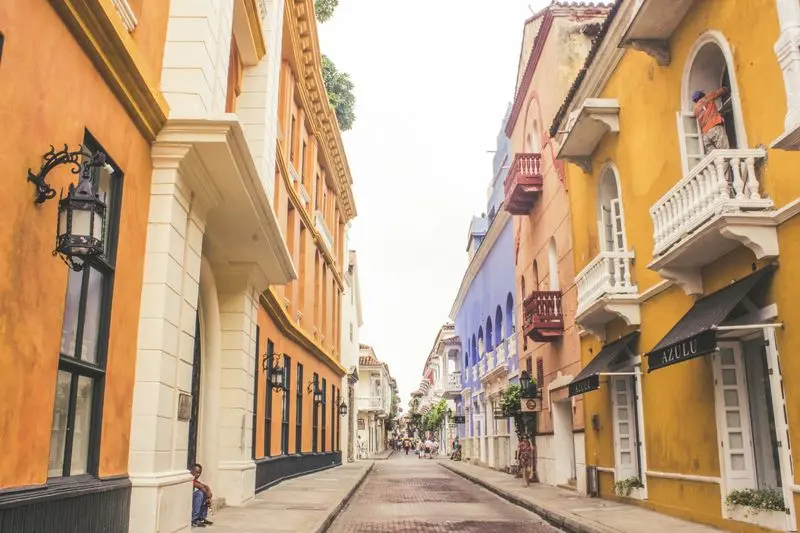
Things to Do in Cartagena, Colombia
Photo made by Maria Paula Medina on Pexels.com
When to visit
Plan your perfect trip to Cartagena, Colombia
Get a complete travel plan built just for you in under 30 seconds, with daily routes, local food tips, budget estimates and more.
Are any of these especially important to you?
Select all that apply
Plan language: EnglishMost popular attractions in Cartagena, Colombia
When considering things to do in Cartagena, Colombia, three attractions stand out. Climb the 300-year-old Castillo San Felipe de Barajas with 23 cannons and 3 kilometers of tunnels. Visit the Torre del Reloj, the 17th-century clock tower entrance to the old city. End at Plaza Santo Domingo where Botero's sculpture sits beneath colonial balconies.
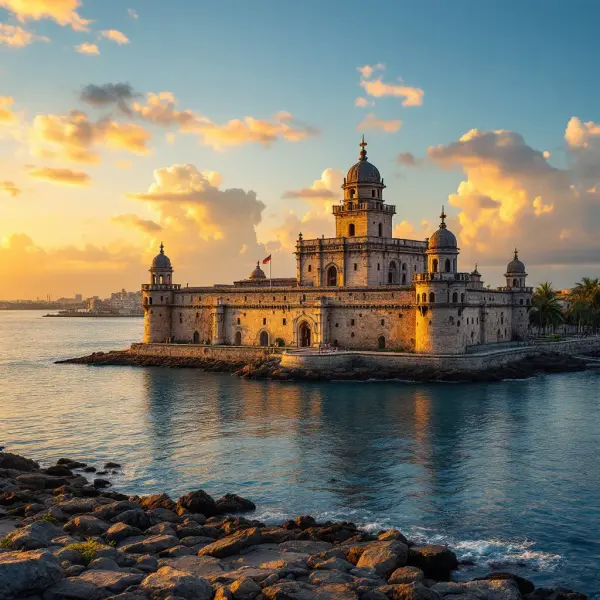
1. Castillo San Felipe de Barajas
Walk through 450-year-old tunnels where whispers echo along perfectly engineered acoustic walls. From the top ramparts, watch the sunset paint the sky over the Caribbean.
Quick facts: Over 20 million bricks and 130 years of construction shaped this fortress into a sprawling defensive complex. Guards once communicated through a 2-kilometer network of tunnels where sound carries distinctly along the curved stone walls.
Highlights: Engineers designed three levels of interlocking tunnels with angled listening posts, allowing a single guard to detect intruders from multiple directions simultaneously. On the fortress's highest rampart, you can trace the exact defensive sightlines that once allowed soldiers to spot approaching ships hours before they reached the bay.
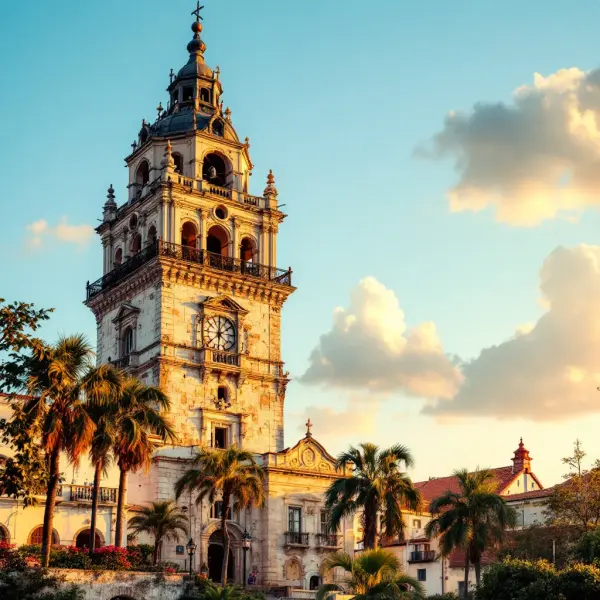
2. Torre del Reloj
This arched gateway has been the city's front door for over 400 years, welcoming traders, travelers, and pirates alike. Walk through it and you step straight into a plaza framed by pastel balconies, horse carriages, and the rhythmic clatter of shoes on cobblestones.
Quick facts: More than 2 million people pass through this coral stone gateway each year, connecting the lively Getsemaní neighborhood with the colonial Old City. The clock mechanism at the top was imported from Switzerland in the early 20th century and still keeps time by hand winding twice a week.
Highlights: Look closely at the archway's base and you will spot a small statue of the Virgin Mary tucked into a niche, placed there centuries ago to bless everyone who entered the city. On the plaza side, the faded colonial frescoes on the adjacent buildings shift color as the afternoon sun moves across the carved stone facade.
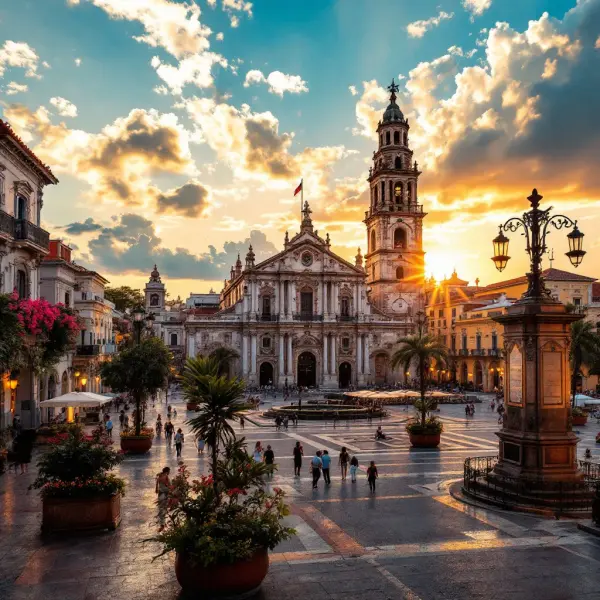
3. Plaza Santo Domingo
Cartagena's most magnetic social hub where Botero's famous bronze goddess lounges under the Caribbean sun. Sip a coconut lemonade while watching salsa dancers, shoe shine boys, and parrots perched on colonial balconies.
Quick facts: A bronze sculpture of a voluptuous reclining woman named "La Gorda Gertrudis" by Fernando Botero anchors this cobblestone square. Street vendors, salsa music, and the scent of fried arepas fill the air from morning until late night.
Highlights: Locals rub Botero's Gertrudis on her belly and bronze toes for good luck, leaving those spots polished to a gleaming golden shine against her darker patina. After a vandal damaged her in 2006, the city repaired her so thoroughly that the scar became part of her story, a testament to Cartagena's fierce protectiveness of her.
Have you heard of free walking tours?
After traveling to 30+ countries, there's one thing I wish someone had told me from day one, and it completely changed how I experience new cities.
Free walking tours. Yes, actually free. No credit card needed. No catch.
Local guide, 2-3 hours
Major sights, hidden gems, local stories
100% tip-based
Guides earn only tips, so they give their absolute best
You tip what feels right
At the end, just tip whatever you feel is right
I've done these in dozens of cities and they've been the highlight of almost every trip. If you're visiting Cartagena, Colombia, do this on your first day. You'll thank me later.
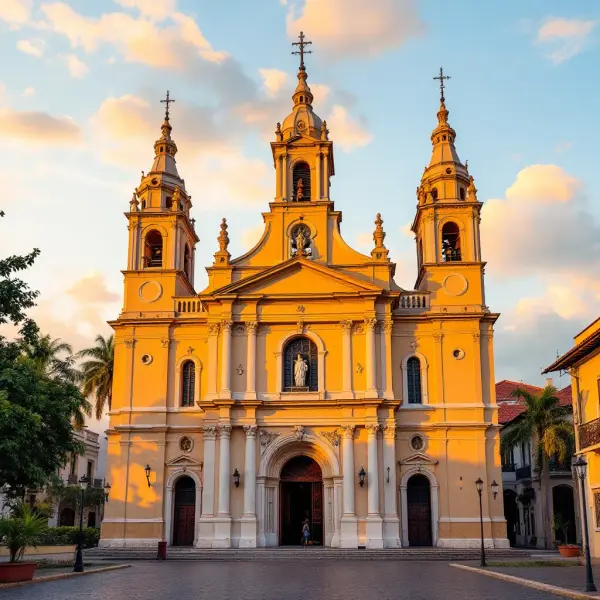
4. Iglesia de San Pedro Claver
Stand before a 400-year-old altar where a real saint once prayed daily. Wander through sunlit cloisters, see his preserved remains, and feel Colombia's layered history come alive.
Quick facts: Saint Peter Claver spent 40 years in this church baptizing over 300,000 enslaved Africans who arrived through Cartagena's port. His remarkably preserved body lies in a glass sarcophagus near the main altar, still wearing the robe he wore at his death in 1654.
Highlights: Climb to the rooftop and you'll find the exact bell tower where Claver would scan the harbor for incoming slave ships, preparing to offer comfort. The adjacent cloister holds the saint's original living quarters, where his simple wooden bed and personal crucifix remain exactly as he left them.
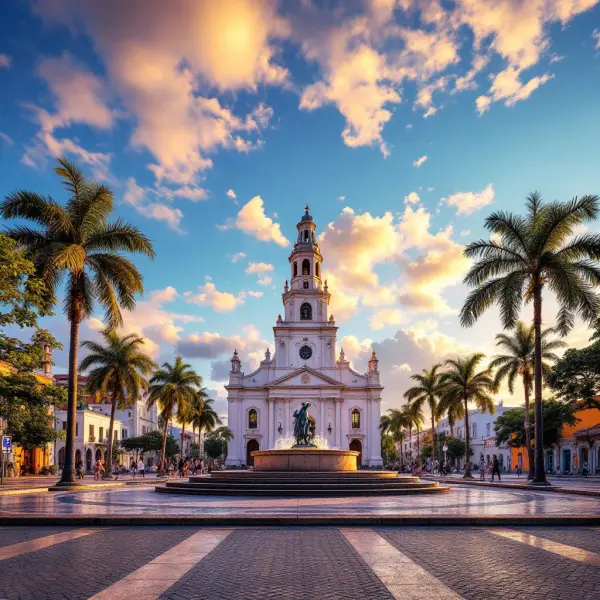
5. Plaza de los Coches
Step into Cartagena's colonial heart where horse-drawn carriages once ruled the cobblestones. Sip a coffee under the arcades while street vendors and musicians bring the square to life around you.
Quick facts: Horse-drawn carriages once lined this plaza, giving it its name meaning "Square of the Carriages." At its center stands a statue of Pedro de Heredia, the Spanish conquistador who founded Cartagena in 1533.
Highlights: Look up at the buildings surrounding the plaza and you will spot wooden balconies painted in vibrant yellows and blues, each with a different carved design. Those balconies tell the story of Cartagena's colonial merchant class, who built their homes and shops here to be close to the port's trading action.
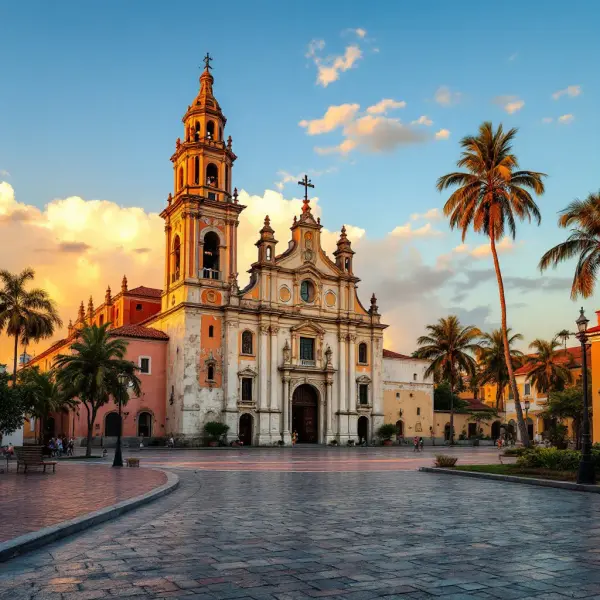
6. Convento de la Popa
Cartagena's highest point delivers the best views of the city, bay, and islands all at once. Climb the convent's rooftop terrace and watch cruise ships glide past the old city walls 150 meters below.
Quick facts: Perched 150 meters above sea level, this 17th-century convent offers a 360-degree panorama of Cartagena's skyline, bay, and the Caribbean Sea. The hill gets its name "Popa" because Spanish sailors thought it resembled the poop deck of a ship.
Highlights: Inside the convent's chapel sits a small wooden statue of the Virgin of La Candelaria, Cartagena's patron saint, who locals believe saved the city from a plague in the 18th century. Every February 2nd, hundreds of pilgrims climb the hill for the Fiesta de la Candelaria, carrying candles up the cobblestone path at dawn.
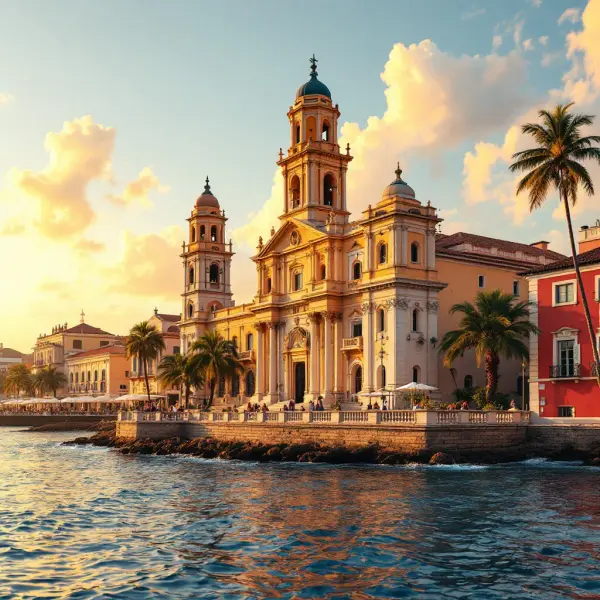
7. Las Bóvedas
Shop for authentic Colombian souvenirs inside centuries-old military vaults carved into the city walls. Wander through 23 archways filled with artisan stalls, the sea breeze and local music echoing off the stone.
Quick facts: Twenty-three arched alcoves span the ancient city walls, once serving as military storage for Spanish troops. These thick stone vaults later held prisoners before transforming into a colorful marketplace of local crafts and art.
Highlights: During colonial times, these vaults stored gunpowder and weapons while the sea lapped directly against the outer walls, making them impenetrable from attack. Today, the same arches are filled with the clatter of artisans carving tagua nut figurines and weaving mochila bags as reggaeton drifts through the stone corridors.
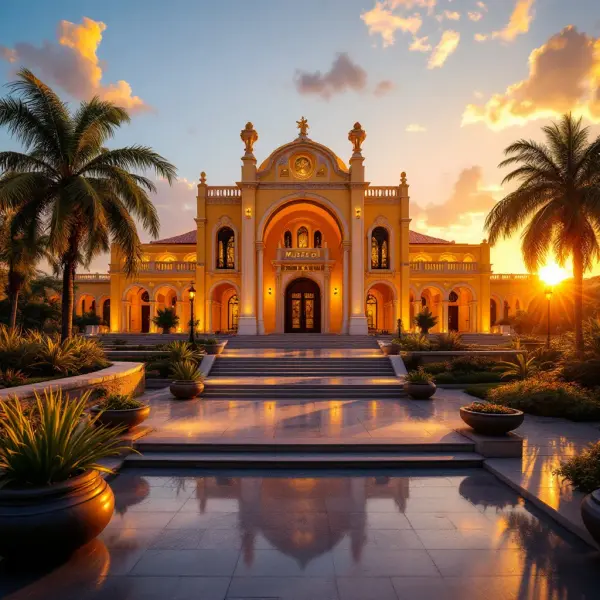
8. Museo del Oro Zenu
Step into a treasury of indigenous gold work that rivals any collection in South America. You will come face to face with intricate filigree earrings, ceremonial masks, and tools that reveal how the Zenú shaped gold 2,000 years ago.
Quick facts: The Zenú people who created these gold pieces engineered an elaborate canal system to control flooding across 500,000 hectares of lowlands. Some of the filigree earrings and nose rings on display are so delicately woven they weigh less than a single paperclip.
Highlights: Peer through the glass at the poporo, a lime container for coca leaves, whose surface tells the story of Zenú spiritual life through thousands of tiny hammered dots. Unlike Inca or Aztec gold objects locked away in storage, more than 1,200 pieces here are arranged in open displays that let you see the front and back of each artifact, revealing how craftsmen worked both sides of the metal.
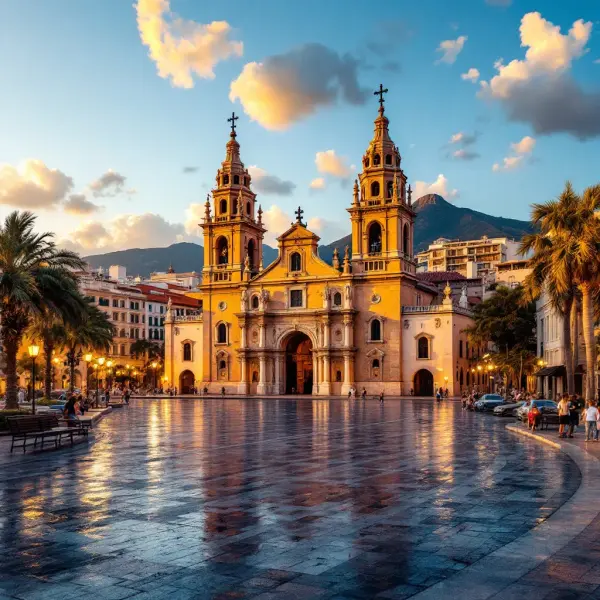
9. Catedral de Cartagena
One of the oldest cathedrals in the Americas, where colonial history meets pirate lore. Stand inside walls that survived earthquakes, attacks, and 400 years of Caribbean storms.
Quick facts: Three centuries of construction gave this cathedral a fascinating architectural mix. Sir Francis Drake's 1586 attack on the city halted early building efforts, leaving the unfinished structure standing in the main plaza for decades.
Highlights: Look closely at the main altar and you'll spot a small cannonball embedded in the wall, a scar from a 17th-century pirate attack. The cathedral's uneven bell tower tells another story: an 1830 earthquake toppled the original, and its replacement was built slightly crooked on purpose to avoid future collapse.
Where to Stay in Cartagena, Colombia
Selected by City Buddy based on guest reviews and proximity to top attractions
Search all hotels in Cartagena, ColombiaPowered by agoda
Traditional Sweet Dishes
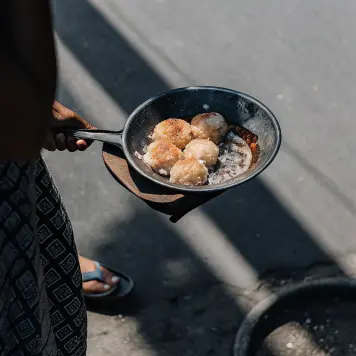
Cocadas
Cocadas are sweet coconut confections that trace their origins to the African diaspora in Cartagena. They are famously sold by palenqueras, Afro-Colombian women in colorful dresses who balance bowls of them on their heads as they walk through the city.
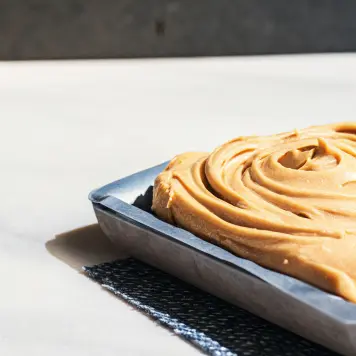
Dulce de Leche (Arequipe)
In Cartagena, dulce de leche is often blended with coconut or fruits like guava to create rich, creamy desserts. It is a staple sweet spread that locals enjoy with cheese or on bread.

Ensalada de Frutas (Fruit Salad)
Cartagena's fruit salad is no ordinary dish; it is a vibrant mix of tropical fruits like mango, papaya, and lulo, often topped with a splash of lime and a sprinkle of salt. Street vendors sell it chilled on hot Caribbean days for a refreshing treat.
Traditional Savory Dishes

Arroz con Coco (Coconut Rice)
Arroz con coco is a quintessential Cartagena side dish made by cooking rice in coconut milk and often sweetened with a hint of sugar. It is typically served alongside fried fish and patacones, creating the classic Caribbean coastal plate.

Mote de Queso
Mote de queso is a hearty, creamy soup made with yam, salted costeño cheese, and herbs. It originated in Cartagena's countryside and is a comforting dish that showcases the region's love for combining cheese with savory stews.
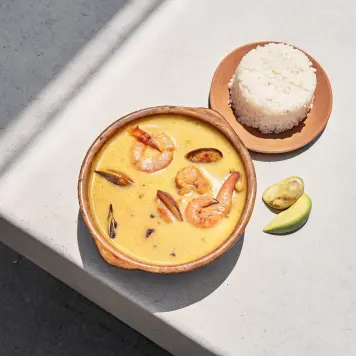
Cazuela de Mariscos (Seafood Stew)
This rich seafood stew is packed with shrimp, fish, crab, and clams simmered in a coconut milk and tomato broth. It reflects Cartagena's coastal location and is often served in a clay pot with rice and avocado on the side.
Traditional Beverages
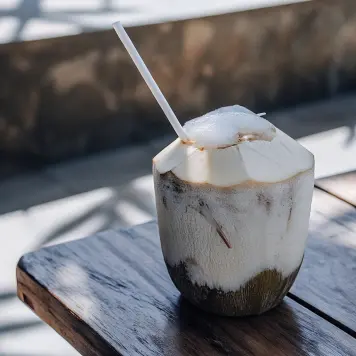
Limonada de Coco (Coconut Lemonade)
Limonada de coco is a creamy, tropical blend of fresh lime juice, coconut milk, and ice that is uniquely popular in Cartagena. Unlike a standard lemonade, it is frothy and rich, making it the ultimate thirst-quencher on a Caribbean afternoon.

Jugo de Lulo
Lulo is a tangy, citrus-like fruit native to Colombia, and its juice is a beloved drink throughout Cartagena. It is often sweetened with sugar and served over ice, offering a bright, zesty flavor that locals swear by for beating the heat.

Aguardiente Antioqueno
Aguardiente is Colombia's signature anise-flavored sugarcane spirit and a favorite at Cartagena's lively street festivals and nightclubs. It is commonly called "guaro" and is typically sipped straight or mixed into cocktails like the popular "Saoco."
Frequently Asked Questions about Cartagena, Colombia
Is Cartagena, Colombia safe?
How many days in Cartagena, Colombia?
Best time to visit Cartagena, Colombia?
Is Cartagena, Colombia expensive?
How to get around Cartagena, Colombia?
Get a PDF with the most popular attractions sent to your email
Get a PDF with all attractions, ratings, and tips. Perfect for offline use.
Most popular day trips
Islas del Rosario
Stunning coral islands with white sand beaches and clear turquoise water
Playa Blanca (Barú)
Pristine white sand beach with crystal clear Caribbean waters
Volcán de Lodo El Totumo
Famous mud volcano where you bathe in therapeutic warm mud
San Basilio de Palenque
UNESCO heritage village founded by escaped African slaves
Getting there
Airports
Train stations
None. Buses, taxis, and private cars are the main transport options.
From CTG airport, take a taxi or Uber to the Old Town (15 to 20 minutes, around USD 10 to 15). Always agree on price beforehand.
Find flights to Cartagena, Colombia
Click to get eSim for Cartagena, Colombia
The easiest and most affordable way to get mobile internet wherever you travel.
Comments (10)
Eat at La Cevicheria for lunch not dinner. Same amazing food but half the price. And skip the restaurants on the main wall, walk one block inland.
Best 4 days ever. The colors, the music, the people. Took a boat to Islas del Rosario and it felt like paradise. Would go back tomorrow.
Always carry small bills. So many places claim to not have change for larger notes. Taxis too, insist on the meter or agree on price before getting in.
Mixed feelings. City is stunning but everything felt overpriced for Colombia. Drinks in Plaza Santo Domingo were twice what I paid in Medellin.
Rainy season caught me off guard. Showers every afternoon but they pass fast. Still managed to see everything and had a great time overall.