 CityBuddy
 English
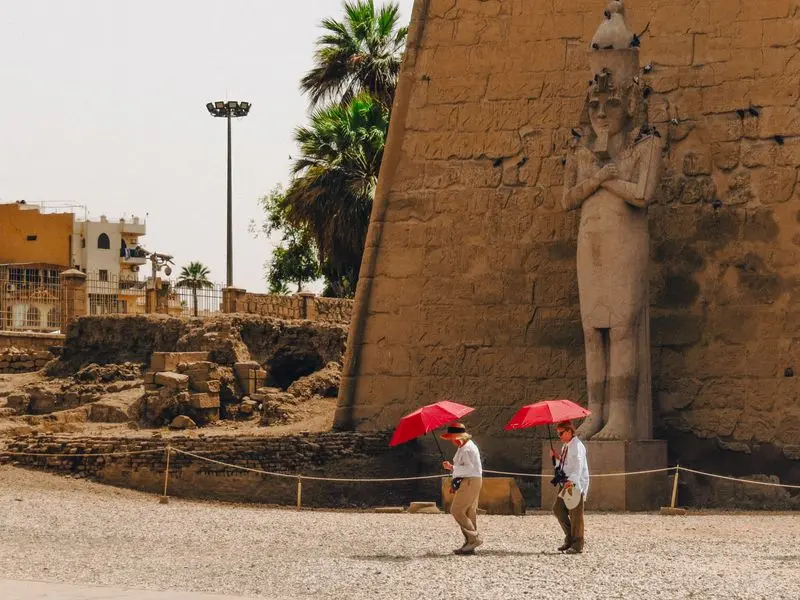
Things to Do in Luxor, Egypt
Photo made by Mert Çelik on Pexels.com
When to visit
Most popular attractions in Luxor, Egypt
If you are looking for things to do in Luxor, Egypt, start with the Karnak Temple, the world's largest temple complex, which covers more than 100 hectares. Cross the Nile River to the Valley of the Kings, where 63 tombs of the pharaohs await. Finally, the Mortuary Temple of Hatshepsut at Deir el-Bahri, where three terraced colonnades.
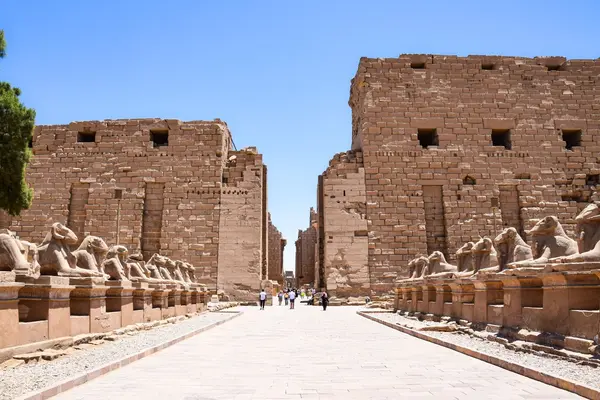
1. Karnak Temple
The ancient Egyptians built such a colossal marvel that the world still admires it. Stroll among the 134 colossal columns, where the morning light and the stone shine so intensely that time is forgotten.
Quick facts: Construction lasting nearly two thousand years produced a single sanctuary complex shaped by more than thirty pharaohs. In the hypostyle hall, 134 colossal stone columns stand, the largest 23 meters tall and nearly 15 meters in circumference.
Highlights: The main hall is large enough that Rome's St. Peter's Basilica and Paris's Notre-Dame could both fit inside at the same time. Morning sunlight streaming through the tall column openings colors the surface of the 23-meter columns deep orange-red, as if the stone itself were alive.
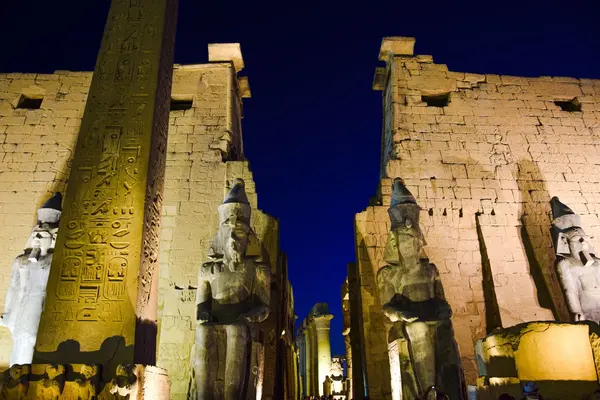
2. Luxor Temple
The only temple of ancient Egypt that can be visited in the evening, and it is even more mystical when illuminated. Enjoy the solitude of the 3000-year-old walls among the rows of sphinxes.
Quick facts: The architectural enterprise directed by Ramses is only part of what stands today, because Alexander the Great, the Romans, and the Mamluk sultans all added to the complex. At sunset, the entire facade glows in a golden rose color, while the row of sphinxes leads you from the entrance to the main courtyard.
Highlights: On the stones they show the spot where a certain archaeologist found a painted wall in 1882 that preserved the original colors of the temple walls. Most visitors walk right past it, yet if you stand in the central courtyard in the evening light, you can almost see the priests filing between the two obelisks of Amenhotep III before your eyes.
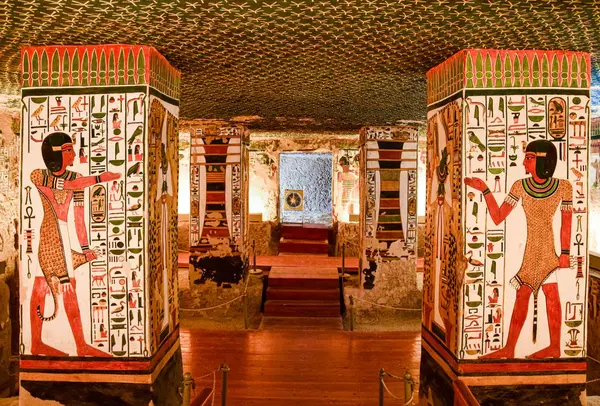
3. Valley of the Kings
Among the royal tombs of the pharaohs, nowhere else can you see the final resting place of so many of Egypt's greatest rulers. You can sink into a world of gilded walls and hieroglyphs while the desert wind blows over the valley.
Quick facts: Tombs of more than 60 pharaohs and royal figures are carved into the bare cliffs, but only Tutankhamun's tomb was found completely intact, with more than 5,000 treasures inside. The largest complex, KV5, opens into over 120 chambers, and researchers believe further tombs may still lie hidden beneath the valley.
Highlights: In Tutankhamun's tomb, visitors can enter the chamber where Howard Carter found the golden mask, and the frescoes on its walls still glow in vivid colors after 3,000 years. The entrances to the tombs open at the end of stepped corridors carved into the hillside, where the cool air and the scenes from the Book of the Dead almost carry you back in time.
4. Valley of the Queens
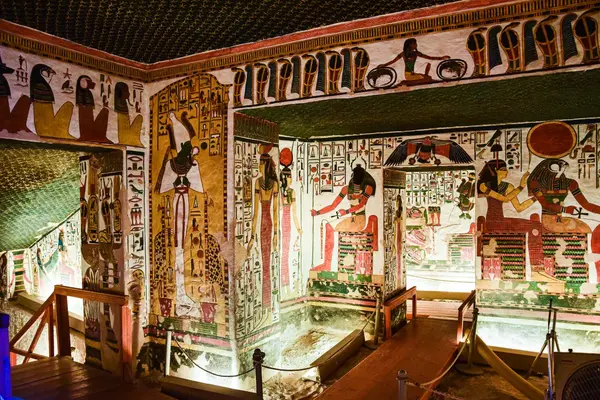
Here you can glimpse Egypt's most beautiful tomb paintings, made for the wives of the pharaohs. The colors shine as if they were painted yesterday, even though they are more than three thousand years old.
Quick facts: Around 90 tombs of queens and royal children lie here, including the stunning burial site of Nefertari, wife of Ramesses the Great. The colors on the tomb chamber walls have survived so vividly that many people think they were recently restored.
Highlights: The ceiling of Nefertari's tomb (QV66) is covered with golden stars that shine against a jet-black background, as if you were looking at a real night sky. The wall paintings are so detailed that researchers are still deciphering new rows of hieroglyphs along the 18-meter-long corridors to this day.
5. Mortuary Temple of Hatshepsut
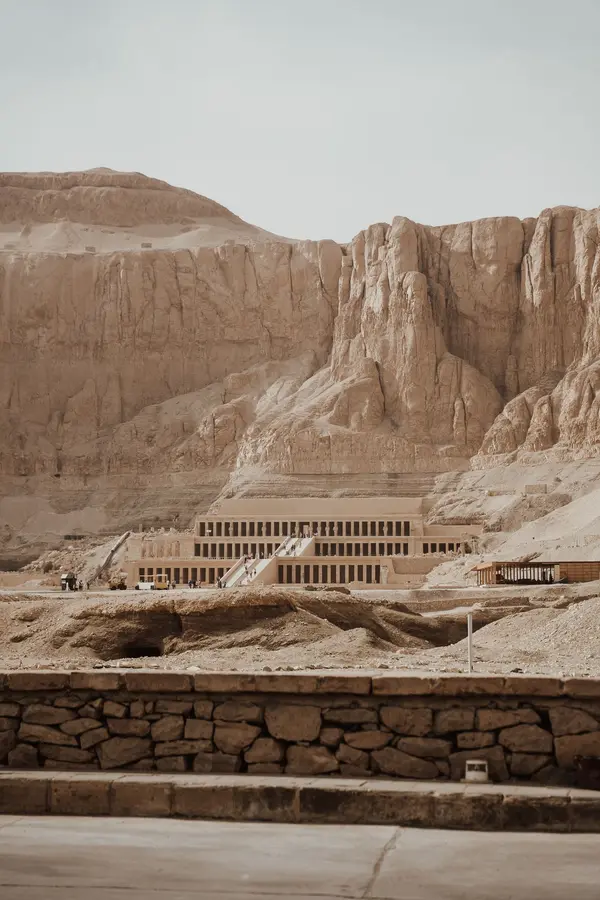
The three-story temple nestled into the rock face pays tribute to ancient Egypt's most famous female pharaoh. As you ascend between the terraces, incredible reliefs and desert panoramas unfold before you.
Quick facts: The rock-cut facade of the terraced temple rising on three levels is more than 97 meters wide, and the limestone cliffs towering behind it embrace it on all sides. The 3,500-year-old structure was the burial center of the only powerful female pharaoh in Egyptian history.
Highlights: It is the burial place of a female ruler who held a royal title but wanted to be recognized as a man, so she had herself depicted with a beard and pharaonic regalia. Among the reliefs adorning the walls, you can find the depiction of the Punt expedition, which shows in life-size images the ships laden with frankincense trees and the inhabitants of distant lands.
6. Colossi of Memnon
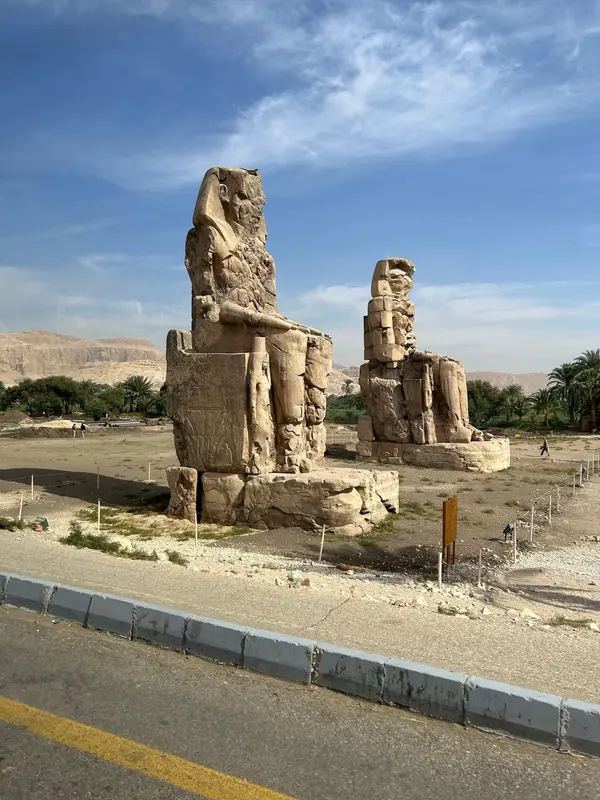
One of the world's oldest tourist attractions, which even the ancient Romans traveled to see. At dawn, the golden light of the sun emerging behind the statues offers a nearly haunting sight.
Quick facts: Two colossal stone statues guard the site, each 18 meters tall and weighing about 720 tons, at the entrance to the mortuary temple of Pharaoh Amenhotep III. Of the statues raised in the 14th century BC, the northern one used to emit a strange, singing sound at dawn, which the Greeks called the song of Memnon.
Highlights: After the earthquake of AD 27, one of the statues made a hissing, weeping sound at dawn, which Roman tourists listened to for hours in reverence. The sound was caused by the morning dew flowing through the cracks, and it continued until the restoration of AD 199, when the imperial repair silenced it forever.
7. Luxor Museum
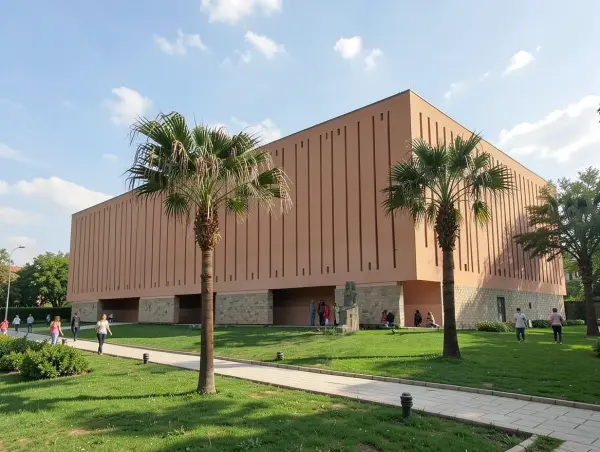
In few places can you see the most beautiful objects of the pharaohs' world this close. In a modern museum setting, standing directly in front of the artifacts, you can discover the heights of Egyptian art.
Quick facts: The collection features only a few hundred objects, but every single one is of outstanding quality, which is why it is considered one of the best small museums in the world. The exhibition showcases the masterpieces of the age of the pharaohs in a modern museum layout with excellent lighting, something that can hardly be found anywhere else in Egypt.
Highlights: The biggest sensation is the two royal mummies from Tutankhamun's tomb, which were brought here in 2019 and can now be viewed in a separate hall in climate-controlled glass cases. The other wonder of the museum is the crocodile hall statues from the reign of Amenhotep III, which were found in the twentieth century in a single hiding place preserved in flawless condition.
8. Mummification Museum
One of the world's most extraordinary mummy collections awaits you, where you can see real human bodies preserved for millennia up close. You will learn how the embalmers prepared the bodies and what rituals accompanied the burial.
Quick facts: Here more than 150 mummies and animal remains are preserved, including crocodiles that were offered to Sobek, the god of fertility. The collection also displays the royal mummy from the tomb of the former high priest Masaharta, which is still in a stunning state of preservation.
Highlights: The most striking sight is the mummy of a young man who was buried with a wide smile, his face preserving that expression for more than three thousand years. In one part of the exhibition, the entire embalming process is shown with real tools, clay vessels, and original fabric remnants, so you can almost see the priests at work before your eyes.
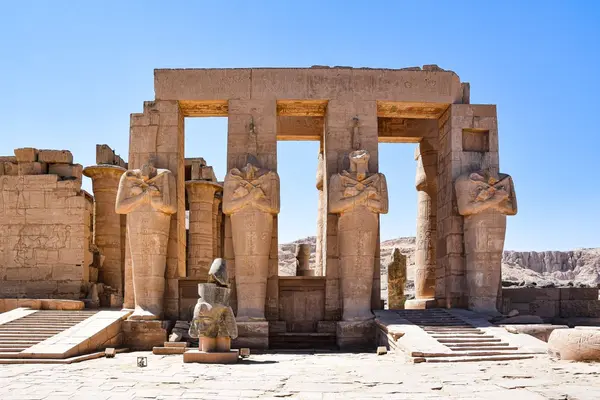
9. Ramesseum
The fallen 19-meter giant colossus embodies the pharaoh's titanic might, and it even inspired Shelley. The fallen reliefs of the pylon and the dawn light awaken the ancient Egypt.
Quick facts: Shelley's English sonnet "Ozymandias" was inspired by the giant colossus lying fallen on the courtyard floor, which depicted Ramses II. The colossus was once about 19 meters tall and nearly 1,000 tons, with the head alone measuring 2.5 meters.
Highlights: The colossus's head, about 2.5 meters tall and 7 tons, still lies fallen on the ground, and Shelley used this head as the muse for his sonnet. The astronomical ceiling ornament depicts the sky goddess Nut, and after almost 3,000 years it remains completely intact.
Where to Stay in Luxor, Egypt
Selected by City Buddy based on guest reviews and proximity to top attractions
Search all hotels in Luxor, EgyptPowered by agoda
Opening days in Luxor, Egypt
Which of the top sights close on which day of the week — the classic trip-ruiner, checked for you.
Good news: all 8 top sights with known hours are open every day of the week.
Closed on Monday · 0 closed, 8 open
Nothing closes on Monday — all 8 sights with known hours are open.
Opening days from Google Maps (checked 2026-09-09). Public holidays, strikes and seasonal hours can differ — check the official website before you go.
Traditional Sweet Dishes
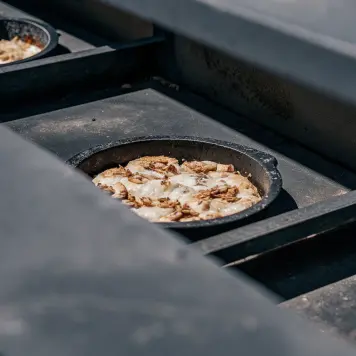
Umm Ali
Umm Ali is Egypt's beloved bread pudding, made with puff pastry, milk, sugar, and nuts, then baked until golden and gooey. Legend says the dish was invented in the 13th century when the wife of a sultan created it to celebrate his victory.
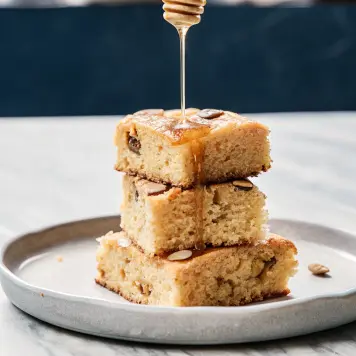
Basbousa
Basbousa is a dense semolina cake soaked in sweet syrup and often topped with almonds or coconut. In Luxor it is usually served warm with a drizzle of creamy honey syrup and a sprinkle of pistachios.
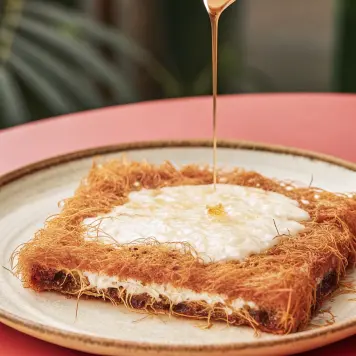
Kunafa
Kunafa features crispy shredded pastry wrapped around a molten layer of sweet cheese or cream. Street vendors in Luxor spin the golden threads by hand and serve it piping hot with sugar syrup poured over the top.
Traditional Savory Dishes
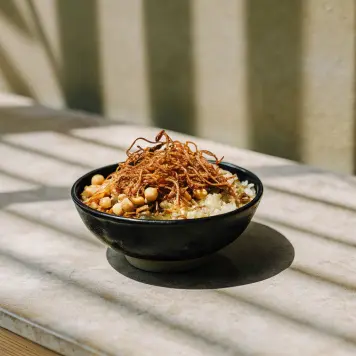
Koshari
Koshari is Egypt's national comfort dish, layering rice, lentils, macaroni, chickpeas, and crispy fried onions under a spicy tomato sauce. In Luxor it is a beloved street food eaten at any time of day.
Fattah
Fattah is a festive dish of tender mutton or beef layered over crispy toasted bread and rice, finished with a garlicky vinegar-tomato sauce. Across Luxor it is the traditional centerpiece of Eid al-Adha celebrations.
Molokhia
Molokhia is a velvety green soup made from finely chopped jute leaves cooked with garlic and coriander, usually served over rice with rabbit or chicken. It is a signature of Upper Egypt, where families in Luxor have perfected the recipe for generations.
Traditional Beverages

Karkade
Karkade is a deep red hibiscus drink that is famously served ice cold in Luxor and Aswan. Locals drink it for its tart, cranberry-like flavor and believe it helps beat the desert heat and lower blood pressure.
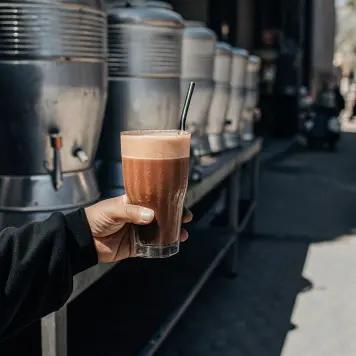
Tamr Hindi
Tamr Hindi is a sweet and tangy tamarind juice that has been enjoyed in Egypt since ancient times. Street vendors in Luxor chill it in big glass urns and serve it year-round as a refreshing cooler.
Sahlab
Sahlab is a warming, thick milk drink made from orchid root powder, sugar, and rosewater, topped with cinnamon and crushed nuts. It is a cozy winter favorite in Luxor's cafes and tea houses.
Frequently Asked Questions about Luxor, Egypt
Is Luxor, Egypt safe?
How many days should you spend in Luxor?
When is the best time to visit Luxor?
Is Luxor, Egypt expensive?
How can you get around Luxor?
Get a PDF with the most popular attractions sent to your email
Get a PDF with all attractions, ratings, and tips. Perfect for offline use.
Most popular day trips
Valley of the Kings
Pharaonic rock tombs on the West Bank, home of Tutankhamun's burial chamber.
Dendera Temple
Remarkably preserved temple of Hathor near Qena, north of Luxor.
Esna Temple
Ptolemaic temple of Khnum partly below street level in Esna town.
Edfu Temple
Grand Ptolemaic temple of Horus, the best preserved in Egypt.
Abydos Temple
Memorial temple of Seti I with the famous king list carvings.
Getting there
Airports
Train stations
Cairo, Aswan, and Qena on the Nile Valley line
Local commuter stops between Luxor and Aswan
Take a taxi or minibus from the airport into town; use the public ferry to reach West Bank sites.
Useful information for Luxor, Egypt
Overview for Luxor, Egypt
Want a day-by-day plan for Luxor, Egypt? Open the trip planner
Plan your perfect trip to Luxor, Egypt
Get a complete travel plan built just for you in under 30 seconds, with daily routes, local food tips, budget estimates and more.
Are any of these especially important to you?
Select all that apply
Getting around
How do you want to move between places?
Plan language: English