 CityBuddy
 English
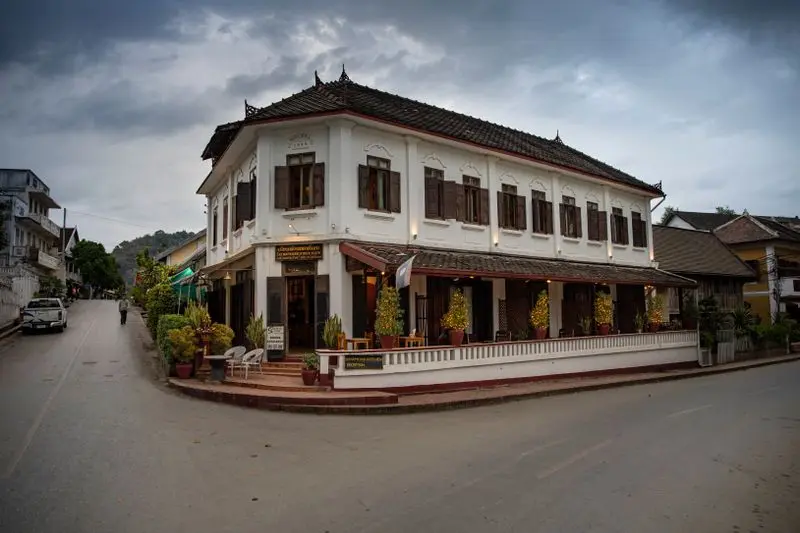
Things to Do in Luang Prabang, Laos
Photo made by Stephen Leonardi on Pexels.com
When to visit
Most popular attractions in Luang Prabang, Laos
Things to do in Luang Prabang, Laos, range from spirituality to the wild. Climb the 328 steps up Mount Phousi for a golden sunset over the Mekong, or take a dip in the turquoise pools of Kuang Si Waterfall, 29 kilometers from the city. In the evening, stroll through the night market with its lanterns and handcrafted fabrics.
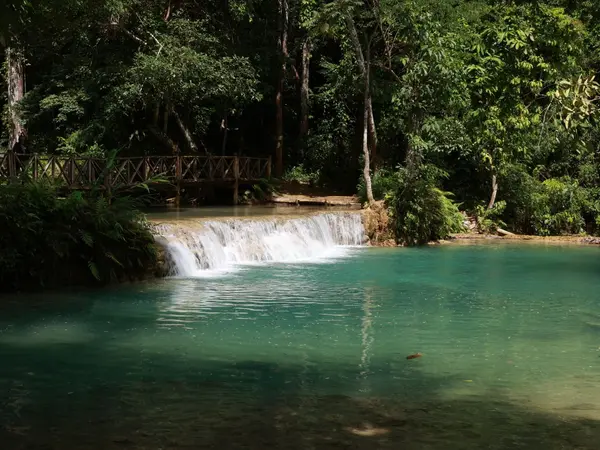
1. Kuang Si Waterfall
An emerald water paradise an hour from the city. Swim in the turquoise pools, climb up to the main waterfall and meet the rescued bears along the trail.
Quick facts: Its turquoise waters form over limestone waterfalls in a series of about 30 natural sapphire-colored pools. The main waterfall plunges about 60 meters into a deep, ice-cold pool, perfect for a refreshing dip on hot days.
Highlights: Few know that the sun bears at the local conservation center are rescued from illegal trade and live just a few meters from the turquoise pools, where you can see them while you swim. The surreal color of the water comes from dissolved calcium reflecting the light, creating shades from emerald green to electric blue that change with the time of day.
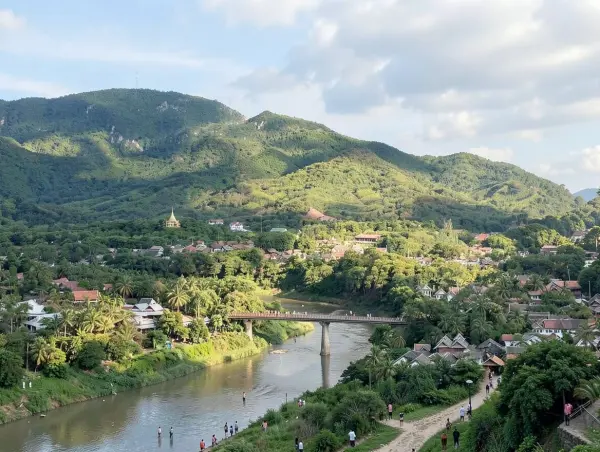
2. Mount Phousi
The best place to admire the city from above, with a short but challenging climb. At the top, golden temples and a 360 degree panorama over two rivers await you.
Quick facts: The summit reaches 100 meters above the Mekong River and is climbed via 328 steps. Along the trail you will encounter Wat Tham Phousi temple with a reclining Buddha sculpture.
Highlights: At sunset, almost all travelers crowd onto the western viewpoint, but the terrace on the eastern side offers an equally spectacular view of the Mekong and Nam Khan with few spectators. At 6 in the morning, local monks reach the summit to collect alms while dawn tints the valley below pink.
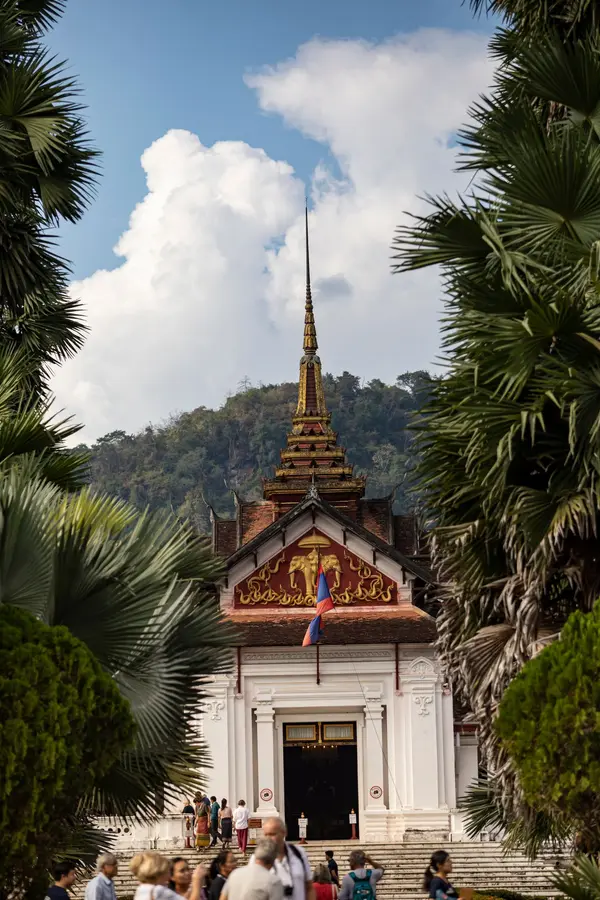
3. Royal Palace Museum
Step into the residence of Laos' last king and discover a world of golden silk and diplomatic gifts. You will walk through ceremonial halls, royal carriages and the gleaming throne that no sovereign has ever occupied again.
Quick facts: The former Royal Palace was converted into a museum after the 1975 revolution, when the Laotian monarchy was abolished. Its collections include diplomatic gifts received by the sovereigns and a ceremonial throne of solid gold.
Highlights: In the central pavilion you will find the statue of Prabang Buddha, the sacred golden image that gives the city its name and is only displayed on rare occasions during festivities. The mosaics and murals on the walls depict daily life in rural Laos, painted by local artists in the 1930s.
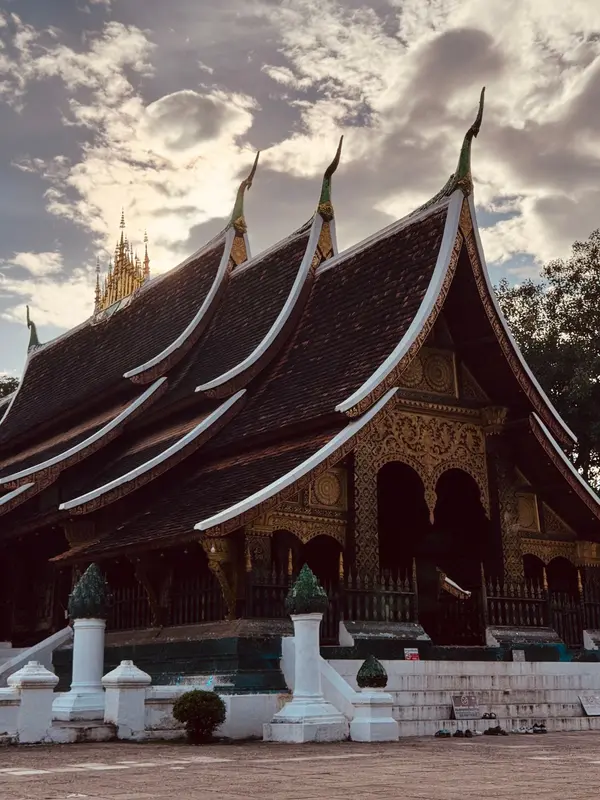
4. Wat Xieng Thong
The spiritual heart of Luang Prabang wraps you in golden roofs and shimmering mosaics. Walk among centuries-old chapels and watch the monks at their daily work.
Quick facts: The city's most beloved sacred complex boasts over 30 structures, including a royal library and gold-lacquered chapels. Its silhouette resembles a stylized lotus flower, with the low central roof sweeping toward the ground.
Highlights: Few know that the most famous mosaic, that of the Tree of Life, is made of thousands of colored glass and mirror tiles, donated by a local family in the 1960s. The Red Chapel houses an extremely rare reclining Buddha statue with a serene expression that seems to change depending on the time of day.
5. Night Market
The most authentic way to end a day in this Laotian city. Stroll among fabrics, lanterns and the aroma of grills, bargaining with genuine smiles.
Quick facts: Every evening, about 300 stalls line up along Sisavangvong Road, transforming the center into a maze of textiles and local crafts. Everything you find here is produced in the provinces of northern Laos, from the Hmong mountains to the Xieng Khouang highlands.
Highlights: The real surprise comes at sunset, when temperatures drop and the smell of lemongrass and grilled chicken fills the street, while Hmong vendors set up their makeshift looms. Here you can watch a grandmother weaving a natural silk scarf while she tells you how indigo color is extracted from the fermented leaves she keeps in a jar behind the stall.
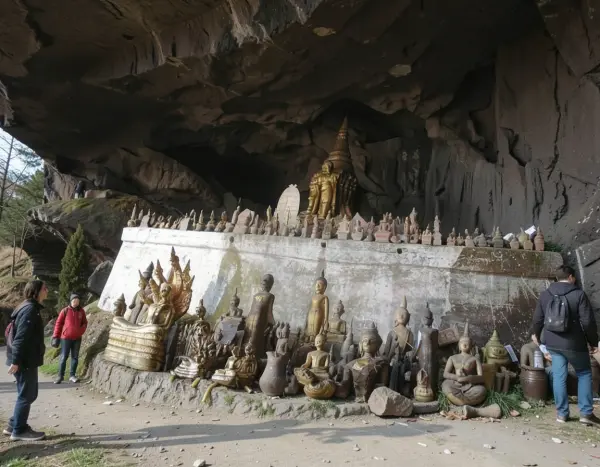
6. Pak Ou Caves
A riverside sanctuary with thousands of Buddhas carved into the limestone rock. Climb the steps among ancient statues while the Mekong flows below you.
Quick facts: The caves hold more than 4,000 Buddha statues, many of which were left here by pilgrims as votive offerings over the centuries. The Mekong River flows right beneath the two caves, which are only reachable by boat from Luang Prabang.
Highlights: The lower cave, Tham Ting, is literally invaded by thousands of Buddhas in wood, bronze, and terracotta, some only a few centimeters tall, others as large as a person, stacked on shelves and in natural niches. Local worshippers still climb up barefoot today to pray and leave their own statuette, a ritual that has continued for centuries without interruption.
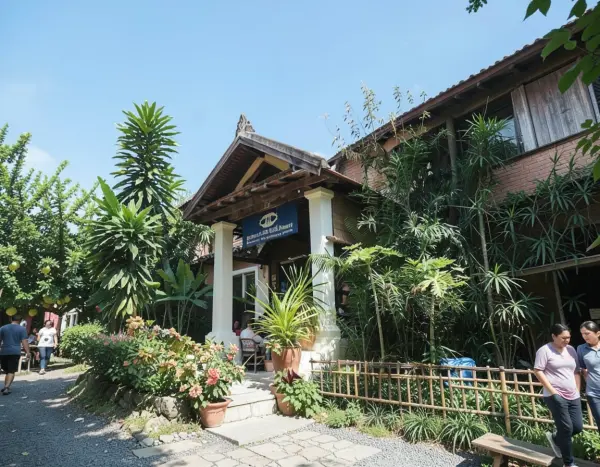
7. Lao Traditional Arts and Ethnology Centre
A journey into Laos' ethnic cultures without leaving Luang Prabang. Fabrics, rituals and stories of 49 different peoples in a restored colonial palace.
Quick facts: Over 49 ethnic groups of Laos are represented in its collections, with artifacts ranging from ceremonial textiles to tribal musical instruments. The exhibitions rotate regularly to make room for lesser-known cultures of the country, such as the Akha and Hmong.
Highlights: On the upper floor there is a collection of textiles that some villages still produce today with traditional looms, and each piece tells a specific ritual or family story. The center works directly with local communities, who often send young artisans to demonstrate their techniques live in front of visitors.
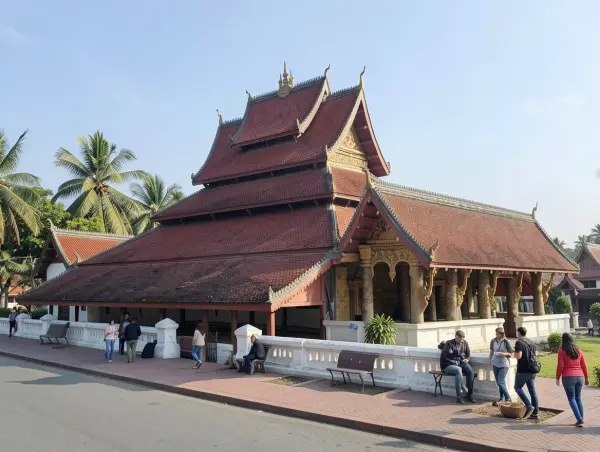
8. Wat Mai Suwannaphumaham
A peaceful temple where monks continue their daily life away from the crowds. Walk among golden stuccoes, ancient statues and the scent of incense that envelops the courtyard.
Quick facts: This temple is located along the main street of Luang Prabang, just a few minutes on foot from the historic center and the Mekong River. Its full name references Suwannaphum, the ancient golden kingdom, and it houses one of the city's most beautiful collections of wooden Buddhas.
Highlights: The prayer hall hides a ceiling entirely decorated with golden motifs and red lacquer that light up when the sun filters through the narrow windows. Few visitors stop to observe the carved wooden panels on the doors, which depict scenes of Laotian daily life from a century ago.
Where to Stay in Luang Prabang, Laos
Selected by City Buddy based on guest reviews and proximity to top attractions
Search all hotels in Luang Prabang, LaosPowered by agoda
Opening days in Luang Prabang, Laos
Which of the top sights close on which day of the week — the classic trip-ruiner, checked for you.
Monday: 1 of 8 top sights closed — plan museums for another day.
Closed on Monday · 1 closed, 7 open
Opening days from Google Maps (checked 2026-10-13). Public holidays, strikes and seasonal hours can differ — check the official website before you go.
Traditional Sweet Dishes
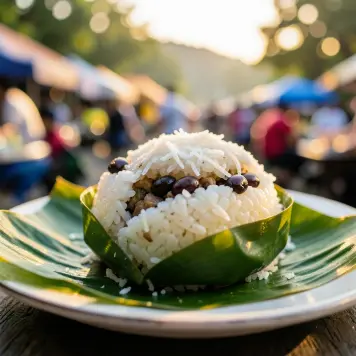
Khao Tom
Khao Tom is a sticky rice dessert wrapped in banana leaves and often filled with sweet coconut and black beans. It is commonly sold by street vendors in the morning markets of Luang Prabang.
Khao Nom Kok
Khao Nom Kok is a coconut rice pancake cooked in a special round, dome-shaped clay mold over a charcoal fire. Vendors flip these tiny pancakes with a bamboo skewer, giving them a crisp edge and a soft, creamy center.
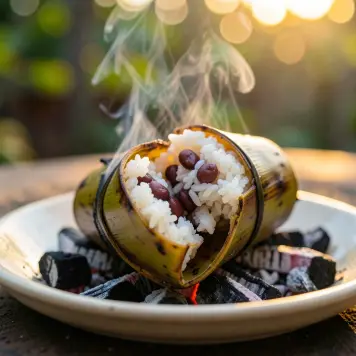
Khao Lam
Khao Lam is sweet sticky rice mixed with coconut milk and red beans, then stuffed inside a bamboo tube and roasted over coals. The bamboo imparts a subtle smoky flavor and the dessert is cracked open and eaten right from the tube.
Traditional Savory Dishes
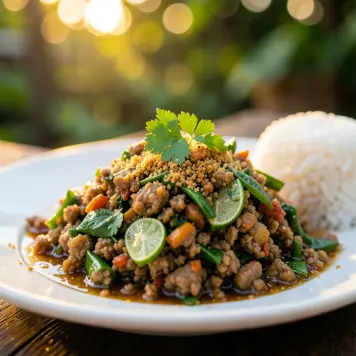
Laap
Laap is considered the national dish of Laos, a minced meat salad seasoned with lime juice, fish sauce, toasted rice powder, and fresh herbs. Each Luang Prabang family has its own variation, and it is traditionally served with sticky rice.
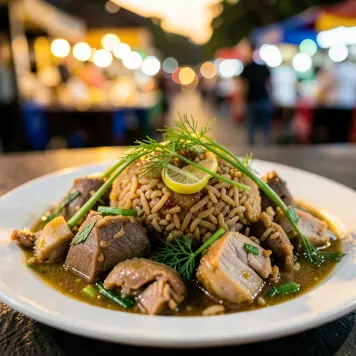
Orm Luang Prabang
Orm is a hearty buffalo or pork stew thickened with grated roasted rice and flavored with lemongrass, dill, and galangal. This slow-cooked dish is a beloved specialty in Luang Prabang and is often sold at the famous night market.
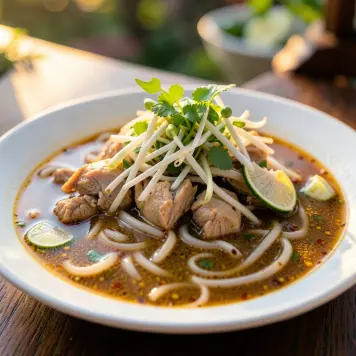
Khao Piak Sen
Khao Piak Sen is a comforting chicken noodle soup with thick, hand-cut rice noodles and a rich, peppery broth. It is a popular breakfast dish across Luang Prabang and is typically garnished with bean sprouts, lime, and fresh herbs.
Traditional Beverages

Lao Lao
Lao Lao is a traditional rice whiskey that has been distilled in Laos for centuries, often made in small village stills. It is commonly served at celebrations and ceremonies, and visitors to Luang Prabang can tour local distilleries to taste it.
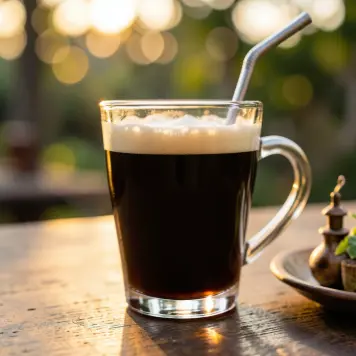
Café Lao
Café Lao is the strong, dark coffee grown in the Bolaven Plateau and brewed through a traditional metal drip filter. In Luang Prabang, it is typically served with sweetened condensed milk, reflecting the French colonial influence on local drinking culture.
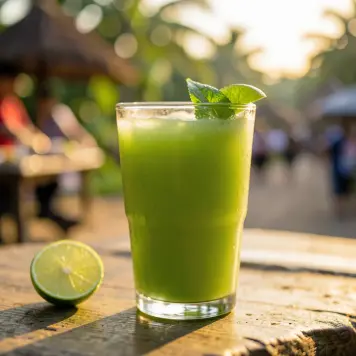
Nam Oi
Nam Oi is fresh sugarcane juice pressed right at roadside stalls throughout Luang Prabang. Vendors often add a squeeze of lime or kaffir lime leaves for a refreshing citrus twist, making it a favorite way to beat the tropical heat.
Know before you go
What a day costs in Luang Prabang, and the rip-offs to avoid
Cost per person per day
Top rip-offs to avoid
- Inflated tuk-tuk fares. Agree on the price before boarding, use the LOCA or InDrive apps, or walk a short distance from the main tourist hubs to find a fairer driver.
- Temple donation pressure. Donate only inside official temple donation boxes, and politely decline anything pressed into your hand.
- Night market ticket and goods padding. Count your change in front of the seller and check your bag contents before paying and leaving.
Fair taxi from the airport: 50,000 LAK - 100,000 LAK (€2 - €4)
Cheaper option: Airport shuttle van or public tuk-tuk into town; several operators run shared vans to the centre (30,000 LAK)
All scams, fair prices and rulesFrequently Asked Questions about Luang Prabang, Laos
Is Luang Prabang, Laos safe?
How many days are needed to visit Luang Prabang, Laos?
What is the best time to visit Luang Prabang, Laos?
Is Luang Prabang, Laos expensive?
How do you get around Luang Prabang, Laos?
Get a PDF with the most popular attractions sent to your email
Get a PDF with all attractions, ratings, and tips. Perfect for offline use.
Most popular day trips
Kuang Si Waterfall
Stunning multi-tiered turquoise waterfall with natural pools for swimming
Pak Ou Caves
Sacred caves filled with thousands of Buddha statues carved into limestone cliffs
Muang Ngoi Neua
Riverside village with dramatic karst mountains, trekking, and relaxed atmosphere
Nong Khiaw
Scenic mountain town on the Nam Ou River with limestone peaks and viewpoint trails
Phou Si Mountain
Sacred hill in the old town offering panoramic sunset views over the city and Mekong
Getting there
Airports
Train stations
China-Laos high-speed rail connecting Vientiane to Kunming
China-Laos high-speed rail, southern terminus
The airport is just 3 km from the old town, a 10 minute tuk-tuk ride. The new high-speed railway station is about 8 km from the center, with shuttle vans available for onward transfer.
Useful information for Luang Prabang, Laos
Overview for Luang Prabang, Laos
Want a day-by-day plan for Luang Prabang, Laos? Open the trip planner
Plan your perfect trip to Luang Prabang, Laos
Get a complete travel plan built just for you in under 30 seconds, with daily routes, local food tips, budget estimates and more.
Are any of these especially important to you?
Select all that apply
Getting around
How do you want to move between places?
Plan language: English