 CityBuddy
 English
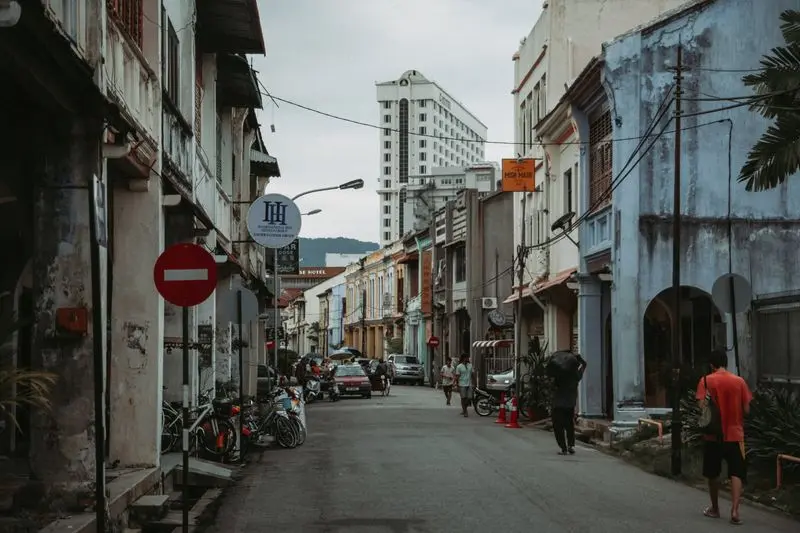
Things to Do in George Town, Malaysia
Photo made by Nikita Belokhonov on Pexels.com
When to visit
Most popular attractions in George Town, Malaysia
The best things to do in George Town, Malaysia begin with the blue-hued Cheong Fatt Tze Mansion, a 38-room heritage hotel built in the 1880s. Wander Penang Street Art at Armenian Street, where 24 murals scatter across a 2-kilometer radius. Then climb the 5,000-step staircase at Kek Lok Si Temple, Southeast Asia's largest Buddhist complex.
1. Pinang Peranakan Mansion
Step into a restored mansion that holds 1,000+ artifacts from the wealthy Straits Chinese era. Wander through ornate rooms, courtyard gardens, and stumble upon secrets like a hidden opium den.
Quick facts: This restored heritage mansion showcases over 1,000 artifacts collected by a local businessman, including Straits Chinese furniture, porcelain, and jewelry spanning the early 1900s. The palace-like building features intricate carvings, colorful tiles, and a grand courtyard that transport visitors back to the era of the Peranakan community in Southeast Asia.
Highlights: The private opium smoking room tucked behind a mirrored wall is something most visitors walk right past, complete with original brass pipes and a narrow carved bed. Look closely at the dining table settings, the porcelain pieces are arranged exactly as they'd be for a Peranakan wedding banquet called a tok panjang, a feast that could stretch for 12 courses over several hours.
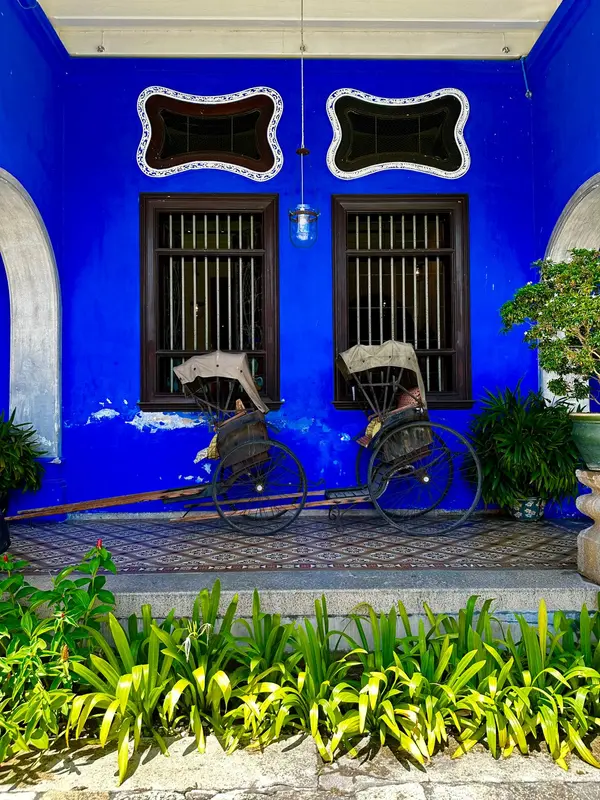
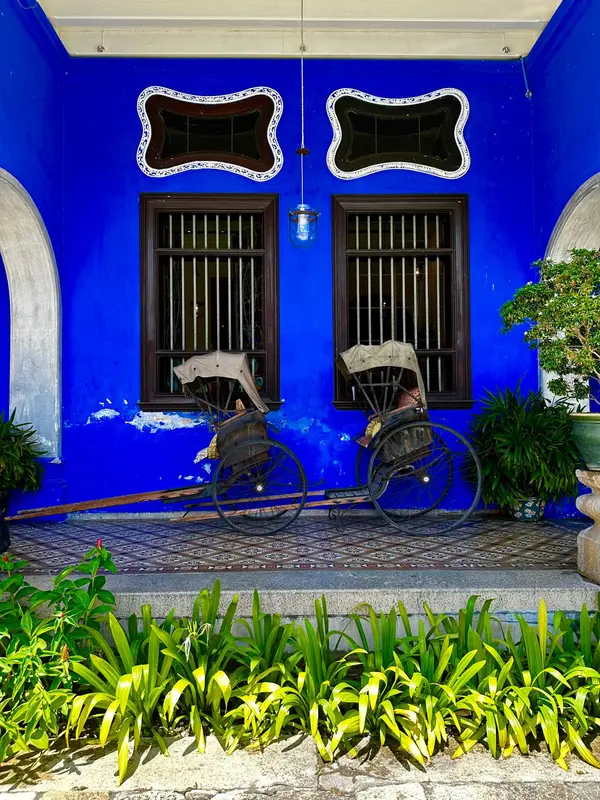
2. Cheong Fatt Tze Mansion
Step inside one of Southeast Asia's most photogenic heritage homes, an indigo blue courtyard mansion frozen in time. Wander through carved screens, lantern-lit halls, and a museum tour that reveals the tycoon's lavish lifestyle.
Quick facts: The entire exterior is painted in indigo blue, a shade chosen for its feng shui properties that were believed to block evil spirits. The 38-room mansion was once home to a Chinese tycoon and now operates as a boutique hotel and heritage museum.
Highlights: The walls glow an unmistakable indigo blue, created from lime and natural indigo dye, and the color shifts throughout the day as sunlight moves across the courtyard. Gaze up at the intricate Peranakan ceramic tiles, carved wooden screens, and stained glass panels that blend Chinese, European, and Malay craftsmanship in every corner.
3. Fort Cornwallis
Step inside Southeast Asia's most complete surviving star fort and walk the ramparts where British cannons once guarded the strait. You'll explore original prison cells, a chapel, and an open-air amphitheater while taking in sweeping water views.
Quick facts: This star-shaped fortification stands at the northeastern tip of Penang island, where Captain Francis Light first landed in 1786 to claim the island for Britain. A single bronze cannon from 1603, known as Seri Rambai, sits inside and locals still place joss sticks and flowers at its mouth, believing it brings fertility.
Highlights: The old Seri Rambai cannon is the real showstopper. Visitors toss small coins into its barrel while locals make wishes, and the tradition of leaving joss sticks and flowers comes from a belief that the cannon can help couples conceive, a practice dating back to the 1970s. Walk to the outer ramparts and you'll find a row of original iron cannons still aimed across the strait toward the mainland.
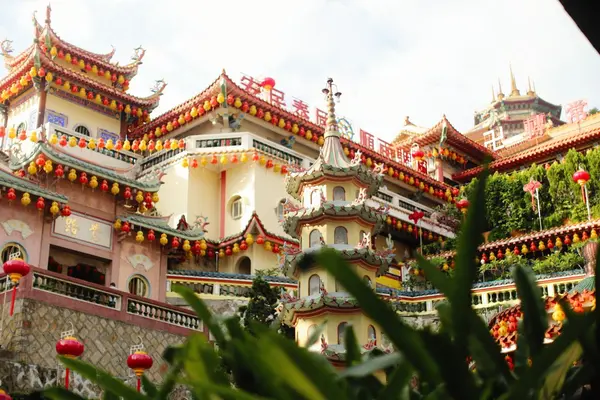
4. Kek Lok Si Temple
Climb the hillside to find Southeast Asia's most architecturally blended temple complex. You'll walk through ornate halls, ride a funicular to a massive bronze goddess, and look out over George Town from the top.
Quick facts: The complex spreads across several hillsides and includes a seven-story pagoda that blends Chinese, Burmese, and Thai architectural styles in one structure. A 30.2-meter bronze statue of Guan Yin, the goddess of mercy, towers above the grounds and is among the tallest of its kind in the world.
Highlights: The Pagoda of Ten Thousand Buddhas stacks Chinese, Thai, and Burmese tiers into one vertical landmark, so every floor feels like a different country. At night, the entire hillside lights up with thousands of lanterns during the Chinese New Year season, turning the temple into a glowing cascade of color and sound.
5. Penang Hill
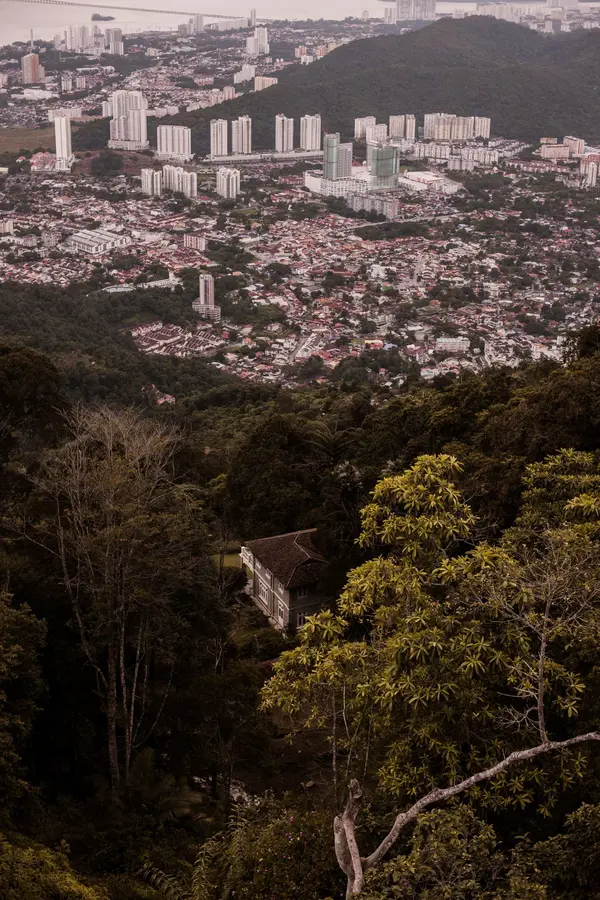
Trade George Town's humidity for cool, pine-scented air in minutes. Ride a near-vertical funicular to sweeping island views, jungle trails, and a historic hilltop with surprises around every bend.
Quick facts: Rising 833 meters above sea level, it is Penang's highest point and offers views across the island and mainland. The funicular railway, which crawls up the 1.4 kilometer track, is one of the oldest in the world and draws over 1.5 million riders yearly.
Highlights: The funicular is genuinely a two-stage affair: an older cable-hauled section built by the British and a newer 2010 Swiss-made train that climbs at a 27.8% gradient, among the steepest in the world. Stand near the driver's window on the way up and you'll feel the floor tilt sharply as the car pitches along the tracks.
6. Batu Ferringhi Beach
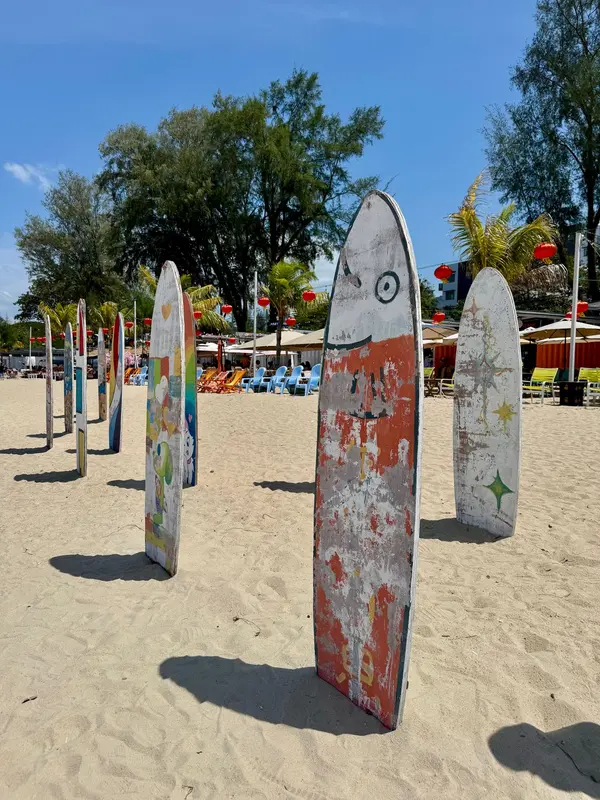
Golden sands, warm waters, and the smell of grilled stingray fill the air along this 2-kilometer stretch. Watch the sun sink into the strait, then wander a night market that sets up right on the sand.
Quick facts: This stretch of golden sand runs about 2 kilometers along the northwestern coast of Penang Island, and it is one of the oldest beach tourism spots in Malaysia, drawing visitors since the 1970s. By late afternoon, the beach transforms into a nightly night market with over 100 stalls selling souvenirs, clothes, and local crafts.
Highlights: After sunset, the beach becomes a launching ground for parasailers who glide right over the waves, with harnesses attached to speedboats that zip along the shoreline. On calm evenings, you can spot dozens of horses being ridden along the surf, a tradition that has been going on here for decades.
7. Clan Jetties
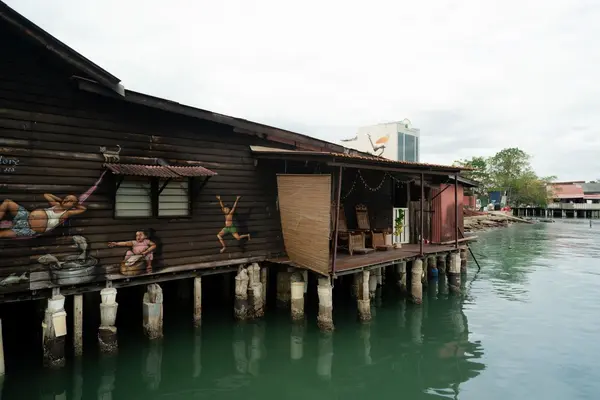
Walk on creaking wooden planks above the sea and step into a living Chinese clan village frozen in time. Smell the salt air mixed with incense while kids pedal tricycles past century-old prayer altars.
Quick facts: Six surviving wooden stilt villages stretch out over the water along Pengkalan Weld, each community tracing its roots to a different Chinese clan from the 1800s. Roughly 5,000 people still call these jetties home, making them one of the last living waterfront kampungs in Penang.
Highlights: The Chew Jetty alone houses over 100 families packed onto a narrow wooden walkway barely wide enough for two motorcycles to pass. Residents still hang their laundry on lines overhead while tourists wander through their living rooms, and some families run tiny souvenir stalls right from their front porches.
8. Blue Mansion
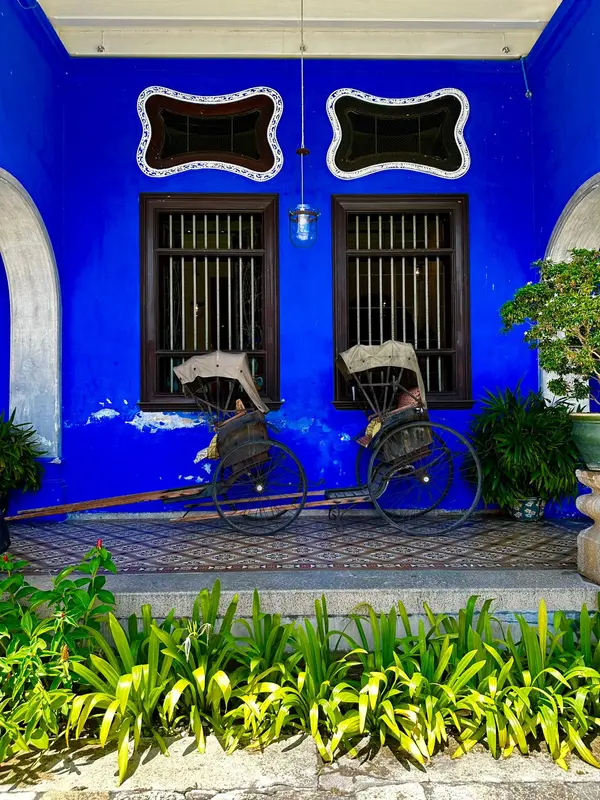
Walk through a 220-room indigo courtyard mansion that time almost forgot. You'll trace the steps of a tycoon through carved screens, tiled mosaics, and a rooftop cistern that still holds water today.
Quick facts: The indigo facade comes from a mix of limewash and natural dyes, and the house took seven years to complete in the late 19th century for a man who made his fortune trading in spices and opium. Its 38 rooms and five courtyards follow traditional feng shui principles, with the central courtyard's granite floor stones set at a slight angle to channel rainwater toward the drains.
Highlights: The famous blue color isn't just paint: workers layered lime, sand, and an organic dye derived from local indigo plants, and the pigment literally seeps deeper into the plaster with age, so the walls grow richer in hue over time. The mansion's restoration in the 1990s won the UNESCO Asia-Pacific Heritage Award, and the housekeeper still keeps the original hand-carved timber screens that let cool air flow through all five courtyards, making the interior noticeably cooler than the street even in midday heat.
9. Esplanade
Stroll a breezy waterfront promenade where colonial history meets modern street food. Watch the sunset over the strait while locals jog, fly kites, and snack at the nearby hawker stalls.
Quick facts: The Esplanade Walkway stretches along the waterfront boulevard known as the Esplanade, a space that has anchored George Town's social life since the colonial era. The adjacent padang (open field) hosts celebrations, food festivals, and fireworks displays throughout the year, giving walkers a front-row seat to local life.
Highlights: Every evening just before sunset, the walkway fills with families flying kites over the padang while the Ferris wheel glows against the darkening sky. On clear nights, you can watch Penang Hill turn purple in the distance as the harbor lights begin to twinkle, a scene that has played out here for generations.
Where to Stay in George Town, Malaysia
Selected by City Buddy based on guest reviews and proximity to top attractions
Search all hotels in George Town, MalaysiaPowered by agoda
Opening days in George Town, Malaysia
Which of the top sights close on which day of the week — the classic trip-ruiner, checked for you.
Good news: all 8 top sights with known hours are open every day of the week.
Closed on Monday · 0 closed, 8 open
Nothing closes on Monday — all 8 sights with known hours are open.
Opening days from Google Maps (checked 2026-10-20). Public holidays, strikes and seasonal hours can differ — check the official website before you go.
Traditional Sweet Dishes
Cendol
Cendol features pandan-flavored green jelly worms served over shaved ice with coconut milk and palm sugar. In George Town, hawkers often prepare it street-side, where the colorful layers make it as much a visual treat as a refreshing dessert.
Nyonya Kuih (Kueh)
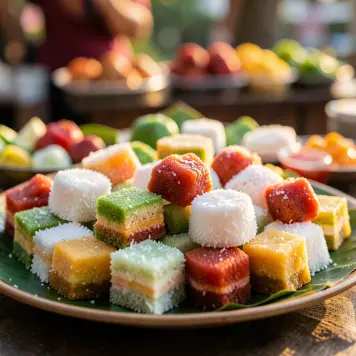
These colorful bite-sized Peranakan sweets come in dozens of variations, from steamed layered cakes to coconut and pandan treats. George Town is famous for its Nyonya kuih stalls that still use traditional banana leaf wrapping and natural dyes.
Apom Balik
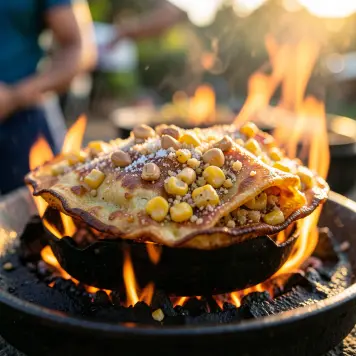
Apom balik is a crispy folded pancake stuffed with sweet corn, crushed peanuts, and sugar. In George Town, vendors cook it on heavy iron molds over open flames, giving it an irresistibly toasty, caramelized edge.
Traditional Savory Dishes
Char Kway Teow
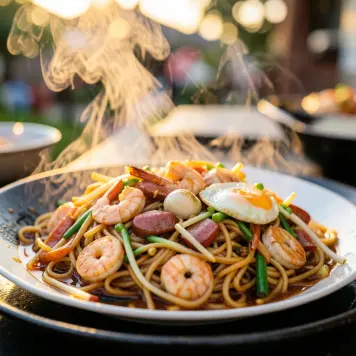
This smoky stir-fried flat noodle dish is cooked over intense heat with prawns, Chinese sausage, eggs, and bean sprouts. George Town is considered one of the best places in the world to taste it, with the wok hei or breath of the wok being the signature mark of a great rendition.
Assam Laksa
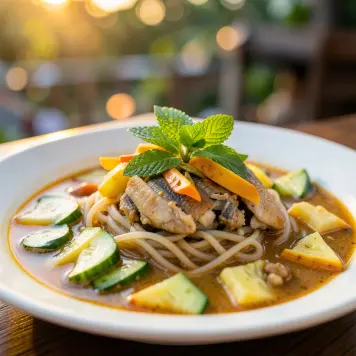
This tangy fish-based noodle soup gets its sour punch from tamarind and is loaded with pineapple, cucumber, mint, and torch ginger. George Town's assam laksa is so celebrated that it was once ranked among the world's most delicious dishes by international food guides.
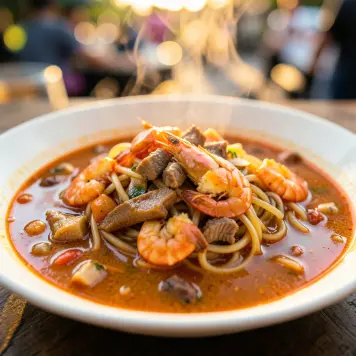
Hokkien Mee
George Town's version of Hokkien mee is a rich prawn and pork rib noodle soup, distinct from its Kuala Lumpur stir-fried cousin. The broth is simmered for hours with prawn shells and heads, creating a deeply savory, reddish-orange soup that defines Penang street food.
Traditional Beverages
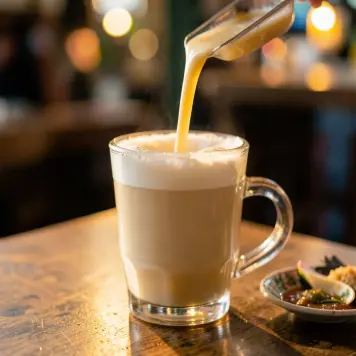
Teh Tarik
Teh tarik, or pulled tea, is made by pouring sweet milky tea back and forth between two containers to create a frothy top. In George Town's kopitiams, expert pullers raise the stream high for show, a skill that has become part of Malaysia's culinary heritage.
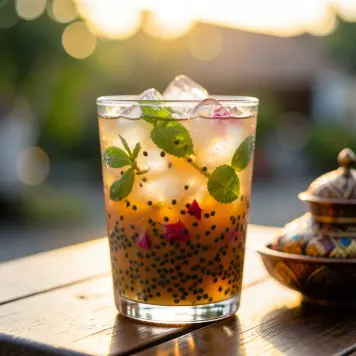
Air Katira
Air katira is a cooling drink made with attar of roses, basil seeds, and a jelly-like resin called katira, served over ice. It is a beloved George Town refreshment, especially popular with Penang's Muslim community after fasting during Ramadan.

Cham
Cham is a unique local blend of coffee and tea served together in one cup, a drink born from Penang's multicultural influences. The name comes from the local phrase meaning mix, and it perfectly balances the bitterness of coffee with the smoothness of milk tea.
Frequently Asked Questions about George Town, Malaysia
Is George Town, Malaysia safe?
How many days in George Town, Malaysia?
Best time to visit George Town, Malaysia?
Is George Town, Malaysia expensive?
How to get around George Town, Malaysia?
Get a PDF with the most popular attractions sent to your email
Get a PDF with all attractions, ratings, and tips. Perfect for offline use.
Most popular day trips
Batu Ferringhi
Popular beach area with water sports, night market, and beachfront resorts
Penang Hill
Hill station with panoramic views, nature trails, and cool climate
Balik Pulau
Rural village with durian orchards, paddy fields, and local food stalls
Teluk Bahang
Coastal village with national park, fishing villages, and beaches
Alor Setar
State capital of Kedah with grand mosque and royal museum
Getting there
Train stations
North-South line connecting to Kuala Lumpur and Thailand
From Penang International Airport, take a taxi (45 minutes) or Grab rideshare into George Town. From Butterworth Station, cross the ferry to George Town in about 20 minutes.
Useful information for George Town, Malaysia
Overview for George Town, Malaysia
Want a day-by-day plan for George Town, Malaysia? Open the trip planner
Plan your perfect trip to George Town, Malaysia
Get a complete travel plan built just for you in under 30 seconds, with daily routes, local food tips, budget estimates and more.
Are any of these especially important to you?
Select all that apply
Getting around
How do you want to move between places?
Plan language: English