 CityBuddy
 English
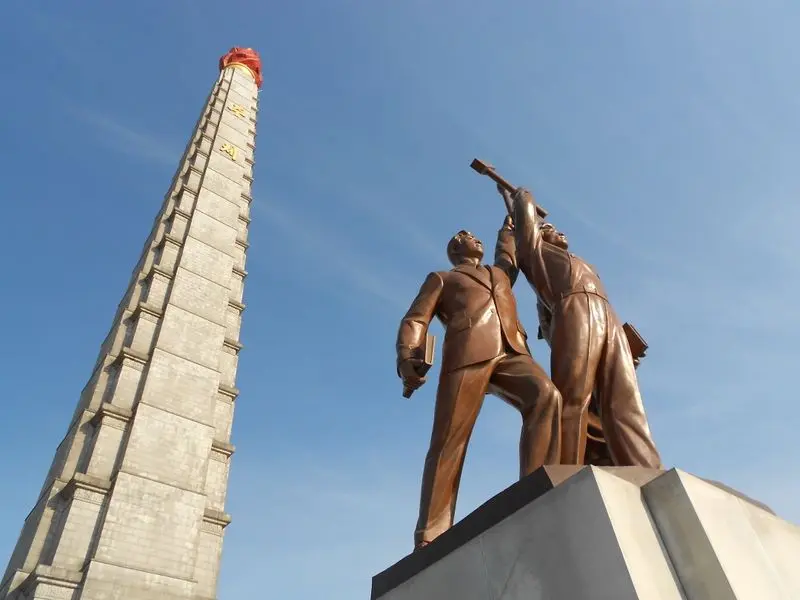
Things to Do in Pyongyang, North Korea
Photo made by Lukas Kindl on Pexels.com
When to visit
Most popular attractions in Pyongyang, North Korea
Things to do in Pyongyang, North Korea, start at the vast Kim Il Sung Square, which can hold over 100,000 people. A few minutes' walk away stands the Juche Tower, 170 meters tall, with a panoramic view over the Taedong River. Complete the itinerary with the Mansudae Monument, whose bronze statues reach 20 meters in height. Every visit requires an authorized guide and formal attire.
1. Kim Il Sung Square
A place that tells the recent history of the country through its monumental architecture. Walking across the vast paved square offers a unique perspective on the ceremonial life of the capital.
Quick facts: It is the symbolic and ceremonial heart of the city, where the great military parades and the most important public events of the country take place. Its vast stone paving opens directly onto the Taedong River, creating one of the most photographed urban panoramas of the capital.
Highlights: Witnessing a dawn here means seeing the square completely empty, an extremely rare experience for a space so charged with meaning. The government buildings surrounding it light up in the evening with architectural details closely reminiscent of Soviet neoclassical style, creating a surprising contrast with the silence of the place.
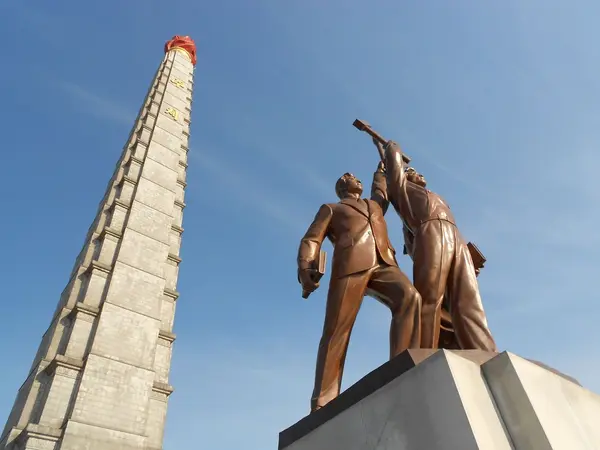
2. Tower of the Juche Idea
One of the most majestic symbols of the capital, visible from every corner of the city center. Climbing up, you enjoy a 360-degree view over squares, skyscrapers, and the Taedong River.
Quick facts: It is a monumental tower erected on the banks of the Taedong River, with an illuminated flame at the top that lights up every evening. Its construction celebrates the political ideology that bears its name, and it is one of the most recognizable landmarks of the capital.
Highlights: The flame at the top of the tower is not merely decorative: it is lit at night and symbolizes the continuity of the ideology, creating a spectacular contrast with the darkness of the river. From the pedestal, one can see the entire Kim Il Sung Square on the other side of the river, a panorama that few places offer with such clarity.
3. Kumsusan Palace of the Sun
A place where time seems to have stopped and every gesture is charged with ritual meaning. Tourists and citizens move in a solemn silence that you will not find in any other museum in the world.
Quick facts: The remains of the founder of the North Korean state rest here, in a hall enveloped in absolute silence and soft lighting. Visitors enter only in guided groups, after strict checks, and must follow a rigid protocol of respect.
Highlights: The most striking moment comes when visitors find themselves before the body preserved under glass, illuminated by a reddish light, while the icy air of the hall makes everything almost surreal. Every gesture, from the bow to the backward step without turning around, is choreographed according to precise rules that make the experience unique in the world.
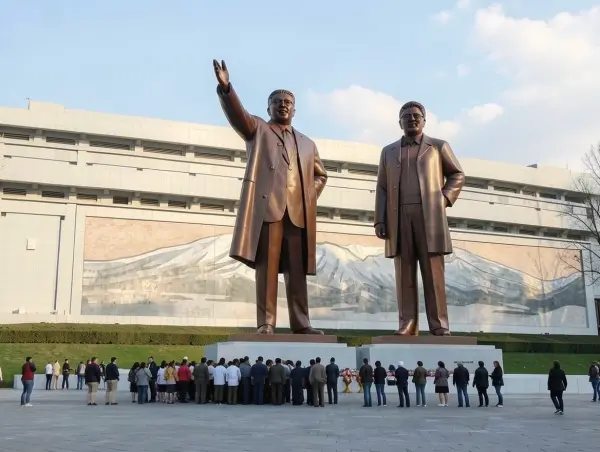
4. Mansudae Grand Monument
A monumental site that embodies the identity of an entire nation. Here you will experience the rigor of protocol and the solemn atmosphere that surrounds every visit.
Quick facts: Two enormous bronze statues of the two historical leaders dominate a square that can host tens of thousands of people during official celebrations. Foreign visitors almost always arrive here accompanied by a designated guide, and the protocol requires bowing before the figures.
Highlights: Almost every group of foreign visitors is welcomed with a mandatory floral tribute: one must buy bouquets of flowers and place them at the feet of the statues while the guide films the moment. The gesture is not merely symbolic, it is an integral part of the travel experience in this country.
5. Victorious Fatherland Liberation War Museum
A journey into the collective memory of a country that few manage to visit. You will walk through halls full of relics, dioramas, and stories of a conflict that marked the peninsula.
Quick facts: It houses memorials and relics related to the Korean conflict, with strong symbolic value for the national historical narrative. The visit is usually part of the organized itineraries for foreign visitors to Pyongyang.
Highlights: Inside you will find immersive dioramas reproducing battle scenes with lights and sounds, an experience that truly leaves a mark. The most evocative point is the view over the Taedong River from outside, with the Korean-Chinese friendship monument towering nearby.
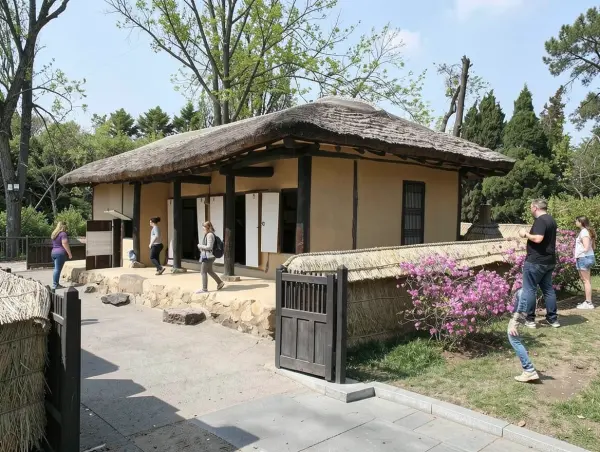
6. Mangyongdae Native House
A journey into Korean peasant life, preserved as a national treasure. You walk among straw courtyards and simple rooms, guided by stories that weave together history and family.
Quick facts: It is said to be the birthplace of the founder of the nation, a detail that turns it into a pilgrimage destination for many visitors. The setting preserves the appearance of a typical Korean farmhouse, with straw and rammed earth walls.
Highlights: The house is arranged in a circle of simple buildings with thatched roofs, and visitors are led in silence through bare rooms where every object tells a family story. There is a traditional well in the courtyard and it is said that the water that comes out of it is considered lucky, so much so that many tourists bend down to touch it before leaving.
7. Ryugyong Hotel
An architecture that defies every expectation, a symbol of ambition and suspension. You will see it towering on the horizon, impossible to ignore.
Quick facts: This unfinished structure towers hundreds of meters above the urban skyline, a true concrete colossus that has remained without glass panes for decades. Its stepped pyramid silhouette is among the most recognizable in the world, although very few visitors can observe it up close.
Highlights: The most curious detail is that no guest has ever slept here: the building remained completely empty for years, a lifeless concrete shell. Today its facades are covered with blue glass panels that shine like a giant mirror at sunset, but much of the interior still remains a mystery.
8. Chollima Statue
A symbol of drive and ambition that dominates the city from above. The visitor admires a monumental sculpture and an unforgettable panoramic view.
Quick facts: The winged bronze horse stands out against the sky of the capital, a symbol created to represent the drive toward the country's economic progress. The sculpture depicts a horse in full gallop carrying two figures, a man holding a document and a woman holding a sickle.
Highlights: Admiring it up close, one notices the muscular details of the horse, almost as if it were about to take flight from its granite pedestal. The elevated position on Mansu Hill offers a privileged perspective over the city, and at sunset the statue takes on golden tones that make it almost unreal.
What to pre-book in Pyongyang
These sell out or need a reservation. Book them first, in this order.
- 1.Tower of the Juche IdeaBook 4 weeks aheadBooked through your North Korea tour agency well in advance
- 2.Kumsusan Palace of the SunBook 4 weeks aheadWeeks to months ahead via your tour operator
- 3.Victorious Fatherland Liberation War MuseumBook 4 weeks aheadWeeks ahead via your tour agency itinerary
- 4.Mangyongdae Native HouseBook 4 weeks aheadWeeks ahead via your tour agency
Where to Stay in Pyongyang, North Korea
Selected by City Buddy based on guest reviews and proximity to top attractions
Search all hotels in Pyongyang, North KoreaPowered by agoda
Opening days in Pyongyang, North Korea
Which of the top sights close on which day of the week — the classic trip-ruiner, checked for you.
Sunday: 4 of 6 top sights closed — plan museums for another day.
Closed on Sunday · 4 closed, 2 open
Opening days from Google Maps (checked 2026-10-01). Public holidays, strikes and seasonal hours can differ — check the official website before you go.
Traditional Sweet Dishes
Yaksik
Yaksik is a sweet glutinous rice cake mixed with honey, chestnuts, jujubes, and sesame oil. It is traditionally eaten on January 15th of the lunar calendar, and the name means "medicinal food" because of its nutritious ingredients.
Hobakjuk
Hobakjuk is a sweet pumpkin porridge that is velvety smooth and naturally sweetened by the pumpkin itself. It is often served warm as a comforting dessert on cold Pyongyang evenings.
Yakgwa
Yakgwa is a traditional fried honey cookie made from wheat flour and sesame oil, pressed into floral shapes. It was once reserved for royal banquets and special ceremonies, symbolizing good fortune and long life.
Traditional Savory Dishes
Pyongyang Naengmyeon
Pyongyang Naengmyeon is the city's most famous cold buckwheat noodle dish served in a tangy, icy broth with sliced beef, pear, and cucumber. It is so iconic that locals traditionally eat it on New Year's Day to symbolize starting the year fresh and cool.
Taedonggang Sungeoguk
This is a clear fish soup made with fresh mandarin fish caught from the Taedong River that flows through Pyongyang. The soup is prized for its delicate, clean flavor and is considered a special delicacy offered to distinguished guests.
Pojangmandu
Pojangmandu are large, plump steamed dumplings filled with pork, tofu, and kimchi, and they are a beloved comfort food in Pyongyang. The name "pojang" refers to the cloth pouch the dumplings resemble, and they are often served with a spicy dipping sauce.
Traditional Beverages
Sungnyung
Sungnyung is a roasted rice tea made by pouring hot water over scorched rice left at the bottom of a cookpot. It has a toasty, nutty flavor and is traditionally served after meals to aid digestion.
Insam Cha
Insam Cha is a ginseng tea made from Korean ginseng, a root that thrives in the region around Pyongyang. It is highly valued for its energizing properties and is often served to honored guests at formal gatherings.
Sikhye
Sikhye is a sweet, lightly fermented rice punch made from malted barley and cooked rice, with a subtle ginger flavor. It is typically served chilled as a festive drink during holidays and celebrations across North Korea.
Frequently Asked Questions about Pyongyang, North Korea
Is Pyongyang, North Korea safe for tourists?
How many days are needed to visit Pyongyang, North Korea?
What is the best time to visit Pyongyang, North Korea?
Is Pyongyang, North Korea expensive?
How do you get around in Pyongyang, North Korea?
Get a PDF with the most popular attractions sent to your email
Get a PDF with all attractions, ratings, and tips. Perfect for offline use.
Most popular day trips
Kaesong
Historic city with Koryo dynasty tombs and the DMZ border area
Nampo
Port city featuring the West Sea Barrage and Taean Friendship Glass Factory
Mount Myohyang
Scenic mountain with Pohyon Temple and International Friendship Exhibition
Wonsan
Coastal resort city on the Sea of Japan with sandy beaches and hot springs
Mt. Kumgang
Diamond Mountains known for dramatic granite peaks and scenic waterfalls
Getting there
Train stations
Pyongyang to Beijing (Koryo Express), Pyongyang to Dandong, Pyongyang to Moscow
Connects to China via Sinuiju border crossing
Foreign visitors must book through an authorized tour agency. Entry is almost exclusively via organized tours from Beijing by Air Koryo or train.
Useful information for Pyongyang, North Korea
Overview for Pyongyang, North Korea
Want a day-by-day plan for Pyongyang, North Korea? Open the trip planner
Plan your perfect trip to Pyongyang, North Korea
Get a complete travel plan built just for you in under 30 seconds, with daily routes, local food tips, budget estimates and more.
Are any of these especially important to you?
Select all that apply
Getting around
How do you want to move between places?
Plan language: English