CityBuddy
Ulugh Beg Observatory
Best time to visit
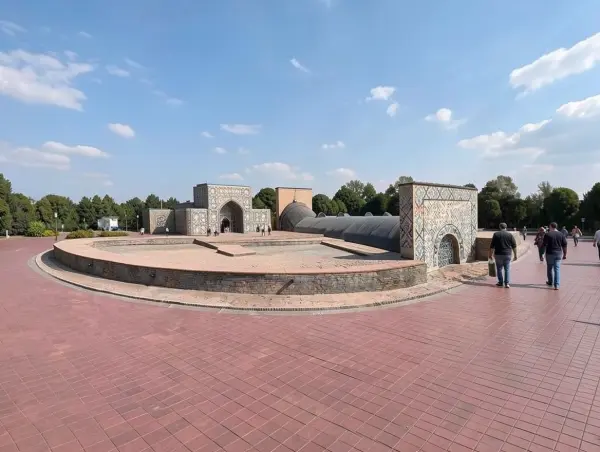
Spring or autumn gives the most pleasant temperature for walking around the area. Morning or late afternoon gives the best light for photographing the sextant's marble arc.
Budget tips
The entrance fee is low, about 20,000 som (just under 20 SEK). Samarkand's combination ticket for several sights does not include the observatory, so pay separately.
Recommended for
History enthusiasts, Astronomy lovers, Photography enthusiasts
Plan your visit
45 minutes to 1 hour
About
Quick facts: Here, the astronomer Ulugh Beg measured the positions of the stars with a sextant that had a radius of 40 meters. His star catalog from the 15th century was so accurate that it was used by Western astronomers several hundred years later.
Highlights: The giant sextant is not above ground but dug deep into the earth crevice, so only an arc of marble sticks up. On its 40-meter-long arc, Ulugh Beg measured the positions of the sun and planets with an accuracy that would take two centuries before the Europeans matched it.
Insider tips
- First go down into the excavation tunnel and look up along the marble arc to really grasp the size.
- The museum next door shows Ulugh Beg's original manuscripts and astronomical instruments, do not miss it.
- Visit on a weekday in the middle of the day to avoid the tourist groups that usually arrive between 10 and 11.
- Combine with a walk to Ulugh Beg's observatory hill for a view over all of Samarkand.
Where to Stay in Samarkand
Selected by City Buddy based on guest reviews and proximity to top attractions
Search all hotels in SamarkandPowered by agoda