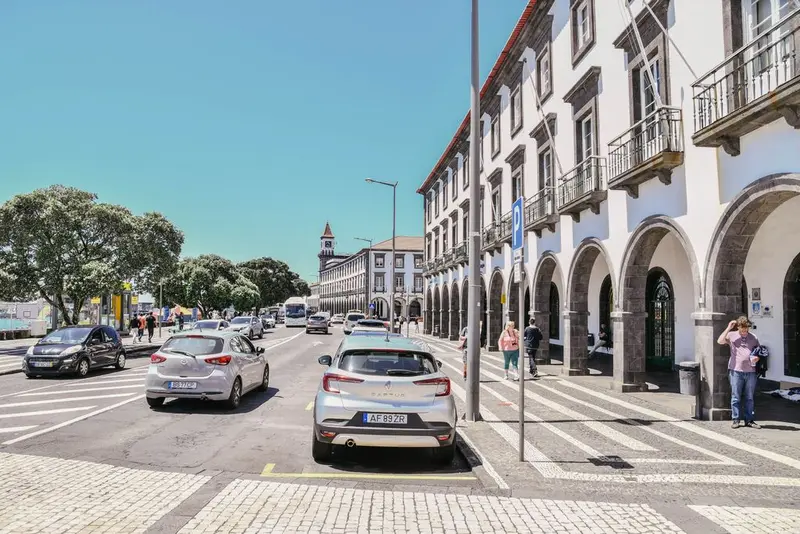
Ponta Delgada is well served by public transport and its centre is walkable, so you can cover most stops on foot. The historic centre, Avenida Infante Dom Henrique, the marina, and Mercado da Graça all sit within a pleasant walking radius. For Jardim António Borges, Museu Carlos Machado, and Forte de São Brás, hop on the local urban bus lines that loop through the city; single fares are around one to two euros. Ponta da Ferraria on day three requires the bus toward Sete Cidades or a taxi, roughly 15 to 20 minutes each way. Bolt and Uber operate locally at about one euro per kilometre. A rental car is the alternative if you prefer more flexibility.
Budget Breakdown
$219Trip total · $73 per day
Accommodation / night
$55
Food / day
$14
Transport / day
$4
Activities / day
$0
Daily total
$73
Trip total
$219
Accommodation is hostel-style. Food includes street food and casual dining. Transport budget for occasional bus rides.
Join a free walking tour to get your bearings and learn about Ponta Delgada's history.
What to order in Ponta Delgada, Portugal, with a fun fact for each
Traditional Savory Dishes
Cozido das Furnas
A volcanic, geothermal-cooked stew from Furnas where meats and vegetables are buried in the ground and slow-cooked by steam, yielding deep, earthy flavors.
Lapas Grelhadas
Grilled limpets served with garlic butter and lemon, a beloved seaside starter that highlights the Azores' abundant seafood.
Caldeirada de Peixe
A rustic fish stew that mixes several kinds of local catch with potatoes and tomatoes, reflecting the island's fishermen's tradition of combining whatever was fresh that day.
Traditional Sweet Dishes
Queijadas da Vila Franca do Campo
Small, sweet cheese tarts from São Miguel, they combine a creamy curd filling with a thin, crisp crust and are famous across the Azores.
Bolo Lêvedo
A sweet, yeast-leavened flatbread that is split and lightly toasted, commonly eaten for breakfast or as a snack and unique to São Miguel.
Arroz Doce (Azorean rice pudding)
A comforting rice pudding flavored with cinnamon and lemon peel, traditionally served at family gatherings and festas and adapted to local dairy tastes.
Traditional Beverages
Chá Gorreana
One of Europe's oldest commercial tea plantations, Gorreana grows black and green teas on São Miguel and produces flavors shaped by the island's volcanic soils and mild climate.
Chá Porto Formoso
The other historic tea estate on São Miguel, Porto Formoso produces delicate teas with mineral notes, and together with Gorreana it represents a rare example of European tea cultivation.
Vinho Verdelho do Pico
A crisp white wine grown in Pico's tiny, volcanic stone plots, Verdelho pairs exceptionally well with Azorean seafood and is part of a UNESCO-recognized wine landscape.
Export Your Trip
Get your trip plan as a PDF with maps and a CSV spreadsheet.
 CityBuddy