 CityBuddy
 Deutsch
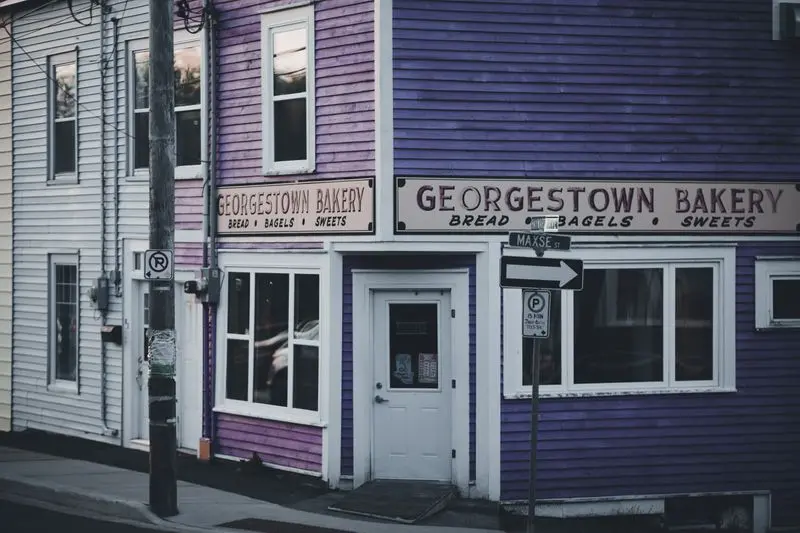
Aktivitäten in Georgetown, Guyana
Foto gemacht von Erik Mclean auf Pexels.com
Wann besuchen
Beliebteste Attraktionen in Georgetown, Guyana
For memorable things to do in Georgetown, Guyana, start at the Stabroek Market, where vendors have sold tropical produce beneath its cast-iron clock tower since 1881. Wander to the soaring St. George's Cathedral, one of the world's tallest wooden churches at 43 meters, and don't miss the Guyana National Museum on Hincks Street, where 18th-century colonial artifacts share space with vibrant indigenous crafts.
1. St. George's Cathedral
Climb to the top of one of the world's tallest all-wooden churches for sweeping views over Georgetown. Wander through timber vaults, stained glass, and a peaceful garden in the heart of the city.
Schnelle Fakten: Eines der höchsten Holzkirchen der Welt, das Bauwerk erhebt sich über 43 Meter und ist vollständig aus einheimischem Grünherz und anderem guyanischen Holz gebaut. Als Sitz der anglikanischen Diözese von Guyana wurde es 1894 geweiht, und sein Turm bietet einen Blick über die Stadt.
Highlights: Das gesamte Gebäude, von seinem aufragenden Turm bis zu den Innenpfeilern, besteht aus Holz, wobei der Rahmen von Tausenden von Holzpflöcken zusammengehalten wird und nicht von einem einzigen Metallnagel. Stellen Sie sich in die Mitte des Kirchenschiffs und schauen Sie nach oben, die Decke ragt 30 Meter empor, und die Holzbalken fächern sich auf wie das Skelett eines großen gestrandeten Wals.
2. Umana Yana
Witness a towering hand-woven palm roof built by Wai-Wai artisans, a living piece of Amerindian engineering. Wander its open interior and catch local crafts, art, and cultural events under a golden canopy of straw.
Schnelle Fakten: This striking benab-style structure was built by the Wai-Wai people using traditional Amerindian techniques, with a tall thatched roof made from all-manda leaves that rise roughly 16 meters high. It originally served as a venue for the 1974 Non-Aligned Movement foreign ministers' conference, and today it hosts cultural events, exhibitions, and official functions.
Highlights: The roof is the real showstopper here, woven entirely by hand from all-manda palm leaves using methods passed down through Wai-Wai generations, with no nails or metal framing holding the massive cone shape together. Step inside and you're standing in a dome of golden straw that filters sunlight into a warm, honey-colored glow, an experience that feels like being inside a giant woven basket.
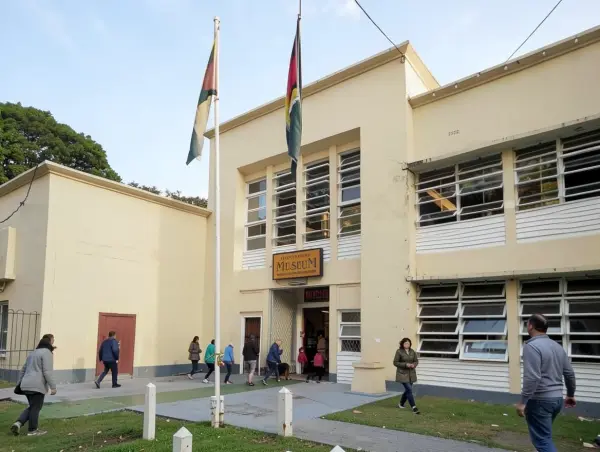
3. Guyana National Museum
Step inside Guyana's oldest museum and trace centuries of history in one afternoon. From Amerindian pottery to colonial-era artifacts, every shelf tells a story you won't find anywhere else.
Schnelle Fakten: The collection spans Guyana's natural history, colonial past, and indigenous cultures, with artifacts that trace the country's story from pre-Columbian times through independence. Visitors can see taxidermied wildlife native to the Guiana Shield, including species found nowhere else on Earth.
Highlights: One of the most striking pieces is the mounted remains of a giant river otter that once roamed Guyana's waterways, a creature few visitors have ever seen alive. The museum also holds one of the largest known collections of Amerindian archaeological artifacts in the region, giving you a rare chance to study centuries-old pottery and tools up close.
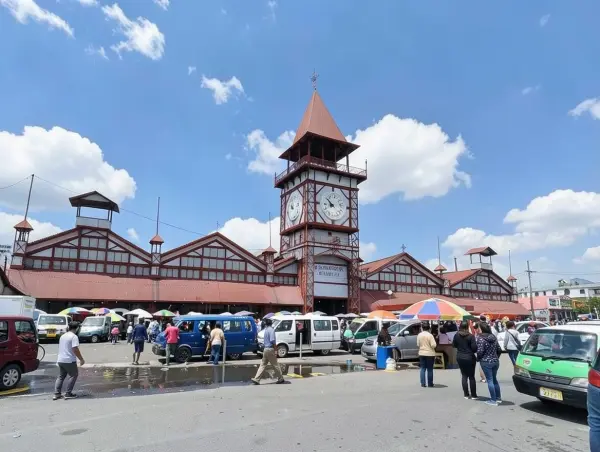
4. Stabroek Market
One of the largest markets in the Caribbean, spread over a full city block. Browse hundreds of stalls selling everything from fresh produce to handwoven crafts under one vast iron roof.
Schnelle Fakten: The market's cast-iron structure was prefabricated in Scotland and assembled on site, making it one of the largest iron-framed buildings in the Caribbean. Its distinctive clock tower rises over the waterfront and has served as a landmark for sailors navigating the Demerara River for over a century.
Highlights: The red-and-white iron clock tower is more than a timepiece; locals say the building was designed in the shape of a brooch that belonged to the wife of the colony's governor at the time. Stand under the central dome and listen, the acoustics carry the chatter of hundreds of vendors from every corner, a sound that feels like the heartbeat of the city itself.
5. Walter Roth Museum of Anthropology
Step inside Georgetown's only anthropology museum and meet nine indigenous cultures through 20,000 artifacts. Expect hands-on exhibits, woven masterpieces, and quiet galleries where history speaks through craft.
Schnelle Fakten: Home to roughly 20,000 ethnographic objects representing all nine of Guyana's indigenous peoples, this museum is the country's only anthropology museum. Named for Walter Roth, a British Guiana colonial medical officer whose family donated his vast research collection, artifacts include cassava graters, ceremonial stools, and intricate woven fiber items.
Highlights: The ground floor holds an unlabeled collection that rewards slow walking, where visitors can trace how Wai-Wai and Akawaio crafts shift from daily use to ceremonial purpose without a single glass display case. A standout is the collection of miniatures crafted by Macushi artisans, tiny woven baskets and dugout canoes so detailed you can spot the individual fiber strands.
6. Guyana Zoo
Spot Guyana's rare rainforest animals without leaving the capital. Wander shaded paths past jaguars, monkeys, and tropical birds in a peaceful green setting.
Schnelle Fakten: This zoo sits in the heart of Guyana's capital and showcases a range of wildlife found across the country's rainforests and coastal savannas. Visitors can observe native species like jaguars, capybaras, and various monkeys in a relaxed park setting.
Highlights: The chance to see a jaguar up close in its home country is something you can't replicate elsewhere. Guyana's rainforest wildlife, from toucans to giant river otters, comes together in one compact, easily walkable space.
7. Botanical Gardens
A green escape from the city's heat where towering trees keep you shaded. Wander winding paths, spot tropical plants, and watch local birds dart between the canopies.
Schnelle Fakten: This lush green space offers a cool, shady retreat in the middle of the city's tropical heat. Local families use it for weekend strolls, quiet picnics, and catching up with friends.
Highlights: The gardens hold some surprisingly old trees with massive canopies that completely block out the midday sun, making the air noticeably cooler the moment you step inside. Follow the pathways deep enough and you can almost forget you're in the middle of a capital city.
8. 1763 Monument
Stand where Guyana's fight for freedom began. The bronze figure of Cuffy towers over the Square of the Revolution, a powerful reminder of the 1763 uprising that reshaped the nation's story.
Schnelle Fakten: The monument stands in the Square of the Revolution, named after the 1763 Berbice Slave Rebellion, one of the earliest major uprisings against colonial rule in the Americas. Cuffy, the leader of that rebellion, was chosen as a National Hero of Guyana, and his face appeared on Guyanese coins for decades.
Highlights: The bronze statue depicts Cuffy broken free from his chains, muscles tensed and blowing a conch shell to rally his people, a detail inspired by the actual gestures of the rebellion's leadership. The statue was sculpted by acclaimed Guyanese artist Philip Moore, whose design was selected from a national competition in the 1970s.
9. Seawall Bandstand
A breezy oceanside stage where local life unfolds every evening. Catch live music, people-watch, and feel the Atlantic breeze on your face.
Schnelle Fakten: Ein öffentlicher Musikpavillon an Georgtowns Seawall dient seit langem als Treffpunkt für Abendspaziergänge und Open-Air-Aufführungen. Der Ort verbindet atlantische Brisen mit einem entspannten karibischen Tempo, das die Einheimischen täglich anzieht.
Highlights: Die wahre Magie zeigt sich gegen Sonnenuntergang, wenn der westliche Himmel über dem Wasser golden und orange wird und die ganze Menge gemeinsam langsamer zu werden scheint. Streetfood-Verkäufer bauen in der Nähe auf, sodass du einen Snack holen und Musik hören kannst, während die Meeresluft hereinzieht.
10. Parliament Building
A striking neo-Gothic landmark that anchors the political heart of the capital. Step inside to see architectural detail rarely found in this part of the world.
Schnelle Fakten: This stately colonial-era structure sits in the heart of the capital, its neo-Gothic facade standing out among the surrounding architecture. Visitors can spot it from several blocks away, as its distinctive clock tower rises above the city skyline.
Highlights: The clock faces on the tower are said to have been specially crafted so they can be read clearly from the busy streets below, a thoughtful design touch from over a century ago. On quiet weekday mornings, the wooden interiors creak and settle in a way that makes the building feel alive with history.
Where to Stay in Georgetown, Guyana
Selected by City Buddy based on guest reviews and proximity to top attractions
Search all hotels in Georgetown, GuyanaPowered by agoda
Öffnungstage in Georgetown, Guyana
Welche Top-Sehenswürdigkeiten an welchem Wochentag schließen, der klassische Urlaubsruinierer, für dich geprüft.
Sonntag: 3 von 7 Top-Sehenswürdigkeiten geschlossen. Plane Museen für einen anderen Tag.
Geschlossen am Sonntag · 3 geschlossen, 4 geöffnet
Öffnungstage von Google Maps (geprüft am 2026-10-23). Feiertage, Streiks und saisonale Öffnungszeiten können abweichen. Prüfe die offizielle Website vor deinem Besuch.
Traditionelle Süßspeisen
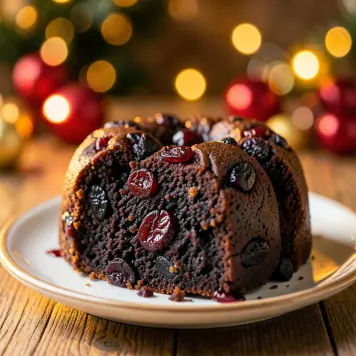
Black Cake
Black cake is a dense, dark rum-soaked fruitcake that is the centerpiece of Guyanese Christmas celebrations. The dried fruits are traditionally soaked in rum and cherry brandy for weeks, sometimes even months, before baking.
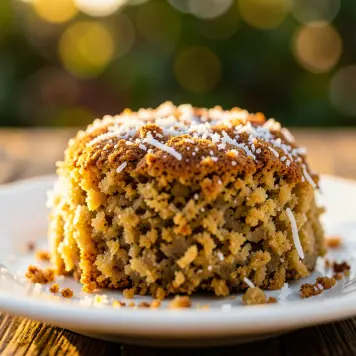
Cassava Pone
Cassava pone is a chewy, sweet baked treat made from grated cassava, coconut, and sugar, often flavored with cinnamon and nutmeg. It reflects the deep Indigenous and African culinary roots of Guyana.
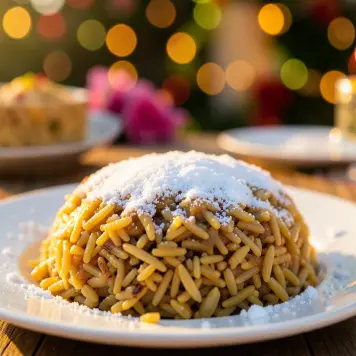
Ghee Rice with Sugar
A beloved Indo-Guyanese comfort treat, ghee rice is cooked with butter-like ghee and then sprinkled generously with sugar for a simple yet indulgent dessert. It is especially popular at weddings and festive gatherings.
Traditionelle herzhafte Gerichte
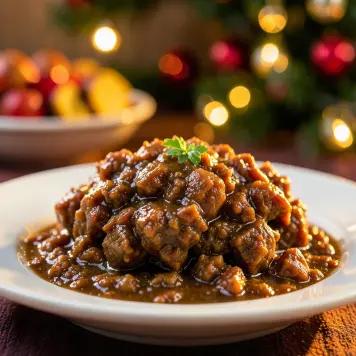
Pepperpot
Pepperpot is Guyana's national dish, a rich, slow-cooked meat stew made with cassareep, a thick sauce derived from cassava juice. It is traditionally served at Christmas and was perfected by the Indigenous Amerindian people.
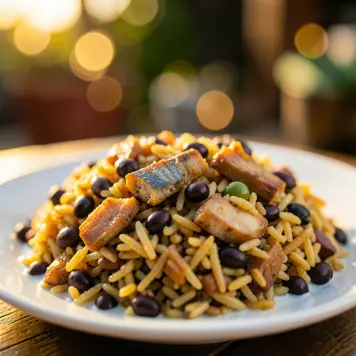
Cook-Up Rice
Cook-up rice is a one-pot rice dish simmered with coconut milk, black-eyed peas, saltfish, and often pigtail or other meats. It is a staple every Sunday and on the first day of the New Year in Guyanese homes.
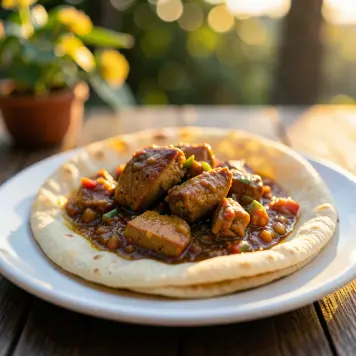
Curry and Roti
Guyanese curry and roti, typically made with chicken, duck, or goat, is heavily influenced by indentured Indian laborers who arrived in the 1800s. The roti is soft and pliable, perfect for soaking up the fragrant, spicy curry.
Traditionelle Getränke

Sorrel Drink
Sorrel is a deep red, tart holiday drink made by steeping dried hibiscus petals with ginger, cloves, and cinnamon. It is a Christmas tradition in Georgetown, often spiked with a splash of rum.

Mauby
Mauby is a bittersweet, fermented drink made from the bark of the mauby tree, simmered with spices like cinnamon and star anise. It is believed to have cooling and digestive properties and is a favorite street-side refreshment.
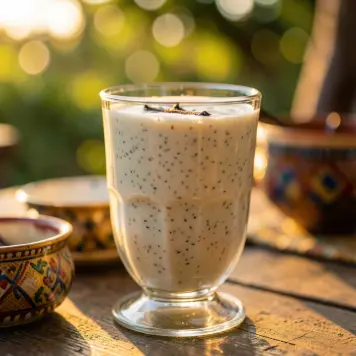
Linseed Punch
Linseed punch is a sweet, creamy drink made from boiled flaxseed blended with milk, vanilla, and nutmeg. It is a classic Guyanese beverage often served at weddings and considered a tonic for good health.
Häufig gestellte Fragen zu Georgetown, Guyana
Is Georgetown, Guyana safe?
How many days in Georgetown, Guyana?
Best time to visit Georgetown, Guyana?
Is Georgetown, Guyana expensive?
How to get around Georgetown, Guyana?
Erhalten Sie ein PDF mit den beliebtesten Attraktionen per E-Mail
Erhalten Sie ein PDF mit allen Attraktionen, Bewertungen und Tipps. Perfekt für die Offline-Nutzung.
Beliebteste Tagesausflüge
Kaieteur Falls
World's largest single drop waterfall, 226 meters tall, a must see in Guyana
Kartabo Point
Birdwatching hotspot along the Essequibo River with diverse wildlife
Mahaica
Coastal village known for fishing and traditional Dutch style homes
Anreise
Bahnhöfe
No rail network, travel by road, boat, or air
Most visitors fly into Cheddi Jagan International Airport (GEO), about 40 km from the center. Taxis and minibuses are available. The Ogle Aerodrome handles domestic flights.
Nützliche Informationen für Georgetown, Guyana
Übersicht für Georgetown, Guyana
Du willst einen Tag-für-Tag-Plan für Georgetown, Guyana? Öffne den Reiseplaner
Wann reisen Sie nach Georgetown, Guyana?
Wählen Sie Ihre Daten und Ihren Reisestil, um zu erhalten:
Sind Ihnen einige dieser Punkte besonders wichtig?
Wählen Sie alle zutreffenden aus
Fortbewegung
Wie möchtest du dich zwischen den Orten bewegen?
Sprache des Plans: Deutsch