 CityBuddy
 English
Things to Do in Nürnberg, Germany
Photo made by Travel Photographer on Pexels.com
When to visit
Plan your perfect trip to Nürnberg, Germany
Get a complete travel plan built just for you in under 30 seconds, with daily routes, local food tips, budget estimates and more.
Are any of these especially important to you?
Select all that apply
Plan language: EnglishMost popular attractions in Nürnberg, Germany
Ask about the top things to do in Nürnberg, Germany and the Kaiserburg Nürnberg usually tops the list. Climb its 350 steps for sweeping castle views, then wander down to Hauptmarkt, where the Gothic Schöner Brunnen rises 19 meters. Finish with a bratwurst at a centuries-old stall.
1. St. Lorenz Kirche
An angelic sculpture floats on a chain above the choir, 16 gilded figures carved in 1517. Crane your neck to spot the sculptor's 500-year-old self-portrait beneath the stone tower.
Quick facts: Two towers rising about 80 meters anchor a church whose hall took craftsmen nearly 200 years to finish. Inside hang rival masterpieces from the same era: Veit Stoss's gilded Angelic Salutation from 1517 and Adam Kraft's delicately carved 20-meter stone tabernacle.
Highlights: Scrutinize the base of Adam Kraft's stone tabernacle and you'll find the carver's self-portrait crouching under the load, lips parted and chisel in hand, a pose he has held since 1496. The actual 1517 Annunciation carving by Veit Stoss hangs low in the free public nave, so visitors can circle its gilded figures instead of squinting into the distant choir.
2. Schöner Brunnen
Spin the brass ring three times and make a wish, a ritual over 600 years old. Look up at 40 painted figures on a Gothic spire above the market square.
Quick facts: A gilded spire of stone rises 19 meters from the cobblestones, its forty hand-painted figures stacked in four tiers from philosophers up to prophets and church fathers. Over six centuries, the brass ring in the iron fence has been turned by countless wishing hands, though the ring you spin today is a replacement while the original rests in a museum.
Highlights: The ring is the real magic, brass worn almost golden-white by centuries of palms and still spinning in its mount, so anyone can turn it three times for luck. Watch how the metal catches the morning sun and glows like a tiny coin at knee height while the rest of the fence stays dark iron, an everyday mystery right in the city's busiest square.
3. St. Sebaldus Kirche
Oldest church in town, and proof that sacred art can feel like a treasure hunt. You'll walk from cold Romanesque stone into glowing Gothic color, ending at a nine-ton bronze masterpiece.
Quick facts: Two slim towers anchor the east end of this eight-centuries-old parish church, while inside sits a bronze shrine that took eleven years to cast and weighs nearly nine tons. Medieval glass, including the Emperor's Window, still pours colored light across the stone after surviving the city's 1945 firestorm.
Highlights: Amid the saints on Vischer's bronze shrine, the sculptor's workshop hid tiny everyday cameos: a self-portrait, a pair of tongs, and a coiled rope that read like Easter eggs for parishioners who knew exactly where to look. When the sun drops low in late afternoon, the Emperor's Window sets the entire eastern choir ablaze in scarlet and amber, a show that lasts barely twenty minutes.
4. Germanisches Nationalmuseum
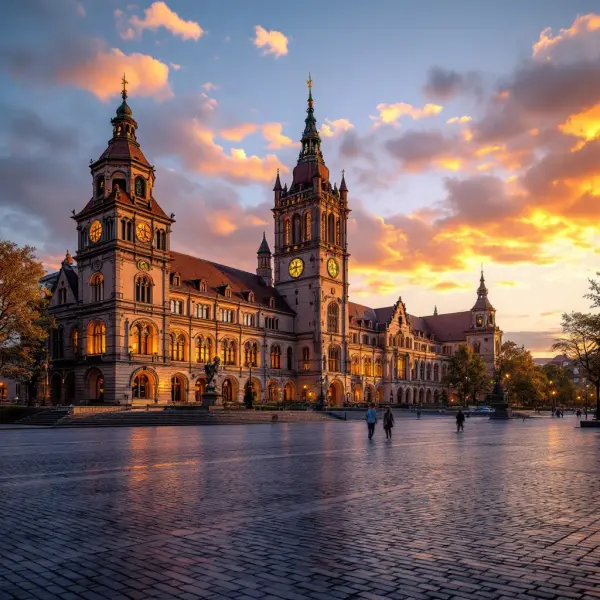
Step into one massive museum that tells a thousand years of culture through 1.3 million objects. You'll wander from medieval altars to Dürer's studio works and peer at the world's oldest globe.
Quick facts: With more than 1.3 million objects spread across some 25 connected buildings, this is Germany's largest museum of cultural history. Naturally lit galleries hold the oldest surviving terrestrial globe, Martin Behaim's hand-painted 1492 sphere, plus Albrecht Dürer's original paintings and engravings.
Highlights: A slightly squashed wooden globe from 1492 spins on a hidden axis, the oldest surviving terrestrial globe in the world, drawn before anyone could prove the Earth orbits the Sun. Curators keep it enclosed in glass under soft, dim light so visitors can still trace the faded coastlines of Europe and Africa exactly as Behaim inked them.
5. Handwerkerhof
Artisan at work is the show here, with live glassblowing and pewter casting steps away. Smell the Lebkuchen baking and watch skilled hands shape metal and glass in motion.
Quick facts: Some 15 working artisans ply their trades daily inside a ring of half-timbered houses rebuilt with traditional medieval methods. Craft demonstrations, from hand-blown glass to pewter casting, unfold inches from visitors who can follow every step for free.
Highlights: Hand-built with traditional timber joins and hand-chiselled beams, the courtyard exists only because its founding guildsmen insisted on authentic working methods. Furnace heat builds as a pewter caster pours molten metal at 230 degrees Celsius into carved molds, and a few meters away a glassblower shapes glowing globes into drinking vessels right before your eyes.
Where to Stay in Nürnberg, Germany
Selected by City Buddy based on guest reviews and proximity to top attractions
Search all hotels in Nürnberg, GermanyPowered by agoda
Traditional Sweet Dishes
Nürnberger Lebkuchen
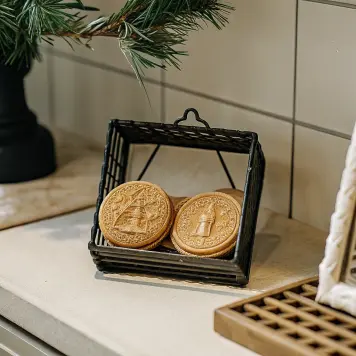
These spiced honey gingerbread cookies may officially be called Nürnberger only if they are baked within the city and carry a protected European designation. The best ones are baked on thin edible wafers called Oblaten, and local bakers guard their secret spice blends closely.
Knieküchle
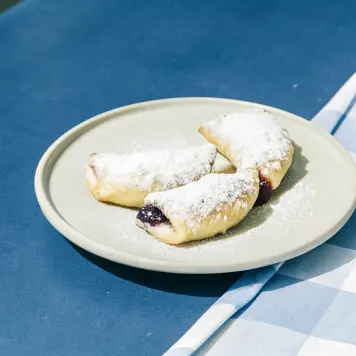
This yeasty fried pastry is dusted with powdered sugar and often paired with plum jam, and it has been a fair and market favorite in Nürnberg for centuries. The playful name is thought to come from the idea that the puffy rounds resemble bent knees.

Zimtsterne
These fragrant cinnamon star cookies are a beloved Christmas tradition in Nürnberg. The city's Lebkuchen bakers commonly produce them during the holiday season, filling kitchens with the aroma of cinnamon and almonds.
Traditional Savory Dishes

Nürnberger Bratwürste
These famously small grilled sausages may legally carry the Nürnberger name only if they are produced within the city and weigh under about 90 grams. The classic street snack is Drei im Weckla, which is three sausages in a crusty roll with mustard or horseradish.
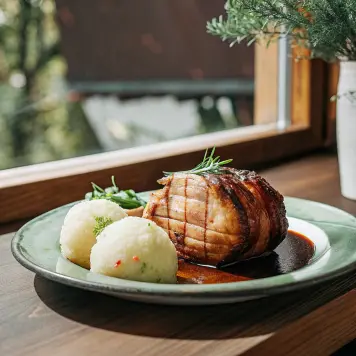
Schäufele
This is a smoked and slowly roasted pork shoulder served with potato dumplings and sauerkraut. The crackling crust and tender meat make it a Sunday favorite across the Franconian region around Nürnberg.
Blaue Zipfel
In this dish, Nürnberger sausages are gently simmered in a tangy vinegar broth with onions and bay leaves instead of being grilled. The name means blue tips in Bavarian dialect, a reference to the slight bluish tint the sausages take on while cooking.
Traditional Beverages
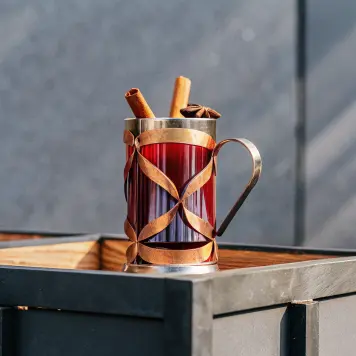
Glühwein
This spiced mulled red wine is the signature drink of Nürnberg's famous Christkindlesmarkt, one of Germany's most storied Christmas markets. Guests sip it from decorative mugs that they get to keep as a souvenir of the festival.
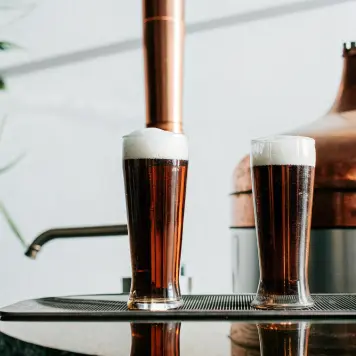
Nürnberger Rotbier
This copper colored red lager was revived by the local Tucher brewery in the late 1980s. Before pale lagers took over the region, red beer was long considered the traditional house beer of Nürnberg.
Frankenwein
The wines of the Franconian region around Nürnberg, especially those from the Silvaner grape, are traditionally bottled in the flat round Bocksbeutel bottle. This distinctive shape makes the wine instantly recognizable on any table.
Frequently Asked Questions about Nürnberg, Germany
Is Nürnberg, Germany safe?
How many days in Nürnberg, Germany?
Best time to visit Nürnberg, Germany?
Is Nürnberg, Germany expensive?
How to get around Nürnberg, Germany?
Get a PDF with the most popular attractions sent to your email
Get a PDF with all attractions, ratings, and tips. Perfect for offline use.
Most popular day trips
Bamberg
UNESCO old town with the Altenburg castle and smoked beer breweries
Rothenburg ob der Tauber
Perfectly preserved medieval town with the famous Christmas shop Käthe Wohlfahrt
Regensburg
UNESCO listed old town with the Stone Bridge and medieval city gates
Würzburg
Home of the Residenz palace and the vineyard covered Marienberg fortress
Bayreuth
City of the Wagner Festival, Margravial Opera House, and Hermitage gardens
Rent a car in Nürnberg, Germany
Getting there
Train stations
ICE to Munich, Frankfurt, Berlin, and Hamburg; direct IC/EC to Vienna, Prague, and Dresden
Take the U2 subway from Nuremberg Airport to the Hauptmarkt in about 15 minutes; most attractions sit inside the medieval city walls within walking distance.
Find flights to Nürnberg, Germany
Click to get eSim for Nürnberg, Germany
The easiest and most affordable way to get mobile internet wherever you travel.
Comments (8)
Best part was just walking the quiet streets at dawn before everyone woke up. Honestly the food alone is worth coming, those little bratwurst rolls are unreal.
The Germanisches Nationalmuseum does free entry Wednesday evenings. Great for the big collections and saves you a good 10 euros.
Bratwurst tip, order drei im weggla from a street stand, not a restaurant. Cheaper, better, and you eat while you walk.
Honestly we caught it in a rainstorm and the old town felt flat under gray skies. Would try again in spring. The sausage though, always good.
It was more rebuilt than I expected. Everything felt too clean and tidy for a place with such dark history. Interesting but not charming to me.