 CityBuddy
 English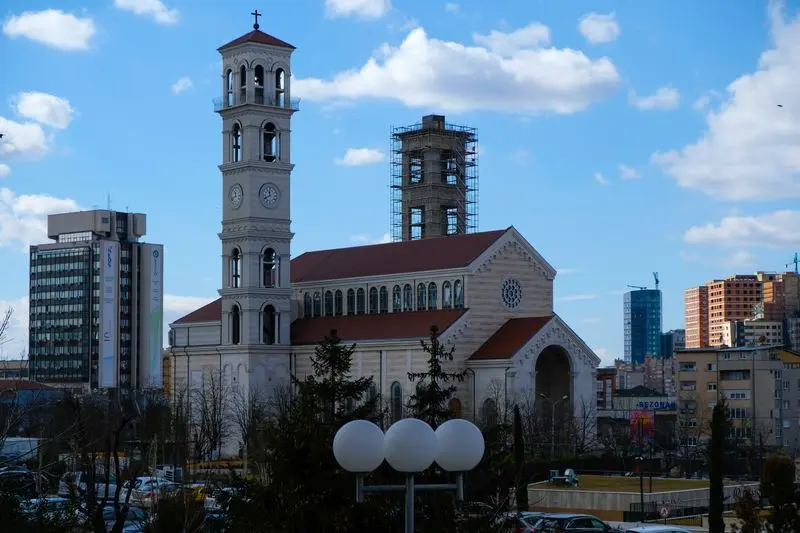
Things to Do in Kosovo
Photo made by Fotoğrafınruhu . on Pexels.com
When to visit
Plan your perfect trip to Kosovo
Get a complete travel plan built just for you in under 30 seconds, with daily routes, local food tips, budget estimates and more.
Are any of these especially important to you?
Select all that apply
Getting around
How do you want to move between places?
Plan language: EnglishMost popular attractions in Kosovo
If you are wondering what the best things worth doing in Kosovo are, start with Pristina's National Library, whose 99 domes offer a surreal sight. The 14th century Gračanica monastery frescoes are breathtaking. From the Prizren fortress, a 360 degree panorama opens up over the city and the mountains.
1. Pristina National Library
Pristina
The world's most debated library architecture, where thousands of books await readers beneath a forest of copper domes. Its strange, futuristic facade and interior halls offer an unforgettable experience.
Quick facts: The building with 99 domes was opened in 1982, and it has been one of the world's most unusual libraries ever since. The domes look as if a huge forest of mushroom caps covered the building, offering a mysterious and fascinating sight.
Highlights: The library building is covered in copper domes that form an ancient Illyrian helmet, paying tribute to the region's history. Inside, the play of natural light filtering through the domes bathes the interior spaces in a golden glow.
2. Gračanica Monastery
Gračanica
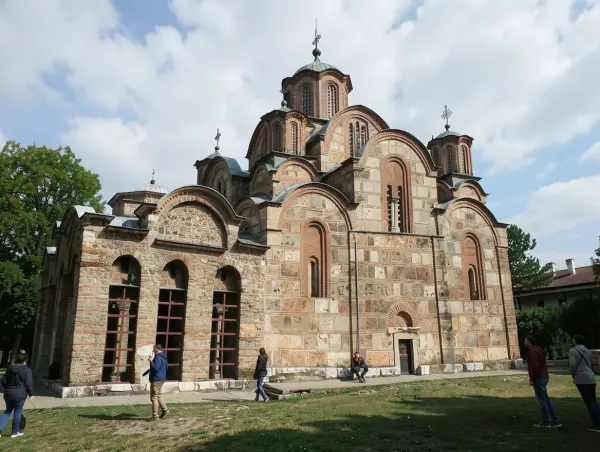
One of Europe's best-preserved medieval fresco ensembles awaits you here. Five-hundred-year-old saints and angels look back at you from the walls, while the smoke of candles and the scent of incense fill the space.
Quick facts: The walls of the Serbian Orthodox monastery built in the 14th century are covered with more than 2,000 unique frescoes. The church was consecrated by our King Saint Stephen, and it is also on the UNESCO World Heritage list.
Highlights: The frescoes dating from 1321, which cover almost the entire interior walls of the church, tell the stories of the Bible as if they were the pages of a medieval comic book. The eyes of the "Christ Pantocrator" depiction under the dome seem to follow the visitor's gaze depending on the lighting conditions.
3. Germia Park
Pristina
Quick facts: One of the largest urban parks in the Balkans spans over 62 square kilometers offering diverse ecosystems from dense forests to open meadows. Over 200 species of birds have been spotted here, making it a hotspot for birdwatchers and nature enthusiasts.
Highlights: The park features over 10 marked hiking trails with scenic viewpoints overlooking the Pristina cityscape and the Sharr Mountains. During winter, some trails transform into quiet sledding spots favored by locals, especially the gentle slopes around the small lake.
4. Prizren Fortress
Prizren
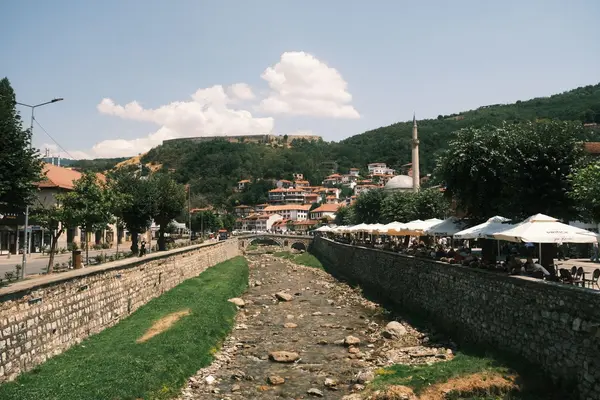
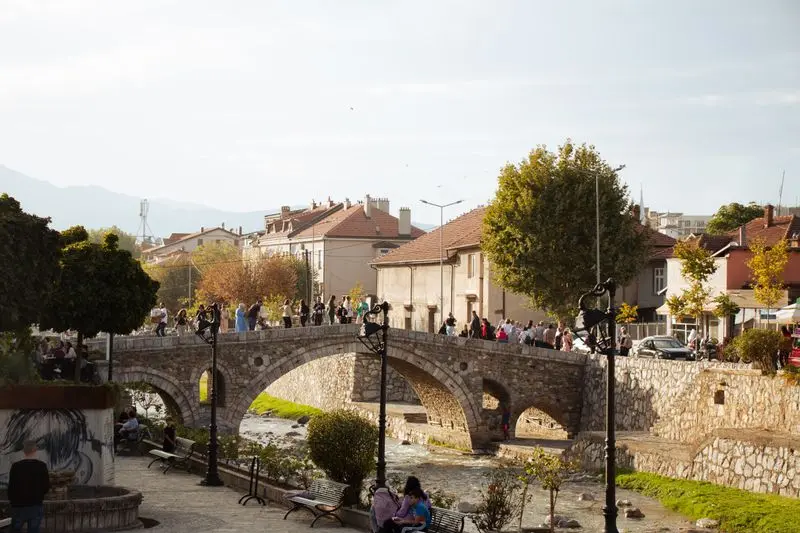
From the top of the hill you can see the entire old town and the surrounding mountains. You can walk along the walls, explore the towers, and meanwhile journey through centuries of Balkan history.
Quick facts: It was continuously used as a fortress for more than 1,100 years, which is considered a rarity in all of Europe. In the 14th century the Serbian Nemanjić dynasty, and later the Ottoman Empire, also expanded it, so today Serbian, Byzantine, and Turkish architectural elements are mixed within the walls.
Highlights: From the southeastern tower of the fortress, exactly 365 steps lead up to the top level, one for each day of the year. From the summit, the bends of the Bistrica River and the red tiled roofs of the old town offer a sight as if a medieval miniature were coming to life before you.
5. Sinan Pasha Mosque
Prizren
It transports you to the heart of Pristina from centuries past, where stone carving and religious architecture meet in perfect harmony. Inside the mosque, silence and refreshing coolness greet you, while the play of light filters through the tall windows.
Quick facts: Pristina's largest Ottoman-era building, the 17th-century mosque, was built from nothing other than the carved stones of the Roman-era city of Ulpiana. The mosque's stunning dome rises 35 meters high, and it can hold 600 worshippers at once.
Highlights: The dizzyingly tall minaret standing at the entrance dominates the skyline of this part of the city with its 42 meters. Standing under the dome inside, you are overcome by the special feeling that in the dimly lit interior, the frescoes and gilded calligraphies are so rich in detail that they cannot be taken in with a single glance.
6. Marble Cave
Gadime
One of Europe's most beautiful underground lakes awaits you, where you can paddle in crystal-clear water. You will boat inside the cave, while calcite crystals glitter above your head.
Quick facts: The cave, which boasts an underground lake more than 100 meters long, was discovered by chance in 1966, when a local farmer stumbled upon its passages while digging a well. It has two larger lakes, including Crystal Lake, whose water is fed by a waterfall plunging from a height of 11 meters.
Highlights: In one of the cave's chambers, thousands of tiny, needle-sharp calcite crystals hang from the ceiling, glittering in the light of the lamps as if the underground world were filled with stars. In places, mineral layers alternate among the crystals, decorating the walls with rainbow-colored stripes.
7. Newborn Monument
Pristina
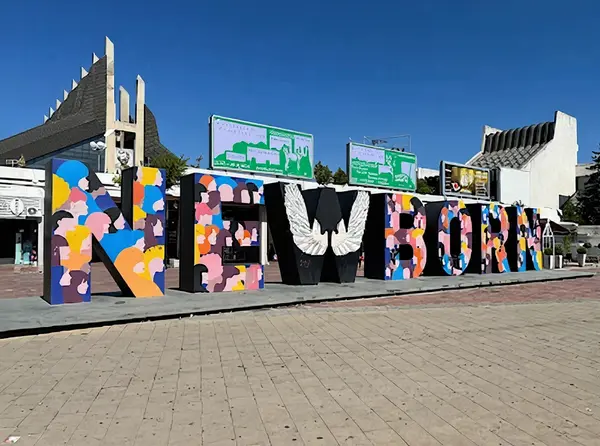
Quick facts: Bold red letters spelling out a powerful message mark the exact spot where independence was declared. The monument’s paint is intentionally overlaid annually, symbolizing renewal and freedom's ongoing story.
Highlights: Visitors can witness a fresh layer of paint every year on Kosovo's Independence Day, turning the monument into a living canvas. Its bold, block-letter style stands 3 meters tall, a vivid shout in the center of a busy city square.
8. Rugova Canyon
Peja
One of Europe's deepest and longest canyon valleys awaits, with breathtaking rock walls. Walking along the winding paths by the stream, you can discover the forces of nature at work.
Quick facts: The gorge valley, 25 kilometers long and 650 to 1,000 meters deep, is located in the Perjeshát mountain range. The valley was carved out over time by the Peja stream, which has made it one of the best spots for whitewater rafting in the Balkans.
Highlights: In the gorge there is the 642-meter-long Gryka e Rugovës suspension bridge, beneath which a chasm 130 meters deep yawns. Walking across the bridge feels as if you were treading on air, while the roar of the stream echoes between the rock walls.
9. Patriarchate of Peć Monastery
Peja
You can walk in one of the holiest places of Serbian Orthodoxy, where four churches were built together into a single monumental unity. Breathtaking 14th-century frescoes, centuries-old liturgical atmosphere, and the monastic silence nestled in the embrace of the mountains await you.
Quick facts: The 13th-century Serbian Orthodox monastery complex consists of four interconnected churches, whose walls are covered with more than a thousand square meters of frescoes. For centuries the complex served as the seat of the Serbian patriarchs, and it is still inhabited by an active community of nuns.
Highlights: By building the churches side by side, they created a unique architectural ensemble where the walls of the three main churches literally touch each other. The colors of the 14th-century frescoes are so vivid as if they had been painted yesterday, and in the dome of the Church of Saint Peter, the face of a Christ Pantocrator created around 1300 looks down at you.
Where to Stay in Kosovo
Selected by City Buddy based on guest reviews and proximity to top attractions
Search all hotels in KosovoPowered by agoda
Traditional Sweet Dishes
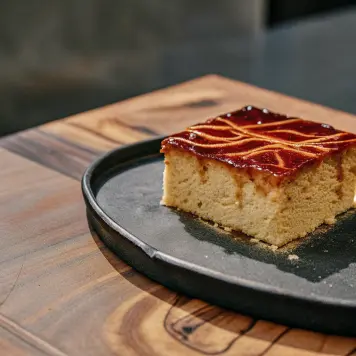
Trilece
Trilece is a tres leches style cake soaked in three kinds of milk, and in Kosovo it is often topped with a caramel sauce and lightly browned with a torch for a delicious contrast in textures.
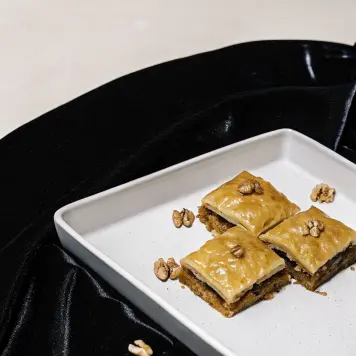
Baklava
Kosovo's baklava features many thin layers of phyllo dough filled with walnuts and sweetened with syrup, and it is traditionally prepared for special holidays like Bajram and festive family gatherings.
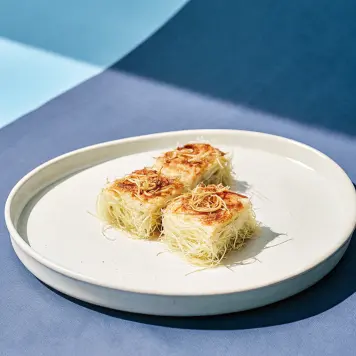
Kadaif
Kadaif is made from shredded phyllo dough that is baked with nuts and soaked in sweet syrup, giving it a unique shredded or hair-like texture that sets it apart from other Balkan desserts.
Traditional Savory Dishes
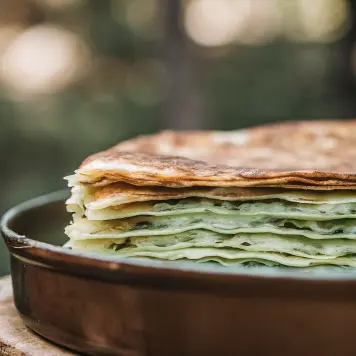
Flija
Flija is a layered pancake and pie hybrid that is cooked slowly over a traditional saç dome, with each thin layer added and baked one by one over several hours.
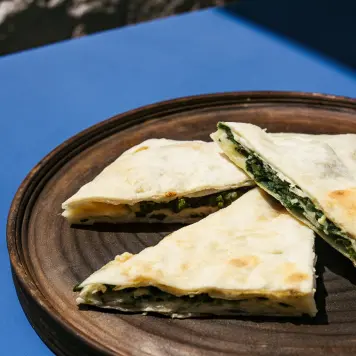
Pite
Pite is a beloved savory pie made with thin phyllo dough and commonly filled with spinach and cheese, pumpkin, or minced meat, and it is a staple dish found in nearly every bakery across Kosovo.
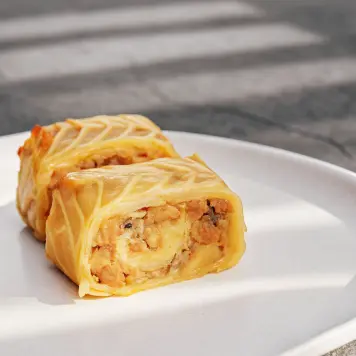
Sarma
Sarma consists of grape or cabbage leaves stuffed with a mixture of rice and minced meat, and Kosovan families often prepare large pots of it for winter months and festive celebrations.
Traditional Beverages

Boza
Boza is a thick, sweet fermented drink made from maize and wheat, and it is especially popular in Kosovo during the colder months as a comforting and energizing beverage.
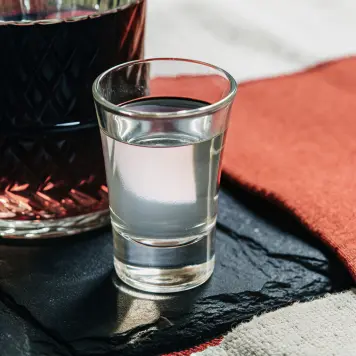
Raki
Raki is a potent fruit brandy typically distilled from plums or grapes, and in Kosovo it is often served as a welcoming drink to guests and sipped alongside meze plates.
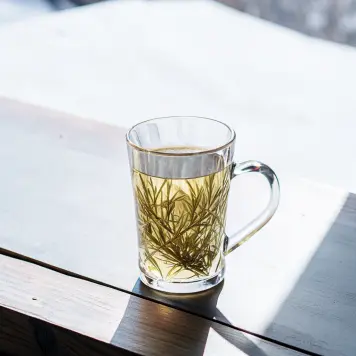
Kosovo Mountain Tea
Kosovo Mountain Tea is a fragrant herbal infusion made from wild mountain herbs like sage and chamomile, and it is cherished for its soothing properties and the distinct aroma of the Balkan highlands.
Frequently Asked Questions about Kosovo
Is Kosovo safe?
How many days should you spend in Kosovo?
When is the best time to visit Kosovo?
Is Kosovo expensive?
How can you get around in Kosovo?
Get a PDF with the most popular attractions sent to your email
Get a PDF with all attractions, ratings, and tips. Perfect for offline use.
Most popular day trips
Pristina
The lively capital with cafes, museums, and the Newborn Monument
Prizren
Ottoman-era old town with a fortress and river views
Peja (Peć)
Gateway to the Rugova Gorge and Patriarchate monastery
Gjakova
Charming bazaar city with the Old Bazaar and traditional houses
Mitrovica
Divided city with a bridge linking Albanian and Serbian quarters
Getting there
Airports
Train stations
Connections to Peja, Prizren, Mitrovica, and Skopje (North Macedonia)
Lines to Pristina and Montenegro (Podgorica)
Main rail hub connecting to Serbia and North Macedonia
From Pristina Airport, take bus Line 1A to the city center (30 minutes, cheap fare). Taxis are also available for around 15 euros.
Click to get eSim for Kosovo
The easiest and most affordable way to get mobile internet wherever you travel.
Visa & entry
EU, Schengen Area, United States, Canada, Australia, New Zealand, Japan, South Korea
Most African, Asian (except Japan, South Korea), and some Middle Eastern countries
Kosovo uses a sticker visa system at border crossings. Check if your country recognizes Kosovo's independence before planning travel.
Comments (10)
Cash is king here. Many smaller restaurants and taxis don't take cards at all. Hit the ATMs at the airport before heading into town.
The weather in June was perfect. Sunny but not too hot. I imagine winter here would be rough though, lots of gray concrete cities in rain.
Take the shared taxis (furgons) between cities instead of buses. They leave when full, go faster, and cost nearly the same. Way less waiting.
Cheapest European country I've been to. Beer for 1 euro, amazing meals under 5. If you're on a budget this place is a goldmine.
Really mixed feelings. Some parts felt genuinely unsafe at night, but daytime was lovely. The young crowd at cafes gave it good energy though.