 CityBuddy
 English
Things to Do in Nakuru, Kenya
Photo made by Nirav Shah on Pexels.com
When to visit
Plan your perfect trip to Nakuru, Kenya
Get a complete travel plan built just for you in under 30 seconds, with daily routes, local food tips, budget estimates and more.
Are any of these especially important to you?
Select all that apply
Getting around
How do you want to move between places?
Plan language: EnglishMost popular attractions in Nakuru, Kenya
For those looking for things to do in Nakuru, Kenya, three places are worth exploring. Lake Nakuru National Park is home to more than 400 bird species and thousands of flamingos. From Baboon Cliff, visitors can view the lake from a height of 150 meters while observing baboons, then head to Makalia Falls, which flows at the southern end of the park.
1. Lake Nakuru National Park
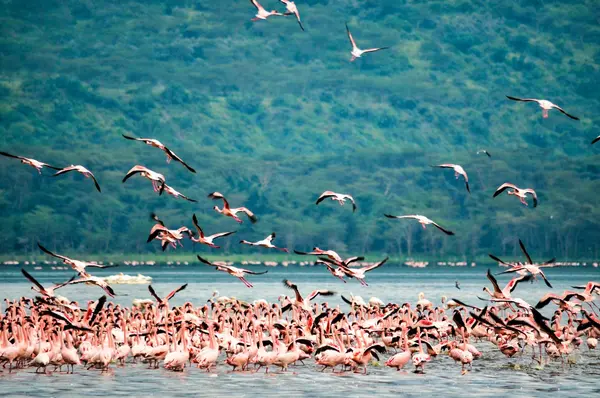
The lake's edge blushes red from more than a million flamingos, an unrivaled living carpet. Within hours, see rhinos, Rothschild's giraffes, and thousands of wings taking off all at once.
Quick facts: More than a million lesser flamingos often color the shores of the alkaline soda lake during peak season, a pink ribbon visible from space. The area around the lake is one of the densest rhino strongholds in Africa, with weekly aerial patrols to count white and black rhinos.
Highlights: The flamingos' pink color here depends on spirulina, the blue-green algae that thrive in the warm soda water. The simultaneous liftoff of thousands of birds thunders like heavy rain hitting the water's surface, a sensation that raises goosebumps.
2. Lake Nakuru
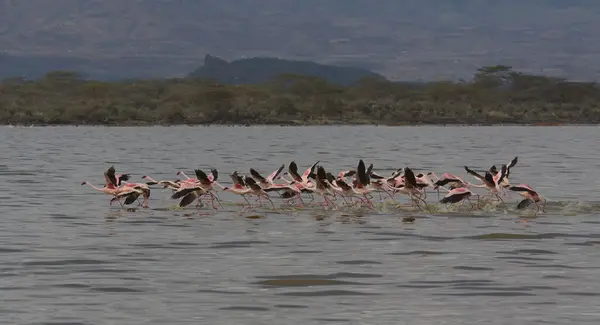
A shoreline that turns entirely pink at low water thanks to one million flamingos. Hear their cackling murmur as you drive past white rhinos and giraffes.
Quick facts: At favorable water levels, more than a million flamingos sometimes settle here, their pink mass discoloring the entire shoreline. Extremely alkaline water allows mostly blue-green algae to grow, the birds' favorite food, while Rothschild giraffes and white rhinos inhabit the surrounding park.
Highlights: When the water level drops, the shore turns into a slowly moving pink blanket of hundreds of thousands of flamingos that loudly chatter as they wade through the shallow water. The birds scoop through the mud with their heads upside down and often balance on one leg, a comical spectacle you can watch up close.
3. Menengai Crater
A caldera rim still puffing hot steam offers a panorama of the valley below from a height of 2,278 meters. Descend to the crater floor to gaze upon frozen lava and wild scrub.
Quick facts: This caldera, 12 kilometers wide with vertical walls 300 meters high, was formed by a violent eruption around 8,000 years ago. The Maasai people of old believed the crater floor was inhabited by evil spirits, and they threw fallen warriors into it as a final burial.
Highlights: White steam rising from cracks in the crater floor shows the mountain is still "alive," and its geothermal heat is being tapped to generate 400 megawatts of electricity. The crater rim at 2,278 meters rewards visitors with a panorama of two lakes, Nakuru and Elementaita, which look miniature from above.
4. Baboon Cliff
Witness a pink sea of 1.5 million flamingos from a height of 200 meters. The savanna wind sweeps your face as herds of zebras and rhinos roam freely beneath you.
Quick facts: Roughly 200 meters above the lake's surface, this cliff serves as a natural observation deck without guardrails. Around 450 bird species can be seen from this peak, making it the most efficient wildlife viewing point in the park area.
Highlights: As evening approaches, golden light highlights herds of white rhinos wallowing in the mud right below the cliff, with the lake surface glittering like a mirror behind them. The wind carries the thunder of running zebra hooves and the occasional howl of baboons echoing from boulders, an experience that cannot be replicated from inside a safari vehicle.
5. Makalia Falls
A blend of fresh and alkaline water invites tens of thousands of waterfowl to gather all year round. The roar of falling water, foamy spray, and a crowd of drinking rhinos await you.
Quick facts: The freshwater falling from here mixes with the soda lake below, and that chemical blend grows algae that draws hundreds of thousands of flamingos to the shore. The cliffs around the waterfall stand 1,754 meters above sea level and serve as a permanent drinking spot for dozens of black rhinos and white rhinos.
Highlights: Its water flow can swell to fill the entire cliff edge, dozens of meters wide, after a night of heavy rain, roaring like a giant that has just woken. The dry season shrinks it to a dozen thin trickles that can be crossed without getting wet, while dusk turns the pool below it into an orange mirror.
6. Hyrax Hill Prehistoric Site
Explore an Iron Age village whose stone walls still stand strong. Touch the ancient rocks and imagine the life that pulsed here thousands of years ago.
Quick facts: Mary Leakey excavated this site in 1937-1938 and found two layers of life: a Stone Age settlement below and an Iron Age village above it. More than 5,000 artifacts, from pottery to obsidian tools, are now stored in a small museum overlooking the lake in the distance.
Highlights: On the west side of the hill, archaeologists found around 19 Neolithic graves complete with skeletons buried in a curled position, some adorned with shell necklaces. Toward dusk, the volcanic stone walls in the area glow orange and the dry wind over the grasslands seems to carry the gentle voices of its ancestors.
7. Kariandusi Prehistoric Site
Hold a stone axe nearly one million years old and feel history in the palm of your hand. On the white diatomite cliffs, you follow in the footsteps of Homo erectus in East Africa.
Quick facts: Thousands of hand axes nearly a million years old are scattered across the cliffs of this site, relics of Homo erectus who lived long before Egypt's pyramids were even imagined. Louis Leakey discovered and mapped this area in 1928, and to this day archaeologists are still reading the diatomite layers to trace the oldest Acheulean technology in East Africa.
Highlights: Most astonishing of all, you can actually hold a symmetrical stone axe with a still-sharp edge, exactly the kind of object our ancestors used to skin animals on the shores of an ancient lake. The nearby diatomite quarry automatically opens up white layers of soil millions of years old every time heavy machinery digs, as if a page of history is being revealed right before your eyes.
8. Lake Elementaita
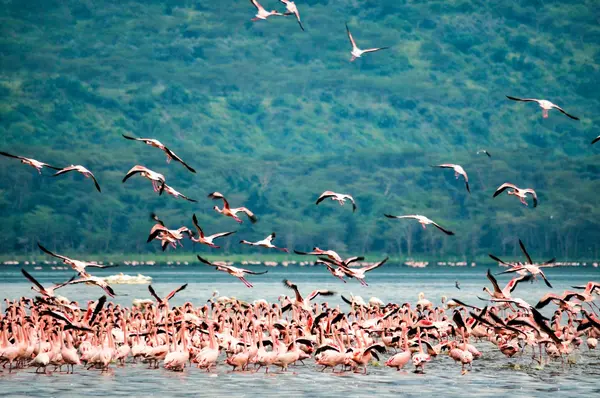
Millions of pink flamingos inhabit the alkaline lake. You will witness thousands of birds taking off at once above your head from the water's edge.
Quick facts: The lake's water is so alkaline it can irritate sensitive skin, yet this is exactly where around 1 million lesser flamingos feed every day. Around 6,000 pairs of great white pelicans also nest here in a single season, one of the densest colonies in Africa.
Highlights: Hot springs at the southern end flow warm water that makes that part of the lake feel like a natural swimming pool, while the other side is clear and cold. During nesting season, around 6,000 pairs of white pelicans settle in and mate all at once, when the sound of their flapping wings echoes like heavy rain striking the water's surface.
9. Lord Egerton Castle
A nobleman built a palace for the beloved who rejected him, and now its doors are open to you. Walk through 52 rooms and 365 windows, and feel the failed love story up close.
Quick facts: Hundreds of windows are arranged to match the number of days in a year exactly, while 52 rooms and 12 doors map the number of weeks and months. The heartbroken owner spent years perfecting the palace for a lover who never came, and ended his life a bachelor.
Highlights: The ticking of an old grandfather clock echoes through the hall corridors, while a private elevator from the 1930s still carries visitors through three floors of stone walls. The owner's lover rejected his proposal because his old house was considered too modest, so he set a mahogany dining table for 30 chairs that were never filled together.
10. Soysambu Conservancy
Experience a quiet safari with no vehicle queues across 19,000 hectares of land. Follow the red-earth trails, see flamingos at the lakeshore, and picnic beneath the acacias.
Quick facts: Spanning 19,000 hectares, this area is home to around 12,000 wild animals, including one of the largest Rothschild giraffe populations in the world. Thousands of flamingos color the lake along its shore, creating a pink expanse visible from airplane altitude.
Highlights: Its name comes from the Maasai language, "place of red stones," referring to the volcanic rocks that emerge in the middle of the grasslands. The safari sensation feels unique because herds of giraffes and zebras often share the pasture with hundreds of ranch cattle belonging to the same managing family, a blend of wild nature and inherited ranching rarely found anywhere else.
Where to Stay in Nakuru, Kenya
Selected by City Buddy based on guest reviews and proximity to top attractions
Search all hotels in Nakuru, KenyaPowered by agoda
Traditional Sweet Dishes
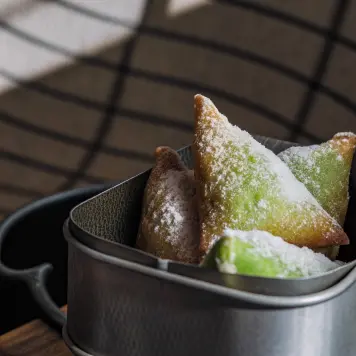
Mandazi
Mandazi are soft, slightly sweet fried dough triangles made with coconut milk. They are a beloved breakfast and tea-time snack found across Kenya.
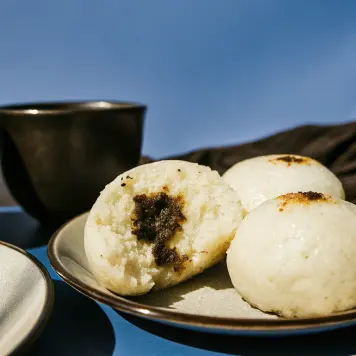
Mahamri
Mahamri are plump, yeasted doughnuts with a fluffy interior and a hint of cardamom and coconut. They are traditionally enjoyed with Swahili stews or a cup of sweet chai.
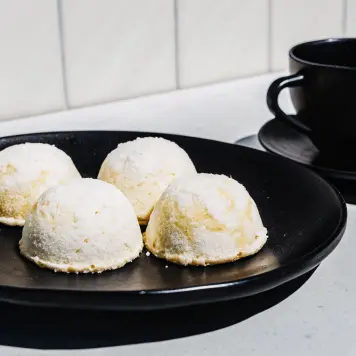
Vitumbua
Vitumbua are small, dome-shaped pancakes made from rice flour and coconut, fried until golden. Their fluffy, sugary texture makes them a popular street-side treat with tea.
Traditional Savory Dishes
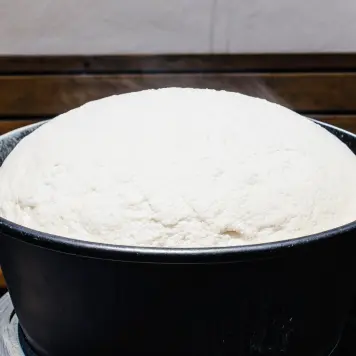
Ugali
Ugali is a stiff porridge made from maize flour and is the ultimate staple across Kenya. It is traditionally eaten with the hands, rolled into a ball, and dipped into stews.
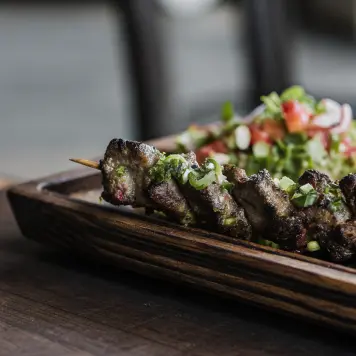
Nyama Choma
Nyama choma, or roasted meat, is Kenya's beloved social dish, often goat or beef grilled over open flames. It is usually shared at gatherings and served with kachumbari, a fresh tomato and onion salad.
Githeri
Githeri is a hearty stew of boiled maize and beans, a favorite in Nakuru's farming region. Modern versions add potatoes, greens, and spices, making it a complete meal in one pot.
Traditional Beverages
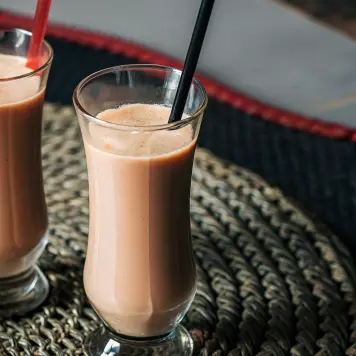
Uji
Uji is a smooth porridge made from fermented millet, maize, or sorghum flour. It is a nourishing breakfast drink that is also served to babies and the sick because it is easy to digest.
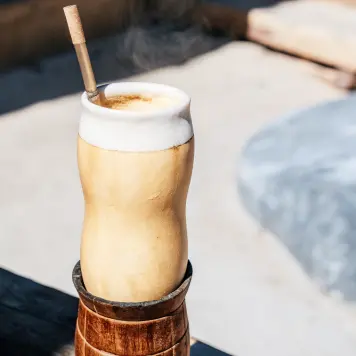
Mursik
Mursik is a traditional fermented milk prized by the Kalenjin community of the Rift Valley, which includes Nakuru County. It is stored in special gourds and has a distinct smoky, tangy flavor.
Chai ya Maziwa
Chai ya maziwa, or milk tea, is Kenya's everyday comfort drink, brewed strong with black tea, milk, and plenty of sugar. It is served throughout the day and often at every meal and social visit.
Frequently Asked Questions about Nakuru, Kenya
Is Nakuru, Kenya safe for tourists?
How many days should you spend in Nakuru, Kenya?
When is the best time to visit Nakuru, Kenya?
Is Nakuru, Kenya expensive to visit?
How do you get around in Nakuru, Kenya?
Get a PDF with the most popular attractions sent to your email
Get a PDF with all attractions, ratings, and tips. Perfect for offline use.
Most popular day trips
Lake Naivasha
Freshwater lake with hippos, boat rides, and Crescent Island wildlife walks.
Hell's Gate National Park
Cliffs, gorges, hot springs, and cycling among zebras and giraffes.
Menengai Crater
Vast volcanic caldera rim with panoramic Rift Valley views and hiking.
Lake Elementaita
Shallow soda lake famed for flamingos and migratory pelicans.
Lake Bogoria
Geyser field, hot springs, and flamingo flocks along the shore.
Getting there
Train stations
Nairobi, Kisumu, Malaba border line via the Kenya Railways metre gauge route
Nairobi to Naivasha SGR passenger service, then road transfer to Nakuru
From NBO take the Nairobi to Naivasha SGR train, or a direct bus or matatu on the Nairobi to Nakuru highway, about 2.5 to 3 hours by road.
Comments (6)
Drove up from Nairobi expecting a safari town, but honestly felt more like a proper city with a lake in the middle. Nice surprise overall.
Came for two nights, wished I'd booked four. The lake at sunrise was unreal, though the pink flamingo crowds eat up your camera battery fast.
Fell in love with the vibe but the town itself is filthy in patches. The park is world class, the streets not so much. Still glad I went.
Skip the lakeside buffet spots, they charge tourist prices for yesterday's fish. Walk past the main gate, there's a little place two roads over, great nyama choma and fresh ugali at half the price.
Weather was perfect in July, cool mornings and sunny afternoons. Just bring layers and a good jacket, the evenings get properly chilly.