 CityBuddy
 English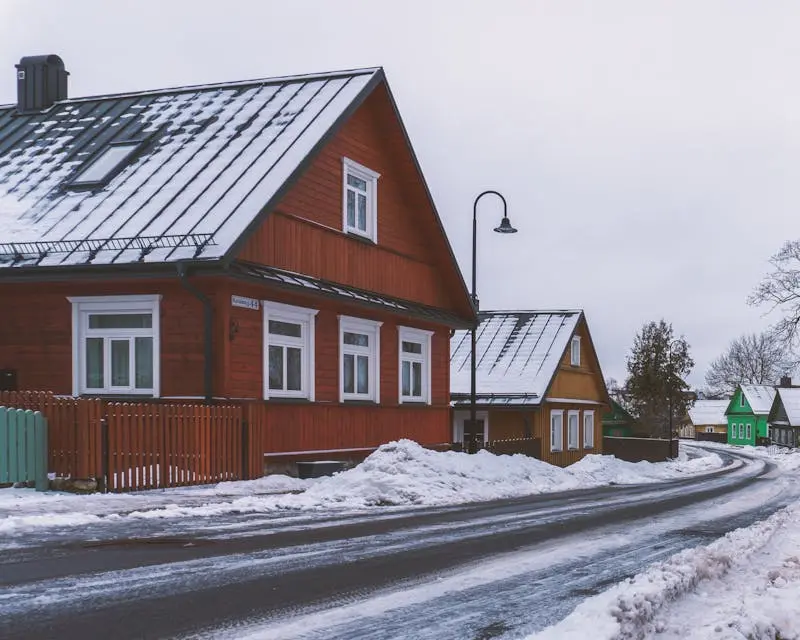
Things to Do in Trakai, Lithuania
Photo made by Justinas on Pexels.com
When to visit
Most popular attractions in Trakai, Lithuania
If you are looking for things to do in Trakai, Lithuania, start with the iconic Trakai Island Castle, built in 1409 on an island. Visit the Trakai Peninsula Castle and the Užutrakis Manor, surrounded by 18 hectares of gardens. The Trakai Historical National Park offers trails among 200 lakes.
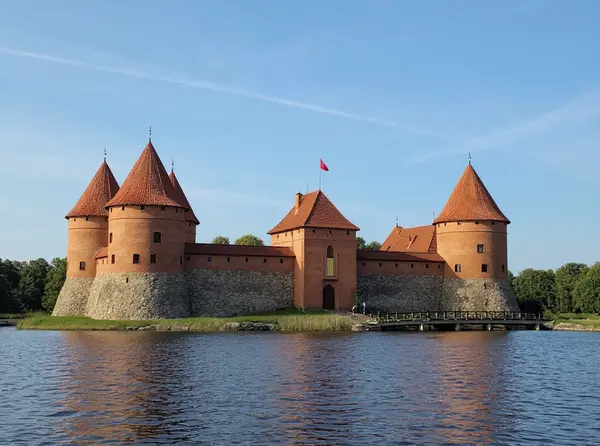
1. Trakai Island Castle
A medieval castle that seems to emerge from the waters of a lake. You will walk through stone halls, listen to the legends of the great dukes, and taste traditional Karaim delicacies on the shore.
Quick facts: In the center of a lake with seven islands, a red brick castle rises, crossing a wooden path that seems to lead to another world. More than 200,000 visitors per year try the famous kibinai, a Lithuanian delicacy served in a small restaurant by the water.
Highlights: The castle was built on a natural island between three lakes, creating a defensive system that no enemy ever managed to breach. Its restoration in the 1950s brought to light colors and architectural details that had been covered for centuries.
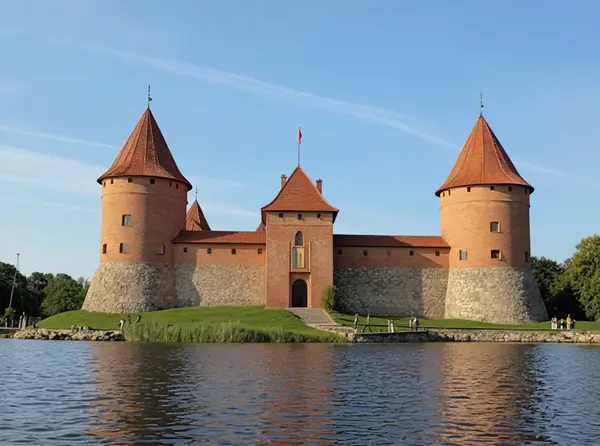
2. Trakai Peninsula Castle
One of the few preserved medieval castles in Eastern Europe, with a rich history and stunning views of Lake Galvė. You will walk along the walls, explore the rooms, and feel the medieval atmosphere.
Quick facts: The castle was built in the 1350s and served as a stronghold of the Grand Duchy of Lithuania against the Teutonic Knights. Today it houses a museum with over 2,000 exhibits, ranging from medieval weapons to period furniture.
Highlights: The interior of the castle has recently been restored with fresh, vibrant murals depicting scenes from the medieval court of the Lithuanian dukes. The throne room is a small gem with golden decorations and wood carvings that transport you straight to the 14th century.
3. Church of the Visitation of the Blessed Virgin Mary
Here Gothic woodcarving meets Catholic faith in a breathtaking lake setting. You will walk on floors four centuries old and listen to the silence of the lake through the wooden windows.
Quick facts: It is one of the few wooden churches in Lithuania that survive in their Gothic form, with a unique bell tower 27 meters high that dominates Lake Galvė. Inside the church, a rare copy of the Virgin Mary of Trakai is kept, considered miraculous by the local faithful.
Highlights: The church has a hidden staircase of 52 steps leading to the top of the bell tower, where the view of the lake and Trakai Castle is truly breathtaking. Few know that beneath the floor there is an underground corridor that is said to have once connected the church to the neighboring castle.
4. Trakai Historical National Park
A unique castle-island in Europe surrounded by 7 lakes. Go kayaking in the waters of Galvė before trying traditional piroshki from the Karaites.
Quick facts: Founded to protect a unique complex of lakes, forests and a medieval castle on an island. It covers 8,200 hectares and hosts over 200 species of birds, while its lakes cover almost 22% of the total area.
Highlights: Trakai Castle, built on a small island in the middle of Lake Galve, is the only island castle in all of Eastern Europe. Imagine a stone fortress with bright red Gothic details emerging from the blue-green waters, especially magical when the sunset light paints it golden.
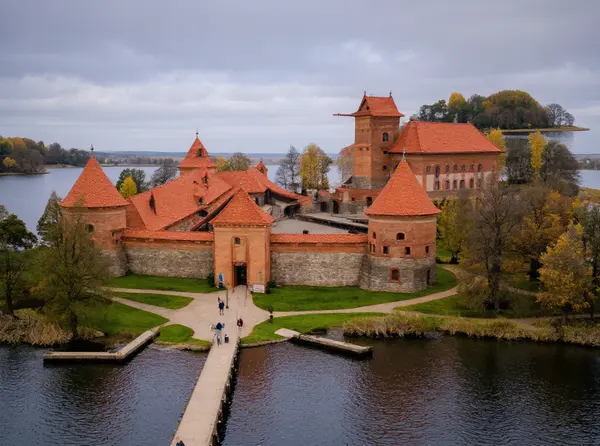
5. Trakai Tourism Information Centre
The ultimate starting point before diving into the alleys of the old town. Here you will understand why Trakai is much more than a castle.
Quick facts: It is housed in a restored 19th century building that was once a town hall and later a high school. It shares the same space with a small exhibition dedicated to the traditional wooden houses of the area.
Highlights: Inside the information center there is an interactive map that lights up with LED bulbs every time a visitor selects a point of interest. You can listen to recorded testimonies from locals in Lithuanian, English, and Russian, bringing the city's stories to life.
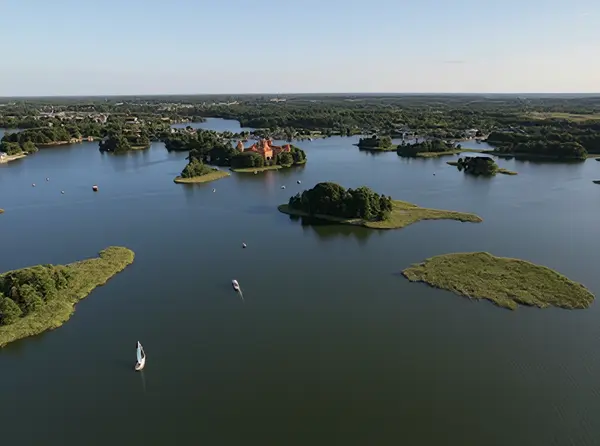
6. Lake Galvė
An escape into a setting straight out of a fairy tale, with crystal clear waters and a castle reflected on the surface. Go kayaking among tiny wooded islands, swim in the clear waters, or try the traditional kibinai of the Karaites.
Quick facts: With an area of 5.6 square kilometers, the lake was formed by melted glacial waters about 15,000 years ago. Beneath its surface lie 21 tiny islands, with the largest hosting one of the most impressive stone castles in Eastern Europe.
Highlights: A replica of a 15-meter-long medieval ship sails its waters every summer, offering rides to the sound of wooden oars and folk songs. It is said that the lake is home to a rare species of fish, the Trakai perch, which is found only here in all of Lithuania.
7. Trakai Wooden Sculpture Park
An open-air labyrinth of wooden masterpieces that comes to life in the forest. You will wander among giant figures, discover hidden details, and feel art breathing around you.
Quick facts: Over 60 wooden sculptures adorn this park, each one hand-carved by artists from around the world. The park was born out of an international woodcarving symposium that takes place every year, leaving behind new works of art.
Highlights: Imagine giant fairy-tale figures, mythical creatures, and abstract compositions emerging from among the trees, with the smell of freshly cut wood still lingering in the air. Each sculpture tells a story, ranging from Lithuanian mythology to contemporary social messages.
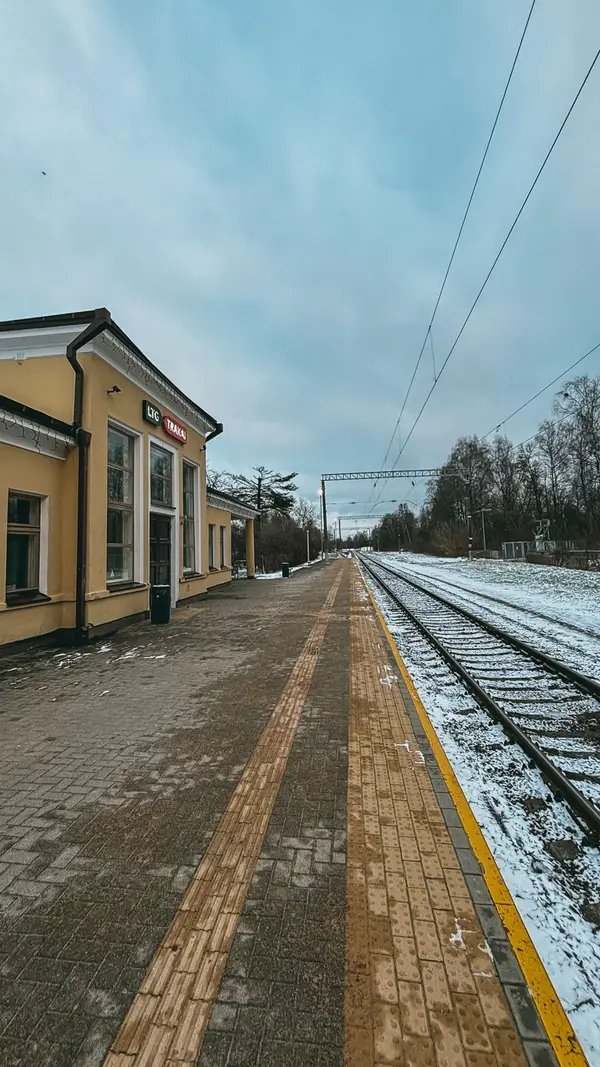
8. Trakai Railway Station
The most beautiful railway station in Lithuania, half an hour from Vilnius. You will see wooden carved details, have coffee at the historic café, and set off for the waters of Lake Galvė.
Quick facts: The 32-minute ride from the capital costs about a euro, one of the best value day trips in the country for the price of a bus ticket. Passengers have stepped onto this platform since the 1860s, when the line carried imperial mail between St. Petersburg and Warsaw.
Highlights: Grab a left-side window seat and the castle's brick towers rise over the lake about seven minutes before the train brakes, a reveal unchanged for over 160 years. Conductors still wave handheld flags here instead of using digital signals, and the platform's original cast-iron lamp posts survive from the imperial era.
What to pre-book in Trakai
These sell out or need a reservation. Book them first, in this order.
- 1.Trakai Island CastleBook 3 days aheadA few days ahead in summer, walk up off season
Where to Stay in Trakai, Lithuania
Selected by City Buddy based on guest reviews and proximity to top attractions
Search all hotels in Trakai, LithuaniaPowered by agoda
Opening days in Trakai, Lithuania
Which of the top sights close on which day of the week — the classic trip-ruiner, checked for you.
Good news: all 6 top sights with known hours are open every day of the week.
Closed on Monday · 0 closed, 6 open
Nothing closes on Monday — all 6 sights with known hours are open.
Opening days from Google Maps (checked 2026-09-14). Public holidays, strikes and seasonal hours can differ — check the official website before you go.
Traditional Sweet Dishes
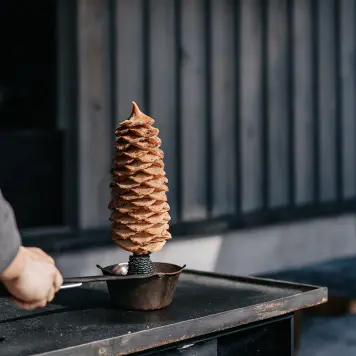
Šakotis
Šakotis is a spit cake resembling a pine tree or branch, and its name literally means 'branchy' in Lithuanian. It is traditionally baked at weddings and Easter by slowly rotating layered batter over an open fire.
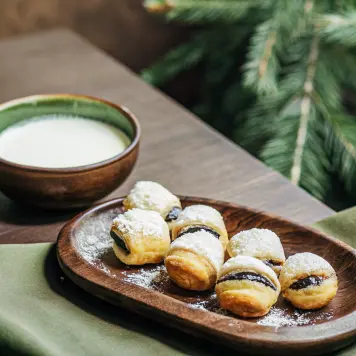
Kūčiukai
These small poppy seed pastries are traditionally served on Christmas Eve (Kūčios) with poppy seed milk. The tiny biscuits are meant to be shared among family members as a symbol of unity and good fortune.
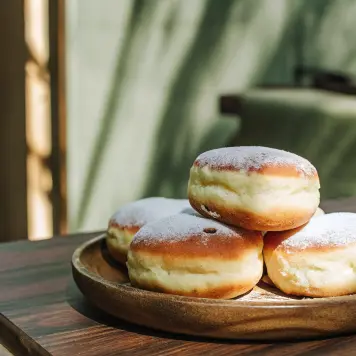
Spurgos
Lithuanian spurgos are yeast doughnuts without holes, often filled with fruit jam or curd cheese and dusted with powdered sugar. They are a beloved treat at fairs and family gatherings across Trakai and all of Lithuania.
Traditional Savory Dishes
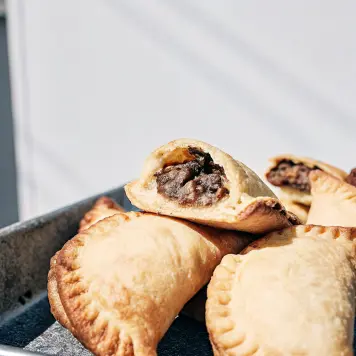
Kibinai
Kibinai are savory pastries filled with minced lamb or beef, brought to Trakai by the Karaite community who have lived in the region for over 600 years. These half-moon shaped pies are the most iconic food of Trakai and a must try for visitors.
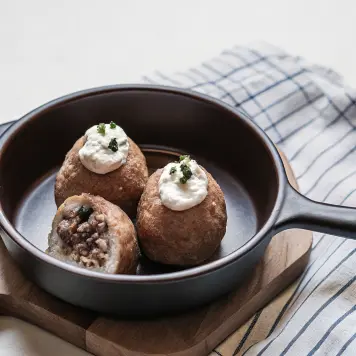
Cepelinai
Cepelinai are large potato dumplings stuffed with minced meat or curd cheese, named for their resemblance to zeppelins or airships. They are considered Lithuania's national dish and are often topped with sour cream and crisp fried pork fat.
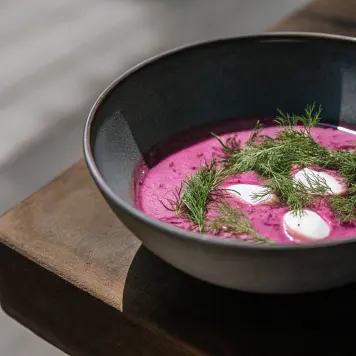
Šaltibarščiai
This cold pink beetroot soup is made with buttermilk, beets, and fresh dill, typically served over hot boiled potatoes on summer days. Its striking magenta color and refreshing taste make it a beloved seasonal staple in Trakai and across Lithuania.
Traditional Beverages
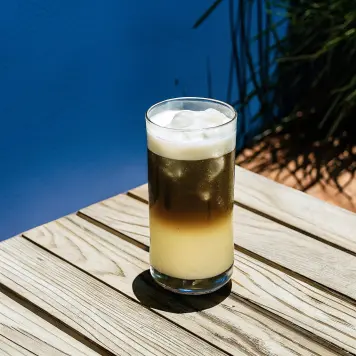
Gira
Gira is a traditional Lithuanian fermented bread drink, similar to a very low alcohol kvass, made from rye bread, yeast, and sugar. It has a sweet and tangy flavor and is especially popular as a refreshing summer beverage.
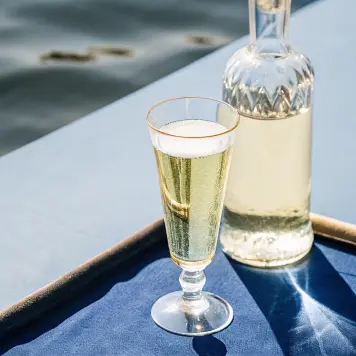
Midus
Midus is Lithuanian mead, one of the oldest alcoholic beverages in the country, made from fermented honey and water. In Trakai, it is often associated with the Grand Dukes of Lithuania who historically enjoyed this golden drink at castle feasts.
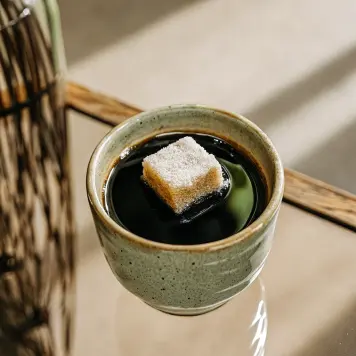
Karaimska Kava
Karaimska kava is a strong black coffee tradition brought by the Karaite community of Trakai, often served with a cube of sugar held between the teeth. This unique way of drinking coffee highlights the rich cultural heritage of the Karaite people in the region.
Know before you go
What a day costs in Trakai, and the rip-offs to avoid
Top rip-offs to avoid
- Unsolicited airport drivers. Walk to the official taxi rank or book through Bolt or Uber in the app before leaving the terminal.
- Castle zone menu markups. Check the menu has clear prices before sitting. Walk a few blocks away from the castle for standard local pricing.
- Poor rate exchange booths. Use bank ATMs for cash in euros, which is already the local currency. Avoid cash exchange entirely if possible.
Fair taxi from the airport: €25 - €40
Cheaper option: Bus or train from Vilnius to Trakai via Vilnius city centre; from the airport take bus 1 or 2 to the railway station, then the Trakai train. (€3)
All scams, fair prices and rulesFrequently Asked Questions about Trakai, Lithuania
Is Trakai, Lithuania safe?
How many days are needed to visit Trakai?
What is the best time to visit Trakai?
Is Trakai, Lithuania expensive?
How can I get around Trakai?
Get a PDF with the most popular attractions sent to your email
Get a PDF with all attractions, ratings, and tips. Perfect for offline use.
Most popular day trips
Vilnius
Lithuania's capital with a UNESCO-listed Old Town
Kaunas
Second largest city known for interwar architecture
Aukstaitija National Park
Lithuania's oldest national park with lakes and forests
Trakai Historical National Park
Scenic park surrounding Trakai's lake region
Rumsiskes Open Air Museum
Ethnographic museum showcasing traditional Lithuanian life
Getting there
Airports
Train stations
Vilnius to Trakai line, with connections to Kaunas and Warsaw
Main hub with connections to all Lithuanian cities and international routes
From Vilnius Airport, take a taxi or bus to Vilnius train station, then a 30 minute train ride to Trakai.
Useful information for Trakai, Lithuania
Overview for Trakai, Lithuania
Compare Trakai with other destinations
Prices, safety, weather and top attractions side by side, with a verdict for every kind of traveler.
Want a day-by-day plan for Trakai, Lithuania? Open the trip planner
Plan your perfect trip to Trakai, Lithuania
Get a complete travel plan built just for you in under 30 seconds, with daily routes, local food tips, budget estimates and more.
Are any of these especially important to you?
Select all that apply
Getting around
How do you want to move between places?
Plan language: EnglishMost popular itineraries for Trakai, Lithuania
Browse trip plans created by other travelers