 CityBuddy
 English
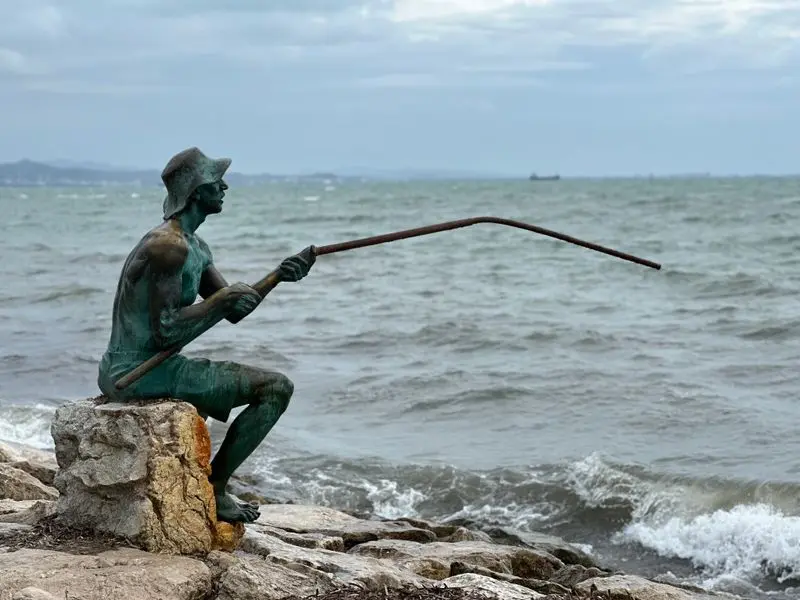
Things to Do in Durrës, Albania
Photo made by Janno De Beul on Pexels.com
When to visit
Most popular attractions in Durrës, Albania
For unforgettable things to do in Durrës, Albania, start with the Durrës Amphitheatre, a massive second-century Roman arena that once seated 15,000 spectators beneath the city. Climb its vaulted galleries, then visit the nearby Durrës Archaeological Museum, home to over 3,000 artifacts. Finish at the Byzantine Forum, where fifth-century mosaic floors still gleam just steps from the harbor.
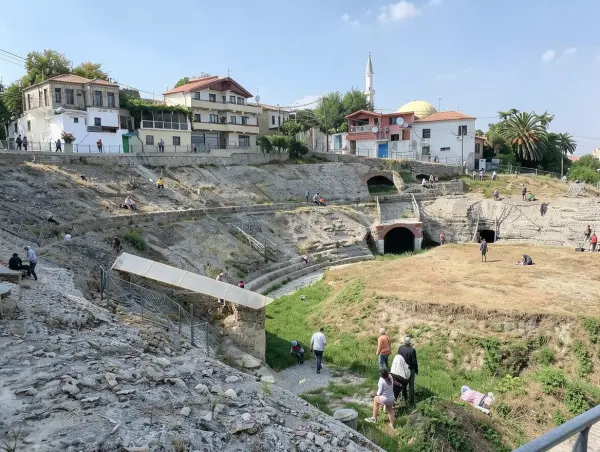
1. Durrës Amphitheatre
Stand inside one of the largest Roman amphitheatres in the Balkans and feel history all around you. Climb the worn stone steps, peer into the underground passages, and trace the layers of centuries in the weathered walls.
Quick facts: Archaeologists uncovered the ruins here almost by accident during the 1960s, revealing one of the largest Roman arenas in the Balkans. Excavations have brought to light part of the original tiered seating and a chapels built into the sloping walls centuries later.
Highlights: Walk into the dim, echoing stone chambers beneath the seating and you will feel the cool air and hear your footsteps bounce off the ancient arches, a sensory time capsule most visitors breeze past. A small Christian chapel was carved directly into the amphitheatre's structure, proof that the space kept living and changing long after the gladiators were gone.
2. Durrës Archaeological Museum
Step inside Albania's biggest archaeological collection and walk face to face with ancient Roman and Greek treasures. Let the glowing Elena mosaic and centuries of local history pull you back in time.
Quick facts: The museum shelters one of the richest collections of archaeological finds along the entire Adriatic coast, with artifacts pulled from ancient Dyrrhachium and the surrounding region. Its standout piece is a stunning 4th century BC mosaic floor, reconstructed and displayed exactly as the archaeologists uncovered it.
Highlights: The centerpiece is a massive polychrome mosaic of the beautiful Elena, rendered in hundreds of thousands of tiny tesserae in vivid reds, blues, and golds, still carrying the vibrancy it had over two millennia ago. You'll walk right up to it on a raised platform and see the individual stone cubes glinting under the gallery lights.
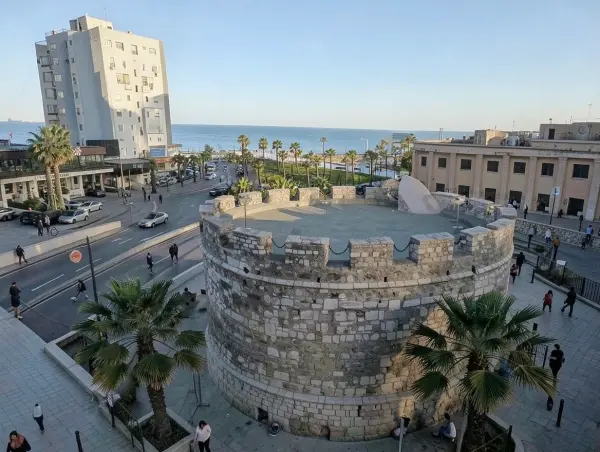
3. Venetian Tower of Durrës
Stand inside a real medieval fortress that once guarded the Adriatic coast. Feel the cool stone walls and take in sweeping harbor views from the top.
Quick facts: The cylindrical stone tower rises along the seafront and once formed part of the city's medieval defenses against sea-borne threats. Restored sections show surviving original masonry, letting visitors trace centuries of coastal military architecture up close.
Highlights: Climb to the upper level and you can see the harbor curve all the way down the coast, with the tower's thick walls still showing the original medieval stonework mixed with later repair patches. On a clear day, the Adriatic stretches out in a wide blue arc, and you get a genuine sense of how this sentinel watched over every ship approaching the port.
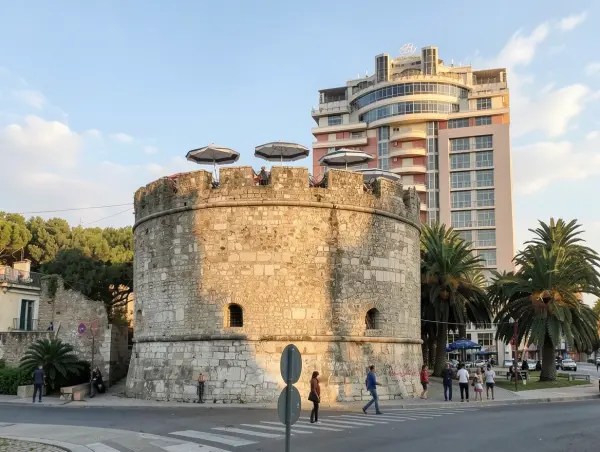
4. Durrës Castle
Step into a five-century-old stone sentinel that watched over the Adriatic. Feel the thick walls, climb the spiral stairs, and picture the galleons that once sailed past this very spot.
Quick facts: The Venetian Tower is a rare surviving piece of medieval fortification in this coastal city, standing over five centuries after it was erected. Its cylindrical stone profile rises beside the Adriatic, a sturdy relic from the era when Venice controlled these trading waters.
Highlights: Climb to the top and you can trace the original outline of the old city walls in the streets below, a map carved in stone and asphalt rather than parchment. The tower's thick walls once connected to a much longer fortification circuit, and you can still spot sections of that wall weaving between modern buildings like a stone spine through the neighborhood.
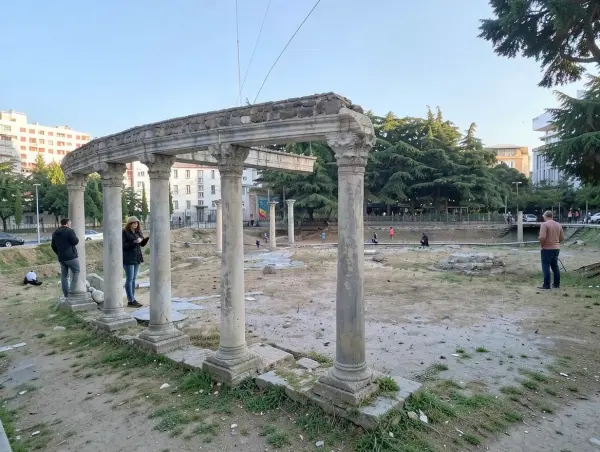
5. Byzantine Forum
Step into a 1,500-year-old Roman-era plaza sitting right in the middle of a modern Albanian city. You'll walk among exposed marble and brickwork that lay buried until the 1960s.
Quick facts: The remains of a 5th century Byzantine round forum sit in the middle of modern Durrës, surrounded by bustling residential streets. Excavations revealed 42 meters of curved seating and column bases from a structure that once dominated the ancient city's public life.
Highlights: You can wander right through the site on ground level, so you're literally walking where traders and officials gathered over 1,500 years ago. The massive semicircular apse survives to a surprising height, and on quiet mornings you might have the whole place to yourself while locals simply walk past it on their daily errands.
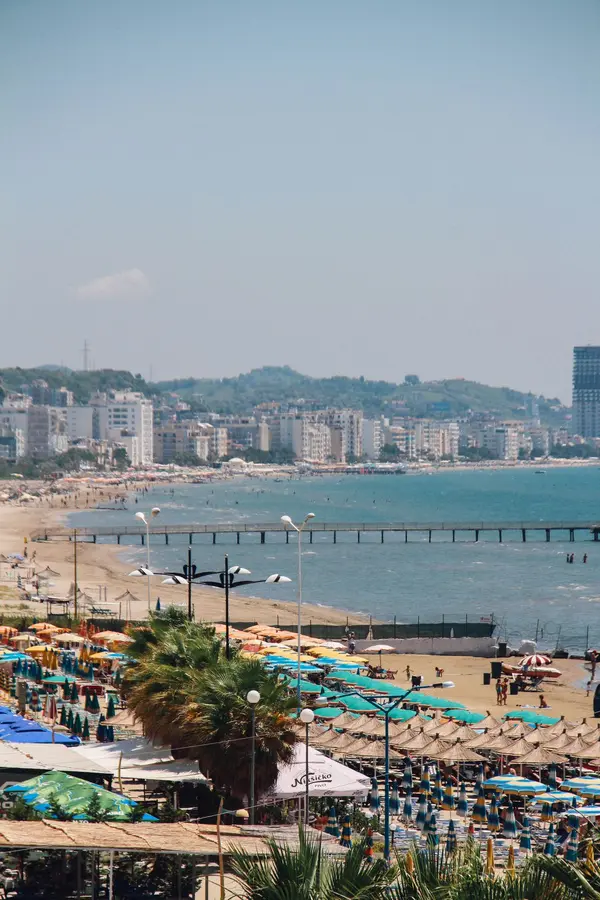
6. Durrës Beach
The Adriatic's most accessible stretch of sand sits within an hour of Tirana, perfect for a spontaneous seaside day. Expect warm shallow water, beachfront seafood grills, and golden sunsets over the bay.
Quick facts: Roughly 10 kilometers of sandy shoreline stretch along the Adriatic, making it the closest beach escape to the Albanian capital, just 40 minutes away. The shallow, gently sloping water stays pleasantly warm through late September, which draws thousands of weekend visitors from Tirana.
Highlights: At the northern end, the ancient city walls of Durrës reach right down to the sand, so you can swim with 2,000-year-old Roman masonry just steps behind you. Vendors walk the entire length of the beach selling roasted corn and fresh mussels harvested from the bay, a salty-sweet ritual that feels uniquely Albanian.
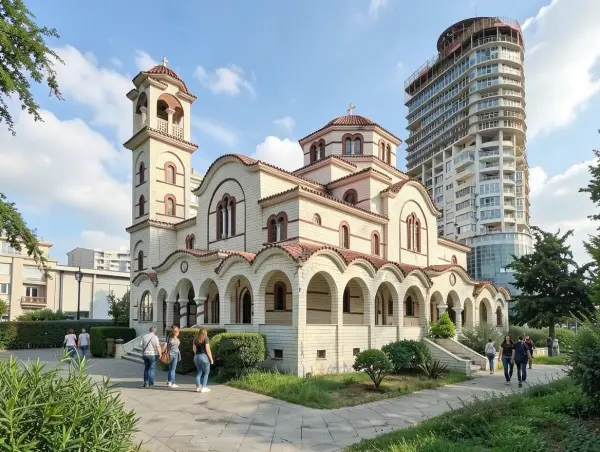
7. St. Astius Church
Step into a quiet sanctuary where centuries of coastal history settle into the stone. You'll find calm, cool air and a space that feels far removed from the modern city outside.
Quick facts: This graceful stone church sits close to the Adriatic shore in a historic Albanian port city. Its modest exterior hides a serene interior that has welcomed worshippers for centuries through periods of great change.
Highlights: The weathered stone walls carry traces of different eras, with layers of history visible right in the masonry. Visitors who look closely can spot how the building was adapted and reshaped over time, a quiet record of the city's many chapters.
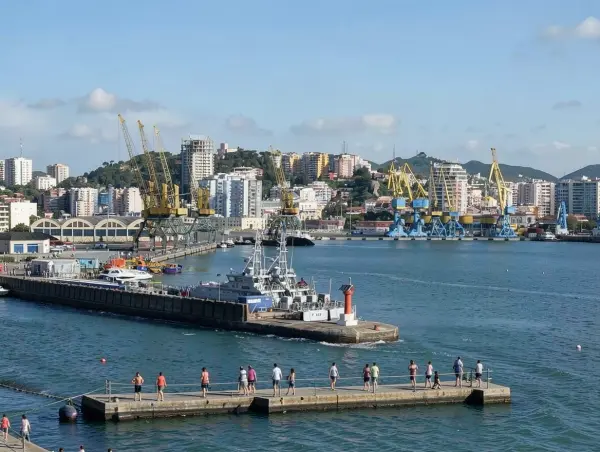
8. Port of Durrës
Watch Albania's main seaport come alive with ferries and cargo ships from its waterfront. Feel the maritime energy as travelers and freight move between the Adriatic and Italy.
Quick facts: Albania's busiest seaport handles the majority of the country's maritime cargo and ferry traffic. Its position on the Adriatic makes it a key gateway between Albania and Italy, with regular ferry crossings to several Italian ports.
Highlights: Watching the massive ferries glide in and out against the backdrop of the ancient city walls gives you a front-row seat to a port that has been moving people and goods for centuries. On busy summer days, you can see dozens of trucks and travelers streaming off the decks, a daily rhythm that has shaped this corner of the Adriatic since ancient times.
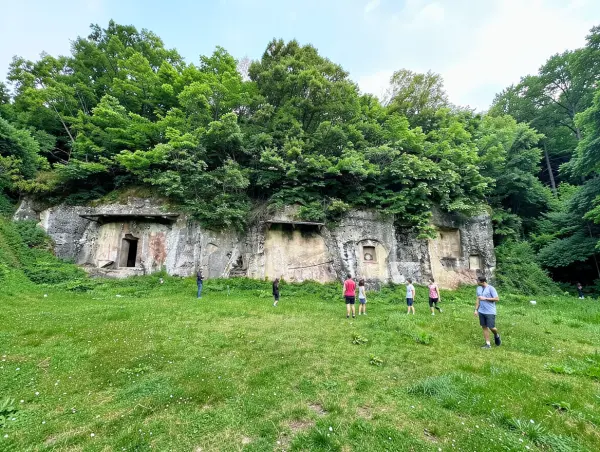
9. Royal Illyrian Tombs
Step into ancient burial chambers hidden beneath a modern city street. You will walk among silent stone vaults and feel history rising up around you.
Quick facts: These ancient burial chambers sit beneath a working city, where modern life unfolds directly above thousands of years of history. Quiet stone archways lead you into cool, dim spaces that once held the remains of Illyrian rulers.
Highlights: One of the real surprises is how intact the vaulted stonework remains after so many centuries underground, with sturdy arches that still feel remarkably solid. Being able to step right into these dark, echoing chambers gives you an immediate sense of the distance between their era and ours.
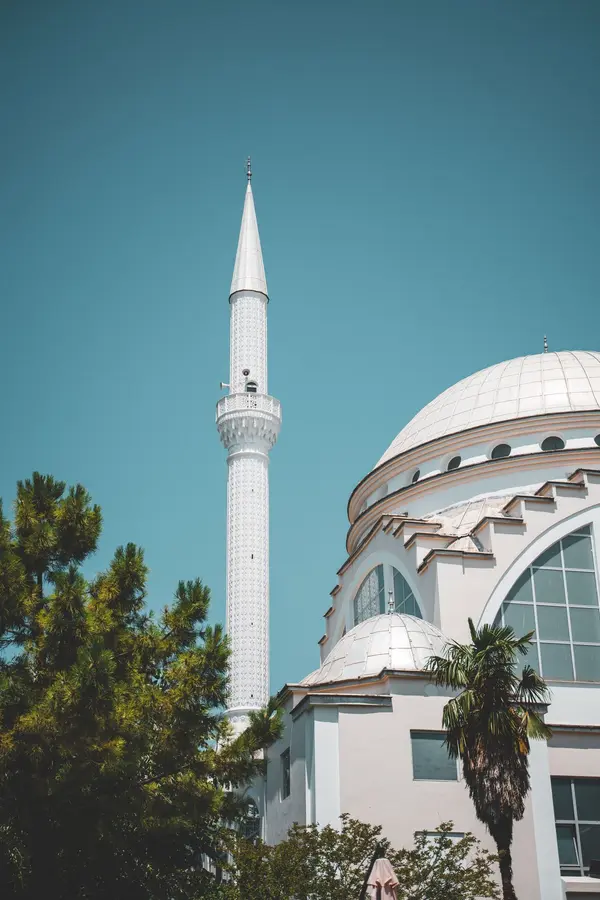
10. Great Mosque of Durrës
Step into one of Durrës' oldest active mosques, tucked right against the ancient city walls. You'll hear the call to prayer echoing over the old town while taking in Ottoman craftsmanship up close.
Quick facts: The Great Mosque of Durrës stands near the city's Byzantine walls on Rruga Aleksander Goga, in the heart of the old town. Its slender minaret rises above the surrounding rooftops, and the mosque remains an active place of worship for the local Muslim community.
Highlights: The mosque's facade blends Ottoman-era architecture with local stonework, and the interior features delicate geometric tile patterns and soft, filtered light from high clerestory windows. Look for the carved wooden mihrab, which visitors often say is the finest detail in the whole building.
Where to Stay in Durrës, Albania
Selected by City Buddy based on guest reviews and proximity to top attractions
Search all hotels in Durrës, AlbaniaPowered by agoda
Opening days in Durrës, Albania
Which of the top sights close on which day of the week — the classic trip-ruiner, checked for you.
Monday: 2 of 8 top sights closed — plan museums for another day.
Closed on Monday · 2 closed, 6 open
Opening days from Google Maps (checked 2026-10-08). Public holidays, strikes and seasonal hours can differ — check the official website before you go.
Traditional Sweet Dishes

Trilece
This three-milk cake is soaked in a blend of cow, goat, and buffalo milk, giving it an incredibly moist and creamy texture. It is a beloved dessert served at celebrations across the Albanian coast, including Durrës.

Bakllava
Durrës has its own twist on this classic Ottoman pastry, layering paper-thin filo dough with walnuts and a honey syrup infused with local citrus. It is traditionally prepared in large trays during holidays and family gatherings.
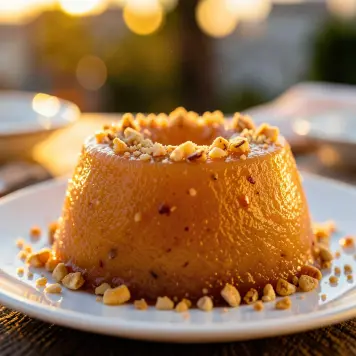
Hasude
This gelatinous cornstarch and sugar pudding is a signature sweet of Durrës, often perfumed with rose water and sprinkled with crushed nuts. It was historically made for religious feasts and is still a nostalgic treat in the city.
Traditional Savory Dishes
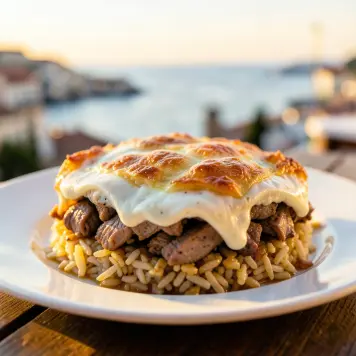
Tavë Kosi
This baked dish combines lamb and rice under a thick layer of yogurt and eggs, creating a golden, tangy crust. It is considered Albania's national dish and is widely served in Durrës restaurants with a view of the Adriatic.

Fërgesë
A hearty skillet dish made with peppers, tomatoes, cottage cheese, and sometimes liver, all simmered in olive oil. In Durrës it is often made with fresh Adriatic catch and served with crusty bread for dipping.

Qofte të Fërguara
These pan-fried meatballs are seasoned with garlic, mint, and onion and are a beloved street food in Durrës. Locals enjoy them stuffed into warm bread with ajvar and fresh tomatoes from the nearby plains.
Traditional Beverages

Raki
This potent grape or plum brandy is the quintessential Albanian spirit and is often homemade. In Durrës it is traditionally served as a welcoming gesture to guests and pairs perfectly with grilled seafood and meze.
Boza
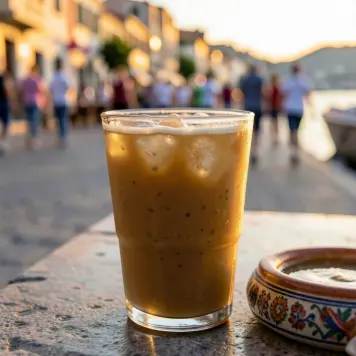
A thick, slightly fermented drink made from maize and wheat, boza has a subtly sweet and tangy flavor. Vendors in Durrës serve it chilled during warm summer evenings along the promenade.

Çaj Mali
Known as mountain tea, this fragrant herbal infusion is made from wild Sideritis plants gathered in the Albanian highlands. It is a soothing, caffeine-free drink that locals in Durrës enjoy after meals or on cool coastal mornings.
Frequently Asked Questions about Durrës, Albania
Is Durrës, Albania safe for tourists?
How many days should I spend in Durrës, Albania?
What is the best time to visit Durrës, Albania?
Is Durrës, Albania expensive to visit?
How do I get around Durrës, Albania?
Get a PDF with the most popular attractions sent to your email
Get a PDF with all attractions, ratings, and tips. Perfect for offline use.
Most popular day trips
Tirana
Albania's vibrant capital with museums, Skanderbeg Square, and lively cafes.
Krujë
Historic hilltop town with Krujë Castle and the famous Skanderbeg Museum.
Berat
UNESCO-listed 'City of a Thousand Windows' with Ottoman-era architecture.
Shkodër
Gateway to Lake Shkodër with Rozafa Castle and rich cultural heritage.
Dajti Mountain
Scenic mountain escape with panoramic views over Tirana via the Dajti Ekspres.
Getting there
Airports
Train stations
Durrës to Tirana line (limited service)
From Tirana Airport, take a taxi (about 40 minutes) or shuttle bus to Durrës city center. Buses from Tirana run frequently between the two cities.
Useful information for Durrës, Albania
Overview for Durrës, Albania
Want a day-by-day plan for Durrës, Albania? Open the trip planner
Plan your perfect trip to Durrës, Albania
Get a complete travel plan built just for you in under 30 seconds, with daily routes, local food tips, budget estimates and more.
Are any of these especially important to you?
Select all that apply
Getting around
How do you want to move between places?
Plan language: English